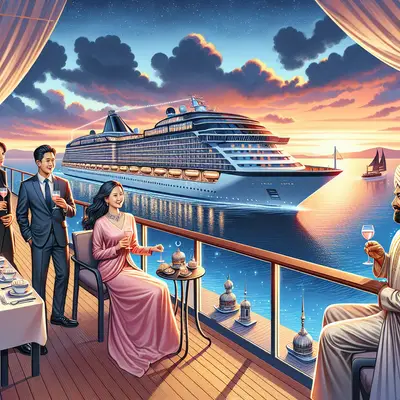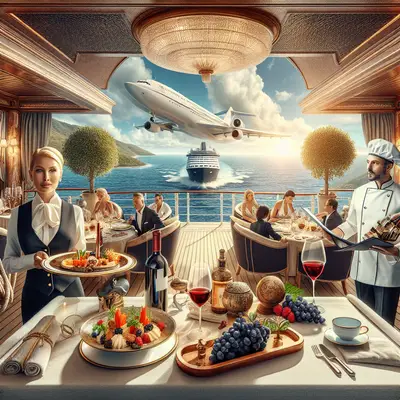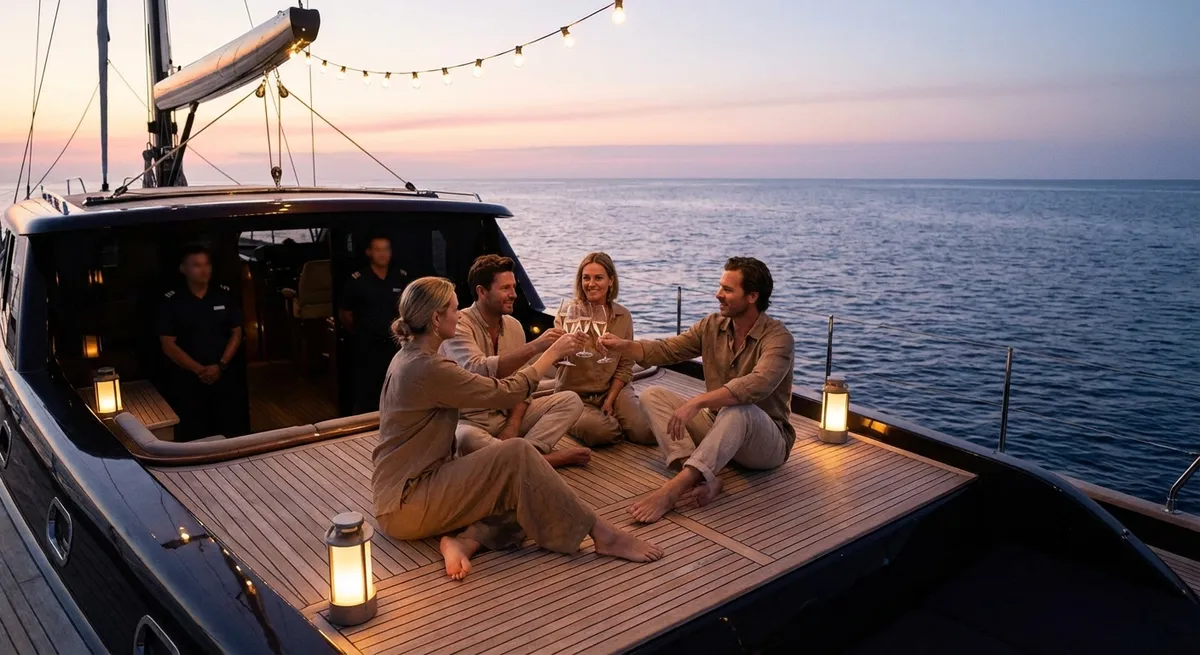
Luxury at sea is no longer defined by sheer excess or spectacle. For the seasoned cruiser, the most memorable voyages unfold in quiet layers: a well-timed glass of Champagne before sunset, the unhurried choreography of a flawless embarkation, a single, perfectly executed course at midnight. Today’s most refined cruise experiences are curated for those who notice what others overlook—texture, timing, proportion, and privacy.
This is an exploration of luxury cruising as a studied art form, with five exclusive insights that frequent cruisers will recognize instantly, and aspirational travelers will want to experience for themselves.
The Silent Prologue: When Luxury Begins Before You Board
On truly elevated sailings, the voyage starts long before the first step onto the gangway. Luxury cruise lines quietly choreograph a pre-departure ritual designed to lower the temperature of your life on land and raise your expectations at sea.
For some travelers, this begins with dedicated concierges who manage flights, private transfers, and hotel stays, aligning every movement with the ship’s schedule so that nothing feels rushed or improvised. Premium lines often extend this into curated pre-cruise programs—overnight stays in landmark hotels, private museum openings, or chauffeured vineyard visits—subtle cues that you are already “on board,” even if the ship is still a day away.
The most discerning guests know to look for seamless documentation handling, priority embarkation without fanfare, and personalized welcomes that suggest the staff has read more than just your name on a manifest. Luxury is not just the penthouse suite; it’s arriving rested, unhurried, and already tuned to the tempo of your ship.
The Architecture of Privacy: Designing Space for the Few
True luxury at sea is less about how much space exists, and more about how intelligently that space is concealed, reserved, and revealed. The most refined ships use their architecture to create pockets of seclusion that feel discovered rather than designated.
Look closely at top-tier vessels and you’ll notice subtle zoning: suite-only decks with private access, elevator banks that lead directly to exclusive lounges, and thermal suites limited to a handful of guests at any given moment. Some lines now integrate “ship-within-a-ship” concepts—self-contained enclaves with private pools, dining venues, and butler service—shielded from the main ship’s energy without ever feeling disconnected.
Seasoned luxury cruisers study deck plans the way art lovers study gallery layouts. They look for aft-facing terraces shielded from wind, forward observation lounges where sunrise can be watched in near solitude, and spa relaxation rooms with panoramic views where conversation naturally softens to a whisper. On these ships, privacy is not provided as a perk; it is built into the DNA of the design.
The Palette of the Plate: Culinary Luxury as Narrative, Not Excess
In the realm of refined cruising, gastronomy has shifted away from excess and spectacle toward narrative and nuance. It is no longer about how many restaurants a ship offers, but how cohesively they tell a story—of a region, a season, or a particular culinary philosophy.
Luxury lines collaborate with Michelin-starred chefs, celebrated sommeliers, and artisanal producers to create menus that reward attention. Multi-course tasting menus reveal a progression of flavors that feels intentional rather than indulgent. Wine lists move beyond labels-as-status-symbol to thoughtful pairings—grower Champagnes, small-production Old World vintages, and meticulously stored new discoveries.
For the experienced cruiser, the real privilege is not simply dining in a signature restaurant, but having a chef remember your preference for barely seared tuna or your aversion to heavy sauces, then tailoring a course around you on a subsequent evening. Some of the most exclusive experiences are not posted in daily programs: an unadvertised chef’s table, a late-night caviar service in your suite, or a made-to-order breakfast on your balcony as the ship glides quietly into a secluded fjord.
In the most sophisticated dining rooms at sea, luxury is the confidence to serve fewer dishes, with greater precision, and to pair them with service that anticipates needs rather than reacts to requests.
Time, Curated: The New Luxury of Thoughtful Itineraries
Savvy luxury cruisers understand that itineraries are no longer just lists of ports; they are carefully constructed narratives of tempo and texture. The most elevated voyages alternate marquee cities with quiet harbors, long port days with languid sea days, and conventional sights with rare, permission-only experiences.
On expedition-luxury hybrids, this might mean waking to find the ship anchored off an uninhabited island, where a small zodiac carries you ashore before any other vessel appears on the horizon. In the Mediterranean, it could be an after-hours palace tour with no other tourists in sight, or a private classical concert in a candlelit church reserved for a handful of guests.
Time on board is curated with equal care. Rather than frenetic schedules, you’ll find a measured rhythm: lectures that deepen the context of the next port, discreet wellness programs timed for sunrise or twilight, and entertainment crafted for engagement, not volume. On the most refined ships, you are never forced to choose between a dozen clashing activities; instead, a few impeccable options are presented at moments when they will feel most welcomed.
For the connoisseur, the true luxury is this sense of orchestration—an itinerary that respects your attention span, your energy levels, and your desire to both discover and decompress.
The Invisible Hand: Service That Anticipates Rather Than Interrupts
Those who cruise often at the highest level quickly learn that the defining feature of an exceptional voyage is not the thread count or marble thickness—it is the grace of the crew. Ultra-refined service at sea operates almost invisibly, like a current beneath the surface.
The best butlers and stewards memorize preferences quickly and quietly: how you take your coffee, which side of the bed you favor, your preferred evening turn-down time. They sense when you want conversation and when you prefer a simple nod. Bartenders remember your palate and suggest a new gin or vintage without pushing an upsell. Shore concierge teams subtly guide you away from crowded hours or over-touristed spots, crafting alternatives that feel personal rather than scripted.
You’ll see it in the way a pool attendant offers a cool towel before you realize you’re overheated, or how a sommelier appears just as you glance at the wine list, suggesting the exact varietal you were about to request. Luxury service at this level is not theatrical—it is attuned. The ship seems to breathe with you, adjusting just a fraction ahead of your needs.
For the well-traveled guest, this is the rarest luxury of all: to feel thoroughly known without ever feeling observed, and effortlessly cared for without a single grand gesture.
Conclusion
Modern luxury cruising is not a parade of obvious indulgences; it is a highly considered composition where every note—space, timing, flavor, privacy, and service—is tuned to a quieter, more discerning frequency. For those who return to the sea again and again, the real pleasure lies in discovering these almost imperceptible refinements: the way an itinerary breathes, how a dining room speaks in textures, how a ship’s architecture hides private worlds in plain sight.
In this realm, the finest voyages are not simply taken; they are curated, almost whispered into being. And once you have experienced this level of maritime elegance, it becomes difficult to accept anything less.
Sources
- CLIA Global Cruise Industry Outlook - Industry research on cruise trends, including luxury and premium segments
- Regent Seven Seas Cruises — The Regent Experience - Illustrates how an ultra-luxury line approaches inclusivity, service, and curated itineraries
- Seabourn — Onboard Experience - Details of high-end onboard services, suite design, and personalized hospitality
- Silversea — S.A.L.T. Culinary Program - Example of narrative-driven culinary experiences and destination-focused gastronomy at sea
- U.S. Department of State — Cruise Ship Travel Information - Official guidance on planning and preparing for cruise travel, particularly for international itineraries
Key Takeaway
The most important thing to remember from this article is that this information can change how you think about Luxury Cruises.