Some ports reward a quick photograph and a souvenir; others invite you into a deeper, more deliberate kind of travel. For the cruiser who values nuance over noise, the choice of destination is no longer about “where the ship goes” but “how the city reveals itself” when you arrive by sea. Certain harbors heighten every sense: the light feels different, the air tastes of salt and stone, and the city’s pulse reaches you long before you step ashore.
In this guide, we explore destinations where the sea is not merely the backdrop but the essential co-author of your experience—places where arrival by ship still feels like a privilege. Woven into the journey are five exclusive, refined insights that seasoned cruise enthusiasts quietly seek when deciding where to sail next.
The Art of Arrival: Ports That Still Reward a Grand Entrance
Some destinations have been shaped so profoundly by their harbors that arriving any other way feels incomplete. Sailing into these ports is not just transportation; it is ceremony.
Think of Venice’s lagoon at dawn, where low-slung light gilds domes and campaniles, or Hong Kong’s Victoria Harbour as skyscrapers ignite at twilight. In such places, the harbor is the overture, and your ship is given the rare role of audience and participant at once. The skyline is not a postcard but a proscenium arch.
In the Mediterranean, cities like Valletta, Malta, and Dubrovnik, Croatia, were engineered to be seen from the water. Valletta’s bastions—honeyed limestone rising straight from the sea—seem almost theatrical when approached by ship, particularly in the soft light of early morning. Dubrovnik’s orange roofs and stone walls, framed by Adriatic blue, make the tender ride itself feel like part of the performance.
This is where a well-chosen itinerary becomes an act of curation. Opt for sailings that schedule key ports for daylight arrival and unhurried departures. Destinations such as Sydney, Cape Town, and Quebec City offer harbor approaches best appreciated when your ship lingers: slow turns, a gentle glide past icons, and time on deck to watch the city assemble itself, layer by layer.
Exclusive Insight #1: Seek Itineraries Designed Around Signature Arrivals
Seasoned cruisers pay attention not only to which ports are visited, but when and how they are entered. Study port timetables: a scheduled sunrise entry into Rio de Janeiro, for example, transforms Sugarloaf Mountain and Christ the Redeemer from landmarks into a living tableau. Similarly, a late-evening departure from Singapore or Hong Kong lets you experience the harbor as a luminous amphitheater. The distinction between merely visiting and truly arriving lies in these carefully orchestrated windows of time.
Coastal Cities with a Second Personality After Dark
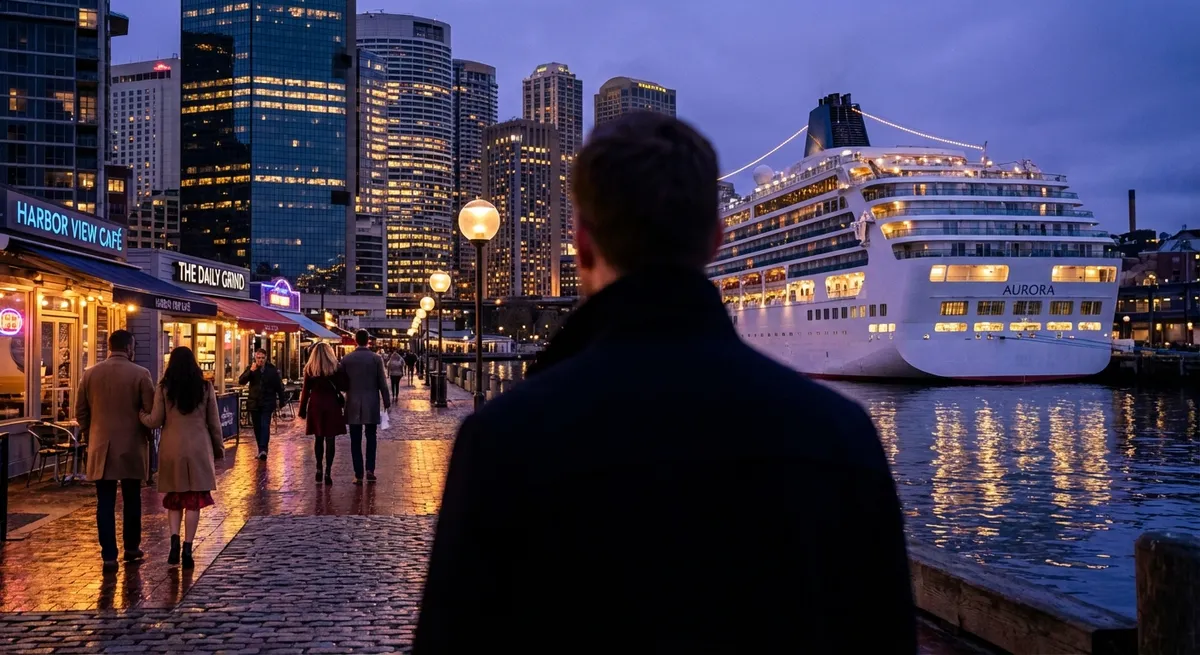
Many cruise travelers disembark, explore, and dutifully return to the ship by late afternoon. Yet some coastal cities reserve their most compelling personality for evening—when day-tripper crowds recede, façades are bathed in warm light, and local life resumes at a gentler tempo.
Lisbon is one such city. By day, trams rattle up sunlit hills, and the Tagus River glints beneath its bridges. By night, the Alfama quarter exudes a quieter intimacy; Fado melodies spill from doorways, and the same waters that brought explorers home now mirror the city’s glowing hillsides. Similarly, in Barcelona, the waterfront and Gothic Quarter take on a softer mood after dusk—restaurant terraces fill with residents lingering late, and the port lights reflect off the Mediterranean in long, shimmering bands.
In the Baltic, Stockholm’s archipelago and Old Town (Gamla Stan) reveal subtle charms in the evening: cobblestone alleyways, lamplight reflected in narrow canals, and a maritime skyline punctuated by historic masts and spires. In North America, cities like Vancouver and Quebec City transform from bustling day ports into sophisticated nightscapes, where the interplay of water, light, and architecture is best savored unhurried.
Exclusive Insight #2: Prioritize Ports with Late or Overnight Calls
Experienced cruisers increasingly favor itineraries that offer late-evening or overnight stays in select ports. This allows for unhurried dinners ashore, sunset harbor walks, and a true sense of the city’s rhythm beyond daytime commerce. When comparing itineraries that visit the same destination, an overnight in Quebec City, Buenos Aires, or Lisbon signals a commitment to depth rather than mere “coverage.”
The Quiet Luxury of Lesser-Known Harbors
There is a growing appreciation among discerning cruisers for ports that are not yet crushed under the weight of their own fame. These are harbors that have all the components of a compelling call—architectural character, regional cuisine, meaningful history—without the dense knot of tour buses and souvenir kiosks at the pier.
In the Mediterranean, towns like Kotor (Montenegro), Nafplio (Greece), and Trieste (Italy) offer rich layers of culture with a fraction of the crowds of marquee cities. Kotor rewards a patient sail-in through fjord-like bays, with stone villages pressed between mountains and sea. Nafplio, with its Venetian fortifications, narrow streets, and waterfront promenade, feels quietly dignified compared to more frenetic ports.
Similarly, in Northern Europe and the British Isles, smaller calls such as Invergordon for the Scottish Highlands, or Honfleur in Normandy, embody a kind of understated allure. They are places where you can stroll from ship to town center without fighting for pavement space, where harbor cafés still cater primarily to locals, and where the sea feels like a living presence rather than a backdrop for mass tourism.
Exclusive Insight #3: Read Beyond the Headline Port Name
Seasoned cruisers look closely at exactly where the ship docks and what that port truly represents. Large cities are often reached via satellite ports that can be industrial and charmless, requiring lengthy transfers. By contrast, lesser-known harbors sometimes offer a seamless, walkable connection between gangway and historic center. Advanced travelers scrutinize port maps, berthing locations, and proximity to old towns, choosing itineraries where the harbor itself offers intrinsic delight.
Ports That Elevate Regional Cuisine and Local Markets
For many travelers, cuisine is the most immediate, visceral expression of place. Certain cruise destinations excel not just in what you eat, but in how and where you encounter food ashore—fresh markets, waterfront bistros, and intimate restaurants that feel more like invitations than addresses.
In the Mediterranean, cities like Marseille, Palermo, and Piraeus (gateway to Athens) open doors into regional culinary traditions where the sea is central. Marseille’s Vieux-Port is perfumed with bouillabaisse and grilled fish; a short walk from the dock can lead to restaurants sourcing directly from the day’s catch. Palermo’s markets are a thrilling choreography of vendors, citrus, shellfish, and street foods that distill Sicilian character into a single, vivid experience.
Further afield, destinations such as Kobe (Japan), Auckland (New Zealand), and Lima via Callao (Peru) offer access to globally significant gastronomy shaped by their maritime heritage. Here, the ocean is pantry, provider, and inspiration. The most astute cruise lines now curate shore experiences that go beyond “food tours,” connecting guests with local chefs, market tastings, and even visits to coastal producers.
Exclusive Insight #4: Align Your Culinary Interests with Seasonal Sailings
Savvy cruisers time their voyages to match culinary high seasons in specific regions. Spring in the Mediterranean, for example, brings tender greens, young cheeses, and early seafood catches; autumn in Northern Europe aligns with harvest festivals, game, and richer maritime dishes. In Japan, sailings during cherry blossom or autumn foliage season often coincide with seasonal specialties and market abundance. Consult local tourism and culinary calendars when choosing your voyage; the same port can feel dramatically different depending on what is in season—and on the plate.
Destinations Where the Sea Shapes Everyday Life
Some ports are not merely adjacent to the sea; they are in constant conversation with it. These are destinations where the tides, fishing fleets, ferries, and working harbors are integral to the city’s identity—not just framed nostalgically for visitors.
In Scandinavia, cities like Bergen and Tromsø breathe a maritime rhythm. Fishing boats coexist with cruise ships; coastal ferries operate as local lifelines rather than tourist novelties. The same is true in many Greek islands, where port cafés face harbors dotted with working vessels, and in New England towns such as Portland, Maine, where fishing piers and lobster boats inform the local character as much as any historic building.
In Southeast Asia, ports like Ho Chi Minh City (via Phu My) or Saigon River approaches, and Bangkok (via Laem Chabang or the Chao Phraya River) reveal the nuanced choreography between river commerce and daily life. Dhows sailing in Dubai Creek, ferries across Istanbul’s Bosphorus, and water taxis in Sydney Harbor all show how water is not an ornament but a vital artery.
Exclusive Insight #5: Choose Ports with Authentic Working Harbors, Not Just Cruise Terminals
For travelers who value authenticity, the presence of a working port can be a powerful indicator. Look for destinations where commercial, fishing, or passenger traffic predates the cruise industry and still operates vigorously today. These harbors tend to offer richer photographic opportunities, more genuine waterfront businesses, and a sense that you are stepping into an ongoing story rather than a purpose-built stage set. When possible, walk beyond the immediate cruise terminal to the areas where local maritime life unfolds.
Conclusion
The most memorable cruise destinations are not always the ones that dominate brochures. They are the harbors where arrival still feels like an event, where the city’s character transforms with the light, and where the sea is an active collaborator in daily life. For the discerning cruiser, choosing an itinerary becomes less about ticking off famous names and more about curating a sequence of meaningful encounters between ship, shore, and sea.
By favoring ports with grand approaches, late-night atmospheres, quietly compelling harbors, seasonal culinary richness, and authentic working waterfronts, you move beyond conventional “port ticking” into something more considered: a voyage shaped as much by how you arrive and when you linger as by where you go. In that space between sea and city, modern cruising still holds the power to feel exquisitely rare.
Sources
- Port of Valletta – Official Port Information - Details on Valletta’s harbor layout, facilities, and historical significance
- UNESCO World Heritage Centre – Old City of Dubrovnik - Background on Dubrovnik’s architectural and maritime heritage
- Visit Lisbon – Official Tourism Guide - Information on Lisbon’s neighborhoods, nightlife, and waterfront experiences
- Port of Hong Kong – Marine Department - Overview of Victoria Harbour operations and maritime environment
- U.S. Department of Transportation – Cruise and Port Information - Context on cruise ports, maritime infrastructure, and passenger operations
Key Takeaway
The most important thing to remember from this article is that this information can change how you think about Destinations.