There’s a subtle but unmistakable shift happening at the very top of the cruise market. While mass tourism chases ever‑bigger ships and splashier attractions, the ultra‑luxury segment is leaning into something more rarefied: time, space, and craftsmanship. In an era where social media celebrates “aesthetic” living room corners and lovingly restored townhouses go viral, it’s no coincidence that the most exclusive ships afloat are increasingly designed to feel less like floating hotels and more like perfectly curated historic homes at sea.
You can see the same mood on land. Viral image collections of century‑old houses—celebrated for their hand‑carved moldings, burnished wood, and architectural integrity—are resonating with millions online. That nostalgia for enduring craftsmanship is now shaping the next chapter of luxury cruising, from the décor in the top suites to the shape of your wine glass at dinner. For discerning travelers, the message is clear: the real status symbol isn’t size or spectacle—it’s considered, quiet excellence.
Below, five exclusive insights into how that sensibility is redefining the high-end cruise experience right now.
1. Heritage, Not Hype: Why Ships Now Feel Like Historic Homes at Sea
Those viral photo essays of beautifully preserved old houses aren’t just internet eye candy; they’ve become a mood board for luxury ship designers. Instead of stark minimalism or generic “international hotel” styling, ultra‑luxury lines are commissioning interiors that echo pre‑war salons, grand European residences, and heritage townhouses—only with acoustic insulation, stabilizers, and world‑class Wi‑Fi discreetly hidden from view.
On newbuilds from brands like Regent Seven Seas, Silversea, and Explora Journeys, you’ll find paneling in rich woods rather than plastic veneers, coffered ceilings instead of dropped tiles, and corridors that feel more like a private club than a shopping mall. The palette is warmer, more tactile, and yes, more photogenic—but in a way that rewards lingering, not just snapping. The most coveted suites now feel like the “library room” from those much‑shared mansion galleries: curated shelves, soft lamplight, hand‑tufted rugs, and art with provenance rather than placeholder prints.
For guests, this translates into an experience that feels less like a week in a resort and more like being handed the keys to an impeccably restored residence that just happens to change address every sunrise. It’s an aesthetic that doesn’t shout wealth; it assumes you’ve already recognized it in the joinery.
2. The Return of the Drawing Room: Intimate Social Spaces Make a Comeback
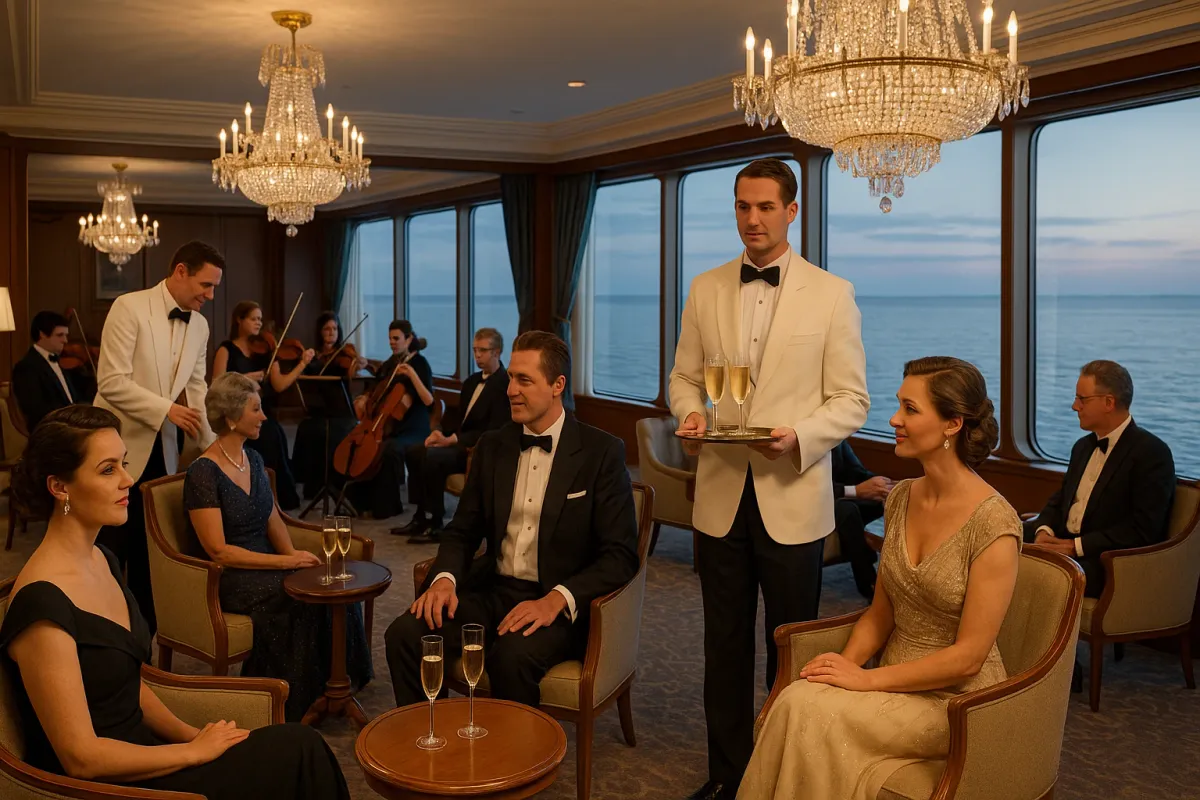
The age of the cavernous, multi‑purpose lounge is quietly fading at the top end of the market. In its place: a network of intimate salons and “drawing rooms” that could have been lifted from a century‑old townhouse—just one with floor‑to‑ceiling windows framing the Amalfi Coast or the Chilean fjords.
Instead of one big entertainment hub, luxury ships are carving out distinct, small‑scale spaces: a Champagne salon with velvet banquettes and silk‑lined walls, a paneled whiskey library with low lighting and club chairs, a music room with a Steinway and seating for just a few dozen. These rooms are designed for the kind of socializing that feels almost anachronistic today: unhurried conversations, live chamber music, perhaps a visiting string quartet from Vienna or a jazz ensemble from New Orleans.
This shift is shaping itineraries and onboard programming too. Expect more salon‑style talks with historians, architects, and designers—experts who can speak to the same themes that make those old‑house photos so compelling: how things were built to last, how craft was passed down, how beauty was understood as a form of responsibility. It’s a social dynamic that favors presence over performance, where every evening can feel like a private house party curated for a guest list of a few hundred, not a few thousand.
3. Craft Over Spectacle: The Rise of “Artisanal Luxury” at Sea
Luxury cruising once defined itself by superlatives—largest suites, tallest water slides, biggest casinos. The latest evolution is far more nuanced. Call it “artisanal luxury”: a focus on handmade, small‑batch, and locally sourced elements that mirror the appreciation for craftsmanship seen in those celebrated historic interiors.
On the newest ultra‑luxury ships, you’ll notice it in quiet details. The porcelain in the specialty restaurant might be from a family‑owned European maker featured in design magazines. The bar program could highlight small coastal distilleries discovered along the route, with limited‑edition bottlings only available onboard. Pool decks swap plastic loungers for custom teak chaises with hand‑stitched cushions in natural fabrics, more Lake Como villa than theme‑park terrace.
This respect for craft extends to how itineraries are curated. Instead of standard shore tours, guests are invited into private ateliers—Venetian glass studios, Lisbon tile workshops, Reykjavik design labs—where the connection between land‑based craftsmanship and shipboard aesthetics becomes almost tangible. In the ultra‑luxury space, the real “wow” moment isn’t a waterslide; it’s realizing your suite’s hand‑woven throw was created by the same artisan whose workshop you visited that morning.
4. Privacy as the New Prestige: Suites That Feel Genuinely Residential
As more travelers share their journeys online, the true luxury has become what isn’t shared with the world. That’s reflected in the way top-tier suites are now conceived. They’re spacious, yes—but more importantly, they are resolutely residential, taking cues from those viral homes that feel deeply lived‑in rather than staged.
Expect thoughtful zoning: a foyer, a genuine dining area, a separate study with its own terrace, a dressing room designed like a private boutique. Materials are chosen less for shine and more for touch—cashmere, mohair, stone with subtle veining, real books rather than decorative spines. Layouts privilege sightlines that recall a well‑planned apartment: you glimpse the sea past a reading chair, not a hardware‑heavy balcony door.
Some lines are partnering with noted residential designers and even heritage furniture makers to outfit these spaces, blurring the line between home and ship. Butler service and private chefs can transform your suite into a private restaurant for a single table, rendering the rest of the ship optional if you wish. For guests accustomed to villas and penthouses on land, this evolution feels less like “going on a cruise” and more like their usual standard of living—simply relocated to an ever‑changing coastline.
5. Time, Curated: Slow Itineraries for a World That Scrolls Too Fast
One of the most intriguing trends at the very top end of the market is a recalibration of pace. While mainstream lines add ports and pack each day with activities, ultra‑luxury brands are experimenting with what might be called “slow itineraries”: fewer stops, longer overnights, and more sea days intentionally designed for unhurried enjoyment of those carefully crafted interiors.
This mirrors the appeal of lingering over a photographic series of historic buildings rather than doom‑scrolling headlines. Guests increasingly want depth, not breadth; time to know a city’s neighborhoods rather than check off its top three monuments. Itineraries through the Mediterranean may trade a port‑a‑day for two days anchored off a single island, encouraging travelers to discover back‑street bakeries and private gardens instead of just the central piazza.
Onboard, this slower tempo means programming aligned with the surroundings: architecture walks in port followed by illustrated lectures on shipboard about Mediterranean urban design; visits to a 19th‑century palazzo followed by a tasting menu in a dining room whose paneling subtly echoes the palazzo’s interiors. The line between ship and shore becomes part of a single, considered narrative. For guests, the ultimate indulgence is no longer ticking off destinations—it’s experiencing them with the same care and attention once lavished on the best rooms of a grand old house.
Conclusion
As the internet falls in love with the patina and permanence of historic homes, the world’s most exclusive ships are quietly responding, not with nostalgia but with evolution. Luxury cruising in this moment is less about theatrical gestures and more about a cultivated sense of place—onboard and ashore. Wood that will age gracefully, fabrics that invite touch, rooms designed for conversation, itineraries paced for reflection: all of it signals a shift from spectacle to substance.
For the discerning traveler, the question is no longer “Which ship has the most?” but “Which voyage feels most considered?” In that answer lies the new definition of luxury at sea: a floating residence where craftsmanship, privacy, and time itself are treated as the rarest amenities of all.
Key Takeaway
The most important thing to remember from this article is that this information can change how you think about Luxury Cruises.