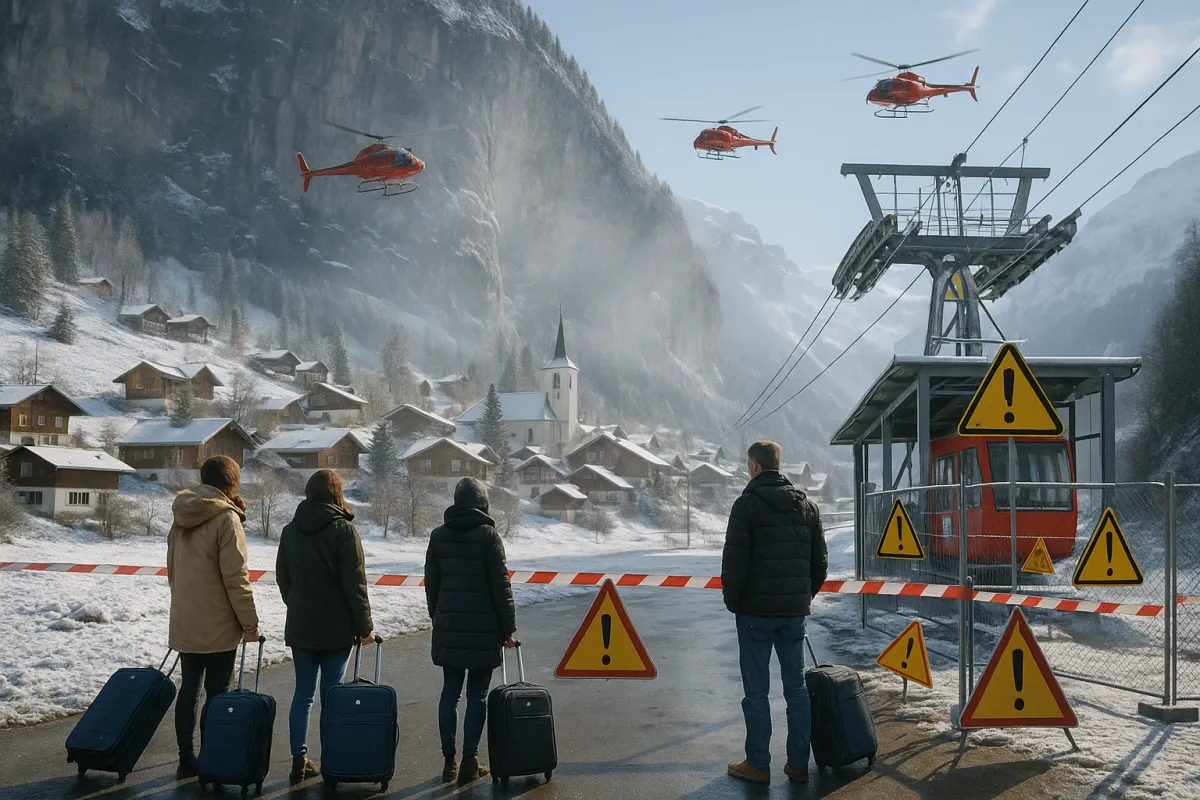
The identification of 33‑year‑old Kerstin Gurtner, the woman abandoned by her boyfriend to fatally freeze on Austria’s highest peak, has shaken the adventure‑travel world this week. As prosecutors weigh negligent homicide charges and European media dissect what went wrong on that icy ascent, one truth is inescapable for discerning travelers: the modern appetite for “epic” experiences in fragile, high‑risk environments is growing faster than our respect for their limits.
For cruise guests, this story is not distant alpine tragedy; it is a sobering lens on a broader question. As more itineraries pair cultured city calls with high‑adrenaline day trips—glacier trekking from Bergen, summit drives above Kotor, heli‑hikes out of Juneau—how do we pursue the extraordinary responsibly? How do we ensure the quest for Instagram‑ready drama never blinds us to the very real, very cold physics of altitude, ice, and exposure, whether above Innsbruck or overlooking Geirangerfjord?
Below, five refined, under‑discussed insights to help sophisticated cruisers recalibrate how they approach high‑risk shore experiences in mountain and wilderness destinations, in light of this week’s events.
1. Treat High‑Altitude Excursions as a Different Class of Luxury
The Austria case underscores a brutal fact: at 3,000+ meters, romance, bravado, and casual decision‑making have no jurisdiction. Cruisers often book mountain experiences—Alps add‑ons from Trieste or Venice, Dolomite tours from Adriatic ports, fjord overlooks from Norwegian calls—as if they were simply another “panoramic” coach tour with prettier scenery. They are not.
True luxury in these environments is not proximity to danger, but the meticulous infrastructure that insulates you from it. When evaluating an excursion, look for the quiet indicators of seriousness: guides with current IFMGA or UIAGM certifications, clear weather and turnaround policies written in plain language, and a maximum guide‑to‑guest ratio that feels almost indulgently low. Ask whether your operator has an explicit protocol for separating mismatched couples or groups if one member struggles—a painful subtext of the Gurtner tragedy. The most refined experiences in alpine ports of call are those that prioritize your safe return as fiercely as your summit view.
2. Insist on Operator Independence from Emotional Dynamics
One of the most chilling details in the Austrian investigation is the allegation that a partner’s poor judgment—and possible panic—dictated life‑or‑death decisions. On a cruise excursion, emotional entanglements can be just as dangerous: honeymoon couples who won’t admit one partner is too cold, multigenerational families pushing on because “we’ve come this far,” or friends reluctant to contradict a more athletic companion.
Select excursion partners who make it explicit that guide authority supersedes group sentiment. In refined, mountain‑adjacent destinations—think helicopter landings on Alaskan icefields from Seward, snowshoeing above Chamonix from a Mediterranean pre‑ or post‑cruise—ask directly: “If one member of our party is struggling, what is your protocol? Who has the final say on turning back?” An operator who answers confidently, even if it sounds unromantic, is offering the most premium service imaginable: freedom from having your safety negotiated within your own relationship.
3. Elevate “Weather Literacy” to the Same Level as Wine Literacy
Cruise guests who can parse the nuances between left‑bank and right‑bank Bordeaux often treat weather as binary: “good” or “bad.” Kerstin Gurtner’s fate on Austria’s highest peak, where sudden changes in wind, temperature, and visibility turned a climb into a death sentence, is a stark reminder that weather at altitude is a language—and one worth learning.
Before booking alpine or high‑latitude experiences from any port—be it a cable‑car ascent in the Alps as a pre‑cruise indulgence, or a glacier walk from an Icelandic or Norwegian call—begin to read mountain forecasts the way you read tasting notes. Learn the difference between air temperature and wind chill, why “clear but windy” can be more dangerous than light snow, and how rapidly conditions can flip near dusk. Many premium lines quietly provide meteorological briefings to expedition guests; treat these as part of the destination, not housekeeping. The new mark of a sophisticated cruiser is not just knowing which vineyard to visit in Provence, but which ridgeline to avoid when the barometer drops.
4. Redefine Romance and Adventure in Alpine Cities
The narrative emerging from Austria—a couple seeking a powerful shared experience, a boyfriend now under investigation for negligent homicide—invites a more subtle reflection: what do we romanticize when we talk about “unforgettable” travel with a partner?
For cruise itineraries that position alpine capitals as gateways—Vienna and Salzburg for Danube sailings, Zurich and Geneva for Rhine embarkations, Innsbruck or Munich as pre‑cruise extensions—there is immense beauty to be found well below the frostbite line. Evening walks through lamplit medieval streets, reserved window tables overlooking snow‑dusted rivers, or private, guide‑led tours of mountain‑view museums can offer intimacy without exposure. Consider trading the summit sprint for a slower, more cultivated romance with the landscape: a ride on a historic cog railway instead of an unsupervised climb, or a curated gourmet picnic at a secure viewpoint rather than a risky push to the “highest point.” The most enduring alpine memories often come from the interplay of comfort and grandeur, not from flirting with the margins of survival.
5. Demand That Cruise Lines Be Explicit About Their Risk Ethos
The Austria tragedy is provoking uncomfortable conversations in European adventure circles about where personal responsibility ends and operator duty begins. Sophisticated cruise guests should seize this moment to ask harder questions of their own lines, not just third‑party tour providers.
When considering itineraries that trumpet “bucket‑list” peaks or glacier access, look beyond brochure language to the company’s underlying risk philosophy. Does the line privilege partnerships with operators who cap group size, maintain rigorous guide training, and possess proven evacuation access? Are guests quietly nudged toward optional, high‑risk add‑ons without a parallel emphasis on safer, culturally rich alternatives? Particularly in destinations where you might extend your cruise with inland stays—Salzburg and the Austrian Alps from a Danube voyage, the Dolomites from Trieste, the Julian Alps from Koper—ask your cruise concierge for operators who are already adapting their practices in light of this week’s Austrian case. Those who can speak candidly about it are likely taking your safety seriously.
Conclusion
Kerstin Gurtner’s death on Austria’s highest peak is not merely another tragic headline; it is a sharp, icy mirror held up to a travel culture that too often equates risk with authenticity and drama with depth. For the discerning cruiser, this is an invitation to refine—not reduce—your appetite for the extraordinary.
As you plan voyages that thread cities and summits, fjords and frozen heights, let the week’s news temper your choices with a quieter, more exacting standard of luxury: guides empowered to overrule you, operators who respect weather as a fluent language, itineraries that favor enduring connection over fleeting bravado. In the most sophisticated journeys, the mountains remain majestic, the ports remain alluring—and you always, without question, make it back to the ship.
Key Takeaway
The most important thing to remember from this article is that this information can change how you think about Destinations.