For years, cruise lines sold the dream of endless buffets and white‑tablecloth dining rooms. Today, that feels almost quaint. As chef culture spills out of Michelin‑star kitchens and onto social media feeds, the most forward‑thinking cruise brands are quietly recentering the entire onboard experience around one thing: the kitchen brigade. What it really feels like to work behind those stainless‑steel doors—immortalized in “chef memes,” viral kitchen confessions, and high‑pressure cooking shows—is shaping how refined travelers now evaluate a ship.
This shift isn’t theoretical. From Norwegian Cruise Line’s partnership with “Top Chef” alumni to Celebrity Cruises’ publicly celebrated culinary leadership and MSC Cruises’ collaborations with marquee pastry and chocolate artists, the galley has gone from backstage to headliner. For discerning guests, understanding how that culture works—its pressures, rituals, and quiet obsessions—has become a new lens for choosing the right line, the right ship, and even the right sailing.
Below, five exclusive, insider‑level insights into how the realities of elite kitchen work—so often distilled into darkly funny memes and industry jokes—are quietly transforming contemporary cruise luxury.
The End of Anonymous Galleys: Why Star Chefs Now Matter More Than Ship Size
In the age of viral “behind‑the‑pass” clips and brutally honest chef confessions, guests are no longer content with faceless “culinary teams.” They want a point of view—and a name. Major lines have taken note. Oceania Cruises, long positioned as a food‑first brand, now heavily spotlights its culinary leadership and recipe provenance in marketing. Celebrity Cruises has elevated its corporate culinary figures to near‑celebrity status, with executive chefs giving masterclasses and hosting limited‑seat chef’s table dinners that sell out before embarkation. Even mainstream brands such as Royal Caribbean and Norwegian are increasingly foregrounding chef‑driven specialty venues rather than generic “Italian” or “steakhouse” concepts.
For the sophisticated traveler, this means the choice of ship is quietly evolving into a choice of culinary voice. Instead of asking, “Does this vessel have a big theater?” experienced cruisers are poring over executive chef bios, tracking which itineraries coincide with visiting guest chefs, and noting which sailings feature special tasting menus that reflect the chef’s background. The real luxury is not the number of restaurants onboard—but the coherence of the story they tell, and the personality that guides them.
From Meme to Manifesto: How Kitchen Pressure Is Elevating Rather Than Breaking Standards at Sea
The internet’s fascination with “what working in a kitchen is really like”—from late‑night chef memes to candid accounts of grueling services—has made one thing clear: excellence in a professional galley is built on relentless repetition and invisible sacrifice. Cruise galleys, which must feed thousands with near‑military precision, have long operated under similar pressure. The difference now is that the industry is increasingly willing to acknowledge, and even celebrate, that intensity as part of the luxury proposition.
Premium lines understand that well‑treated, well‑trained brigades make better food. Viking and Regent Seven Seas have both publicly emphasized investment in training, kitchen ergonomics, and scheduling to maintain standards over long seasons. Some newer ships are designed with more rational galley flows—shorter runs between hot lines, improved cold storage placement, better staff dining areas—to reduce fatigue and errors. For the guest, this translates into dishes that arrive consistently correct on night seven as on night one, and a menu that feels composed rather than merely produced. The hidden pressure that once only other chefs understood—the very tension that fuels so many viral kitchen stories—is increasingly being channeled into a more refined, reliable onboard experience.
The Rise of the Open Kitchen at Sea: Turning Back‑of‑House Drama into Front‑Row Theater
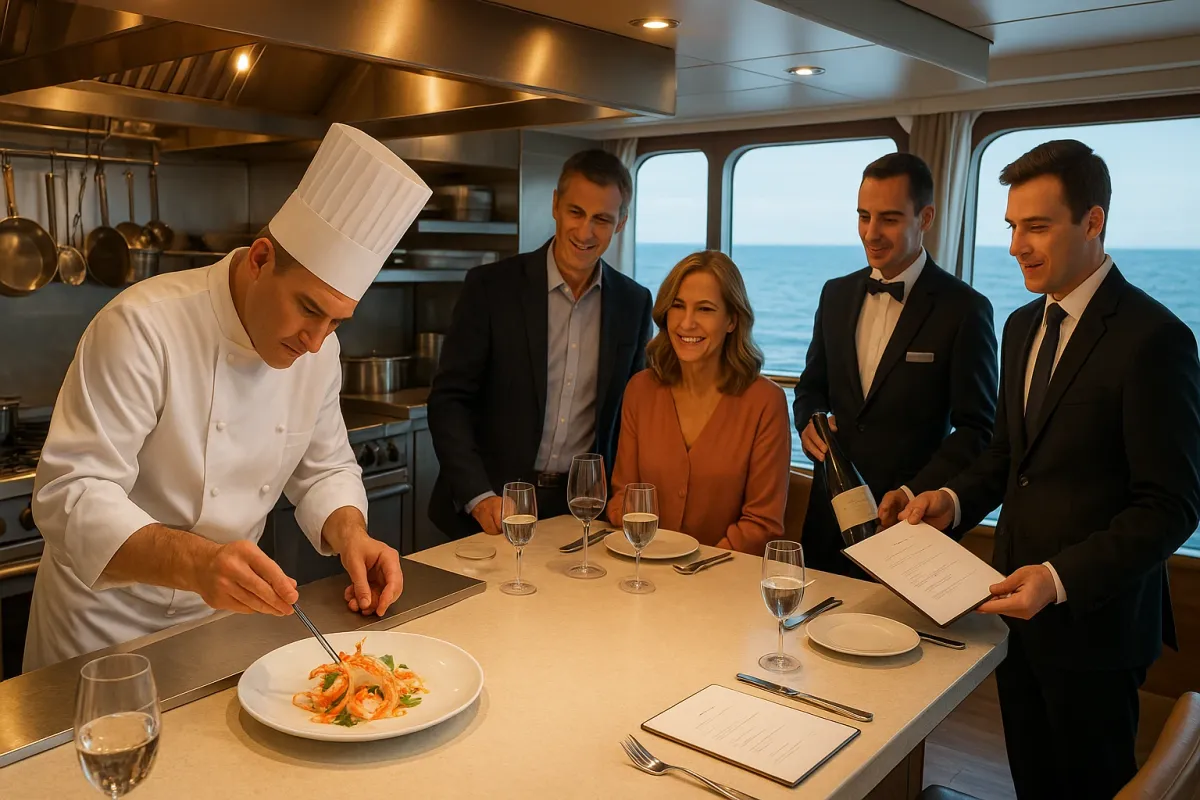
On land, the open kitchen trend turned cooks into performers and the pass into a kind of stage. At sea, that concept is being reinterpreted with an added layer of choreography. Celebrity’s Edge‑class ships, for example, feature specialty venues where portions of the galley are intentionally visible, allowing guests to glimpse plating, fire, and finishing work without compromising safety. On some MSC and Princess ships, live‑cooking counters and show kitchens bring elements of the brigade’s rhythm into premium buffet and casual venues, transforming breakfast into a low‑key culinary spectacle.
For the seasoned cruiser, this visibility offers something more nuanced than entertainment: it is a live, ongoing assessment of standards. The heat lamps, the body language on the line, the way expediters taste before sending plates—it all becomes part of the luxury equation. Is that pasta station working à la minute, or is it quietly reheating batches? Are those steaks being rested properly, or rushed to meet demand? In a world where social media can turn a single mis‑plated dish into a cautionary tale, the smartest lines are betting that putting more of their process in sight is not a risk—but a statement of confidence.
Port‑to‑Plate, Not Just Farm‑to‑Table: How Itineraries Are Being Curated Through the Galley
Farm‑to‑table may be an old story on land, but at sea, the new frontier is port‑to‑plate. As travelers grow more sophisticated—and more vocal—about authenticity, the lines most attuned to contemporary culinary discourse are rebuilding itineraries around what is realistically and beautifully procurable along a route. Ponant and Silversea have long integrated regional provisioning, from fresh seafood in the Mediterranean to local produce in the fjords. Now, even larger brands are refining their approach: Princess Cruises’ “360: An Extraordinary Experience” and similar immersive concepts nod to local sourcing while pairing it with theatrical multi‑sensory storytelling.
The discerning cruiser can now read a sailing map almost like a seasonal menu. A late‑summer Adriatic itinerary that aligns with peak tomato and fig season, or a Japan sailing timed for spring seafood and early mountain vegetables, speaks volumes about a brand’s culinary priorities. Expect more pre‑cruise communications that feel like chef’s notes rather than marketing copy—detailing markets to be visited, regional suppliers to be featured onboard, and limited‑run dishes that will disappear once the ship leaves those waters. For guests who think in vintages and harvests, this is where itinerary planning and menu literacy elegantly converge.
The New Quiet Luxury: Culinary Spaces as Sanctuaries, Not Spectacles
While social media might celebrate chaotic kitchen humor and high‑decibel service, the most refined cruise lines are moving in the opposite direction on the guest side of the pass. Ultra‑luxury brands such as Seabourn, Regent, and Explora Journeys are designing dining rooms less as grand halls and more as acoustic sanctuaries—spaces where one can hear the sommelier, the subtle crumble of pastry, and one’s own thoughts. Lighting is warmer, table spacing more generous, and service choreography intentionally smoother and less obtrusive, allowing the intensity of the galley to be distilled into calm at the table.
For enthusiasts who follow chef culture closely, this contrast is part of the pleasure. Knowing the work, the jokes, and the pressure that fuel those plates adds a private frisson to an otherwise serene experience. An amuse‑bouche that arrives at precisely the right moment, a sauce that clearly has been reduced rather than shortcut, bread that tastes like a living culture rather than a frozen commodity—these are the new, quiet signals of true luxury at sea. They are appreciated most by those who understand how rare such consistency is, whether in a three‑star restaurant on land or on a moving ship serving thousands.
Conclusion
As the world eagerly consumes candid glimpses into the realities of professional kitchens—through memes, confessions, and cultural commentary—the cruise industry is harnessing that awareness in a decidedly elevated way. The best lines are not imitating the chaos; they are refining the craft that lies beneath it, inviting guests to recognize and savor the difference. For today’s sophisticated cruiser, choosing a sailing increasingly means choosing a culinary philosophy, a kitchen culture, and a level of invisible discipline they’re willing to trust for a week or more.
In this emerging era, tonnage statistics and cabin counts feel almost secondary. The true measure of a modern luxury ship may be found in the gleam of its copper pots, the calm precision of its brigade, and the confidence with which its chefs invite you—not just to dine—but to understand, at least in part, the extraordinary world behind every plate.
Key Takeaway
The most important thing to remember from this article is that this information can change how you think about Cruise Lines.