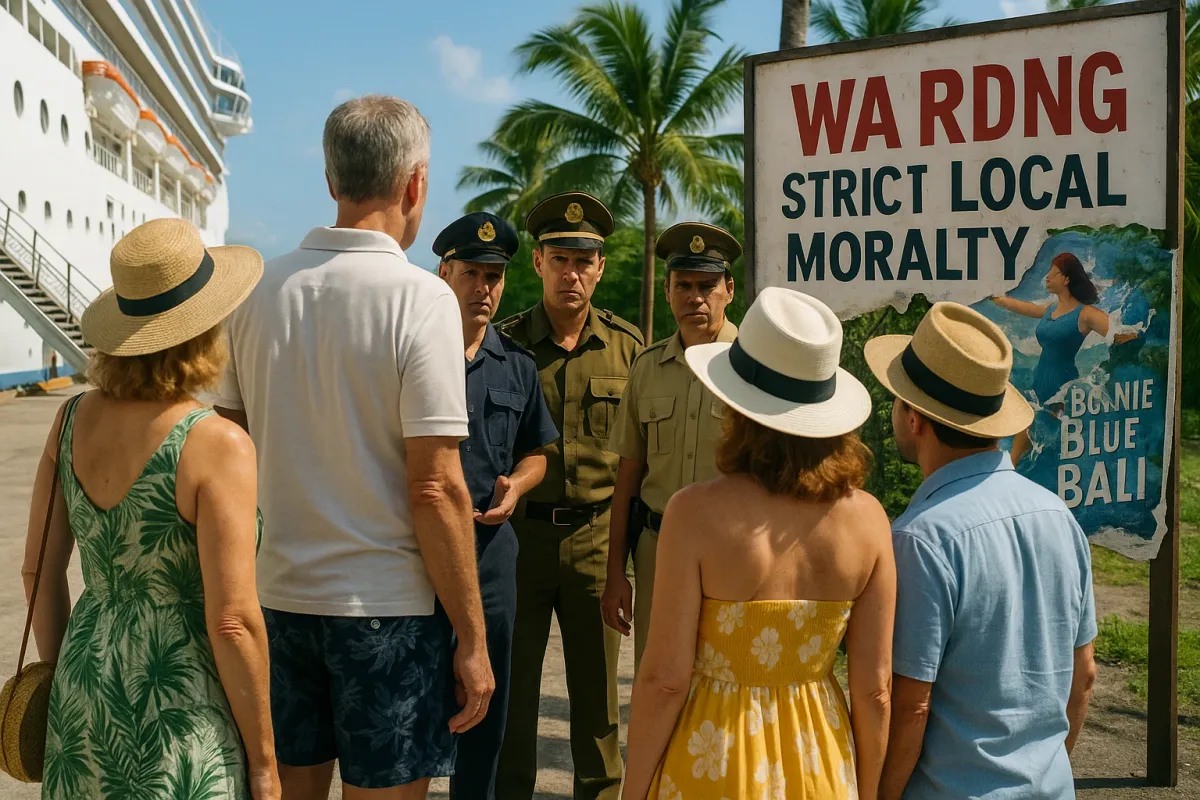
A recent headline from Bali — adult content creator Bonnie Blue facing a potential 15‑year sentence after allegedly filming explicit material in violation of local laws — is rippling far beyond the world of social media. For the cruise industry, it’s a stark, real‑time reminder: your ship may be a floating resort, but the moment you step down the gangway, you are subject to local law, local customs, and, increasingly, local outrage.
As major lines expand into more culturally conservative regions — Indonesia, the Middle East, parts of Southeast Asia and North Africa — the Bonnie Blue case is becoming essential reading for anyone planning a premium itinerary through these destinations. This is no longer a theoretical warning buried in the fine print of your cruise ticket; it is a headline‑level example of how quickly a “discreet” personal project, a seemingly playful video, or an impulsive photoshoot can become a legal crisis in port.
For discerning cruisers, the question is not “Should I be worried?” but “How do I sail beautifully — and safely — through destinations with very different boundaries?” Below are five nuanced, often unspoken insights that sophisticated cruise travelers are quietly adopting in light of Bali’s unfolding controversy.
1. The Ship Is Not a Legal Bubble — And Local Authorities Are Watching Digital Behavior
In the Bonnie Blue case, what mattered to Balinese authorities was not where the content would ultimately appear online, but where it was created and how it violated local decency and morality laws. This same principle applies to cruise passengers: filming “for later” on OnlyFans, a private subscriber platform, or even a locked social feed does not insulate you from local regulation.
The premium cruise traveler’s mindset is shifting accordingly. Onboard, you may feel cocooned in a cosmopolitan micro‑world shaped by Miami, London, or Monaco. But once the ship tenders into a small Indonesian island or berths near a conservative coastal town, the environment changes instantly. Security cameras in port, hotel staff, tour operators, taxi drivers — all form part of an informal local network that notices behavior visibly at odds with cultural norms. And in the age of viral outrage, a single leaked clip can transform a private misjudgment into a diplomatic headache. Upscale lines are responding with subtle but clearer language in their pre‑cruise documentation, gently reminding guests that what you capture on your phone is not just “content” — it is evidence that can be interpreted under local criminal statutes.
2. Luxury Excursions Are Being Curated for Cultural Safety as Much as Exclusivity
One of the under‑reported shifts in high‑end cruising is how excursion design has evolved in response to incidents like Bali’s current scandal. Where itineraries once focused almost exclusively on access — that secret beach, that private temple visit, that ultra‑remote cove — the most thoughtful lines now curate shore experiences to manage risk and misunderstanding as carefully as they stage luxury.
In regions with strict decency or blasphemy laws, expect to see better‑briefed local guides, smaller tour sizes, and highly controlled environments for “Instagrammable” moments. That seemingly casual cocktail at a clifftop bar may actually be a carefully vetted venue where local ownership understands — and is comfortable with — Western resort behavior. Elite guests are starting to value this invisible layer of protection. What feels like seamless indulgence is, in reality, a sophisticated choreography between the cruise line, local authorities, and vetted partners who all share an interest in ensuring no one repeats Bonnie Blue’s mistake of assuming that a beautiful backdrop implies permissive rules.
3. Dress Codes Are Quietly Returning — Not Just for Formal Night, but for Port Days
The Bali saga has accelerated a trend that only the most observant cruisers have noticed: a subtle recalibration of dress expectations ashore. In conservative destinations, cruise lines are now paying closer attention to what their guests wear off the ship, not as moral arbiters, but as pragmatic stewards of safety and local relations.
This is not about shaming; it’s about signaling. When a dozen guests in micro swimwear or see‑through coverups stroll from the tender pier through a village whose residents dress modestly year‑round, tensions rise. Post‑Bali, some lines are expanding pre‑port communications: elegant one‑page briefings that don’t merely say “cover shoulders and knees,” but explain why — referencing local religious practices, current political sensitivities, and even recent controversies. Experienced cruisers now treat these notes like they would a fine wine list: carefully read, thoughtfully applied, and discussed over dinner. The most sophisticated travelers understand that real luxury is the freedom to move graciously through another culture without leaving a trail of offense — or inviting the kind of scrutiny that turned Bonnie Blue’s Bali visit into a legal nightmare.
4. Content Creation Is Becoming a Discreet Art Form at Sea
Bonnie Blue’s alleged decision to film explicit material in Bali underlines a broader reality: we now travel with production studios in our pockets. For content creators — from micro‑influencers to guests simply documenting a romantic voyage — cruise lines are learning they must set boundaries without killing the magic.
The result is a new code of discreet creativity. Some luxury brands are quietly piloting “content etiquette” guidelines: film all you wish in public ship spaces, but avoid recording other guests without consent; never stage explicit or suggestive shoots ashore; and do not monetize imagery that could embarrass local partners or violate local norms. On select sailings, lines even offer photography workshops anchored in cultural respect — teaching guests how to capture the texture of a Balinese temple or an Indonesian fishing village without turning residents into unwilling props. The message, in the era of Bali’s explicit‑content scandal, is clear: if your camera work could, in another context, land you in the same headlines as Bonnie Blue, it does not belong in port. True sophistication lies in knowing when to put the lens down.
5. Insurance, Legal Support, and “What If” Scenarios Are Becoming Part of the Luxury Conversation
The Bali case is raising uncomfortable but necessary questions for the premium cruise market: What happens if a guest is detained ashore? How far does a cruise line’s duty of care extend? And how prepared are travelers — even seasoned ones — for a serious legal entanglement in a foreign jurisdiction?
Astute cruisers are now scrutinizing their policies with a more forensic eye. Does your travel insurance include legal assistance abroad? Does it cover extended stays due to detainment or investigation? Are you familiar with your line’s protocol if a guest is arrested in port? Insiders know that top‑tier lines already maintain quiet relationships with local legal counsel and consular contacts along their itineraries, not as a promise of rescue, but as a realistic contingency. The Bonnie Blue situation is a reminder that the ultimate “luxury upgrade” may not be a larger suite, but a well‑structured safety net: robust coverage, an understanding of your rights, and the humility to recognize that in destinations like Bali, your status as a guest does not exempt you from the full weight of local law.
Conclusion
The Bonnie Blue Bali scandal is not a salacious footnote to dismiss; it is a map of where modern travel, digital culture, and local sovereignty collide. For cruise lines, the lesson is immediate and operational: refine briefings, curate excursions with sharper cultural intelligence, and support guests in navigating the invisible boundaries that frame each port of call.
For the sophisticated cruiser, the takeaway is more personal. Sailing through conservative destinations demands the same elegance you expect from your ship’s design, service, and cuisine — expressed not in conspicuous indulgence, but in conscious restraint. The most memorable voyages in today’s world are those where you disembark having touched a culture gently, left no controversy in your wake, and returned to the ship with stories rich enough to share — and refined enough never to resemble the headlines now coming out of Bali.
Key Takeaway
The most important thing to remember from this article is that this information can change how you think about Cruise Lines.