The world is pausing today to marvel at the newly announced Nature Photographer of the Year winners—a collection of images so precise, so quietly powerful, that they feel almost cinematic. For luxury travelers, this moment is more than an art-world headline. It is a mirror: a reminder that the most coveted experiences at sea are no longer about sheer opulence, but about proximity—to rare light, fragile ecosystems, and fleeting, unscripted moments that deserve to be captured as carefully as those prize‑winning photographs.
As the winning images make their rounds on social media—supersized moons, glass‑still fjords, and wildlife suspended mid‑motion—high‑end cruise lines are quietly recalibrating. The most sophisticated itineraries of 2025 are now crafted not simply around ports, but around light, tides, and celestial events. If Nature Photographer of the Year 2020 signaled a global appetite for wild beauty, the luxury cruise market in 2025 is the industry that has finally learned how to curate it.
Below, five exclusive insights into how the new golden age of nature photography is reshaping luxury cruising—subtly, decisively, and very much in step with what’s trending right now.
Moonlit Voyages: When Itineraries Are Planned by the Night Sky
The viral popularity of “not Photoshopped” lunar images—those extraordinary shots where the moon appears impossibly large over cityscapes or coastlines—has ignited a quiet arms race among premium cruise planners. Instead of treating a full moon as a pleasant coincidence, some luxury lines now engineer entire sailings around lunar events, eclipses, and ideal night‑sky conditions.
On select Mediterranean and South Pacific routes, boutique and expedition‑style ships are experimenting with “dark‑sky crossings,” cutting light pollution on outer decks and staggering late‑night service so guests can enjoy near‑observatory conditions at sea. A few ultra‑luxury lines have begun inviting astrophotographers and award‑winning nature photographers on board as resident experts, turning a simple sea day into a guided masterclass in shooting moonrise over the horizon, using only the lens and the ship’s motion to create drama—no editing required. For discerning guests, the memory is twofold: the cinematic moment itself, and the knowledge that the ship’s course and timing were curated with the same precision as a gallery‑ready image.
From Passenger to Curator: Ships as Floating Nature Galleries
As the Nature Photographer of the Year winners circulate, cruise lines are taking careful notes—not only on destinations, but on how the images are displayed and narrated. The most forward‑thinking luxury vessels are redesigning their public spaces to function more like curated galleries than transient lounges.
Instead of generic landscapes, you’ll increasingly find limited‑edition prints from award‑winning photographers—shots of Arctic ice fields, bioluminescent bays, or Serengeti skies—hung with museum‑style captions detailing not just location but time of day, weather patterns, and the technical choices behind the shot. Some ships have begun rotating onboard exhibitions synchronized with their itineraries. A Norwegian fjord cruise, for instance, might feature a temporary collection of past winning images of glaciers, waterfalls, and Northern Lights, paired with evening talks by visiting photographers whose work has been shortlisted or honored in major competitions.
This shift transforms the ship into a bridge between what you see framed on the wall and what you witness from the observation deck the next morning. Luxury guests, accustomed to private collections and gallery experiences on land, recognize the difference immediately: this is not décor, it is dialogue.
Precision Timing: Chasing the Same Light as the Masters
Look closely at the Nature Photographer of the Year series and a pattern emerges: the best images rely on the rarest light—those brief windows at dawn, blue hour, and storm’s edge when the world feels freshly drawn. High‑end cruise lines are now internalizing this lesson, redesigning shore excursions for guests who care less about souvenir shopping and more about achieving that same ethereal glow in their own photos.
Instead of arriving at ports in the blunt light of midday, select luxury itineraries are staggering arrivals and departures to coincide with sunrise over lagoons, late‑evening arrivals into dramatic harbors, or extended blue‑hour moorings in photogenic bays. In certain destinations, this might mean pre‑breakfast tender rides reserved exclusively for a small group of photography‑minded guests, with local guides briefed not just on history and culture, but on where the first rays of light will hit the water, the rooftops, or the cliffs.
On board, photography butlers are emerging as a quiet new category of service: crew members who can suggest the best vantage points on the ship, advise on reflections and glass, or arrange for a private zodiac or yacht tender at just the right moment. For the serious cruiser, the value is subtle yet immense: a feeling that the entire voyage respects the clock that truly matters—the clock of light.
Intimate Scale: Why Smaller, Slower Ships Are Winning the Moment
Many of this year’s most admired nature photographs share a striking intimacy. The subjects feel close: a fox in the snow, a bird in mid‑flight, the fragile pattern of ice. Translated to the world of luxury cruising, this aesthetic increasingly favors smaller, slower vessels over megaships, particularly in regions like the Arctic, Galápagos, and remote archipelagos in Asia and the South Pacific.
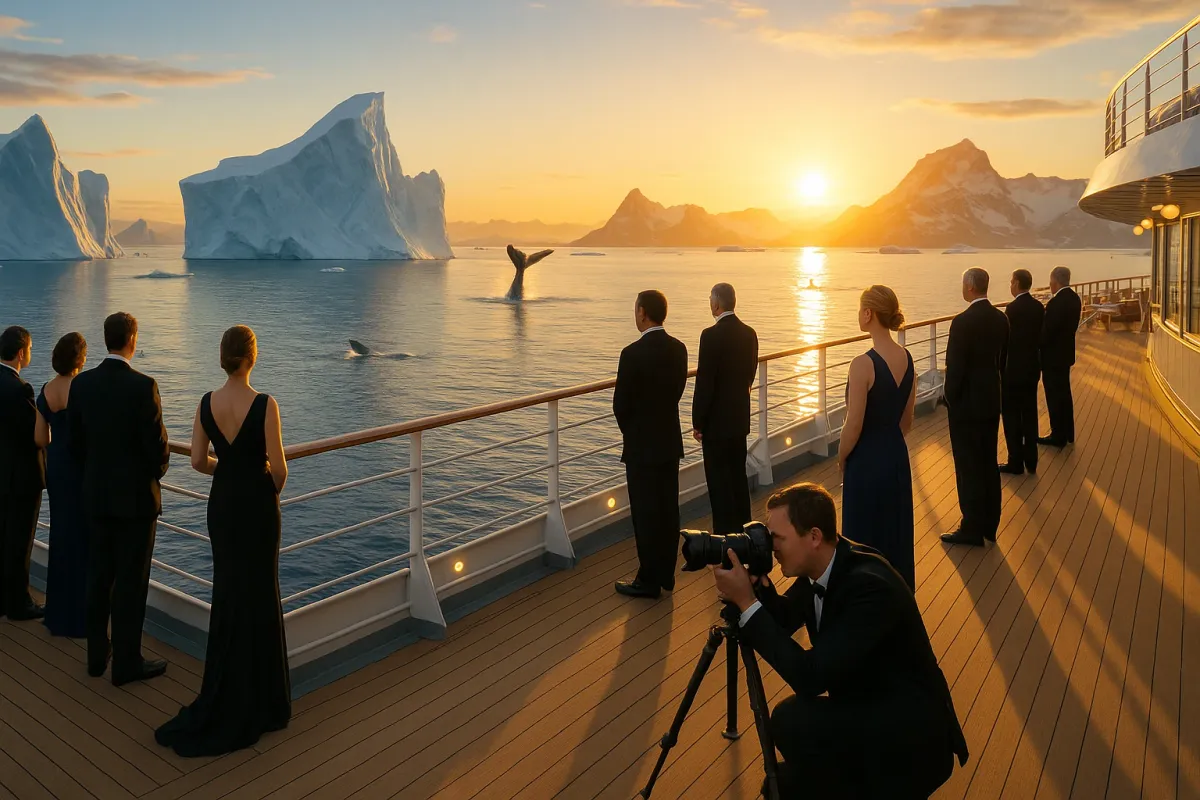
Expedition‑style luxury ships, carrying a fraction of the passengers of traditional vessels, can linger in narrow fjords, hover beside glacial faces, and pivot quietly to follow a pod of whales or a flock of seabirds without creating visual “noise.” For the guest on deck—camera in hand or not—the experience more closely resembles being on a private yacht than participating in mass tourism. It’s the difference between seeing a scene and inhabiting it.
Top‑tier suites on these ships often come with their own wraparound verandas or forward‑facing windows purpose‑built for photography and quiet observation. Combined with stabilizing technology and careful route‑planning for minimal vibration, these ships offer the ideal platform for anyone who has ever looked at an award‑winning wildlife image and thought, “I want to be there, not just see there.”
The New Luxury: Protecting the Scenes We Photograph
One of the understated themes running through the Nature Photographer of the Year discourse is ethical storytelling: capturing the wild without disturbing it. Luxury cruise guests, especially those drawn to these images, are increasingly attuned to the same question—what does it mean to visit, and to photograph, a place delicately?
Responding to this, high‑end cruise brands are elevating environmental stewardship from a talking point to a design principle. Onboard briefings before sensitive landings now address not just where to stand and what to see, but how to avoid interrupting animal behavior or damaging fragile ground. Some lines are partnering with conservation organizations whose scientists also serve as onboard lecturers, contextualizing the very landscapes and species that guests are there to admire—and, often, to photograph.
In ultra‑premium circles, the most coveted itineraries are becoming those with a clear, measurable contribution to the destinations they showcase, whether through funded research, habitat restoration, or strictly enforced guest limits in particularly fragile areas. For guests inspired by this year’s celebrated nature images, the true luxury is knowing that the scenes they capture will still exist for the photographers—and travelers—who come after them.
Conclusion
As the latest Nature Photographer of the Year winners circulate across our feeds, they are more than beautiful diversions. They are a blueprint for where luxury cruising is moving this very moment: toward experiences curated with the precision of a master photographer—attuned to light, timing, ethics, and intimacy.
For the serious cruise enthusiast, the question to ask in 2025 is no longer just “Which ship?” or “Which suite?” but “Which moments is this voyage truly designed around?” The most compelling answer will come from lines that understand what today’s award‑winning images are quietly telling the world: that real luxury is not found in what we surround ourselves with, but in how carefully we choose what we stand before—and how respectfully we leave it behind.
Key Takeaway
The most important thing to remember from this article is that this information can change how you think about Luxury Cruises.