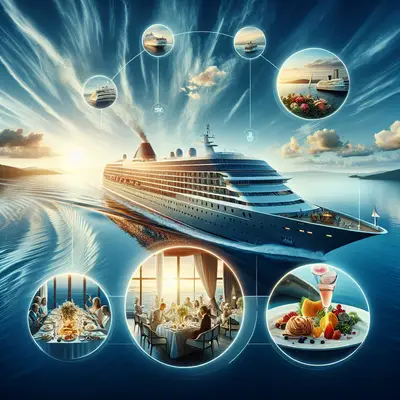
For the seasoned cruiser, the choice of cruise line has become less about square footage and spectacle, and far more about nuance. Behind the glossy brochures and familiar brand names lies a quiet evolution: lines are refining not only what they offer, but how, when, and to whom they present it. The most rewarding experiences at sea are increasingly unlocked not by loyalty tier alone, but by understanding each line’s underlying philosophy—and how to position yourself within it. This is the new connoisseurship of cruising: knowing which details matter, and how to curate them.
The New Language of Luxury at Sea
The old binary of “mass market” versus “luxury” is dissolving. Many contemporary lines now operate on a spectrum, with enclaves of privacy and elevated service embedded inside larger ships and fleets. What once required a dedicated ultra-luxury brand can now be found in ship-within-a-ship concepts, boutique decks, and curated suite neighborhoods.
These layered experiences mean that two guests on the same ship can inhabit entirely different worlds. On some premium and contemporary lines, top-suite guests may enjoy private sun decks, exclusive restaurants, and priority tendering that subtly mirror the privileges of the most rarefied small ships. Conversely, ultra-luxury lines are borrowing from the best of their larger counterparts—more expansive wellness offerings, refined entertainment, and flexible dining environments that feel closer to a cosmopolitan hotel than a traditional ship.
For the discerning traveler, the key is to read beyond cabin size and base fare. Pay attention instead to the cultural signals of the brand: their partnerships (fine dining, design houses, wellness institutions), the way they describe service (personalized vs. intuitive vs. butler-attended), and how they speak about time ashore (excursions vs. experiences vs. immersion). These subtleties are often more predictive of your onboard reality than a list of amenities.
Designing the Journey, Not Just the Itinerary
Two itineraries may trace the same coastline, yet unfold entirely differently depending on the cruise line’s philosophy of time. Some brands treat ports of call as punctuation marks in a largely ship-centric experience, while others build the entire voyage around careful, lingering encounters with place.
Increasingly, upper-premium and luxury lines are designing sailings that feel almost editorial in their curation. Rather than a generic “Mediterranean” headline, you may encounter voyages that follow wine harvests, opera seasons, or local festivals. Time in port is extended or shifted to capture a region at its most alive: a late departure to savor a Venetian evening, an overnight in Reykjavik designed around geothermal spas and Nordic dining, or an early-morning arrival in a Greek harbor to avoid both heat and crowds.
The best itineraries now behave like well-edited travel anthologies: every call contributes to an overarching narrative, whether it is maritime history, culinary terroir, or a coastline’s artistic heritage. Evaluating lines through this lens—how they think about time, seasonality, and rhythm—often reveals far more than a simple list of destinations could. For travelers who value depth over breadth, this narrative approach may be the single most decisive factor when selecting a line.
Five Understated Insights for the Attentive Cruiser
Beneath the visible hierarchy of ship size, star ratings, and loyalty tiers lies a quieter calculus. For those willing to look past headline offers and brochure language, several subtleties can substantially elevate the experience.
1. The Real Luxury Is in Ratios, Not Décor
It is tempting to equate marble, chandeliers, and high-thread-count linens with luxury. Yet the most consequential metric onboard is often the guest-to-crew ratio. Lines that maintain lower ratios are positioned to offer proactive rather than reactive service: staff who remember preferences, anticipate needs, and solve problems before they are voiced.
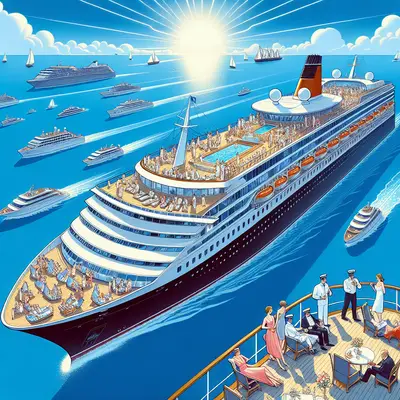
The same is true of space-to-guest ratio. Ships that allocate more square footage per guest typically feel unhurried even when sailing full. Lounges remain inviting rather than crowded, pool decks feel tranquil, and specialty venues retain a sense of occasion. When comparing cruise lines—particularly at the premium and luxury level—these ratios can be more predictive of your actual comfort than any single design flourish.
2. Culinary Excellence Lives Between the Lines
Every line claims exceptional cuisine; the difference lies in how seriously they treat provenance, partnerships, and pacing. True culinary emphasis shows up not just in the number of venues, but in thoughtful menu rotation, regional sourcing, and wine programming aligned with the itinerary.
On certain lines, a Mediterranean voyage will mean olive oils actually from the Adriatic, seafood pulled from nearby waters, and wine lists that evolve as you move from one appellation to the next. Some luxury and upper-premium brands now treat sea days as opportunities for quietly ambitious tasting menus, chef’s counter experiences, or collaborations with renowned land-based restaurants. The more a line is willing to let menus be shaped by geography and season rather than central planning, the more seriously it takes gastronomy as a defining pillar rather than an obligation.
3. Shore Experiences Reveal a Line’s True Priorities
Shore excursions are often the clearest window into a cruise line’s soul. Mass-market approaches tend to prioritize capacity and predictability; more curated lines invest in smaller groups, specialist guides, and access that would be difficult to arrange independently.
Look for signals such as partnerships with local cultural institutions, small-group caps, and experiences that are quietly ambitious rather than theatrically labeled. A private after-hours museum visit, a winemaker-hosted barrel tasting, or a guided market tour with a ship’s chef speaks to a brand invested in context, not merely logistics. Lines that give their destination teams real creative latitude typically attract guests who value discovery over box-ticking, which in turn shapes the overall onboard atmosphere.
4. Wellness Has Evolved Beyond the Spa Menu
Wellness on many contemporary ships is undergoing a sophisticated transformation. It is no longer confined to massages and facials; leading lines are weaving well-being into the architecture of the voyage itself. You’ll find circadian-aware lighting in suites, sleep-focused pillow menus, and cuisine that can be both indulgent and nutritionally literate.
Some premium and luxury lines collaborate with wellness brands, nutritionists, and sports scientists to develop programs that continue ashore: guided hikes designed around heart-rate zones, yoga at sunrise in secluded coves, and thermal suites calibrated for genuine physiological benefit, not just spectacle. The most considered lines understand that their guests are increasingly unwilling to accept a binary of “health” at home and “indulgence” at sea. Instead, they offer a continuum, allowing guests to dial the experience toward recalibration or revelry as they wish—all without aesthetic compromise.
5. The Quiet Value of Continuity and Fleet Culture
In an era of rapid ship launches and headline-grabbing newbuilds, one subtle advantage often goes unnoticed: continuity of crew and culture across a fleet. Some lines place deliberate emphasis on retaining staff, nurturing internal promotion, and ensuring that the personality of the brand is lived consistently from bridge to bar.
Guests who return to a line where bartenders recall their favored aperitif and concierges remember past itineraries experience a form of hospitality that marketing cannot manufacture. It is often found on lines that grow deliberately rather than explosively, valuing refinement over constant reinvention. When evaluating cruise brands, it is worth paying attention not only to the age of the ships, but to the stability of the teams who bring them to life.
Choosing a Line That Reflects Your Personal Aesthetic
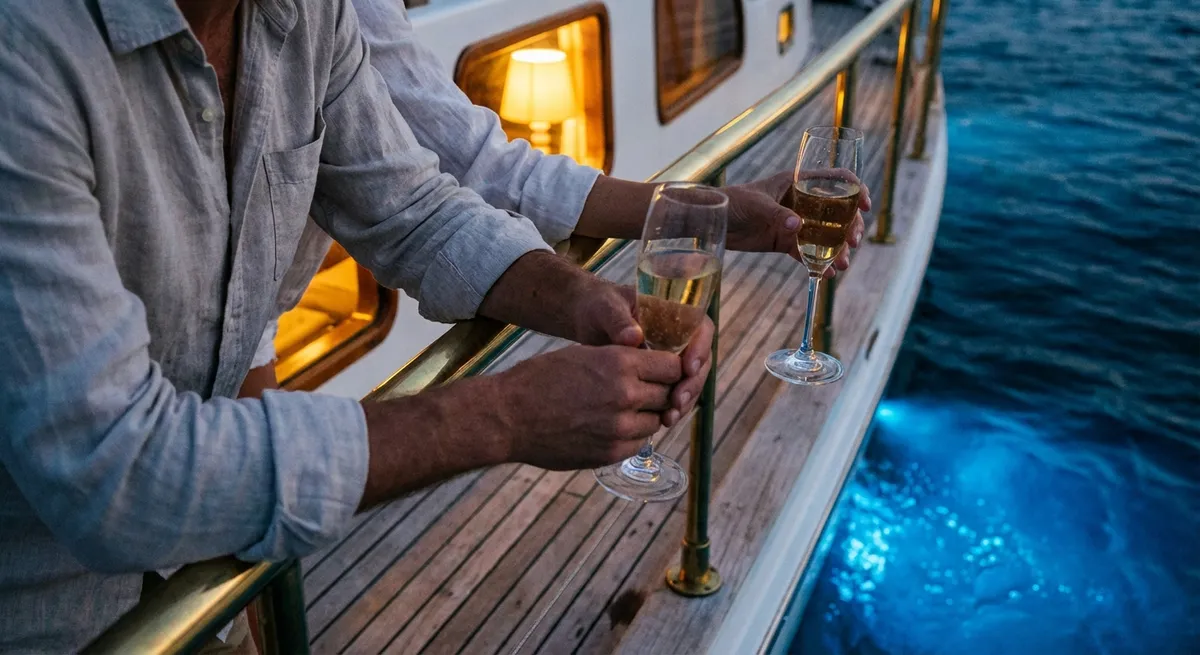
The most satisfying pairings between traveler and cruise line occur when there is alignment not just in budget and destination, but in sensibility. Some lines tilt toward a quietly club-like ambiance, where the social fabric resembles a discreet members’ lounge. Others evoke the energy of a grand urban hotel, vibrant and cosmopolitan. Still others channel the intimacy of a private yacht or country-house retreat.
To decode this, go beyond brochures and study the visual language and partnerships a line curates. Are the public spaces filled with contemporary art or maritime nostalgia? Is entertainment rooted in cabaret, classical performance, or Broadway-scale productions? Do brand collaborations emphasize haute couture, design, gastronomy, or exploration?
Matching your own aesthetic compass to a line’s underlying character yields a profoundly different experience than simply “moving up” in category. For some, that might mean a larger premium line with a private suite enclave and vibrant nightlife; for others, a small-ship luxury line where evenings end with a digestif, a string quartet, and the quiet rustle of pages turning in a nearby library.
The Future of Cruise Lines: Discretion as the New Indulgence
As the industry evolves, the most forward-thinking cruise lines are moving away from ostentatious displays of excess and toward a more nuanced understanding of luxury. Discretion—of service, of design, of access—is gradually becoming the ultimate indulgence. The guests most courted are no longer those who demand to be noticed, but those who appreciate being understood.
For the attentive cruiser, this moment offers unprecedented opportunity. With more finely differentiated brands, ship-within-a-ship concepts, and subtly curated itineraries than ever before, the question is no longer simply “Which cruise should I take?” but “Which interpretation of the sea best reflects who I am now?”
Choosing well requires a willingness to read between the lines: to see ratios where others see chandeliers, to favor narrative over checklist, and to view a voyage not as a break from your life, but as its most considered extension. In that wake of distinction, the right cruise line becomes not just a carrier, but a quietly perfect mirror.
Sources
- Cruise Ship Design and Passenger Experience – Boston University’s Business & Hospitality Review on how ship design and space planning shape the onboard experience
- U.S. Federal Maritime Commission – Cruise Industry Overview – Regulatory context, passenger rights, and structural insights into the cruise sector
- Cruise Lines International Association (CLIA) – 2024 State of the Cruise Industry – Data on passenger trends, luxury growth, and evolving traveler preferences
- CDC Travelers’ Health: Cruise Ship Travel – Guidance on health, wellness, and safety considerations when selecting and experiencing a cruise
- Forbes Travel Guide – What Luxury Cruising Looks Like Now – Perspective on how luxury cruise lines are redefining service, wellness, and culinary offerings
Key Takeaway
The most important thing to remember from this article is that following these steps can lead to great results.