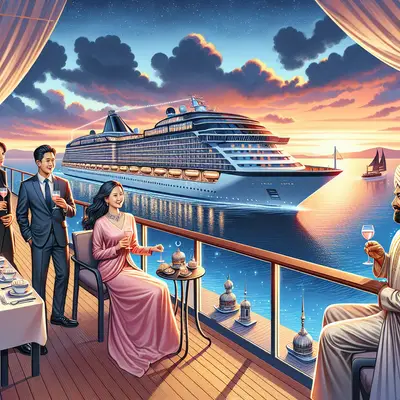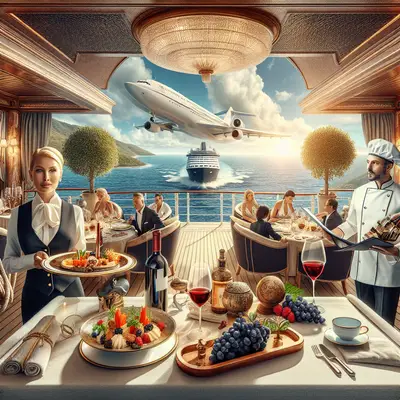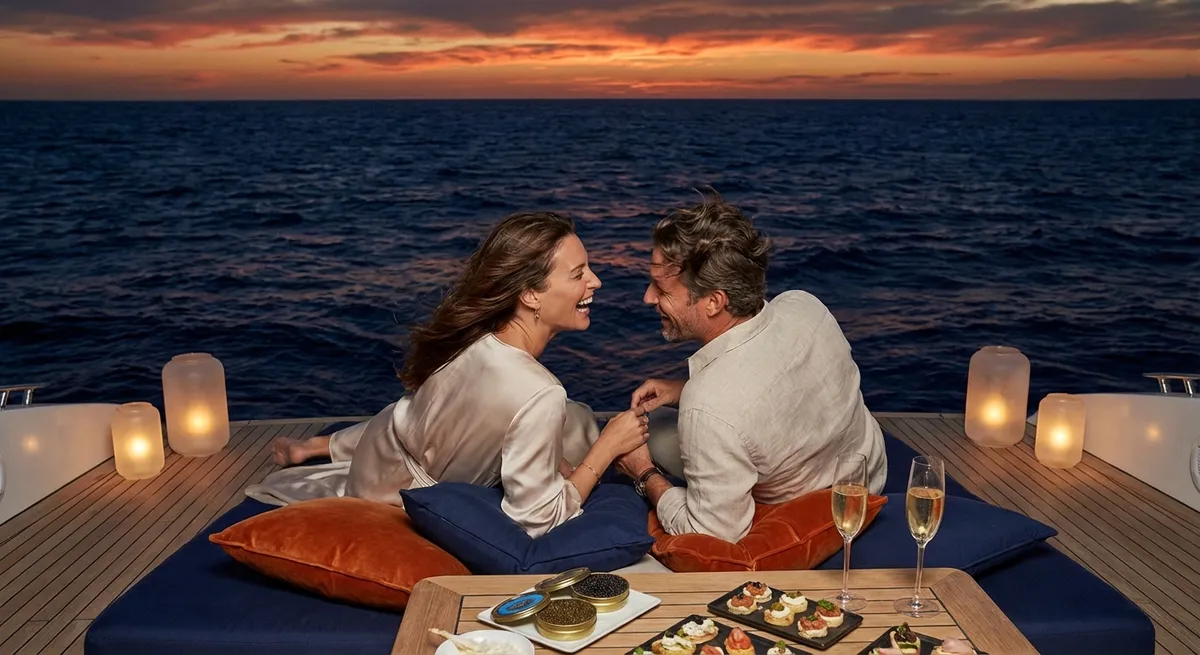
Luxury cruising today is less about spectacle and more about precision—the careful orchestration of space, time, and service that allows you to feel entirely unhurried, even as hundreds of crew members move with quiet intention on your behalf. For the traveler who has graduated from simply “going on a cruise” to truly curating life at sea, the difference lies not just in the suite category or the wine list, but in the subtleties most guests will never notice.
This is an exploration of those details—the understated rituals, design decisions, and service philosophies that define the upper tier of contemporary cruising. Along the way, you’ll find five exclusive insights that seasoned cruise enthusiasts tend to discuss only with one another, often after disembarkation, when the ship has already become a memory.
The Architecture of Ease: How True Luxury Hides Its Effort
On a luxury vessel, the most meticulous work is often invisible. The ease you feel walking from suite to lounge, terrace to spa, has been carefully engineered long before you board. Leading lines, ceiling heights, sound-absorbing textiles, and corridor angles all collaborate to create a feeling of calm progression rather than traffic and queues.
Unlike larger mainstream ships that place their most dramatic spaces at the center, ultra-luxury vessels frequently diffuse their highlights throughout the ship to avoid congestion and maintain an atmosphere of rarefied calm. A small, library-like bar at the funnel, a hushed observation lounge forward, a semi-secret terrace aft—these spaces are designed as “pressure valves” so the ship never feels full, even at capacity.
The layout of specialty dining, too, is intentional. On top-tier lines, some of the most coveted tables are positioned not in the center of the room but just beyond sightlines, where ambient sound dips and conversation can unfold at a lower register. Decorative choices—velvet banquettes, heavy drapery, soft carpeting—do far more than please the eye; they are acoustic tools designed to turn an open ship into a series of intimate salons.
Exclusive Insight #1: The most refined ships are not always the newest or the largest; they are often the ones that have perfected the choreography of space over time, subtly refining traffic flow and acoustics after each season based on how guests actually move and linger onboard.
The Art of the Unasked Gesture: Service Beyond Personalization
In luxury cruising, “personalized service” is no longer enough—it has become the entry point, not the differentiator. At the highest level, what matters is anticipatory grace: the glass of water refreshed before you realize it’s empty, the balcony chair already angled toward the sunset when you return from a shore excursion, the quiet adjustment of a dining time because the sommelier knows you are lingering over pre-dinner champagne.
Many premium lines now invest heavily in training butlers and key staff in micro-observation: posture, pacing, even how quickly you read a menu. These signals inform subtle decisions—whether to offer conversation or silence, whether to suggest a digestif or simply bring a pot of fresh mint tea without comment. The most refined crews maintain a deliberate lightness of presence; they appear when needed and vanish before you feel managed.
Behind this is a discreet but powerful layer of data. Guest preferences, noted over multiple voyages, are transformed into almost-invisible rituals: the exact firmness of your pillows, the type of sparkling water in your suite, the expectation that you will want breakfast on your balcony on sea days but in the dining room on port days. Done well, it feels not like analytics, but like old-fashioned remembering.
Exclusive Insight #2: Frequent luxury cruisers often test a line’s true caliber not by how it handles a special request, but by how it recovers from a small mistake—whether a forgotten preference is quietly corrected on the next interaction and never repeated.
Time as the Rarest Luxury: Itineraries Crafted for Stillness
In the luxury segment, the itinerary is no longer just a list of ports; it is a carefully composed rhythm of exertion and exhale. Days at sea are no longer “filler,” but curated intervals of recovery, crafted with as much intention as a marquee destination. This is where smaller, high-end ships excel: they are free to linger in regions rather than merely pass through them.
Some lines now design specialty voyages around celestial events—meteor showers, eclipses, bioluminescent bays—or seasonal ephemera like early-morning mist over Norwegian fjords or grape harvest along Mediterranean coasts. The ship becomes an observatory as much as a vessel, positioning itself to give guests the longest, clearest, or most dramatic view of nature’s quiet spectacles.
Port calls, too, are evolving. Late-night and overnight stays in cities such as Venice, Buenos Aires, or Tokyo allow travelers to experience destinations in their softer hours—after day-trippers have gone and the local rhythm resumes. Luxury cruisers understand that the real privilege is lingering, not collecting new stamps in a passport.
Exclusive Insight #3: Seasoned guests often choose voyages not by headline ports but by the “negative space” around them—number and placement of sea days, overnight calls, and how often the ship sails during sunrise or dusk, which radically shapes the emotional character of the journey.
The Private Vocabulary of Onboard Atmosphere
Every luxury ship develops its own quiet lexicon of atmosphere—a particular blend of music, lighting, scent, and even temperature that becomes identifiable after only a few hours onboard. This is not accidental. Leading lines now employ sensory designers much like five-star hotels, creating a narrative that moves from bright and anticipatory in the morning to languid and intimate at night.
Lighting is a perfect example. On refined vessels, it is layered rather than uniform: warm pools over armchairs in the lounge, almost gallery-level illumination for art pieces in corridors, candle-like softness in cocktail bars after dusk. The aim is to make you feel elegantly composed wherever you sit, which matters as much for those who enjoy dressing for dinner as it does for those who prefer a more relaxed style.
Even the choice of background music is deliberate. Certain lines lean toward contemporary jazz and neo-classical soundscapes; others favor curated playlists aligned with the region—soft bossa nova in South America, restrained piano in Northern Europe, low-key Mediterranean jazz along the Riviera. The best ships know when to let silence win: early mornings in observation lounges often feature nothing more than the sound of the sea.
Exclusive Insight #4: Experienced cruisers quietly assess a ship by its transitions—how the atmosphere shifts between afternoon tea and pre-dinner cocktail hour, or from sail-away to late evening. The most sophisticated ships manage these transitions so seamlessly that you feel the change before you consciously register it.
Culinary Calm: Moving Beyond Excess to Edited Indulgence
If traditional cruises equated abundance with luxury, modern high-end lines have embraced a more confident restraint. Menus are becoming shorter, more seasonal, and less theatrical, with an emphasis on clarity of flavor and provenance. The best kitchens onboard think like serious land-based restaurants, where knowing when not to embellish is a defining skill.
This evolution is driven partly by a new culinary ethos at sea: closer collaboration with regional producers, emphasis on sustainability, and a growing expectation that even indulgence should feel considered rather than indiscriminate. You are as likely to find a menu celebrating a single coastal region’s seafood, accompanied by local wines, as you are to find the traditional “global” offerings.
Tasting menus, once performative, are now often more intimate and conversational, with chefs appearing tableside to explain a particular cure, a long-fermented dough, or a rare ingredient sourced in the last port. In-suite dining has also matured; it is increasingly conceived as a parallel, not secondary, experience, with dedicated plating, thoughtfully shortened menus, and temperature-managed delivery.
Exclusive Insight #5: Insiders often judge a luxury line not by its most elaborate restaurant, but by its simplest dishes—the stock in a clear soup, the temperature of a poached egg at breakfast, the texture of a baguette delivered to the suite. Precision in the basics is the quiet signature of a serious culinary program at sea.
Conclusion
For the cultivated cruiser, luxury is no longer a matter of chandeliers and caviar. It is the sense that every element—the curvature of a staircase, the pause before a waiter refills your glass, the timing of a sail-away—has been arranged with an almost editorial eye. The true pleasure of today’s finest ships lies in their restraint: enough glamour to feel transported, enough thoughtfulness to feel at home.
To sail in this realm is to participate in a choreography that is largely invisible, but deeply felt. Once you have experienced this level of calibrated ease, it becomes difficult to return to mere transportation. The ship is no longer simply taking you somewhere; it has become, in itself, a place worthy of the journey.
Sources
- U.S. Department of Transportation – Cruise Ship Travel - Background on cruise travel considerations and health standards that inform modern luxury operations
- Cruise Lines International Association (CLIA) – 2024 State of the Cruise Industry - Industry overview, including trends in luxury cruising and guest expectations
- Regent Seven Seas Cruises – The Regent Experience - Illustrates how an ultra-luxury line articulates its service philosophy and onboard atmosphere
- Cunard – Onboard Experience - Provides insight into how heritage lines design space, dining, and ambiance for a refined clientele
- Harvard Business Review – The Future of Luxury: Small, Quiet, and Personal - Explores broader luxury trends toward subtle, personalized experiences that mirror shifts in high-end cruising
Key Takeaway
The most important thing to remember from this article is that this information can change how you think about Luxury Cruises.