For the seasoned traveler, luxury at sea is no longer defined by chandeliers and champagne pyramids alone. The new measure of refinement is quieter, more curated, and often discovered in the details that don’t appear on brochures. Today’s most compelling luxury cruises are shaped by a choreography of design, service, and destination access that feels less like a vacation package and more like a private, floating members’ club.
Below, we step behind the polished veneer to reveal five exclusive insights that discerning cruise enthusiasts are increasingly seeking—and quietly sharing only with those who will truly appreciate them.
The New Suite Hierarchy: Beyond Square Footage and Butler Service
Once, a “suite” merely promised more space and an attentive butler. On today’s luxury ships, the top accommodations are deliberately designed as self-contained sanctuaries that change how guests use the vessel itself. The most coveted suites now borrow cues from high-end residential design: discreet entry corridors, walk-in dressing rooms, and dining areas that feel appropriate for a private chef’s tasting rather than room service on a tray.
Material choices are equally intentional. You’ll find tactile fabrics instead of glossy surfaces, integrated lighting scenes instead of a single overhead switch, and acoustic insulation that actively dampens corridor noise. The goal is not ostentation, but composure. Some lines have even created “ship-within-a-ship” enclave decks where suite guests enjoy a private lounge, restaurant, and sundeck removed from the rest of the vessel, effectively turning a large ship into what feels like a 100‑guest boutique hotel.
For enthusiasts who value privacy and control, this new hierarchy of suites is transformative. It allows them to enjoy big-ship amenities—culinary range, spa scale, entertainment depth—while retreating to an environment that feels almost entirely detached from the crowds.
Culinary Signatures: When the Best Meals Happen Off the Menu
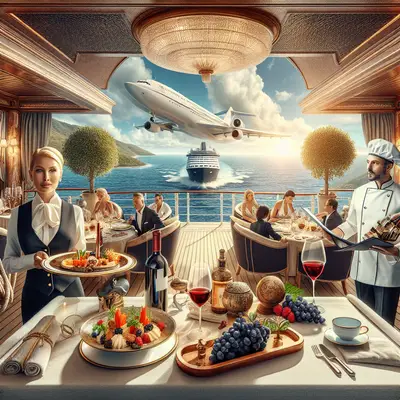
Fine dining is now a baseline expectation in luxury cruising; what truly distinguishes the upper tier is what never appears on the printed menu. The most attentive ships cultivate a kind of culinary whisper network, where returning guests and observant newcomers learn that the kitchen will quietly accommodate far more than it openly advertises.
This might mean a chef who will recreate a dish you sampled on shore that afternoon, or a sommelier who maintains a shadow list of limited‑allocation bottles reserved for those who inquire. Some lines partner with Michelin‑starred chefs not to replicate land‑based restaurants at sea, but to workshop evolving menus around particular regions—think a short, unpublicized menu celebrating a specific olive harvest or truffle season on a single sailing.
For travelers who care deeply about food, the most memorable meals are often the most personal: a late‑night, off‑hours tasting of local cheeses in the observation lounge after other guests have drifted off, or a bespoke vegan or caviar service created on the spot because staff have taken note of preferences over the first days of the voyage. The true luxury is not the ingredient list—it is the feeling that the kitchen is cooking for you, not just for table 14.
Silence as a Service: Design That Protects Your Time and Attention
One of the least discussed—but most prized—elements of a refined cruise is silence, or at least a carefully controlled soundscape. Top-tier ships increasingly treat acoustic design as seriously as décor, working to insulate guests from the operational noise that can disrupt an otherwise flawless voyage.
This begins with engineering: advanced hull designs and propulsion systems reduce vibration, while premium materials are layered in cabin walls, ceilings, and floors to deaden sound. But it goes further into guest experience. Some luxury lines map “quiet corridors” and low‑traffic stairwells for suite decks, diverting service routes elsewhere. Public spaces are zoned so that evening music, casino energy, and late‑night bars feel vibrantly alive—but never bleed into lounges and terraces favored by guests who prefer a more measured ambiance.
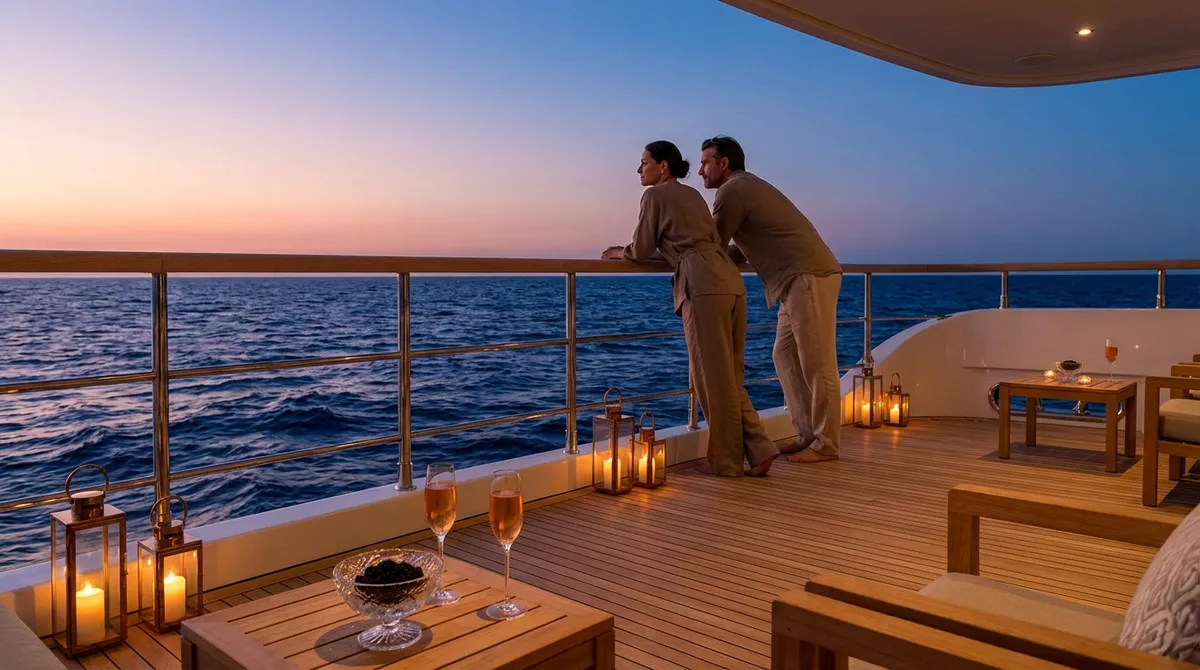
You’ll also see this philosophy in the renewed emphasis on observation lounges and libraries that actually function as calm retreats: natural light, generous spacing between seating groups, and service that appears almost invisibly. For those who board not to be entertained relentlessly but to think, read, or simply watch the sea, this carefully curated quiet is among the most luxurious amenities of all.
Intimate Access Ashore: When the Port Call Becomes a Private World
Luxury cruises are no longer content to simply berth in marquee ports for a standard day ashore. What differentiates the most compelling itineraries is less the headline destination and more the precision of access: private timings, smaller harbors, and curated experiences unavailable to ships carrying thousands.
Some vessels anchor off tucked‑away coves, using sleek tenders to bring guests into charming harbors that are simply beyond the reach of deep‑draft megaships. Others time departures to allow late‑evening stays in cities like Venice or Barcelona, when day‑trippers have vanished and the city begins to belong to residents again. Increasingly, cruise lines collaborate with local experts—art historians, vintners, conservationists—to host micro‑scale excursions that feel more like being personally introduced to a destination than being processed through it.
For the enthusiastic cruiser, these nuances change the rhythm of a voyage. A private pre‑opening museum tour, a winemaker’s dinner in a candlelit cellar, or a quiet sunrise zodiac landing in a remote fjord all recalibrate the definition of “shore excursion.” The ship becomes a base camp for rarefied experiences, not just a way to check off ports on a list.
Rituals of Recognition: The Discreet Art of Being Known on Board
Exceptional service at sea has always been a hallmark of luxury cruising, but the most sophisticated ships now practice something subtler than formality: an artful, almost anticipatory recognition that feels genuinely personal rather than scripted.
Crew members use carefully managed guest profiles and real‑time communication to remember how you take your coffee, which wines you favored at dinner, or whether you prefer firm or soft pillows. Yet the true distinction lies in how that information is deployed. On the best ships, it’s never presented as a party trick; it’s woven into service casually, so that your preferences appear to have been remembered by individuals rather than captured by systems.
Repeat guests often note an evolution on their third or fourth sailing with the same line: staff who recall them by name from years past, bar teams who gently set aside a limited‑stock spirit knowing it will be requested, or a concierge who proactively adjusts future restaurant reservations based on the pace of their first night’s meal. These quiet rituals of recognition create a continuity that many find more meaningful than any single onboard amenity. In an environment where everything else can be upgraded or replicated, the feeling of being genuinely known is increasingly the rarest luxury.
Conclusion
Luxury cruising in its most compelling modern form is defined not by spectacle but by calibration: of space, sound, flavor, time, and attention. For cruise enthusiasts, the real treasures are often invisible to the casual eye—an unexpectedly hushed hallway, a chef willing to improvise, a quiet anchorage just beyond the busy harbor, or a familiar face who remembers exactly how you like your martini.
These veiled luxuries are not accidental; they are the product of deliberate decisions made by lines that understand their guests are not seeking to be impressed so much as understood. For those who know where to look, today’s finest ships offer not just a way to cross the water, but a way to inhabit it—with a level of grace and discretion that feels increasingly rare on land.
Sources
- Cruise Lines International Association (CLIA) – 2024 State of the Cruise Industry - Industry overview covering trends in luxury, sustainability, and guest expectations
- Regent Seven Seas Cruises – The Regent Suite - Example of top-tier suite design and amenities on a leading luxury line
- Seabourn – Onboard Dining Experience - Insight into elevated culinary programs and personalized dining at sea
- U.S. Department of Transportation – Maritime Administration (MARAD) - Background on maritime operations and ship design considerations
- Harvard Business Review – “The Future of Customer Service Is AI-Human Collaboration” - Context on evolving service personalization practices relevant to high-end hospitality
Key Takeaway
The most important thing to remember from this article is that this information can change how you think about Luxury Cruises.