Luxury cruising, at its most considered, is less about spectacle and more about calibration. It is the art of matching ship, suite, service style, and itinerary to a very specific way you like to move through the world. For the experienced cruiser, the real luxuries are often invisible to the casual eye—subtle decisions that transform a voyage from pleasant to quietly exceptional. This is not about being impressed; it is about being understood.
Redefining Luxury: From Opulence to Intentionality
The language of luxury at sea has evolved. Marble atriums and chandeliered staircases still have their place, but for the modern connoisseur, refinement is measured by intentional design and thoughtful restraint. Boutique and ultra-luxury lines now favor residential aesthetics over hotel grandeur: softer color palettes, tactile materials, and spaces that feel curated rather than staged.
Well-designed luxury ships create a choreography of calm—ceilings at the right height, lighting that flatters without shouting, noise levels that allow for conversation in undertones. Public spaces flow intuitively, with natural sight lines to the sea instead of endless corridors of duty-free temptation. Even the most elaborate dining venue now aims to feel more like a city’s best table than a “themed” restaurant.
True indulgence is increasingly defined by time and privacy. Fewer guests, more crew, and short lines—or none at all—convey luxury in ways no brochure can fully capture. The most sophisticated experiences are those that appear effortless, as though the ship has quietly anticipated your pace, your palate, and your preferences before you ever step aboard.
Insight 1: Suite Selection as a Fine Art, Not a Category Choice
For the well-traveled cruiser, choosing a suite is no longer a question of “which category,” but “which experience.” Two suites of the same nominal class can feel profoundly different once you layer in light, movement, and the subtle rhythms of the ship.
Serious enthusiasts often begin with the deck plan rather than the marketing description. Forward versus aft is not merely a matter of view; it shapes the motion you feel on heavier seas and the sounds you hear when the ship is underway. Midship suites may offer the most balanced motion, but an aft-facing terrace can deliver cinematic wake views and quieter sunsets away from pool decks and outdoor stages.
It is also worth studying what lies above and below. A seemingly perfect suite under a pool deck can mean early-morning chair movement or late-night footsteps. Positioning beneath other guest accommodations, a spa, or a quiet lounge typically yields a more tranquil acoustic profile. Corner suites can offer expanded balconies and multi-directional light, but also more wind exposure; seasoned travelers weigh these subtle trade-offs against how they actually live on board.
In this tier of travel, a “better” suite is not simply larger; it is more aligned with your personal cadence. Early risers may value first light through floor-to-ceiling windows; night owls might prefer more controlled lighting and a balcony shielded from dawn. Luxury, here, is precision.
Insight 2: The Quiet Power of the Concierge and Butler Network
On ultra-luxury ships, butlers and concierges are not ornamental—they are the nervous system of your experience. The difference between competent service and exceptional service often lives in what you never see: the coordination behind the scenes, the advance notes shared between departments, the small anticipations that make the voyage feel bespoke.
The most refined travelers actively collaborate with this network. Rather than presenting an endless list of demands, they share a few well-chosen details: how they prefer their mornings, any dietary nuances beyond basic allergies, the style of dining they enjoy (unhurried tasting menus versus elegantly simple), their tolerance for social programming, and what they consider “too much attention.” This allows crew to calibrate their presence with remarkable sensitivity.
On select lines, this network can quietly reorient your trip: securing a particular table at a restaurant that suits your lighting preferences, arranging a seamless in-suite cocktail hour with canapés that mirror your favorite land-based bar, or planning a low-profile private transfer in port for a more discreet arrival. Guests who understand the ship’s human architecture—and engage it thoughtfully—often experience a level of personalization that feels like a well-run private club at sea.
Insight 3: Mastering Culinary Layers Beyond the Main Dining Room
To the untrained eye, luxury cruise dining is about the number of venues and the promise of “gourmet” cuisine. Enthusiasts know the real differentiator is how those venues are used, not just how they are described. On the most sophisticated ships, culinary options operate in layers, each suited to a different mood, time of day, and level of formality.
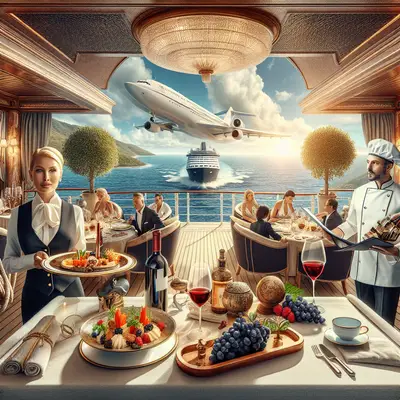
A hallmark of elevated lines is the ability to dine beautifully without fanfare. This might mean a perfectly executed in-suite dinner, served course by course on white linen, or an unhurried lunch at a quiet terrace with thoughtful wine pairings and no ambient soundtrack beyond the sea. Some of the finest meals on board are the least photographed: a late-afternoon bowl of house-made bouillabaisse, or a chef’s off-menu preparation created after a brief conversation about what you truly feel like eating.
Experienced guests also understand the cadence of the ship’s culinary calendar. They may choose to visit a signature restaurant on the second or third evening rather than on the heavily booked first sea day, when service and kitchens are finding their rhythm. They pay attention to when provisioning occurs in port and align fresh seafood or regional specialties to those days. On lines with partnerships to renowned chefs or wine estates, they leverage hosted dinners or tastings not as spectacles, but as chances to engage quietly with serious professionals in an intimate setting.
Luxury, in this space, is the ability to have your culinary life at sea feel as individually tuned as your favorite restaurants at home—just with a horizon that shifts nightly.
Insight 4: Curating Port Days for Depth, Not Volume
For the connoisseur, ports are not items to be collected, but contexts to be understood. The difference between a conventional excursion and a truly elevated shore experience is rarely about price alone; it is about pace, access, and narrative.
Rather than stacking multiple “must-see” stops into a single day, sophisticated cruisers will often choose a single, well-constructed experience that allows for depth: a private guide with strong local credentials, a visit timed for early opening or late access, or moments designed for unscripted wandering in a carefully chosen neighborhood. In certain ports, they may choose not to disembark at all, seizing instead the rare luxury of having an ultra-luxury ship almost to themselves.
Many high-end lines now curate small-group or invitation-only experiences—after-hours museum visits, vineyard dinners with the proprietor present, or market tours led by the ship’s own chef. The most rewarding of these are not about exclusivity for its own sake; they are about seeing a destination when it has exhaled, after the day’s crowds have receded. On port-intensive itineraries, enthusiasts will often pre-select one or two days for nothing more ambitious than a spa appointment, a long lunch, and an empty pool deck—protecting their bandwidth so the ports that matter most can be appreciated in full.
In the end, the most luxurious itineraries are not the ones that tick the most boxes, but those that leave room for memory to form.
Insight 5: Reading a Ship’s Culture Before You Step Aboard
At the top of the market, every line can claim spacious suites, fine dining, and polished service. The truly discerning cruiser looks instead at culture: what a ship values, whom it quietly caters to, and how it spends its space, time, and attention.
This culture expresses itself in subtle choices. Is more square footage dedicated to wellness or to nightlife? Are enrichment programs led by serious practitioners—historians, naturalists, designers—or by generalist entertainers? How does the ship handle formality: through explicit dress codes, or through an unspoken expectation shaped by design, lighting, and the tone set by crew?
Pre-cruise documentation and public-facing materials are revealing when read carefully. A line that publishes detailed information on sustainability initiatives, expedition protocols, or destination partnerships is signaling where it invests its intellectual capital. Similarly, the way a brand talks about families, solo travelers, or multigenerational groups will tell you a great deal about the energy on board.
Enthusiasts often cross-reference multiple sources—line websites, third-party reviews, and independent travel advisories—to form a composite picture before committing. The result is not just picking a “luxury” ship, but choosing a floating environment whose values mirror their own. When this alignment is right, everything else—service, dining, comfort—feels naturally elevated, because you are among a shipful of guests who have chosen the same wavelength.
Conclusion
At its highest expression, luxury cruising is less about being impressed and more about being precisely matched. It is the quiet satisfaction of realizing that the ship’s rhythm, the suite’s light, the restaurant’s tone, and the ports’ pacing align effortlessly with the way you prefer to live—even far from shore.
For those who look beyond surface opulence, five elements consistently distinguish an exceptional voyage: suites chosen for experience rather than status; a thoughtful partnership with the ship’s concierge and butler network; culinary choices guided by rhythm instead of novelty; port days curated for resonance rather than coverage; and ships selected as much for their culture as their hardware. When these layers are orchestrated well, luxury at sea feels less like an upgrade and more like a natural extension of your most considered life on land—only with the horizon as your constant companion.
Sources
- U.S. Department of Transportation – Cruise Ship Travel - CDC’s Yellow Book guidance on cruise ship travel, health, and considerations for travelers
- CLIA (Cruise Lines International Association) - Industry research and insights into global cruise trends and luxury segment developments
- Silversea Official Website - Example of ultra-luxury cruise positioning, suite concepts, and personalized service descriptions
- Regent Seven Seas Cruises – Life Onboard - Details on inclusive luxury, onboard experiences, and how high-end lines structure dining and enrichment
- Harvard Business Review – The New Luxury Experience - Analysis of how modern luxury is defined by experience, personalization, and time rather than visible opulence
Key Takeaway
The most important thing to remember from this article is that this information can change how you think about Luxury Cruises.