In the upper tiers of cruising, excellence is rarely announced; it is inferred. The finest cruise lines are no longer competing on who can be the loudest, biggest, or flashiest. Instead, they distinguish themselves through orchestration—of space, of time, of service, of taste. For travelers who have moved beyond novelty and toward nuance, understanding how different lines express their “house style” becomes part of the pleasure. This is not simply a choice of ship, but of philosophy at sea.
Below, we explore how leading cruise lines quietly define their craft—through five exclusive, often understated insights that seasoned cruise enthusiasts will recognize and appreciate.
The Signature of Space: How Lines “Draw” Their Ships
Walk onto a ship from a truly refined cruise line and the first impression is not of chandeliers or grand staircases, but of proportion. The layout tells you everything about the line’s priorities. Some brands lean into a residential aesthetic: generously spaced corridors, art placed at sightlines rather than selfie spots, and lounges that feel more like private club rooms than public spaces. Others favor a hotel-forward design language—crisp, minimal, with visual continuity between ship and shore-side properties.
What matters to the seasoned cruiser is how space is used rather than how much there is. A clever line will engineer quiet “eddies” of calm even on larger ships—niches that absorb sound, transitional lighting that guides passengers almost subconsciously, and sightlines that direct you toward sea views instead of retail. Subtleties like ceiling height, the curvature of banquette seating, and the depth of window ledges all convey whether the line understands how guests actually inhabit a ship over 7, 14, or 30 days.
Pay attention to how a line treats its in-between spaces: elevator lobbies, stair landings, corridors leading to nowhere in particular. On a thoughtfully designed ship, these are not dead zones; they are micro-galleries, reading nooks, or vantage points—whispers of the line’s taste. This “drawing” of space is one of the clearest signatures of a cruise line’s design intelligence and long-term respect for its guests.
Culinary Philosophy: Beyond the Menu, Into the Method
A menu cannot tell you everything you need to know about a cruise line’s culinary standards. The true story lies behind the pass. The most discerning lines reveal their commitment not in how many specialty restaurants they can name, but in how coherently those venues align under a single culinary philosophy.
Watch for the quiet markers. Is there a considered relationship between the main dining room, the alternative restaurants, and casual venues, or do they feel like separate franchises stitched together? Does the line’s “flagship” restaurant actually taste like its spiritual center, or simply its most expensive offering? Do daytime menus echo the sophistication of the evening, or does care evaporate once the sun is high and the dress code relaxes?
Advanced cruisers increasingly look for provenance: partnerships with respected culinary institutions, wine programs curated by credentialed sommeliers, and thoughtful integration of local ingredients procured in port. On certain lines, you’ll notice wine lists that evolve over the course of longer voyages, reflect regional terroir, and even respond to guest feedback—an indication of a living, breathing program rather than a static offering.
Most revealing of all is how the line handles constraint: late-night dining, in-suite service, and dietary accommodations. A cruise line that can navigate gluten-free, low-sodium, or plant-forward preferences with elegance—without drawing attention or sacrificing balance on the plate—is operating at a level of culinary maturity that goes well beyond marketing language.
The Architecture of Service: Anticipation as an Art Form
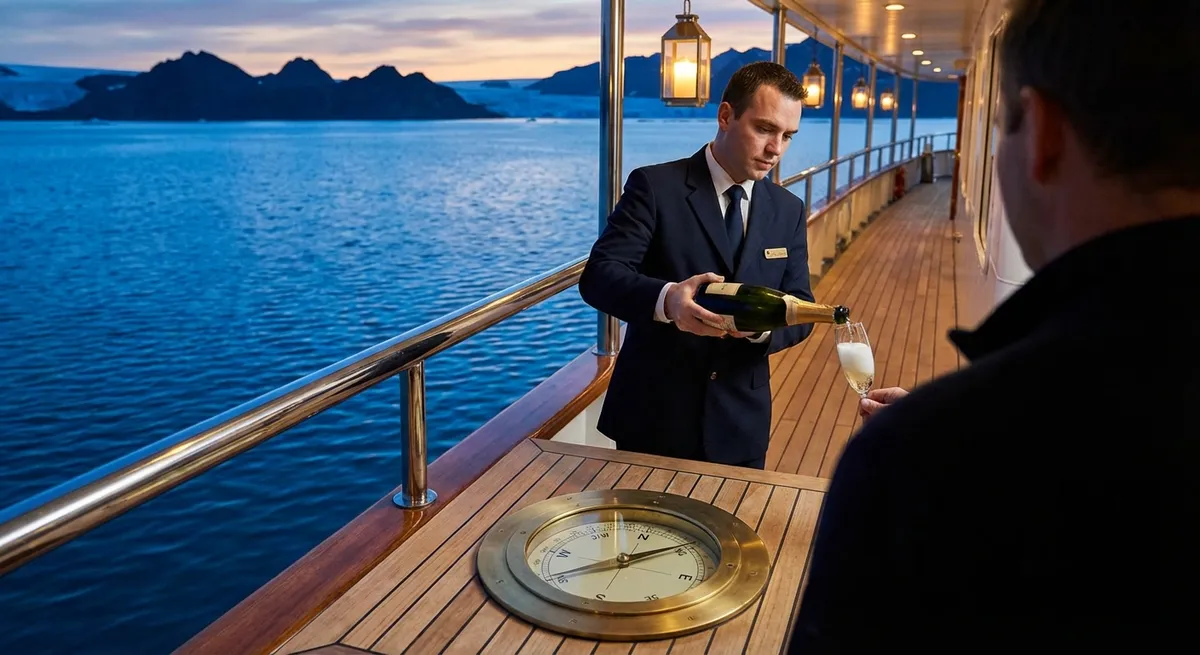
Exceptional service at sea is less about effusive friendliness and more about choreography. The most refined cruise lines train their teams not just to remember names and preferences, but to read patterns: when you tend to dine, what sort of lighting you adjust in your suite, whether you linger over coffee or prefer to move on swiftly. Over a voyage, this data is absorbed and translated into a form of quiet anticipation.
Well-traveled guests often note that on the best lines, service feels almost invisible during the moments you want solitude, then miraculously present at the exact instant you require something. This is not accident; it is architecture. It’s built into staffing ratios, training, service stations you never see, and the systems that allow crew to share information with one another without breaking the spell of effortlessness.
Another subtle indicator is how staff handle friction. On a well-run line, problems rarely escalate to the guest because front-line staff have both the authority and the training to resolve issues discreetly. The tone of communication—never rushed, never officious, always unflustered—signals a service culture rooted in confidence rather than scripts.
Perhaps the most elegant expression of a cruise line’s service DNA is consistency across ships and itineraries. When the same sense of considered care is evident on a short coastal sailing as on an extended grand voyage, you’re not dealing with an exceptional crew or a standout hotel director; you’re witnessing a service ethos embedded deeply within the brand.
Time as a Luxury: How Itineraries Reveal a Line’s Values
Itinerary design is where a cruise line’s soul is most clearly revealed. For the sophisticated cruiser, the sequence of ports, time in each destination, and pacing of sea days matter as much as the destinations themselves. Look closely at arrival and departure times: a line that repeatedly docks just after sunrise and sails just before midnight is deliberately granting its guests the full arc of a place, from morning markets to late-evening promenades.
Sea days are another quiet signal. Are they bunched together as mere transit, or are they integrated thoughtfully—providing a measured rhythm that allows guests to reset, reflect, and fully inhabit the ship? On lines that respect the concept of time as luxury, longer voyages do not feel like endurance tests; they feel like well-edited narratives, with rest and discovery balanced in a way that feels almost literary.
Port selection also speaks volumes. Some lines prioritize headline cities and iconic harbors; others favor ports that are logistically more complex but experientially richer. You’ll notice the difference in how often tenders are used, in the variety and depth of shore excursions, and in the presence (or absence) of thoughtful enrichment programming tied directly to the places visited.
Watch for lines that create “quiet luxuries of time”: overnights in culturally dense cities, late departures to allow for performances or local dining ashore, and itineraries built around seasonal phenomena—harvests, festivals, migrations. These are crafted for guests who value immersion over simple accumulation of ports on a map.
The Hidden Layer: Shipboard Culture You Only Notice on Return
Perhaps the most elusive, and most telling, dimension of a cruise line is the culture that emerges organically aboard its ships—something you often recognize only when you return ashore and compare notes with fellow travelers. Certain lines cultivate an almost club-like atmosphere: guests who return year after year, familiar rituals, and a social tone that feels cosmopolitan yet unforced. Others cultivate privacy and introspection, where the ship becomes more sanctuary than salon.
The entertainment program is a powerful barometer. On some luxury lines, enrichment lectures, recitals, or intimate performances are not “scheduled activities” but cultural anchors around which the day softly orients itself. Even the curation of onboard art, library selections, and boutique offerings reveal a point of view—are you being invited to engage deeply, or merely to consume?
Noise culture is another underappreciated hallmark. Seasoned cruisers quickly detect whether a ship treats volume—of music, announcements, and even onboard events—as something to be governed with discernment. Lines that invest in acoustics, thoughtful zoning of lively and quiet spaces, and minimal intrusive announcements are telling you they trust their guests to create their own tempo.
Finally, the way a line communicates its sustainability and safety practices—calmly, transparently, without theatrics—offers insight into its operational maturity. When environmental measures and health protocols are woven seamlessly into the voyage rather than presented as marketing headlines, you’re seeing a brand that understands that true luxury is inseparable from responsibility and reassurance.
Conclusion
For those who view the sea not as a backdrop but as a recurring chapter in their travel story, choosing a cruise line is less about comparison charts and more about alignment. Each brand has its own vocabulary of space, flavor, service, tempo, and culture. The distinctions are frequently quiet but profound—revealed in how a line spends its square footage, its minutes in port, its attention to your unspoken preferences.
To the uninitiated, these differences may seem marginal. To the well-cruised, they are the essence of the experience: the reason one ship feels immediately like a temporary home while another remains merely a vessel. Learning to read these understated signatures is part of the pleasure of modern cruising—and part of the art of curating a life that returns to the sea with intention, rather than habit.
Sources
- Cruise Lines International Association (CLIA) – 2024 State of the Cruise Industry - Industry overview offering insight into trends in guest preferences, sustainability, and itinerary design.
- U.S. Department of Transportation – Cruise Ship Travel - Government guidance on safety, operations, and passenger rights that underpin how reputable cruise lines structure their onboard experience.
- Harvard Business Review – The Art of Customer Service - Explores principles of anticipatory service and service culture that parallel high-end cruise line practices.
- Cornell University, School of Hotel Administration – Hospitality and Service Research - Academic research on hospitality design, service architecture, and guest experience, highly relevant to how cruise lines shape life aboard.
- UNESCO World Heritage Centre – Sustainable Tourism - Context on sustainable and culturally sensitive destination engagement, illuminating how thoughtfully designed itineraries respect ports of call.
Key Takeaway
The most important thing to remember from this article is that following these steps can lead to great results.