There is a subtle difference between taking a cruise and curating one. The most memorable voyages are never accidental; they are quietly orchestrated—piece by thoughtful piece—long before the first step on the gangway. For the discerning traveler, refinement at sea is less about conspicuous luxury and more about control: of time, of space, of atmosphere. These five exclusive insights are designed not for first-time cruisers, but for those who have already fallen in love with the ocean—and now wish to travel with greater intention, precision, and effortless poise.
1. Treat Your Cabin Like a Private Salon, Not a Storage Locker
Experienced cruisers know that your stateroom is not merely where you sleep; it’s your private salon, your anchor of calm amid the choreography of the ship. The way you set it up in the first hour on board will shape the entire voyage.
Begin with light and line of sight. If you have a balcony, resist the urge to over-clutter the space with towels, shoes, and day bags. Keep that horizon line visually clean; it is, in effect, your moving landscape painting. Indoors, designate one “landing zone” near the door for key cards, sunglasses, and shore passes. This prevents the low-grade irritation of searching for essentials before each outing.
Bring discreet, soft-amber battery-operated candles or a small, warm-toned travel lamp to soften the often-clinical overhead lighting. A silk or linen scarf draped over a chair can instantly elevate the feel of the room, while a slim, foldable organizer hung in the closet turns a standard wardrobe into a thoughtfully arranged dressing room.
Veteran cruisers also pack a minimalist fragrance strategy: a single, refined room spray or travel-sized diffuser oil (within safety regulations) to establish a scent signature—something fresh, clean, and understated. The goal is not perfume-heavy opulence, but an almost subliminal impression of calm, curated space. When your stateroom feels like a private salon, you return from every deck and every port to a space that restores you rather than simply holds your belongings.
2. Dine Against the Current: Mastering Off-Peak Indulgence
Fine dining at sea can be extraordinary, but not when experienced on the ship’s timetable alone. The connoisseur’s trick is to dine against the current, using timing as your most powerful refinement tool.
On embarkation day, most passengers head to the main buffet. Slip quietly instead into a specialty restaurant or the main dining room if open—many lines now offer a more restrained, civilized lunch option away from the crowds. Throughout the voyage, aim for early or late dining windows rather than prime-time seating. The payoff: a more attentive sommelier, quieter conversation, and a dining pace that can expand to match the complexity of the menu.
If your ship offers flexible dining, discreetly introduce yourself to the maître d’ on day one. Express a preference for a certain style of service—unhurried, perhaps, or particularly attentive to wine pairings. Request the same section or server for multiple evenings; this continuity allows the team to anticipate your preferences, from still vs. sparkling water to preferred bread and coffee style, often without a word exchanged.
For the most exclusive feeling experiences, pair sea days with long, languid lunches and port days with lighter, more flexible dining in the evening. This rhythm respects the natural energy flow of a voyage: indulgence when you’re ship-bound with time to spare, restraint when the day’s discoveries on shore have already been your main course. The result is a culinary experience that feels curated rather than simply consumed.
3. Curate Your Own “Quiet Deck” Experience
Premium cruising is as much about finding stillness as it is about spectacle. While ships have designated quiet zones, the true insider knows how to create a “quiet deck” experience almost anywhere on board.
Start by learning the ship’s daily rhythm on day one. Note when the pool deck peaks, when the spa empties, and when the bars transition from pre-dinner murmurs to late-night energy. Use this intelligence to claim underutilized spaces: a shaded corner of the promenade just after early-seating dinner, an upper deck lounge mid-morning on port days, or an observation lounge during key evening events when most guests are elsewhere.
Bring a small, elegant day kit: a lightweight cashmere wrap, noise-cancelling earbuds, a slim journal, and a single physical book (a tactile contrast to digital life that complements the analog pleasure of the sea). Choose seating with both comfort and a line of sight to the horizon, ideally with your back to traffic flow; this simple positioning dramatically reduces the sense of busyness, even in relatively active spaces.
If the ship offers a thermal suite or spa relaxation room, consider a voyage-length pass and treat it as your private club. Visit in off-peak hours: early morning on sea days, or during late afternoon when many guests are in port or preparing for dinner. Over the course of a cruise, these hours of curated quiet become the invisible framework that turns a good sailing into an exquisitely restorative one.
4. Approach Shore Excursions Like a Private Concierge, Not a Tourist
For the seasoned cruiser, ports are less about ticking boxes and more about layering experiences: a city or island revisited at different times of day, in different seasons, from slightly different angles. The key is to approach excursions less as a passenger and more as your own private concierge.
Before booking, study not just what the excursion is, but when it happens in relation to the ship’s schedule. A simple walking tour at 8:30 a.m. can feel entirely different from the same route at midday. Early tours often offer cooler temperatures, softer light for photography, and a city that has not yet fully awakened. Conversely, a late-afternoon vineyard visit or coastal drive can capture the golden hour and a more unhurried atmosphere.
When possible, book small-group or private tours through the cruise line’s higher-end partners or vetted independent operators with strong reputations and appropriate licensing. Quietly communicate your style to your guide: less shopping, more local neighborhood texture; more time for coffee in a historic café, less time in crowded souvenir districts. The most rewarding excursions often pivot slightly from the script to accommodate your interests, without losing the structure that ensures you return to the ship effortlessly on time.
Over multiple cruises, build a personal “port portfolio”: notes on a particular harbor café you loved, a local perfumery or bookshop, a boutique winery, a coastal path. Then, when itineraries overlap ports you have seen before, you are not repeating a visit—you are deepening it. This longitudinal approach to returning ports transforms each cruise from a one-off holiday into part of a larger, ongoing relationship with the world’s coasts.
5. Engineer Your Evenings for Atmosphere, Not Just Entertainment
On most ships, evenings are a carousel of options: shows, lounges, live music, late-night bites. But experienced guests know that the most memorable nights are not the noisiest; they are those in which atmosphere feels purposefully, almost cinematically composed.
Think of each evening in three acts. Act One: a pre-dinner ritual in a bar or lounge with a character and mood that aligns with your night—perhaps something low-lit with a pianist for a formal evening, or a terrace bar with sea breeze for a more relaxed night. Sit where you can observe the room without being fully in the flow of foot traffic; a banquette or side table often works best.
Act Two: your main engagement, which may not always be the headliner show. For some itineraries, a walk on the open deck beneath the stars or a slow drink in a nearly empty observation lounge as the ship slips away from a lit harbor can be more affecting than any theatre production. Pay attention to nightly programs featuring smaller-scale experiences—string quartets, jazz duos, regional musicians brought on board in port. These often provide a deeper sense of place than broader-brush entertainment.
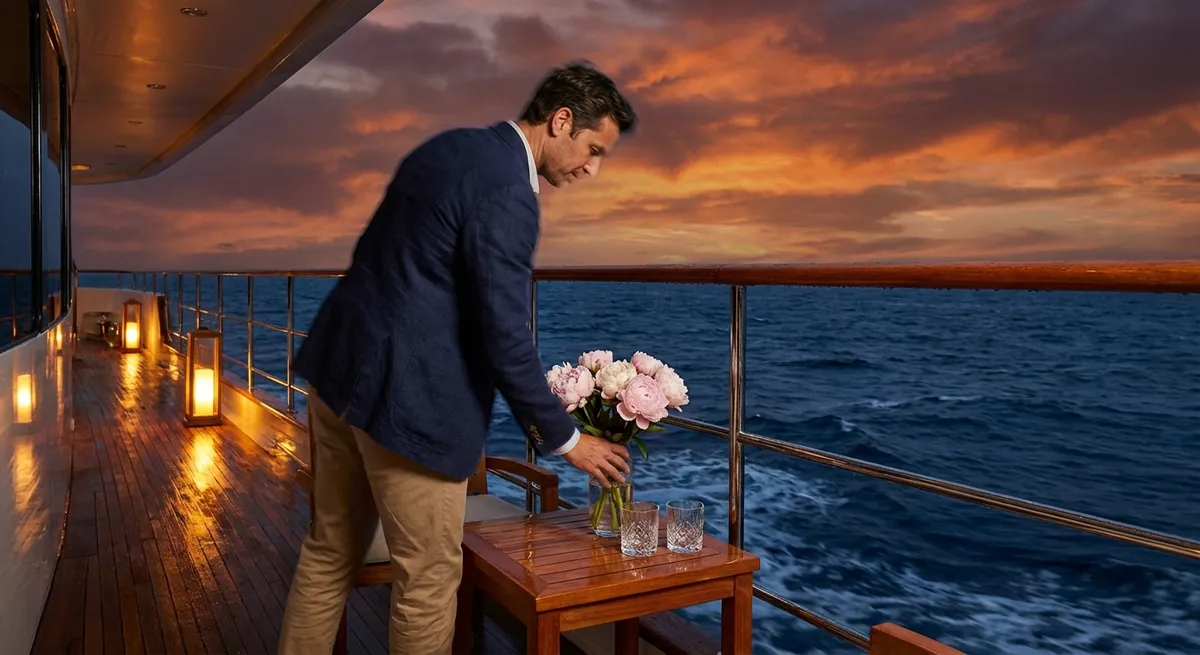
Act Three: a gentle decrescendo rather than an abrupt end. This might be a solitary promenade walk, a final tea or nightcap brought back to your stateroom, or a few minutes on the balcony watching the ship’s wake. Keep your phone in your cabin or bag for this last act; the sensory memory of salt air, distant lights, and the subtle hum of the ship will outlast any photo.
By engineering your evenings for atmosphere rather than merely activity, you transform the ship from an entertainment complex into a stage for your own, deeply personal nocturne at sea.
Conclusion
A refined cruise is not defined by itinerary alone, nor by the brand of champagne in your flute. It is defined by how deliberately you shape your environment—cabin, deck, dining room, port, and evening—into something that reflects your own sense of quiet luxury. These five insights ask for no grand gestures, only a series of subtle decisions about timing, placement, and intention.
For the true enthusiast, this is where the art of cruising now lives: not in the spectacle of excess, but in the understated mastery of experience. When every corner of your voyage—public and private, day and night—feels composed rather than improvised, the ship ceases to be simply where you are staying. It becomes, in the most satisfying sense, the way you travel.
Sources
- U.S. Department of State – Cruise Ship Traveler Information - Official guidance on documents, safety, and planning for cruise travelers
- Cruise Lines International Association (CLIA) - Industry research and insights into cruise trends, guest behavior, and onboard experiences
- CDC – Cruise Ship Travel & Health - Authoritative recommendations on staying healthy and comfortable at sea
- Princess Cruises – Onboard Experience Overview - Example of how major lines structure dining, entertainment, and quiet spaces onboard
- Harvard Business Review – The Power of Ritual - Explores how small, intentional rituals can enhance well-being and meaning, a concept relevant to designing refined routines at sea
Key Takeaway
The most important thing to remember from this article is that this information can change how you think about Travel Tips.