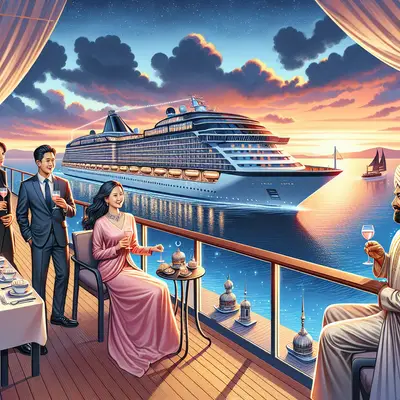
For the traveler who regards time as the rarest currency, a luxury cruise is no longer a floating hotel; it is a highly choreographed experience where discretion, craft, and detail converge at sea. Beyond the polished marble and the flawless service, there is an intricate architecture of choices—culinary, cultural, spatial, and social—that separates a merely comfortable voyage from a truly distinguished one. This is the realm where the ship becomes a curated environment rather than simple transportation, and every moment is quietly engineered to feel both effortless and deeply personal.
Below are five exclusive, under-discussed insights that seasoned cruise enthusiasts increasingly prize—signals that a ship, and the line behind it, understands what true refinement at sea now requires.
The New Signature of Luxury: Spatial Generosity and Acoustic Calm
On the most considered ships, luxury is measured not only in square footage, but in how space breathes and how sound behaves. The best vessels are designed so that public rooms never feel saturated, even at peak times; you will notice wider passageways, gentler lighting transitions between venues, and a deliberate absence of echo in lounges and dining rooms. These are not aesthetic accidents but the result of acoustic engineering, zoning, and careful passenger-to-space ratios.
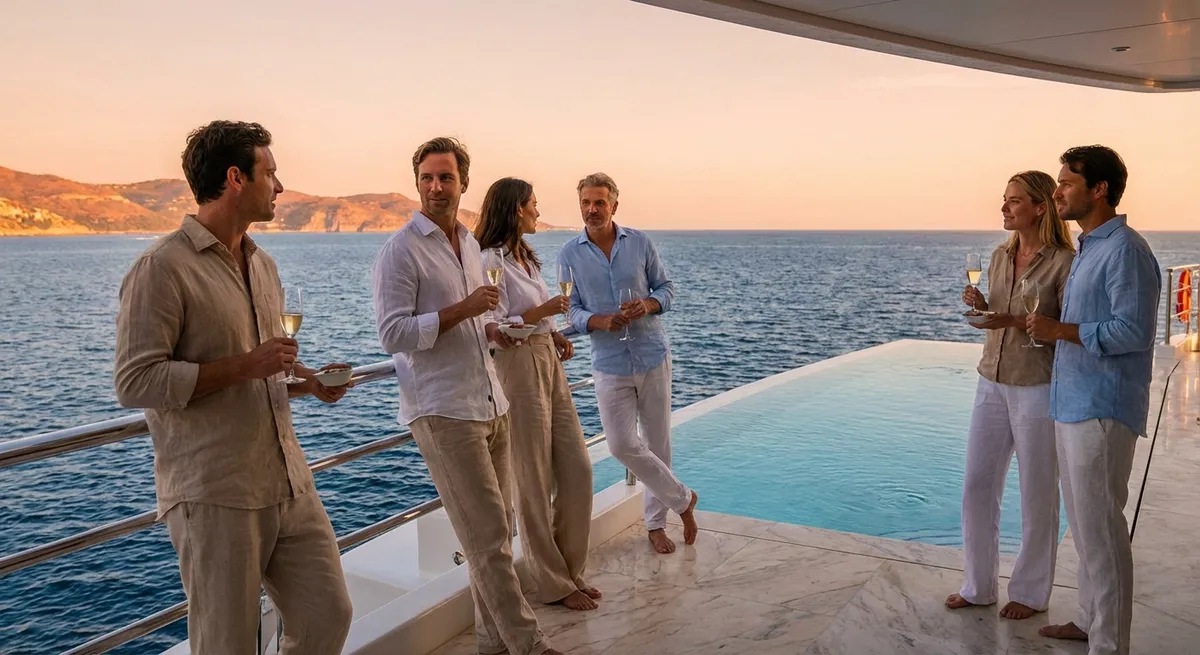
Well-traveled guests increasingly look beyond suite size to the distribution of space: deep-balcony terraces with true dining capacity, libraries and observation lounges placed away from traffic routes, and small, almost hidden enclaves that function as private salons without needing reserved signage. High-end lines are also investing in vibration and noise suppression, particularly in accommodations near engines or public venues; a ship that feels quietly poised even when maneuvering into port is a subtle but significant marker of quality. When researching, pay attention to deck plans, passenger counts, and independent reviews describing sound levels and crowd flow—these quiet logistics often say more about a ship’s refinement than any chandelier ever could.
Culinary Precision: Beyond “Fine Dining” to Curated Provenance
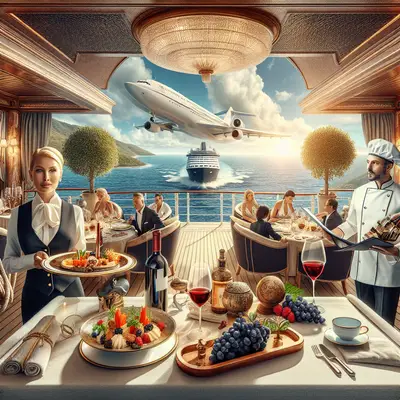
Exceptional cuisine at sea now transcends white tablecloths and multi-course menus; the real discernment lies in provenance, restraint, and narrative. On leading luxury ships, the culinary director is closer to a curator than a chef-in-absentia, composing a rotating repertoire that prioritizes seasonality and regional specificity over sheer opulence. You might find a menu that speaks in detail about the exact bay where shellfish were harvested, the single-estate olive oil used tableside, or a vintner whose wines are showcased only on particular itineraries.
Cruise lines with serious culinary ambitions have moved away from vast, overlapping menus toward more focused offerings that change frequently and are intimately tied to the day’s port of call. A call in Kotor may mean line-caught Adriatic fish grilled simply with mountain herbs, while a day in Bordeaux might see a fleeting appearance of rare local cheeses paired with small-producer Sauternes. Savvy travelers look for ships with visible culinary partnerships—Michelin-star collaborations, respected sommelier programs, and onboard cooking schools that actually reflect the itinerary rather than generic “Mediterranean” themes. The presence of a thoughtful, dynamic wine list—balanced between classic labels and nuanced boutique producers—is another discreet indicator that the culinary program is taken seriously at the highest level.
Private-Lens Shore Experiences: Depth Instead of Distance
While mainstream excursions still default to panoramic coach tours and crowded landmarks, the most rewarding luxury voyages are distinguished by highly edited, low-capacity shore experiences that feel almost privately staged. This might manifest as pre-opening museum access with a curator, a visit to a winemaker who does not ordinarily receive visitors, or a morning in a local market with the ship’s chef followed by a small-group cooking session back on board. The point is not mere exclusivity, but depth: the sense that the port has been interpreted for you, not simply visited.
Experienced cruisers have started to treat shore programs as a primary selection criterion, examining whether the line offers layered options—active, artistic, culinary, and scholarly—rather than a single generic tour in each port. Increasingly, top-tier lines are also integrating meaningful sustainability and cultural-respect components: limited-group visits that support local artisans, wildlife excursions guided by accredited naturalists, or partnerships with heritage organizations that ensure your presence contributes rather than depletes. Travelers who value nuance will also look for “unscripted” formats: flexible private guides, customizable half-day itineraries, and the ability to return to the ship at leisure without feeling marshalled through a rigid timetable.
Discreet Personalization: Technology in Service of Human Grace
The most sophisticated luxury ships are quietly rethinking what personalization means, moving beyond rote name recognition into something more architectural: anticipating preferences and eliminating friction without making the process feel transactional. Technology is present but intentionally recessive—RFID wearables for seamless embarkation, unobtrusive digital ordering on pool decks, or in-suite tablets for spa reservations and in-room dining that never require waiting on hold. Crucially, this infrastructure supports, rather than replaces, human service.
On a well-run luxury ship, your coffee appears as you prefer it by the second morning not because you requested it again, but because staff are trained and empowered to notice and remember. Dietary nuances are logged once and then reflected across venues without repeated explanations. Butler and concierge teams coordinate behind the scenes so that a spa treatment, a special bottle of wine, and a particular pillow preference feel like a single continuous gesture rather than three separate requests. For the seasoned guest, a strong indicator of true refinement is the absence of small frictions: no signing for every glass of wine, no queues forming in front of reception, no repeated “reminders” of package tiers or priced add-ons. Personalization becomes the art of eliminating noise, not adding performative flourishes.
Itinerary as Identity: The Rise of Purpose-Built Voyages
Perhaps the most telling shift in high-end cruising lies in how itineraries are conceived. No longer is a voyage defined merely by a region—“the Baltic,” “the Caribbean”—but by a point of view. The most compelling luxury sailings are designed as narratives: a deep cultural arc through lesser-known Aegean islands exploring ancient trade routes, a culinary journey charting the evolution of New World wines, or an expedition that uses the ship as a platform for climate science lectures and citizen-research initiatives in polar regions.
Discerning guests increasingly read itineraries as manifestos. Details like overnight stays in select ports, unhurried river transits, or calls at small, infrastructure-limited harbors say a great deal about a line’s priorities. A ship that lingers into the evening in a Mediterranean port so guests can experience local dining and performance, rather than departing at 5 p.m. for scheduling convenience, is making a statement about how it values place and time. Look for voyages that resist the temptation to simply accumulate ports and instead emphasize rhythm—alternating immersive days ashore with contemplative sea days, building a sense of progression rather than a checklist of locations.
Conclusion
Luxury cruising, at its most accomplished, is a discipline of restraint and intention. It is the quiet assurance that every detail—how a corridor feels at midnight, how a menu reads after a long day ashore, how a port unfolds when approached with context and care—has been considered for travelers who notice such things. For the enthusiast who has already sailed the familiar routes, the new frontier of refinement lies less in overt extravagance and more in coherence: how space, service, cuisine, and itinerary align to create a voyage that feels uniquely, almost privately, yours. In a world where time and attention are increasingly fragmented, the most distinguished ships offer something rare: a journey in which every element is tuned to the frequency of your most exacting expectations—and then quietly exceeds them.
Sources
- U.S. Federal Maritime Commission – Cruise Passenger Resources – Background on cruise operations, passenger rights, and regulatory context.
- Cruise Lines International Association (CLIA) – 2024 State of the Cruise Industry – Industry trends, passenger preferences, and data on luxury and experiential cruising.
- Regent Seven Seas Cruises – Luxury Cruise Experience Overview – Example of how a leading luxury line presents space, inclusions, and personalized service.
- Seabourn – Ventures and Expedition Experiences – Illustrates curated, in-depth shore programs and expedition-style enrichment.
- NYU School of Professional Studies – Hospitality & Luxury Trends – Academic perspective on evolving definitions of luxury, personalization, and guest experience.
Key Takeaway
The most important thing to remember from this article is that this information can change how you think about Luxury Cruises.