Luxury cruising has entered a quietly transformative era. The best ships no longer compete on spectacle alone, but on nuance: the way a steward anticipates your preferences by day two, the stillness of a library no one seems to know exists, the gratifying sense that time bends ever so slightly in your favor. For travelers who value refinement over fanfare, today’s luxury cruise experiences offer a new lexicon of privilege—measured not in logos and labels, but in access, atmosphere, and a certain effortless precision.
Below, five exclusive insights reveal how discerning cruisers are navigating this evolved landscape—and how to recognize a ship and itinerary truly worthy of your time.
The New Benchmark: Space, Not Size
In the upper tier of cruising, luxury is increasingly defined by what you don’t see: lines, crowds, noise, bottlenecks, and over-programming. The most sophisticated ships are quietly engineering a sense of spaciousness that transcends square footage. It is evident in passenger-to-space ratios that rival boutique hotels, corridors that never feel congested, and public rooms that are deliberately under-furnished to preserve visual calm.
Seasoned travelers now look past headline-grabbing amenities and focus on occupancy and design. A ship carrying under 1,000 guests with a high crew-to-passenger ratio often delivers a more civilized rhythm: you move through the vessel without friction, service remains attentive even on sea days, and popular venues never feel oversubscribed. Suite layouts are reimagined as private apartments at sea, with dedicated work nooks, dressing areas, and generous terraces that invite you to spend as much time outside as in.
The most telling detail is often acoustic rather than visual. Thoughtful use of sound-dampening materials, the positioning of lounges away from stateroom corridors, and intelligent traffic patterns between restaurants and theaters create a shipboard environment where you can hear the sea before you hear your neighbors. On these vessels, true luxury is the ability to close your suite door and feel, instantly, as though the rest of the ship has politely receded.
Curated Gastronomy: Beyond “Fine Dining at Sea”
The rhetoric of “Michelin-inspired cuisine” is now standard marketing language, but connoisseurs know to look for subtler markers of culinary seriousness. The most accomplished vessels have moved beyond generic “continental” menus toward a more precise, terroir-driven approach that adjusts with both region and season.
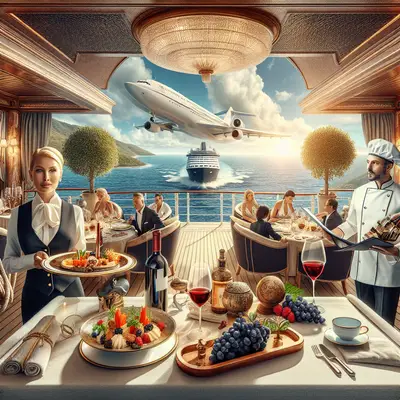
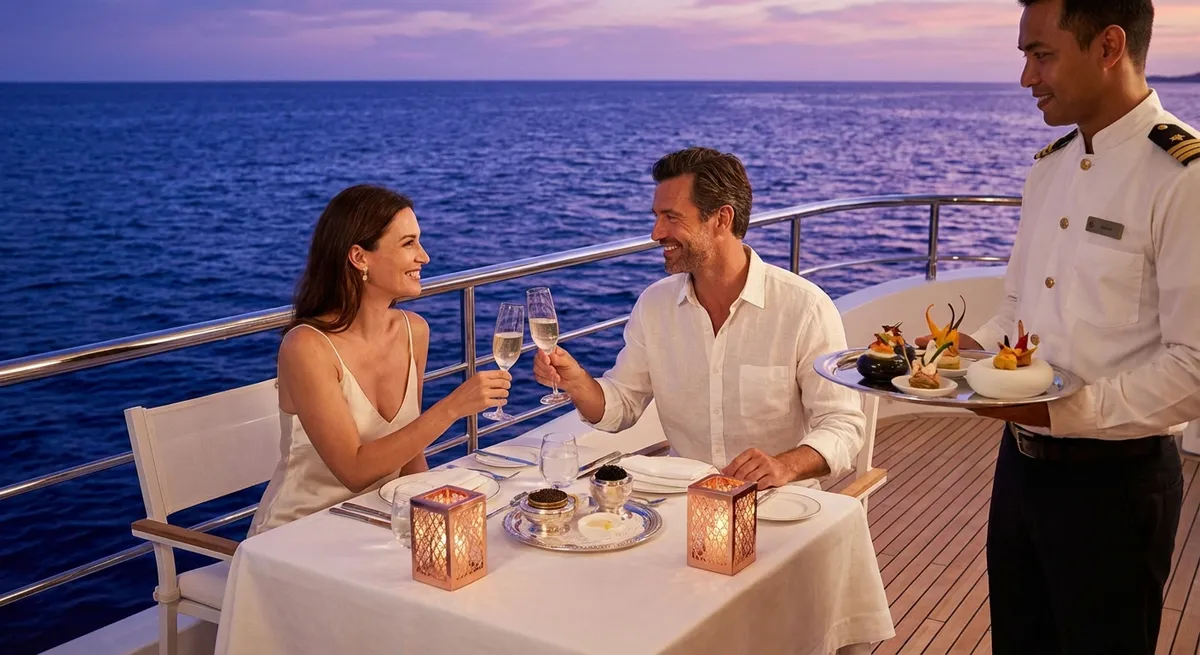
A few telltale signs: bread baked in small batches throughout service, so it reaches the table still warm; wine lists that move beyond the familiar labels to spotlight smaller producers, particularly from regions you are sailing through; and a willingness to offer genuinely slow dining for those who wish it—lingering, unhurried meals that stretch across several courses and several hours without ever feeling theatrical.
Menus on these ships rarely attempt to be all things to all people at every moment. Instead, you might find a compact à la carte menu anchored by a few technically demanding signatures, complemented by tasting menus that change mid-cruise. Increasingly, chefs are using embarkation and port days to source ultra-fresh ingredients ashore, integrating them into pop-up menus or one-night-only chef’s tables limited to a handful of guests.
For the well-informed cruiser, the question isn’t “Is there a specialty restaurant?” but “Who is behind this menu, and how are they thinking about provenance?” A culinary program that publishes its partnerships—whether with respected champagne houses, coastal fisheries, or artisan producers—signals that the ship is operating at a level comparable to top-tier land-based restaurants, rather than merely approximating them.
Itineraries as Narratives, Not Checklists
The most exclusive advantage of luxury cruising in its current form may be the quiet sophistication of its itineraries. Gone are the days when “premium” was defined purely by marquee ports and short visits. Today’s discerning lines are crafting journeys built around coherence rather than quantity—voyages that read like carefully edited narratives instead of crowded lists of stops.
In practice, this might look like extended calls that stretch deep into the evening, allowing you to see a coastal city evolve from daytime commerce to twilight ritual without rushing back to the ship. It may involve overnights in strategically chosen ports—Lisbon, Singapore, Vancouver—where the experience after dark constitutes a distinct chapter of the trip rather than a mere extension of the day.
Itinerary design has also become a subtle art of sequencing. The most thoughtful voyages balance intense, culture-rich cities with quieter anchorages that allow you to reset. Harbors are chosen not only for their attractions but for their approach: gliding into a fjord at dawn or drifting off a small island at golden hour can be as memorable as any formal excursion.
Experienced cruisers now examine sail timings and port orders as critically as they do cabin categories. A ship that routinely departs ports after 8 p.m., offers tender operations designed for minimal waiting, and pairs sought-after destinations with less publicized but thematically linked ports is signaling that it views the itinerary as a crafted experience—not merely a logistical framework.
Bespoke Shore Experiences: Precision Over Spectacle
On land, the new currency of luxury is not simply access—it is calibration. The most desirable shore experiences are shrinking, not expanding: smaller groups, deeper encounters, and a degree of personalization that feels thoughtfully engineered rather than extravagantly staged.
Instead of mass-market tours, refined cruise lines now curate a portfolio of intimate experiences with meaningful constraints. Group sizes might be capped at six or eight participants, vehicles chosen for comfort rather than capacity, and guides selected for academic backgrounds or long-standing local ties. You are less a tourist in transit and more a temporary guest of the destination.
Tiered options have become more nuanced as well. Beyond standard excursions, many luxury lines now discreetly facilitate custom days ashore: private visits to galleries outside public hours, reserve tastings at family-owned vineyards, after-hours access to architectural landmarks, or guided walks through neighborhoods where there are no souvenir stands—only everyday life unfolding around you.
For those who value autonomy, the ultimate privilege is often logistical rather than overtly glamorous: expertly vetted local drivers, restaurant reservations aligned with your dietary and aesthetic preferences, and smart advice about when it is best to abandon the car and simply walk. Luxury in this context becomes a choreography of small decisions handled on your behalf, allowing you to inhabit a place fully, with minimal effort and maximum depth.
Quiet Personalization: Data, Discretion, and the Art of Anticipation
Perhaps the most defining shift in modern luxury cruising lies in service that is personalized yet elegantly understated. The best crews now operate at a level where you feel utterly recognized but never surveilled—a delicate balance that separates true luxury from mere enthusiasm.
This begins with pre-cruise preparation. High-end lines have become increasingly sophisticated in how they capture and interpret guest preferences, from the firmness of pillows and preferred gin to the ideal dining cadence for your party. The difference on board is felt in a hundred barely perceptible ways: the way your usual table becomes naturally “available” at your favored time, or how a particular tea appears in your suite just before you would have thought to request it.
Technology, deployed discreetly, is changing the tempo of this personalization. Guests might find that facial recognition or smart cards make embarkation seamless, or that reservations are adjusted in real time to avoid congestion, creating the impression that the ship has somehow expanded just for them. At the same time, the finest lines uphold strict privacy and restraint—never overusing data in ways that feel intrusive or overly familiar.
What seasoned cruisers come to value most is not the grand gesture but the consistent calibration of small ones: a butler who adjusts the timing of canapés after noticing your tendency to return late from shore, a sommelier who quietly steers you away from a predictable choice toward something both more interesting and better suited to your palate, a housekeeper who recognizes whether you prefer your suite fully serviced during breakfast or while you are in the spa. This is where modern luxury at sea truly differentiates itself—not in the promise to say “yes” to everything, but in knowing exactly when not to ask.
Conclusion
Luxury cruising today is less about conspicuous abundance and more about artful editing. It is expressed in generous space, thoughtful gastronomy, narratively coherent itineraries, quietly exceptional experiences ashore, and a level of service that seems to anticipate your pace as much as your preferences. For travelers who appreciate refinement over fanfare, these five insights offer a lens through which to evaluate ships and sailings—one that privileges nuance, time, and a sense of immersion in both sea and shore. The most rewarding voyages are no longer simply about where you go, but how gracefully everything in between is orchestrated.
Sources
- Cruise Lines International Association (CLIA) – 2023 State of the Cruise Industry - Industry overview with data on luxury trends, capacity, and guest expectations
- U.S. Federal Maritime Commission – Passenger Vessel Operator Information - Regulatory and operator background information on major cruise lines
- Forbes Travel Guide – Understanding Luxury Hospitality Standards - Insight into global luxury service benchmarks relevant to high-end cruise offerings
- The New York Times – “As Cruises Rebound, Luxury Lines Compete on Amenities” - Reporting on how luxury cruise lines differentiate through space, service, and design
- Harvard Business Review – “The Future of Customer Service Is AI-Human Collaboration” - Context for how data and technology enable personalized yet discreet service experiences
Key Takeaway
The most important thing to remember from this article is that this information can change how you think about Luxury Cruises.