There is a moment—usually just after sailaway, when the wake draws a clean white line behind the ship—when seasoned cruisers quietly trade notes about where the truly exceptional itineraries still exist. Not the predictable circuits of the mass market, but the coastal routes that unfold like a private address book: unhurried harbors, well‑kept culinary secrets, and anchorages where the tenders feel more like chauffeured town cars than lifeboats.
These are the itineraries that never scream for attention, yet remain the most talked‑about among guests who measure value not in spectacle, but in nuance: the slowness of a long harbor approach, the exact hour when the light hits a city’s waterfront, the captain’s choice to linger an extra curve along an unsung coastline. For those who prefer their wanderlust with a tailored finish, the following insights reveal destination details that elevate a cruise from “well planned” to quietly unforgettable.
Arriving After the Crowds: The Art of the Twilight Harbor
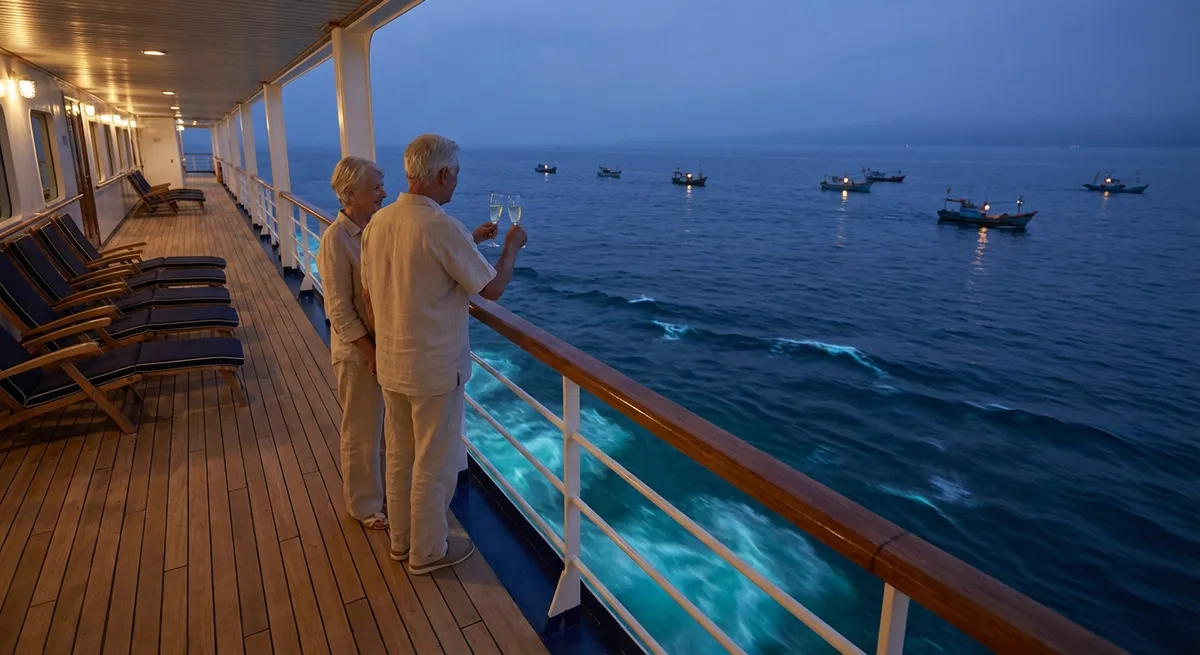
Connoisseurs of great itineraries know that when you arrive can be as important as where you arrive. Premium lines are increasingly designing sailings that slip into marquee ports just as the day ships depart, transforming cities that normally feel overrun into near‑private playgrounds at dusk. Picture Dubrovnik’s medieval walls, not seething with tour groups but bathed in late‑gold light, with your tender gliding in as local commuters head home and the cobblestones begin to cool.
The advantages are layered and luxurious. Shore experiences at twilight become more intimate—restaurants have time to linger over your wine pairing, guides can abandon the megaphone in favor of conversation, and shops shift from transactional to genuinely welcoming. Temperature, too, becomes an understated indulgence; wandering Valletta’s bastions or Mykonos’ lanes in the evening removes the fatigue that heat and crowds silently impose. For experienced cruisers, these “after hours” port calls feel like possessing the duplicate key to cities most travelers only ever see through the front door.
Harbor‑Hopping, Not Country‑Collecting: Micro‑Regions with a Signature Rhythm
While first‑time cruisers often chase long lists of countries, seasoned guests tend to favor micro‑regions—compact seas and coasts with a distinct internal rhythm. Consider, for instance, itineraries that trace a single gulf, archipelago, or fjord system rather than sprinting from headline city to headline city. A week spent threading the smaller ports of the Adriatic, the lesser‑known islands of the Aegean, or the quieter reaches of Norway’s inner fjords offers a depth of experience that can’t be captured by ticking off capitals.
In these micro‑regions, cultural subtleties reveal themselves from one harbor to the next: the way coffee is served, how locals treat the water, the shifting architectural accents from village to village. Your ship becomes not just a floating hotel but an elegant lens, allowing you to watch the landscape and way of life evolve in measured increments. Practiced cruisers appreciate this continuity; they begin to anticipate the next port not as a new “country,” but as another chapter in a single, coherent coastal narrative.
Culinary Latitude: Following Local Tides Instead of Tourist Trails
On the most thoughtfully crafted routes, destinations are selected not only for scenery but for their culinary tide clocks—the precise moments when what’s served ashore is at its seasonal and daily peak. Serious cruisers often choose sailings that align with local food rhythms: the shoulder‑season truffle hunts in certain Mediterranean hinterlands, spring asparagus festivals along the Rhine, or late‑summer seafood gluts in quietly celebrated Baltic towns.
These are not generic “foodie” ports, but places where your ship’s arrival is timed so you can slip directly into the culinary life of the destination. A morning docking in a small Ligurian harbor might coincide with the fish auction, giving you first pick at a trattoria that still buys from the boats you watched from your balcony. In northern Europe, a long day in port might be designed to stretch from the bakery’s first loaves to the evening’s hyper‑local tasting menus. The true luxury here is not abundance, but precision: itineraries that understand that an oyster pulled from the water at noon and shucked at 12:05 is a destination in its own right.
The Long Approach: When Sailing Into the Destination Is the Experience
For certain ports, the true destination is not the city, but the approach. Discerning cruisers quietly prioritize itineraries that extend these maritime “prologues,” allowing time on deck to become as curated as any shore excursion. Think of the extended glide up the Gironde toward Bordeaux, the stately procession along the Tagus as Lisbon’s skyline unfolds, or the early‑morning sweep past low‑slung islands before docking in Copenhagen.
On the most refined voyages, these approaches are treated with the same gravitas as a gala evening: commentary is offered by someone who can speak to both maritime history and present‑day life, the bar leans into local flavors, and the pace of the ship slows deliberately so guests can absorb the unfolding panorama. Seasoned travelers know to wake early, to step onto their balconies with coffee in hand, and to watch as fishermen, ferries, and harbor pilots stitch together a living tapestry of the destination long before anyone sets foot ashore. It is here, in the measured choreography of buoys, bridges, and turning basins, that one truly arrives.
Beyond the Big Name: Sister Ports with a More Authentic Pulse
One of the quietest luxuries in cruise planning is the deliberate choice of “sister” ports: lesser‑known harbors that sit in the shadow of household names yet deliver a more refined, unfiltered expression of place. Instead of the marquee island, your itinerary lingers at its quieter cousin; rather than the region’s largest cruise pier, you dock at a smaller commercial quay where the rhythm is driven by local life, not seasonal surges.
These ports might not dominate brochures, but they often captivate experienced guests. You may find, for instance, that a compact French Atlantic harbor offers more meaningful contact with winemakers and oyster farmers than a larger city ever could. Or that a modest Scandinavian town, bypassed by mega‑ships, provides access to hiking trails, design studios, and fjord‑edge saunas that feel almost curated for your sailing. The beauty of these sister ports lies in their understatement: they allow you to experience the destination’s essence without the filter of crowds, creating memories that feel quietly proprietary.
Conclusion
For travelers who treat the sea as both passage and privilege, destination choice has evolved beyond the simple question of “which port next.” The truest luxury lies in subtler distinctions: twilight arrivals instead of midday chaos, micro‑regions over marathon country lists, culinary timing honed to the hour, approaches that turn navigation into theatre, and secondary harbors that reveal a country’s unvarnished character.
These are the itineraries seasoned cruisers talk about in hushed tones over a final nightcap, the voyages that feel less like products and more like well‑kept confidences. For those curating their next journey with care, it is in these refined details—these tides of distinction—that the world’s coastlines reveal their most rewarding secrets.
Key Takeaway
The most important thing to remember from this article is that this information can change how you think about Destinations.