There are ports that tick boxes, and there are ports that alter your internal cadence. The latter are not always the most photographed, nor the most obvious—they are places whose character unfolds gradually, rewarding the cruiser willing to look beyond the pier and the predictable shore excursion. For travelers who see each voyage as a curated sequence of sensorial notes rather than a checklist of stops, destination choice is less about “where have you been?” and more about “what stayed with you?”
This is a guide to those ports and coastal regions where time feels thicker, more deliberate—places that ask to be walked, tasted, and listened to slowly. Woven through are five exclusive insights that seasoned cruise enthusiasts quietly share among themselves, the kinds of details that turn a pleasant itinerary into a deeply textured journey.
Destinations with a Sense of Inner Architecture
Some destinations feel impressive on arrival but hollow on closer inspection. Others—Barcelona at dawn from the breakwater, Kotor framed by its fjord-like bay, Quebec City rising above the St. Lawrence—have an internal architecture, both physical and cultural, that sustains repeated visits.
What distinguishes these ports is coherence: the way geography, history, and daily life interlock. In Valletta, Malta, the honey-colored bastions, baroque domes, and narrow streets channel sea light and sea breeze so completely that orientation becomes almost intuitive. In Bergen, the surrounding mountains, historic wharf, and subtly shifting North Atlantic sky form a visual rhythm you begin to anticipate after only a day ashore.
Such destinations invite layered itineraries: a morning in the visible city (the primary cathedral, the main market), followed by an afternoon in the city behind the postcard—side streets, second courtyards, waterfront edges the tour coaches never reach. Over multiple calls, you don’t “finish” these places; you cultivate a more nuanced understanding of their patterns: when the fishermen come in, when the cafés turn local, when the tourist tempo softens.
Exclusive Insight #1: Repeat Ports, Evolving Scripts
Experienced cruisers favor itineraries that return to the same port across different seasons or even consecutive years—not out of habit, but for contrast. A winter Mediterranean call in Civitavecchia followed by a high-summer return yields an entirely different Rome: one defined by locals reclaiming neighborhoods versus one tuned to festival and outdoor energy. When evaluating itineraries, look less at how many new ports are promised and more at which ports are granted the dignity of a second, or longer, look.
Reading the Waterfront: What the Harbor Quietly Reveals
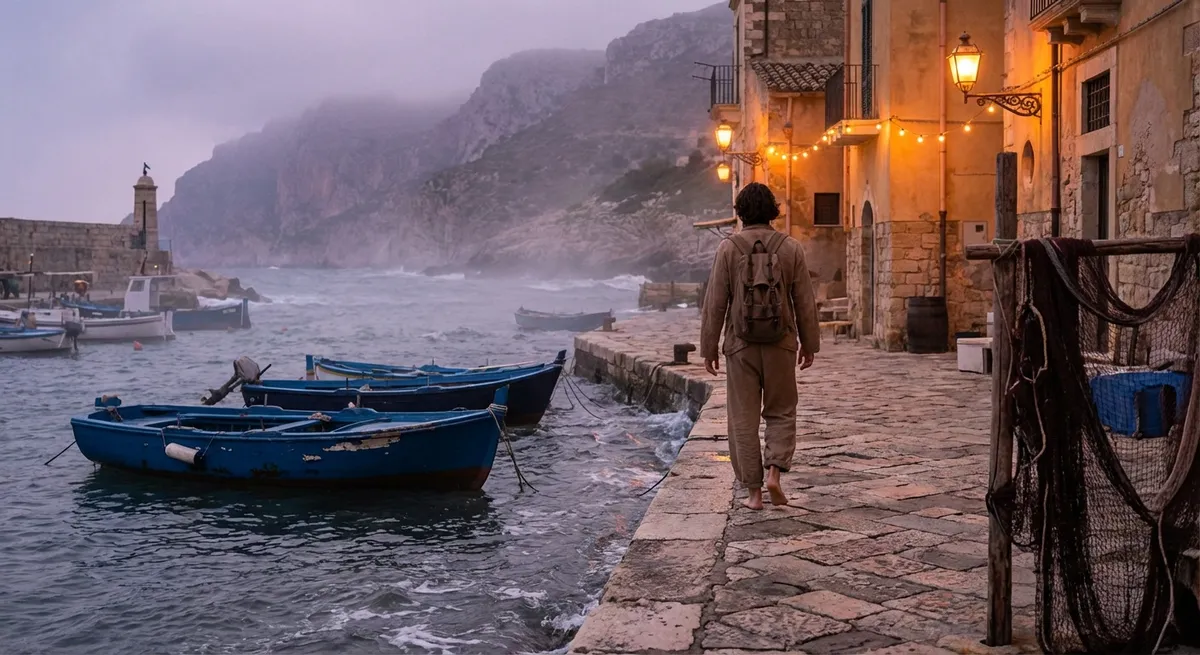
Before you disembark, the waterfront has already begun telling you the truth about a destination. The type of vessels moored nearby—workboats, ferries, small leisure craft, or a row of other cruise ships—offers an immediate sense of the place’s relationship with the sea. A port where fishing boats and cargo vessels still dominate often retains a working maritime culture; one where mega-yachts crowd the marina signals a different kind of economy and social rhythm.
Port design also matters. Compact, walkable harbors with clear pedestrian-friendly routes—think Mykonos Town, or Old San Juan—tend to reward spontaneous exploration. Industrial terminals with long shuttle transfers are not inherently lesser, but they place more emphasis on planning and private arrangements. The distance from ship to old quarter, the presence of locals using the same promenade you will, even the condition of the pier infrastructure together sketch an immediate portrait.
Exclusive Insight #2: The “Wake View” Test
Veteran cruisers often step onto deck during docking and sailaway not merely for the spectacle, but as reconnaissance. They watch where the crew’s eyes go, which side of the ship local pilots linger on, and how the coastline recedes. If the most compelling scenes seem slightly removed from the main cruise terminal—perhaps a headland with a quiet beach, a cluster of homes around a secondary cove—that becomes the focal point ashore. A short taxi ride to a satellite neighborhood can yield a far more authentic and tranquil encounter than staying within the orbit of the primary pier.
Beyond the Postcard: Destinations That Excel in the Subtle Notes
Some ports are obvious showstoppers—the Santorinis, the Dubrovniks, the Alaskas of the world. Yet for the well-traveled cruiser, the real fascination often lies in the subtler coastal cities and towns that reveal their excellence not in a single vista, but in the accumulation of small details: the way streetlights reflect off a river at night, the balance between old and new architecture, the presence of quiet, civic spaces rather than only tourist-facing plazas.
Consider Antwerp or Hamburg, riverine gateways where maritime trade and cultural sophistication coexist. Both are ports where the walk from ship to city threads through layers of history and urban design, each bend in the river offering a slightly altered perspective. Or look to smaller Adriatic towns like Zadar, where a sea organ and “greeting to the sun” installation turn the waterfront into a contemplative amphitheater at dusk, rather than just a promenade.
These are destinations where the most memorable moments are rarely pre-sold. They appear when you step into a neighborhood bakery that feels untouched by the cruise timetable, or find a municipal park overlooking the harbor frequented entirely by locals on their lunch break.
Exclusive Insight #3: Following Supply Lines, Not Souvenir Streets
One quiet tactic used by experienced cruisers is to watch where the small delivery vans and hand trucks go in the morning. Rather than following the main flow of passengers toward the principal square, they trace the routes of suppliers—those bringing produce, bread, or newspapers into the city. This often leads to commercial streets that serve residents first and tourists second: the places where you can taste local pastries still warm from the oven, sample regional cheeses without fanfare, and observe the unhurried choreography of daily life.
Time as the Ultimate Luxury: Choosing Itineraries That Breathe
For the discerning traveler, the true luxury is not simply a spacious suite or fine dining—it is generous, well-structured time ashore. Destinations feel entirely different under the compression of a half-day call versus an evening departure that allows for golden hour, dinner in town, and an unhurried wander back to the ship.
Northern Europe and the Mediterranean both offer ports whose character blossoms after dark: Lisbon’s hilltop viewpoints and fado bars; Marseille’s waterfront as the fishing boats return; Stockholm’s islands tinted by the late Nordic sun. Similarly, some Caribbean calls are transformed by later departures that permit a transition from beach day to local nightlife, rather than forcing a mid-afternoon retreat.
When assessing future voyages, it can be revealing to map not just the sequence of ports, but the depth of each call: Which receive overnights or late departures? Where are you granted sunrise arrival or sunset departure? The more a line respects the natural rhythms of the destination, the more aligned the experience feels with the place itself.
Exclusive Insight #4: The Port-Time Ratio Rule
Discerning cruisers often apply an informal “port-time ratio” when considering itineraries. Rather than being seduced by a long list of stops, they tally how many hours are meaningfully available in each key destination. A seven-night cruise with four extended, well-timed calls can be far richer—and less fatiguing—than one that offers seven ports in seven days with compressed windows. Look particularly for cruises that pair one or two “headline” ports with slightly longer calls in more understated towns; it is often in those quieter stops that your most enduring memories are made.
Designing Your Own Narrative Ashore
The modern cruise guest has more tools than ever to shape their time in port. Official excursions, independent guides, rideshare services, and local public transport all enable vastly different narratives within the same call. What distinguishes an elevated approach is not necessarily spending more, but editing more carefully.
In a port like Naples, the options can feel overwhelming: Pompeii, Capri, the Amalfi Coast, the National Archaeological Museum, simply walking Spaccanapoli. Rather than attempting a highlight reel in a single day, experienced travelers align their choice with the emotional and sensory tone they seek: contemplative (Paestum’s temples), glamorous (Capri’s terraces overlooking the Tyrrhenian Sea), or intensely urban (Naples’ historic center). Future calls then become variations on a theme, building a multi-visit portrait of the region.
Equally, there is value in reserving one port per itinerary for what might be called “structured wandering”—a simple framework (e.g., walk to the oldest market, find the quietest church, sit in the busiest café) that leaves room for serendipity. In such moments, the cruise ceases to feel like a procession and becomes a series of personally curated encounters.
Exclusive Insight #5: The “Anchor Port” Philosophy
Many well-cruised guests quietly designate one port per voyage as their “anchor port”—not necessarily the most famous call, but the one around which they shape the emotional arc of the journey. They research it more deeply, perhaps book a private guide or niche experience (a market tour with a local chef, a visit to a family-run vineyard, a small boat trip with a naturalist). This anchor port becomes the voyage’s narrative fulcrum: the destination you recall when you think of that particular sailing years later. Selecting an anchor port in advance subtly changes how you experience every other stop, providing both anticipation and context.
Conclusion
A truly memorable voyage is not defined solely by the ship, nor solely by the ports, but by the dialogue between the two: the floating world you inhabit at sea and the terrestrial worlds you briefly inhabit ashore. Destinations of real substance—the ones with inner architecture, nuanced waterfronts, and rich, everyday rhythms—reward those who approach them with intention and curiosity.
For the refined cruiser, the itinerary becomes less an inventory of countries and more a collection of precisely chosen moments: the sound of church bells drifting across a harbor at sailaway, the texture of cobblestones underfoot in an unhurried side street, the taste of a local dish enjoyed in a café where no one seems aware a cruise ship is in port. In seeking out these ports—and in using the quiet strategies that experienced travelers share only in passing—you transform each voyage from a sequence of stops into a considered, coherent journey.
Sources
- UN World Tourism Organization – Coastal and Maritime Tourism – Overview of global trends shaping coastal and cruise-related travel
- Port of Barcelona – Cruise Activity and Passenger Information – Insight into how a major European cruise port structures its terminals and city access
- Port of Valletta (Valletta Cruise Port) – Official port information illustrating the relationship between harbor design and access to historic city centers
- European Commission – Sustainable Cruise and Ferry Ports – Context on how European ports balance cruise growth with local urban and environmental considerations
- National Geographic – Guide to Sustainable Travel – Broader perspective on approaching destinations thoughtfully and respectfully
Key Takeaway
The most important thing to remember from this article is that this information can change how you think about Destinations.