Some destinations dazzle; others linger. The most rewarding ports for discerning cruisers are rarely the loudest or the most photographed. They are the cities and harbors where the sea is not backdrop but bloodstream—where maritime history, food culture, architecture, and everyday ritual combine to create a sense of place that feels quietly, unmistakably real.
For the cultivated cruiser, selecting destinations is less about ticking off capitals and more about reading the subtler grain of a coastline. The following exploration focuses on how to recognize—and deliberately curate—those ports that transform an itinerary from pleasant to indelible, along with five exclusive insights that seasoned enthusiasts increasingly keep to themselves.
Ports With a Living Maritime Pulse
Ports with genuine character are not designed around cruise terminals; they are shaped by centuries of trading, fishing, and shipbuilding. Walking distance is a reliable clue: when you can step from gangway to working waterfront, into neighborhoods where laundry still flutters over cobbled lanes and market crates smell of brine and citrus, you are in the right kind of harbor.
Think of places like Cádiz, Bergen, or Kusadasi—not as mere gateways to bigger-name inland cities, but as destinations worthy of your full day. Look for visible shipyards, heritage lighthouses, and ferries carrying commuters rather than tourists. These details signal that maritime life remains embedded in the local rhythm, and your short time ashore will be anchored by an authentic coastal narrative rather than a choreographed performance.
For the discerning traveler, this means consciously choosing itineraries where ports are destinations in their own right, not just springboards to long bus rides. A quiet morning wandering a harbor town that still smells of salt and diesel can provide far more sense of place than a rushed excursion to a crowded landmark two hours inland.
Reading an Itinerary Like a Sommelier Reads a Wine List
Most travelers scan cruise itineraries for familiar city names; the cultivated cruiser reads them like a tasting menu, paying attention to balance, pacing, and provenance. A mature itinerary moves with intention—pairing intense days in cultural capitals with restorative calls in smaller harbors, and sequencing climates and landscapes to create an arc rather than a jumble.
Start by mapping the ports: how many are deep-water industrial harbors with long transfers, and how many are tender ports that deliver you directly into atmospheric old towns or small islands? Are overnight calls clustered in cities that truly come alive after dusk—Lisbon, Quebec City, Singapore—or are they wasted on utilitarian ports where evenings feel hollow?
Also consider “transitional” ports: lesser-known harbors that cleverly break long sea stretches while introducing under-the-radar regions. Ports such as Kotor, Porto (Leixões), or Syros often serve this role beautifully, offering high cultural density in compact, walkable environments. When you evaluate an itinerary by this standard, you begin to see which voyages have been curated with an editor’s eye—and which are simply a string of convenient berths.
Exclusive Insight #1: The 48-Hour Sweet Spot
Enthusiasts increasingly prize itineraries that offer a 48-hour span across two closely situated ports (for example, a late-evening departure from one city followed by an early call at a nearby coastal town). This creates a “moving city-pair” experience—two distinct atmospheres framed by a single night on the water. It’s a more nuanced way to experience a region than a single overnight, and savvy cruisers now seek these pairings as a signature of thoughtful planning.
The Art of Arriving: Timing as a Form of Luxury
In an age of abundant choice, what often distinguishes a truly elevated itinerary is not where you go, but when you arrive. The most evocative cruise destinations reveal their character at specific hours—dawn over Santorini’s caldera, the long indigo twilight of a Baltic summer evening, or the hush of an old Caribbean town before the heat thickens and the day-trippers spill in.
Dawn arrivals are especially prized. Gliding into Stockholm’s archipelago or Alaska’s fjords as the first light washes over rock and pine is as much an experience as any shore excursion. Similarly, late departures from ports such as Dubrovnik, Montreal, or Sydney allow you to savor their evening personas—candlelit squares, waterfront promenades, and city lights mirrored in the harbor—before returning to a ship that feels like an extension of the skyline.
Destination-forward lines increasingly choreograph these moments, but they are not always obvious in marketing materials. A careful reading of arrival and departure times—particularly in shoulder seasons when daylight changes dramatically—can reveal whether a cruise line understands the art of arrival or simply fills berths.
Exclusive Insight #2: The “Blue Hour” Port Call
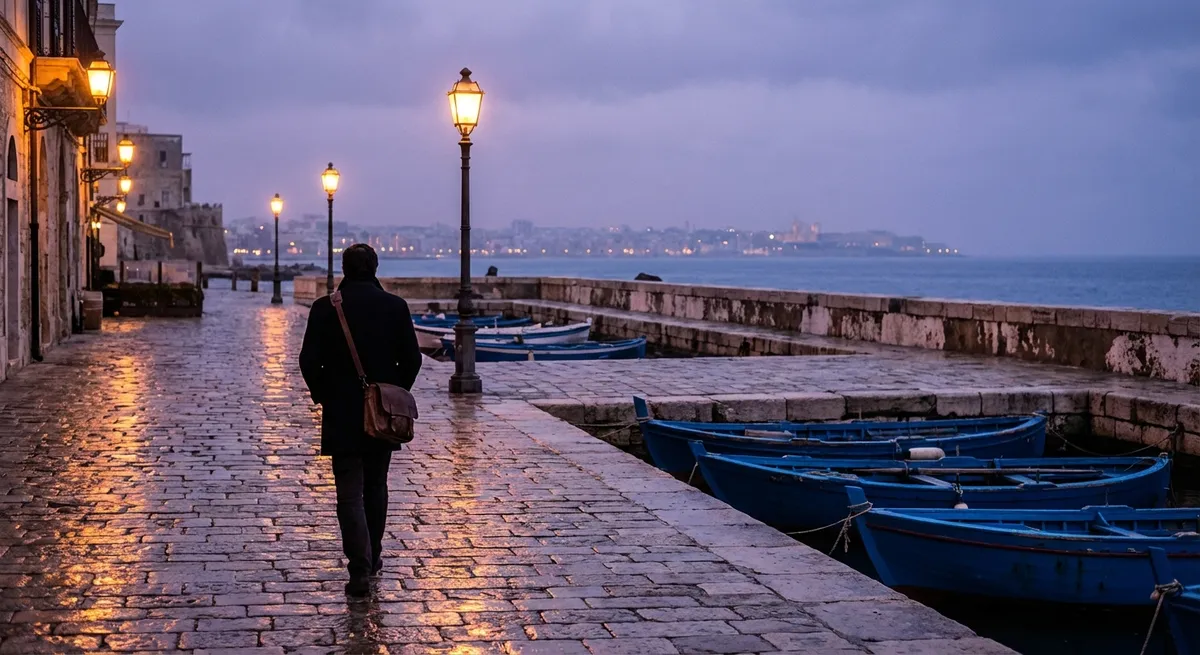
Experienced cruisers quietly favor itineraries listing departures between 9:00 p.m. and midnight in cities where historic centers sit directly on the water (think Venice alternatives like Trieste or smaller Adriatic ports, or compact Northern European cities like Tallinn). These timings allow you to experience the “blue hour”—that luminous interval just after sunset—when architectural detail softens, crowds thin, and waterfront cafés reclaim a local clientele. It is a fleeting window, and those who value it now treat these departures as a mark of refined itinerary design.
Culinary Coastlines: When Ports Taste of Place
For the discerning cruiser, certain destinations become synonymous with flavors—a port is not just a landscape but a tasting note. The most rewarding coastal cities still maintain integrated food chains: fish auctions at dawn, produce markets by mid-morning, and restaurant menus that mirror the day’s catch rather than a fixed tourist repertoire.
In Mediterranean ports such as Marseille, Palermo, or Chania, you can literally trace your lunch back to the morning’s crates. In northern waters—from Lisbon’s Atlantic markets to Bergen’s harbor stalls—shellfish, cod, and local breads reflect centuries of seafaring and trade. In Asia, cities like Nagasaki or Penang offer layered culinary histories where Portuguese, Chinese, Malay, and Japanese influences entwine in a single bowl.
Here, the most memorable shore excursions are often self-curated: a walk from the pier to a market, then to a modest bistro or izakaya favored by dockworkers and merchants rather than glossy guidebooks. Booking a ship’s food-focused tour can be a helpful overview, but allowing an extra unscripted hour afterwards often yields the most vivid sensory impressions.
Exclusive Insight #3: Tracking Market Days to Elevate Port Calls
Devoted cruise travelers quietly cross-reference port calls with local market days. A Tuesday call in a small French or Italian harbor, for example, can be transformed if it coincides with the weekly fish or farmers’ market. Before finalizing an itinerary, enthusiasts now research municipal schedules—especially in Europe and Asia—turning an ordinary call into a richly layered cultural and culinary experience. It is a small adjustment in planning that pays disproportionate dividends once ashore.
Coastal Architecture as Narrative
Ports are best understood vertically as well as horizontally. A city’s relationship with the sea can be read in the line of its facades, the placement of its defensive walls, and the way its streets climb away from—or plunge toward—the water. Paying attention to this architectural choreography reveals whether a destination has grown with, against, or despite its maritime setting.
In cities like Valletta, Bergen, or Quebec City, the stratification is explicit: fortifications crowning the heights, mercantile streets at mid-level, and bustling quayside warehouses at the waterline. Mediterranean hill towns such as Amalfi or Taormina, or Pacific jewels like Valparaíso, stage their relationships with the sea in tiers of color and tile. Northern cities, from Copenhagen to Helsinki, present cleaner, more measured facades—calculated to withstand climate as much as to please the eye.
Rather than simply checking off “Old Town” and “harbor walk,” consider how the city organizes itself around its shoreline. Does it present its best face to arriving ships, or is the waterfront still somewhat raw, industrial, and purposeful? Both can be compelling, but each tells a different story about the city’s economic and cultural evolution.
Exclusive Insight #4: Seeking “Second-Face” Harbors
Seasoned passengers increasingly look for destinations where the cruise pier is slightly removed from the postcard view—requiring a short ferry, funicular, or harbor taxi to reach the historic core. Places like Funchal, Hong Kong (when berthed at less central terminals), or certain Greek and Norwegian ports reveal a “second face” of the city as you transfer: working shipyards, residential quays, and quiet inlets locals use daily. That transitional journey adds narrative depth and a sense that you’ve slipped briefly into the backstage of the destination, rather than entering only through its most polished front door.
Choosing Seasons That Reveal a Destination’s True Self
The same port can feel like an entirely different city depending on when you visit. A sophisticated approach to destination selection folds seasonality into the decision, not merely for weather, but for atmosphere, light, and local life.
The Baltic in high summer gleams with long evenings, open-air cafés, and festivals; return in early spring or late autumn, and you meet a quieter, more introspective version of the same cities, their museums and concert halls reclaimed by residents. Mediterranean islands in July are glamorous and theatrical; in shoulder seasons they revert to something gentler, with orange blossoms, moody seas, and restaurateurs who have time to talk. Even classic Caribbean ports shift character outside of peak holiday weeks, revealing more of their local vernacular and less of the floating-crowd economy.
This is where cruise enthusiasts distinguish themselves: by intentionally seeking out “shoulder intersections” where comfortable sailing conditions coincide with a destination’s transitional moods—harvests, festival build-ups, or the first days of a city’s return from winter hibernation.
Exclusive Insight #5: Targeting Cultural Shoulder Moments, Not Just Weather
Well-informed cruisers now plan around cultural calendars, not only climate charts. They look for voyages that intersect with events such as Lisbon’s June festas, Japan’s autumn foliage rather than spring cherry blossoms, or Quebec City in late September when summer crowds thin but cultural life remains vibrant. These “cultural shoulder moments” offer more authentic interactions and richer programming ashore, while still maintaining pleasant sailing conditions. It’s an approach that transforms a familiar port into a nuanced, temporally specific experience.
Conclusion
Curating destinations as a discerning cruiser is an art of nuance. It asks you to look past marquee names and toward ports where the maritime pulse still beats, where arrival times are choreographed rather than incidental, where food, architecture, and seasonality converge into something irreducibly local.
When you begin to read itineraries this way—seeking city-pair flows, blue-hour departures, market-day alignments, second-face harbors, and cultural shoulder moments—you shift from being a passenger to a quiet co-author of your voyage. The sea provides the constant; the ports you choose, and the way you inhabit them, provide the character.
Sources
- UN World Tourism Organization – Tourism and Coastal Areas - Overview of how tourism shapes coastal and port destinations globally
- European Commission – Coastal and Maritime Tourism - Insight into the dynamics of European coastal cities and their port economies
- Port of Bergen Official Site - Example of a working port that blends cruise activity with local maritime life
- Port of Lisbon Authority - Information on arrival patterns, terminals, and how a major European capital engages with cruise traffic
- Harvard Graduate School of Design – “Ports and Urban Waterfronts” - Exploration of how architecture and urban form articulate the relationship between cities and their harbors
Key Takeaway
The most important thing to remember from this article is that this information can change how you think about Destinations.