Some destinations are sold by billboards and splashy port calls. Others are whispered about at cocktail hours on aft decks, exchanged between guests who pay more attention to tenders and tide tables than to onboard raffles. This article is about the latter: the ports, neighborhoods, and routes that reward a more attentive cruiser—places where timing, ship size, and a bit of insider foresight turn a familiar itinerary into something quietly exceptional.
Below are five exclusive, experience-shaping insights that seasoned cruise enthusiasts rarely spell out, yet rely on to curate their most memorable journeys.
The Hidden Art of “Second-Row” Ports
A growing number of sophisticated travelers are deliberately bypassing banner-name cities in favor of their more nuanced, nearby counterparts. These “second-row” ports are close enough to famed destinations to share their cultural DNA, yet distant enough to retain texture and calm.
Think of calling at Trieste instead of Venice, or Cádiz as a base for Andalusia rather than crowd-worn Málaga. From Trieste, rail connections place guests in Venice in under two hours, but evenings are spent wandering Habsburg-era boulevards largely free of tourist congestion. Similarly, Cádiz offers a luminous, sea-breeze setting for explorations of Jerez’s sherry bodegas and Seville’s historic quarters, without having to spend the night in a landlocked hotel.
Cruise lines with smaller ships are quietly building more of these ports into their schedules, taking advantage of their deeper local relationships and less congested docking windows. For guests, this translates to easier disembarkation, more authentic dining within walking distance, and the rare pleasure of returning to a ship that feels anchored in a neighborhood rather than parked beside a floating mall. When evaluating itineraries, it is worth looking not just at the headline city but its maritime “shadow”—the port one or two steps removed that may, in fact, deliver the more serene, cultured experience.
Micro-Seasons: When Familiar Ports Feel Like Private Discoveries
Beyond peak and off-peak, there exists a quieter calendar understood best by port agents and captains: micro-seasons. These are short windows when weather, daylight, and crowd patterns align to transform overly familiar destinations into near-private enclaves.
In northern Europe, this might mean sailing the Baltic in the slim shoulder between early September’s soft light and late-September’s cruise drawdown, when air temperatures are still pleasant yet the day-tripper volume has fallen away. In the Mediterranean, a November calling in cities like Marseille or Valencia can reveal a more local rhythm—cafés returning to their neighborhood clientele, galleries with space to linger, markets tuned to daily life rather than excursion crush.
In the tropics, micro-seasons are often bound not only to school calendars but also to regional holidays and religious festivals. A Caribbean call following the end of regional holiday crowds, but before major North American vacations begin, creates an almost private island feel in otherwise high-traffic bays. Conversely, arriving during a local cultural festival—planned, not accidental—can mean access to heritage events and performances that never appear in standard excursion brochures.
The discerning cruiser looks not just at “month” but at specific weeks and local calendars, reading between the lines of school breaks, national holidays, and religious observances to secure port calls when cities return to themselves.
Harbor Geometry: Why Certain Ships Belong in Certain Cities
Some destinations are not merely “visited” by ship—they are properly seen only from the water. Yet this is not universal. The geometry of a harbor—its depth, turning radius, and the distance between sea and historic core—quietly dictates which vessels truly complement a city rather than overwhelm it.
In fjord regions such as western Norway, smaller vessels can slip into more intimate inlets and closer anchorages, aligning passengers directly with waterfalls and mountain walls rather than shuttling them in from the periphery. The difference is not only scenic; it alters how much time you have ashore, how long tenders take, and how closely the onboard experience mirrors the landscape.
Consider also historic river-mouth cities like Bordeaux or Quebec City. Ships capable of progressing upriver can dock within steps of UNESCO-listed streets, turning a port call into a floating boutique hotel stay in the historic center. Larger ships, restricted to outer piers, often require coach transfers that dilute the immediacy of the locale.
When reviewing itineraries, it’s instructive to cross-check the ship’s dimensions against the port’s geography—many port authorities publish berth and depth data. Choosing an itinerary where the vessel is tailored to the harbor, rather than merely accommodated by it, is one of the quietest yet most powerful ways to elevate a cruise.
The Night in Port: Where Ships and Cities Share a Tempo
An overnight in port is not just a line item on a brochure; it is a structural change in how you encounter a destination. Day calls favor museums and monuments. Nights in port invite opera, late dinners, dimly lit bars, and waterside promenades after the shore excursion buses have long departed.
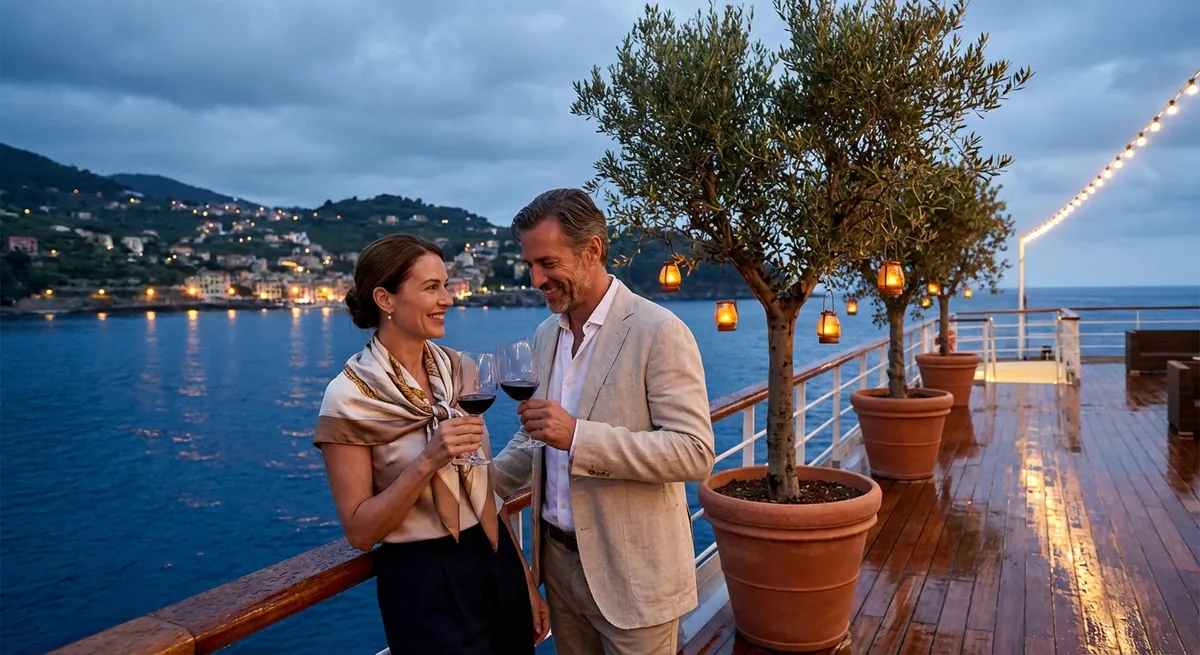
Cities such as Istanbul, Lisbon, Stockholm, and Buenos Aires take on much of their character after dusk. The ability to leave the ship at 10 p.m. to hear live fado in a Lisbon alley or to attend a late-evening concert in Stockholm, knowing your stateroom is a short walk or tender away, is a different form of luxury than any onboard show.
Even more transformative are double overnights, occasionally found in culturally dense ports. A single night allows a carefully planned dinner and perhaps one performance; two nights create room for serendipity. You can return to a gallery that intrigued you, book a local guide for a bespoke neighborhood walk, or simply allow yourself to get pleasantly lost and unhurried, knowing another evening awaits.
When comparing similarly priced itineraries, count the overnights and where they occur. A ship that spends two days and one or two nights in a cultural capital may deliver more lasting value than one that offers numerous brief samplings across many ports.
Beyond the Pier: Designing Your Own Shoreline Radius
While packaged excursions serve a purpose, many refined travelers now approach ports with a self-directed radius in mind—a mental map defining how far they wish to move from the pier, by which modes of transport, and in what kind of company.
In compact cities like Dubrovnik, Old San Juan, or Bergen, this radius may be fully walkable, anchored to a tapestry of cafés, small museums, and vantage points that can be explored at your own pace. In larger destinations such as Tokyo (Yokohama), Rome (Civitavecchia), or Athens (Piraeus), the question becomes: is the time and distance from port to city center worth the investment for a single day? For some, the answer is yes; for others, it suggests pivoting to less obvious yet closer alternatives—harbor promenades, lesser-known districts, or regional towns reachable by local train.
Curating your own shoreline radius allows for micro-itineraries that feel aligned with your interests rather than generic highlights. Perhaps you focus on one discipline—architecture, contemporary art, wine bars, or traditional craft—and let that theme guide a three- or four-stop route. The key is to research not “top 10 attractions” but neighborhoods, transport hubs, and locally frequented venues within a realistic travel envelope from the pier.
Over time, this approach transforms ports from checklists into living geographies. Instead of “seeing” Barcelona, you come to know El Born and the waterfront boardwalk. Instead of “doing” Sydney, you might anchor your day in Surry Hills galleries and an early harborfront supper, returning to the ship as the skyline illuminates.
Conclusion
The most rewarding cruise destinations are often less about the port names printed on an itinerary and more about how, when, and with what kind of ship you encounter them. By leaning into secondary ports, traveling during micro-seasons, matching vessel to harbor, prioritizing nights in port, and consciously defining your own shoreline radius, you begin to unlock a different register of travel—quieter, more specific, and infinitely more memorable.
These are not tricks so much as adjustments in perspective: a willingness to read between the lines of cruise brochures and to treat the sea not as a moving hotel corridor, but as an elegant medium connecting finely chosen, deeply experienced places.
Sources
- UNESCO World Heritage Centre – World Heritage List – Authoritative information on historic city centers and cultural sites mentioned (e.g., Bordeaux, Quebec City, Dubrovnik)
- Norwegian Coastal Administration – Fairways and Ports – Technical details on Norwegian ports and fairways, illustrating how harbor geometry and ship size interact
- Port of Venice Authority – Official Site – Background on cruise restrictions and access, useful for understanding shifts to alternate ports like Trieste
- Cádiz Port Authority – Official Port Information – Data and context on Cádiz as a cruise gateway to Andalusia
- European Travel Commission – Seasonal Travel Trends Report – Analysis of shoulder seasons and travel patterns supporting the concept of micro-season cruising
Key Takeaway
The most important thing to remember from this article is that this information can change how you think about Destinations.