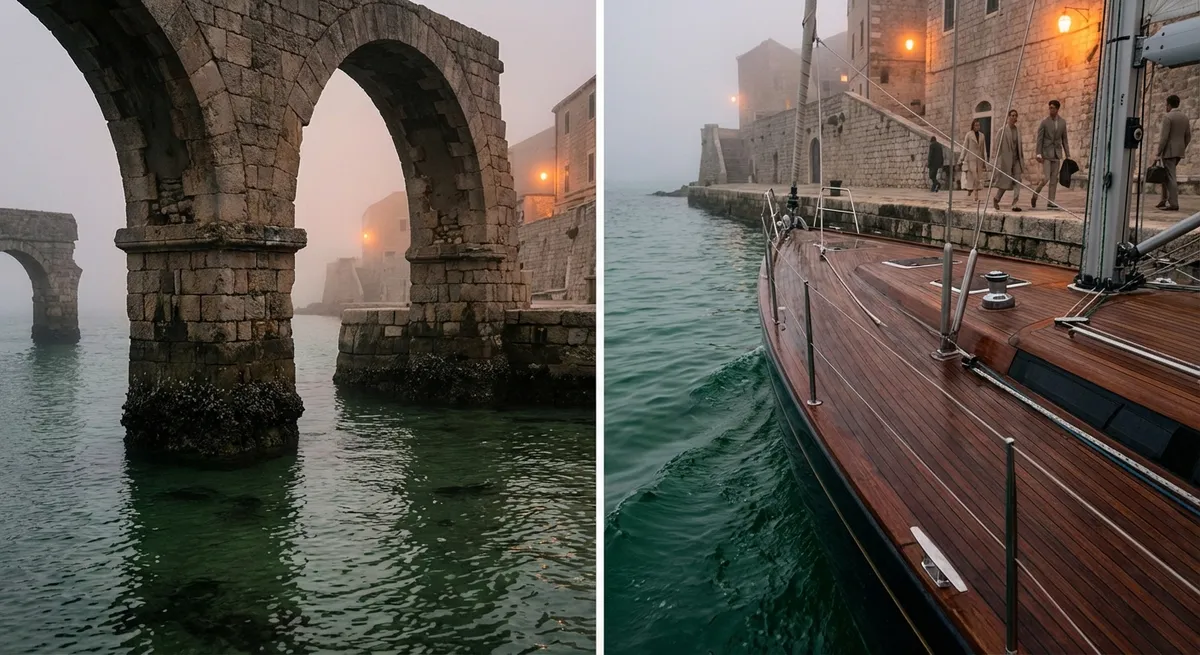
There are ports that welcome visitors; and then there are ports that unfold for those who arrive by sea. For the refined cruiser, the harbor is not merely a gateway but a prologue—subtle, atmospheric, and utterly different from the experience of stepping off a plane. This is where the ocean acts as curator, editing the chaos of a destination into a measured, cinematic reveal. In an age of easy airlift, choosing to arrive by water has become a deliberate luxury, and certain destinations reward that choice with quiet privileges only seasoned cruisers tend to notice.
When the Harbor Is the First “Suite”: Coastal Cities with Grand Arrivals
Some cities are designed to be approached from the water; their silhouettes make sense only when traced along the horizon line. Sailing into Stockholm, for instance, feels less like entering a capital and more like threading a private waterway between forested islets and discreet summer houses. The effect is not spectacle but composure: the city appears gradually, as if you are being escorted into an inner circle.
Venice, even under the pressures of mass tourism and cruise regulations, still offers one of the most layered maritime arrivals. Gliding past the low profile of the lagoon, a bell tower here, a dome there, you sense the centuries when the only “check-in” was the depth of your draft. In Sydney, the journey from open Pacific to harbor is a study in scale: the sheltering headlands, then the steel arc of the Harbour Bridge, and finally the Opera House, improbably close—more like a neighbor’s terrace than a global icon. These approaches remind the experienced cruiser that the most memorable “destination views” are often not from the balcony in port, but from the railing just before you reach it.
The Art of the Shoulder Season: Destinations at Their Most Generous
For those who treat travel calendars as carefully as wine lists, timing a destination is as critical as choosing it. Many ports offer a distinctly more gracious character in the narrow band between their high and low seasons. In the Mediterranean, late September and early October soften the glare: the sea is still warm, the coastal light turns golden rather than white, and once-impenetrable sites—from Dubrovnik’s walls to Santorini’s cliffside lanes—breathe again. Arriving by ship in these weeks, the atmosphere ashore is less hurried, conversations with local restaurateurs linger longer, and reservations suddenly materialize at places that were “fully booked” a month before.
Farther north, the Norwegian fjords gain an almost private-club serenity in May and early June, or again in early September, when the main summer rush has ebbed yet days are still luminous. Small museums, family-owned hotels, and artisans who service the short season are more available—and more inclined to share their real stories when not operating at full tilt. For the discerning cruiser, the destination is the same on paper, but in practice it is an entirely different city: slower-breathing, better composed, and far more generous with its time.
Quiet Corners Within Famous Ports: The Discreet Geography of Escape
Even the most renowned cruise ports have pockets that remain strangely invisible to the casual visitor, simply because they sit one or two decisions beyond the standard tour. In Barcelona, many never drift far from La Rambla and the Gothic Quarter, yet neighborhoods like El Born and Gràcia offer a gentler, more polished rhythm an easy taxi ride away. A late-morning stroll under wrought-iron balconies, a coffee at a café where the staff recognize locals by name, or a quiet tasting at a contemporary vermuteria can turn a routine port call into something that feels unexpectedly personal.
In Santorini, where crowds concentrate in Oia and Fira at sunset, there are quieter hillside villages like Pyrgos and Megalochori that still present the island’s whitewashed elegance without the crush. Similarly, in Juneau, most visitors remain close to the main streets and headline excursions, while a short walk or a pre-arranged private transfer can place you on tranquil trails or at lesser-known viewpoints where you hear more raven calls than human voices. Expert cruisers often approach each port with a simple strategy: one intentional “signature” experience, and one quiet escape route—ideally a neighborhood, shoreline, or vantage point that is never mentioned in the ship’s daily program.
The Luxury of Late Departures: Ports That Shine After the Coaches Leave
Not all time in port is created equal. A destination with a 6 p.m. sail-away is fundamentally different from one that lets you linger until 10 or 11 p.m., and this nuance can elevate certain itineraries from pleasant to unforgettable. In cities like Lisbon, a late departure gives you the luxury of an unhurried afternoon wandering Belém’s riverfront, a sunset drink beneath azulejo-tiled façades in the Bairro Alto, and still enough time to return on foot, tracing the Tagus back to your ship under lamplight.
The Greek isles reveal a similar dual personality. Mykonos at midday can feel like a postcard under siege, but in the evening, when day-trippers vanish and the light softens along the waterfront, the island becomes more intimate and composed. Dining in a harborside taverna while your ship glows quietly in the distance is a markedly different experience from rushing back to catch a late-afternoon tender. In Scandinavia, late stays in cities like Copenhagen or Helsinki allow you to experience the soft, lingering twilight of northern evenings—when locals reclaim their waterfront promenades and parks, and the tourist theater gives way to genuine daily life.
Curated Distance: Choosing Ports for What You Don’t Have to See
Seasoned cruisers eventually learn that the most satisfying destinations are often those where you feel no pressure to “do everything.” Instead, you can select a single thread—a craft tradition, a culinary story, a shoreline walk—and follow it without compromise. In Palermo, that might mean foregoing the checklist of chapels and markets in favor of a reservation at a single refined trattoria, followed by an unhurried espresso at a historic café where you watch the theater of Sicilian street life unfold.
In smaller ports like Kotor or Korčula, the scale itself is a luxury. You can ascend the fortifications or explore the historic core in a morning, then retreat to a harborside bar, fully at ease that you have neither missed the “must-sees” nor surrendered your day to logistics. This curated distance—from obligation, from overplanning—creates a rare kind of mental space. The destination becomes something you savor rather than conquer, and the ship transforms from mere transportation into a calm, reliable boundary: the elegant frame around each shore-side canvas.
Conclusion
For the discerning cruiser, destinations are not simply dots on a map but choreographies of arrival, timing, and intention. Some harbors reveal their artistry only at certain hours, in certain seasons, or when approached with a willingness to ignore the script. The ocean has always shaped the character of coastal cities; arriving by sea allows you to read those subtleties in real time. Choose ports that reward the slow reveal, favor shoulder seasons that let places breathe, seek the quiet corners just beyond the crowd, and guard the luxury of doing less with precision. In that interplay between ship and shore, you will find voyages where each destination feels less like a stop—and more like a carefully staged chapter in a larger, beautifully composed journey.
Sources
- Visit Stockholm – Official Tourism Site - Provides detailed information on Stockholm’s archipelago, seasonality, and harbor approach experiences.
- Norwegian Fjords – Visit Norway Official Guide - Offers insights on timing trips to the fjords, shoulder-season conditions, and port characteristics.
- Visit Greece – Official Greek National Tourism Organization - Covers Greek island destinations such as Santorini and Mykonos, including seasonal patterns and regional highlights.
- Turisme de Barcelona – Official Barcelona Tourism - Describes neighborhood characteristics (El Born, Gràcia, etc.), port proximity, and cultural attractions beyond the main tourist corridors.
- Visit Lisbon – Official Lisbon Tourism - Details waterfront districts, evening city life, and port access, supporting discussion of late departures and nighttime experiences.
Key Takeaway
The most important thing to remember from this article is that this information can change how you think about Destinations.