For the discerning traveler, there is a quiet satisfaction in reaching a place by sea rather than by runway. Certain coastlines, harbors, and island cities are composed for the maritime approach: their silhouettes, light, and tempo only fully cohere when encountered from a ship’s rail at dawn or under a late harbor haze. This is not simply about “port calls” but about destinations whose character is unlocked through the choreography of arrival, anchorage, and departure. For cruise enthusiasts who value nuance over novelty, these are places that offer a richer, more layered performance when experienced from the waterline.
Destinations Crafted for a Maritime First Impression
Some destinations are visually spectacular from land, but the truly captivating ones are structured around the sea itself. Think of Mediterranean cities where the old quarter bends in a crescent around the harbor, or Norwegian villages that seem to lean toward the fjord. The built environment, the working waterfront, even the soundscape of cranes, ferries, and fishing boats create a living amphitheater that can only be appreciated from offshore.
Arriving by ship, you sense the gradations of a place long before you step ashore: the scent of pine from a Croatian island on a warm afternoon, the mineral coolness of mist in an Alaskan inlet, the salty breath of trade winds over a Caribbean crescent bay. A well-chosen itinerary layers these sensory cues, allowing the traveler to experience not just disconnected ports, but an evolving coastal narrative. The result is a series of destinations that feel less like stops on a route and more like movements in a single, coherent composition.
The Quiet Geography of Exceptional Harbors
What separates a merely “beautiful port” from a truly memorable harbor is usually not obvious in photographs. It is the choreography of approach: the angles at which a ship must enter, the way the coastline reveals and conceals itself, the compression of distance as you move from open sea to intimate basin. Old mercantile ports like Valletta or Quebec City were engineered to be both defensible and dramatic, and that historical intention is still perceptible from a ship’s deck.
A sophisticated cruiser learns to watch the charted course before arrival, noting the twists of a fjord, the submerged shelves of coral that keep larger vessels at bay, or the sandbars that dictate early-morning pilotage. Some harbors are best entered at first light, when water and stone still hold to a narrow color palette of grays and blues; others, such as volcanic calderas or modern skylines, are most striking in the late golden hour, when glass and rock reflect the setting sun and ship lights begin their counterpoint. The harbor is not merely a backdrop for disembarkation; it is the prologue that sets the emotional register for the day ashore.
Five Exclusive Insights for the Discerning Cruise Enthusiast
For travelers who have graduated beyond “seeing the sights” to curating their own maritime experiences, a few refined strategies can transform familiar destinations into something far more rewarding.
1. Choose Itineraries for Their Approaches, Not Just Their Ports
Two itineraries may list the same ports, yet offer vastly different experiences based on the timing and direction of approach. A city approached from the open ocean at sunrise feels entirely different from the same skyline reached after a day threading through islands. Sophisticated cruisers increasingly study not just the port list, but the nautical charts and estimated arrival times.
Fjords, archipelagos, and river approaches reward slow, early entries: think of the layered islands of the Aegean or the sinuous channels into certain Baltic capitals. By contrast, some destinations are best entered in deep evening, when their lighting design—the illuminated ramparts, bridges, and waterfront promenades—reveals a deliberate aesthetic that day visitors never see. Selecting cruises that emphasize these approaches transforms the voyage itself into a curated moving gallery.
2. Use Overlooked Viewpoints on Board to “Read” a Destination
Prime balconies and forward observation lounges are obvious vantage points, but they are not always the most revealing. Quiet side decks near the bow, promenade corners that catch both wind and wake, or even a tucked-away outdoor stairwell can provide a more textural sense of a destination as the ship edges closer.
Those who know ships watch the working decks and tenders as well as the skyline. The bustle of local pilots boarding, harbor tugs maneuvering, and port crews preparing gangways tells its own story of a place’s scale, rhythm, and maritime culture. In smaller or more remote destinations, the presence of local fishing boats pacing the ship, children waving from breakwaters, or a pilot boat’s confident arc under the bow adds human dimension that cannot be replicated from an airport taxi queue.
3. Favor Ports with Layered Waterfronts Over Single-Attraction Stops
Many popular cruise ports are built around a singular attraction—an iconic beach, a famous cathedral, a shopping district—but lack depth beyond that first postcard image. By contrast, destinations with layered waterfronts reward extended exploration and repeat visits. These are places where the commercial harbor, historic quarter, artisan districts, and residential neighborhoods each claim their own relationship with the water.
A refined cruiser looks for signs of this layered complexity: local ferry networks stitched through the harbor, working shipyards visible from the anchorage, promenades where residents stroll in the evening, and older warehouses discreetly repurposed into galleries or tasting rooms. Such ports invite you to move intentionally—from the formal waterfront designed for visitors, to the quieter quays where you glimpse the city as it lives when the ships depart. The destination becomes not a single “must-see” sight, but a series of interlocking maritime stories.
4. Pay Close Attention to Tenders and Remote Anchorages
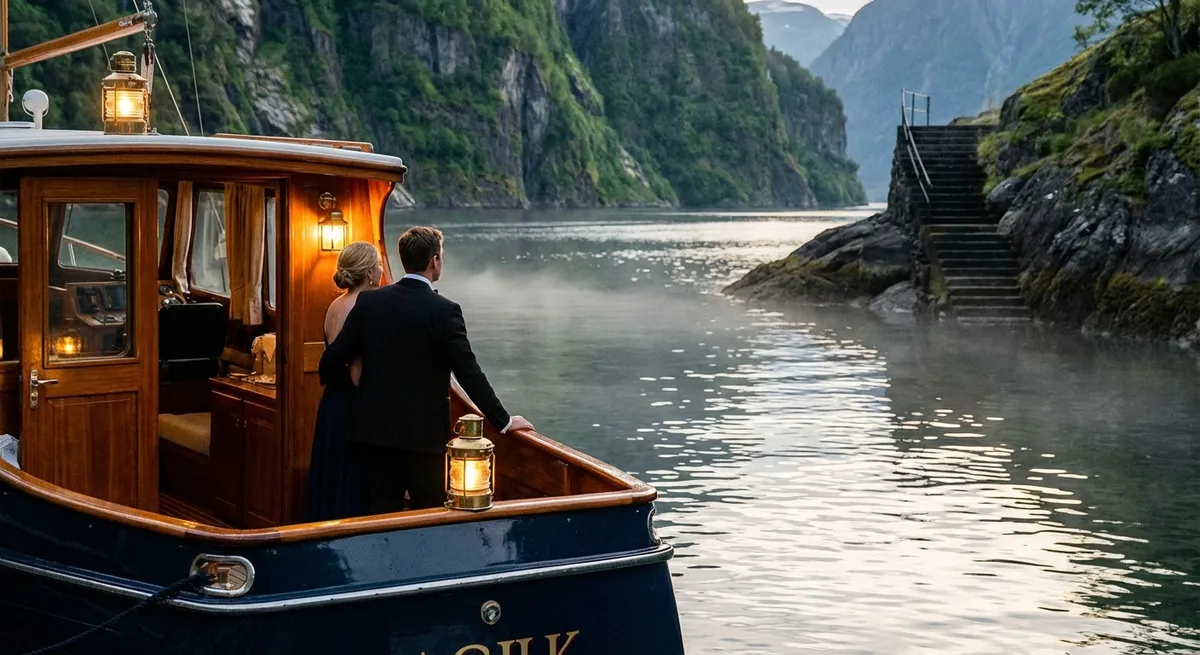
It is tempting to treat tender operations simply as a logistical bridge between ship and shore, but for many destinations, the tender ride is the most intimate way to experience the setting. When large ships must anchor offshore—inside a volcanic caldera, along a reef-sheltered lagoon, or below a fortress-topped hillside—the smaller scale of the tender brings you closer to both sea and shoreline.
During these brief crossings, you experience the destination at a more human speed: the slap of smaller waves against the hull, the layered sound of seabirds and harbor chatter, the changing textures of stone, vegetation, and architecture as you draw near. For remote islands or small harbors with draft restrictions, the tender experience can feel like arriving on a private launch, especially on early morning runs before the day’s movement fully begins. In such cases, the destination is not just the landfall, but the dialogue between ship, tender, and shore.
5. Time Your Return to the Ship as Part of the Destination Experience
Most travelers treat “all aboard” as a deadline, but seasoned cruisers use the return to the ship as a final, curated act. Returning just early enough to enjoy a near-empty outer deck as the port transitions from day to evening offers a perspective that daytrippers never glimpse. You watch as local life continues: fishing boats returning, café lights flickering on, ferries still tracing their habitual routes, even as your ship prepares to pull away.
In some destinations, the moment of departure is the most powerful segment of the experience. Gradually, the city compresses into a singular silhouette, the coastline repositions itself into a clean line of light and shadow, and yesterday’s labyrinth of alleys and markets distills into a single, serene horizon. Those who plan their day ashore with this finale in mind often skip a final shop or café in order to claim a quiet rail or balcony spot. The reward is a private farewell to the destination, framed by the subtle energy of the ship setting out once more to sea.
Crafting a Destination Portfolio by Sea
Over time, sophisticated cruisers come to think of their travels less as a list of ports and more as a personal portfolio of maritime experiences. A certain Ligurian harbor at sunrise, an Icelandic fjord under low cloud, a subtropical river mouth after an afternoon storm—each becomes an entry in a private atlas of coastal moods and approaches. It is this accumulation of impressions, rather than any single landmark, that defines the true value of sea-based travel.
Choosing destinations that honor the maritime approach is, in essence, a vote for travel that unfolds rather than arrives. When you evaluate itineraries by their harbors as much as their headliners, favor ships that respect the slow theater of entry and exit, and allow time to observe the interplay between sea and shore, cruising becomes something more profound. The world does not merely pass your balcony; it reveals itself in precise, tidal increments—one harbor, one silhouette, one carefully chosen destination at a time.
Sources
- U.S. Department of Transportation – Cruise Ship Travel - Background on cruise operations, ports, and safety considerations that shape itineraries and approaches
- Port of Barcelona Official Site - Example of a layered, complex harbor environment designed for both commerce and tourism
- UNESCO World Heritage Centre – Historic Areas of Istanbul - Illustrates how certain coastal cities were historically oriented toward maritime approaches
- Norwegian Fjords – Visit Norway - Insight into fjord geography and why certain destinations are best experienced from the sea
- National Geographic – The World’s Most Beautiful Ports - Curated perspectives on ports and harbors whose character is defined by their maritime setting
Key Takeaway
The most important thing to remember from this article is that this information can change how you think about Destinations.