There is a particular pleasure in a cruise that feels almost frictionless—a voyage where little frictions are resolved before they arise, where each day unfolds with quiet precision rather than anxious improvisation. For experienced cruisers, perfection is rarely about more chandeliers or larger suites; it is about decisions made early, details noticed quickly, and a kind of calm choreography that makes the ship feel as though it is moving in time with you. These travel insights are designed for the guest who already knows the basics—and now wishes to refine the experience into something quietly extraordinary.
Designing a Daily Rhythm That Outsmarts the Crowd
The most coveted moments on a ship are not the obvious ones—the sail-away party, the formal gala—but the still, uncrowded intervals when public spaces feel almost private. To create this, think in rhythms rather than rigid schedules. Study the daily program not as a checklist, but as a map of pressure points: peak breakfast hours, show times, port departure windows, spa promotions, and boutique events all reveal when the majority of guests will be concentrated in specific areas.
Once you understand this flow, you can move gently against it. Dine fifteen minutes before the traditional seating window; visit the pool during early dinner on a formal night; book the thermal suite for late afternoon on port days, when most guests are still ashore or napping. Even embarkation day offers an opportunity: while others stand in line for buffet lunches, slip quietly to the main dining room (if open) or a smaller specialty venue that often serves a calmer, more measured meal.
On port days, consider returning to the ship deliberately early, especially in marquee destinations. The last hour before all-aboard is invariably crowded and hurried; coming back an hour earlier trades one more hurried drink ashore for a serene swim or a near-private balcony sail-away. Over a week, these subtle inversions of the crowd’s rhythm create a voyage that feels unhurried, as though the ship were built just for you.
Using Your Stateroom as an Intelligent Base, Not Just a Sleeping Space
Well-traveled guests treat their stateroom less like a hotel room and more like a thoughtfully arranged base of operations. Small adjustments on day one can transform everything that follows. Begin with light and airflow: if you have a balcony, decide whether you’re sailing eastbound or westbound and adjust curtain habits accordingly—keeping the room dim when you’re sailing into the sunrise can protect sleep and jet lag recovery, while embracing natural light in the afternoon helps reset your body clock.
Storage is less about unpacking everything and more about eliminating frictions. Keep a dedicated embarkation drawer or shelf for daily-use items—key card, sunglasses, shore card, small bills, sunscreen—so leaving the room never involves a scavenger hunt. Use packing cubes or slim organizers in drawers to create a sense of order that housekeeping can easily maintain. Many refined cruisers also establish a “return ritual”: when you come back to the room, you empty pockets, charge devices, and place the next day’s essentials in one clearly defined area. The result is fewer delays at the door, fewer forgotten items, and a quiet sense of control.
If you travel with technology, set up a discreet charging station on embarkation day, with a multi-port USB or universal adapter (mindful of cruise ship electrical rules). Keep cables coiled and labelled—particularly helpful when outlets are limited and shared—and place all devices there each evening. This turns the room into an efficient hub rather than a cluttered catch-all, preserving its sense of calm and luxury.
Curating Shore Days with a “Two-Tier” Strategy
Sophisticated cruisers learn to resist the temptation to collect experiences and instead curate them. Rather than attempting to “do” each port, approach shore days as a two-tier experience: one anchor experience that defines the day, and one secondary interlude that preserves energy and perspective. The anchor might be a guided art tour, a private driver along a coastal road, or a visit to a singular restaurant. The secondary interlude could be as simple as coffee in a quiet square, a walk along the waterfront, or a short visit to a local market.
Select the anchor experience with intention. For ports with long travel distances to iconic sights (for example, Civitavecchia for Rome, or Laem Chabang for Bangkok), weigh the cost of time and fatigue honestly. Sometimes the more sophisticated choice is to stay local—exploring the port city itself, or even remaining on board to enjoy a sparsely populated ship. When you do book excursions, mixing ship-organized tours with select independent arrangements offers both security (for longer, time-sensitive trips) and flexibility (for shorter, more personal explorations).
Always layer in a buffer: plan to be back in the vicinity of the port at least an hour earlier than strictly necessary, especially in ports with variable traffic. Use that final hour for an unhurried drink, a brief stroll, or quiet shopping close to the pier. This protects you from stress while preserving the feeling that the day belonged to you, not the clock.
Dining with Intent: Beyond Reservations and Dress Codes
On a well-run ship, dining can either be a predictable rotation of venues or an almost bespoke tasting journey across the voyage. The difference lies in intentional sequencing. Before you sail, sketch a broad dining arc: one night for the ship’s signature specialty restaurant, one for a more relaxed bistro or grill, one devoted to regional cuisine in the main dining room, and one evening intentionally kept flexible for serendipity.
Pay attention to how menus evolve over the cruise. On many lines, the most interesting dishes and regional specialties appear on specific nights—often those aligned with port calls or sea days. Attentive guests quietly ask their waitstaff or maître d’ which evenings feature local seafood, chef’s specials, or grand tasting menus and then organize reservations accordingly. This allows you to match settings with menus—a Mediterranean seafood tasting on a balcony evening, for instance, or a rich, long dinner on a sea day when you are not rushing back from shore.
Wine and cocktails are best approached in the same vein. Rather than defaulting to the included selection, ask the sommelier which bottles are particular strengths of the ship’s current cellar—cruiseline beverage programs often have quiet gems hiding in plain sight. If you enjoy aperitifs or digestifs, identify a bar that excels at them (often a quieter lounge rather than the busiest venue) and make it your unofficial home at the beginning or end of the evening. Over time, staff will learn your preferences, and drinks arrive more tailored, more precise, and more in tune with your palate.
Orchestrating Quiet Luxuries: Services, Spaces, and Serendipity
The most memorable cruises are rarely defined by a single grand gesture; they are made of small, cumulative luxuries that feel almost incidental. To cultivate these, focus on three elements: discreet service relationships, underused spaces, and personal rituals.
Build a quiet rapport with three people early in the voyage: your stateroom attendant, a senior member of the restaurant or bar team, and a concierge or guest services professional (or butler, if applicable). Offer clear, calm preferences rather than vague wishes—coffee style, newspaper access, preferred housekeeping times, dietary nuances. When requests are specific and reasonable, crew members can anticipate needs and often delight in exceeding them. Tipping cultures and policies vary by line and region, but a handwritten note or sincere thanks at the end of the voyage, along with any appropriate gratuities, reinforces the relationship.
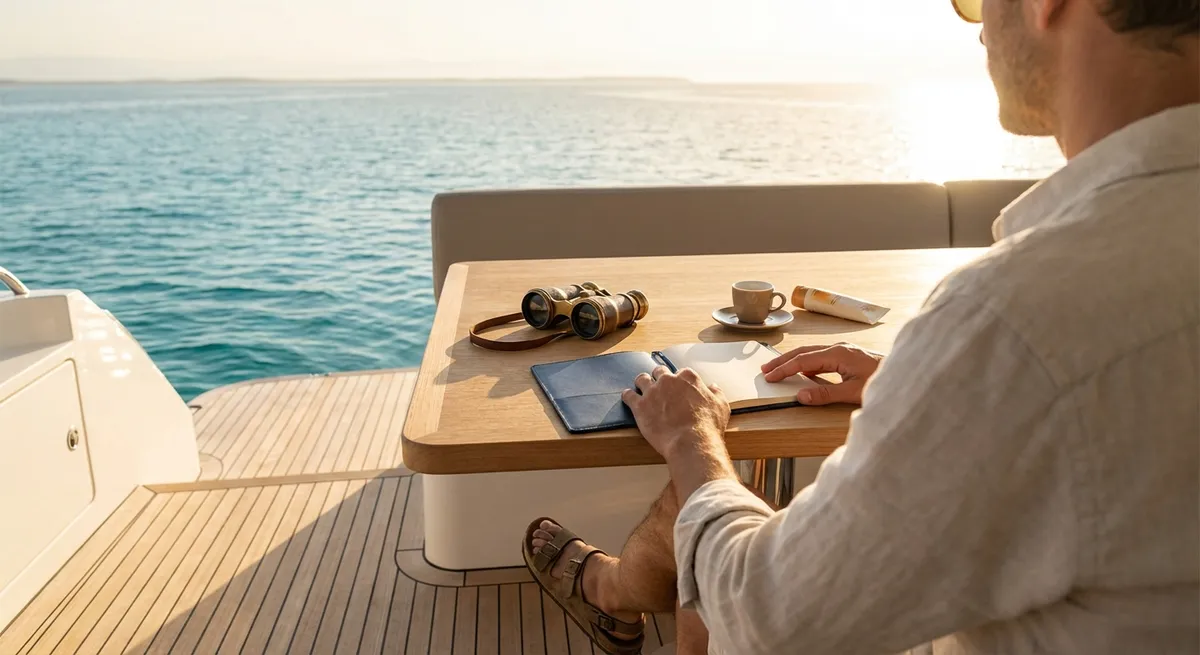
Underused spaces are where a ship reveals its true character. Explore reading rooms, small observation lounges, promenade corners, or outdoor deck chairs that sit slightly off the main flow. Visit them at multiple times of day: dawn, late afternoon, post-theatre hours. One of these will become “your” place—the setting for morning journaling, late-afternoon champagne, or simply watching the sea change. Protect this ritual; it is where the voyage becomes more than a sequence of activities and turns into a personal narrative.
Finally, cultivate one daily ritual that is entirely your own: a sunrise walk around the promenade deck, a pre-dinner classical set in the lounge, a late-night tea on the balcony. When you look back later, it is often this small, recurring luxury that defines the cruise, not the headline experiences. It is the difference between having taken a cruise and having inhabited one.
Conclusion
Refinement at sea rarely announces itself. It is present in the ease with which you move through a ship, the thoughtfulness with which you approach each port, and the unhurried confidence that your days will unfold smoothly. By reading the ship’s rhythm, elevating your stateroom into a purposeful base, curating shore days with intention, treating dining as a narrative rather than an obligation, and orchestrating quiet luxuries, you transform a cruise from a well-managed holiday into a work of personal curation. The itinerary may be shared by thousands, but the experience becomes unmistakably your own.
Sources
- U.S. Department of State – Cruise Ship Travel – Official guidance on documentation, safety, and preparation for cruise travelers
- U.S. Centers for Disease Control and Prevention – Cruise Ship Travel – Health, hygiene, and wellness considerations specific to cruising
- Cruise Lines International Association (CLIA) – Industry research, passenger trends, and background on modern cruise operations
- Port of Barcelona – Cruise Passenger Information – Example of how major cruise ports structure passenger flows, facilities, and embarkation logistics
- Harvard Business Review – The Power of Small Wins – Insight into how small, well-managed experiences and routines shape overall satisfaction and perception of quality
Key Takeaway
The most important thing to remember from this article is that this information can change how you think about Travel Tips.