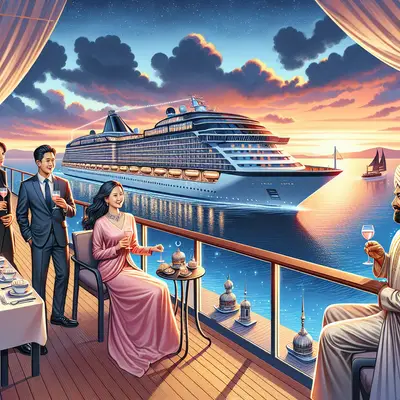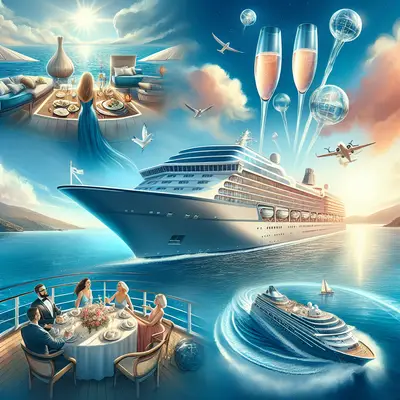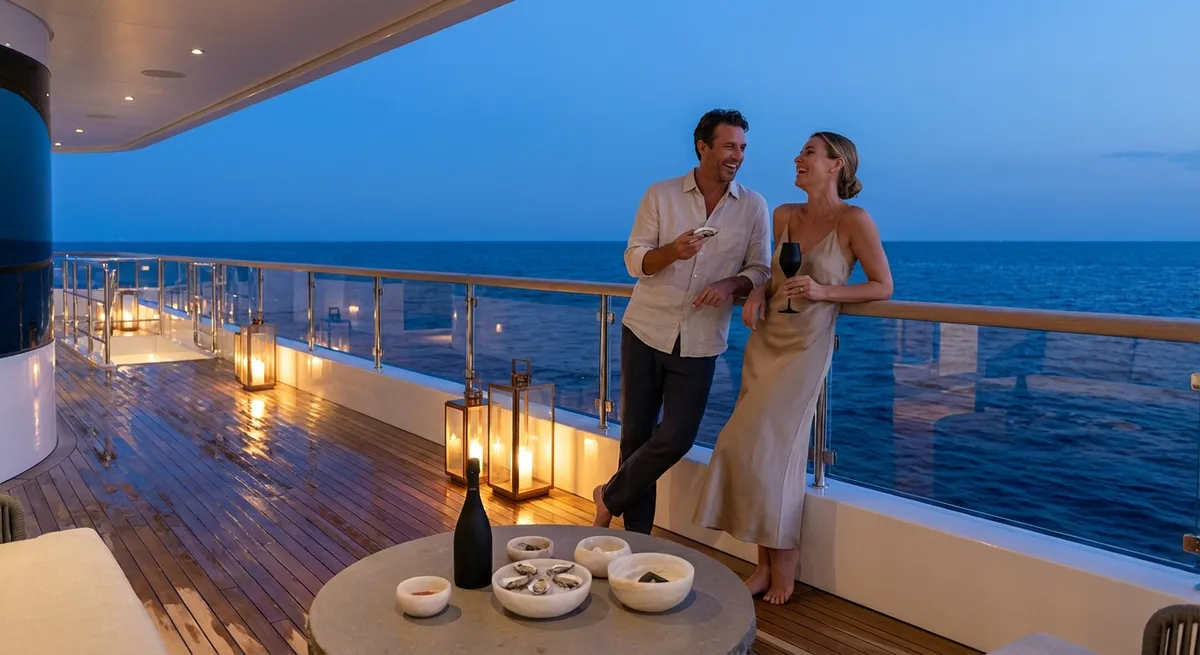
There is a version of luxury cruising that rarely appears in glossy brochures: quieter, more curated, and defined less by spectacle than by intention. It is found in the way a ship handles a late‑night craving, how a sommelier remembers your preferred vintage, or the silence of a private terrace as dawn breaks over an unannounced anchorage. For the discerning traveler, these are not mere details—they are the true hallmarks of refinement at sea.
Below, we explore five exclusive insights that seasoned cruise enthusiasts quietly prize, and which increasingly define the upper tier of contemporary luxury cruising.
1. The Intimate Scale Advantage: Why Smaller Ships Feel Larger
In the realm of luxury, size is not measured in tonnage but in personal space and calm. Ultra‑luxury and boutique ships typically carry a fraction of the guests of mainstream vessels, yet paradoxically feel more expansive.
Smaller ships unlock itineraries that larger vessels simply cannot attempt: tucked‑away fjords, lesser‑known Mediterranean harbors, or remote expedition anchorages in the Kimberley or the Arctic. The effect for guests is twofold. First, there is the aesthetic pleasure of arriving directly in the heart of a destination rather than docking in sprawling industrial ports miles away. Second, the onboard experience becomes more residential than resort-like—staff greeting you by name, near‑instant bar service, and the ability to find a quiet corner virtually on demand.
For seasoned cruisers, intimate scale also means more thoughtful crowd management: staggered tender operations, uncrowded spas, and specialty restaurants that feel like genuine dining rooms instead of high‑capacity venues. The most refined lines increasingly position themselves as “private yachts” rather than “floating resorts,” and the difference is felt not in superlatives, but in the unhurried tempo of each day.
2. Culinary Precision Over Excess: Rethinking Dining at Sea
The traditional optics of cruise dining—towering buffets and midnight extravaganzas—are quietly being replaced at the upper end by a culinary philosophy closer to that of land‑based gastronomy capitals. The mark of a sophisticated ship is no longer how much food is available at any hour, but how considered the offering is.
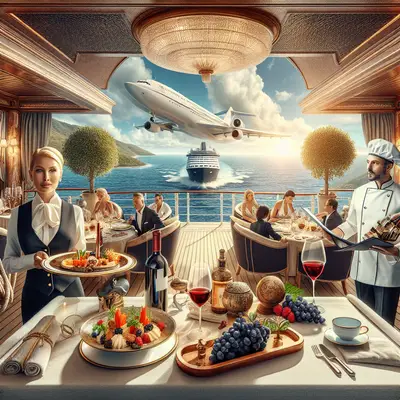
Luxury lines now court acclaimed chefs and Michelin‑recognized partners not just for marquee names, but to impose restaurant‑caliber discipline: seasonal menus, local sourcing in port, and pacing that respects both palate and place. You might find a carefully curated caviar service before sail‑away, a compact but exquisite room‑service menu presented on white linen, or a chef’s table that evolves each voyage based on what is freshest in local markets.
What experienced luxury cruisers know—and newcomers often discover on day two—is that the true privilege lies in choice without chaos. Elegant à la carte breakfasts in a quiet dining room, a refined afternoon tea featuring pâtisserie made onboard, or a late-night bite prepared to order instead of warmed under a heat lamp. The cuisine becomes a narrative thread of the journey, not just a daily necessity.
3. Personalized Rituals: When Service Becomes Memory
The world’s most sophisticated ships understand that luxury is less about formality and more about recognition. Repeat guests frequently speak less about a ship’s hardware than its “rituals”—the small, personal customs that crew and guests build together over time.
On the best luxury cruises, service feels choreographed but never rehearsed. A butler who learns the exact temperature you prefer for your in‑suite espresso. A stewardess who notes your fondness for soft, low lighting and adjusts your suite each evening accordingly. A bar team that stocks a particular artisanal tonic or boutique gin after a single conversation.
The enchantment lies in the discretion. Nothing is announced; there are no grand gestures. Instead, personalized service appears in the background: a perfectly timed glass of Sancerre as you return from a windswept shore excursion, or your preferred seat on deck unobtrusively “held” each afternoon without a towel or sign in sight. Over the course of a voyage, these moments accumulate into a sense of being deeply, quietly looked after—something frequent luxury cruisers come to value above any single amenity.
4. Precision Itineraries: The Luxury of Time and Timing
For many travelers, the itinerary is a list. For the sophisticated cruiser, it is a choreography of light, tide, and human rhythm. On higher‑end lines, itinerary design has become almost a curatorial discipline, balancing iconic ports with lesser‑known gems and timing arrivals with almost theatrical care.
Longer stays and overnights in port are now a defining feature of refined cruising. Instead of rushing back aboard by late afternoon, guests may dine ashore, attend an opera, or simply walk a city’s waterfront long after day visitors have departed. This tempo turns the ship into a true base of operations rather than a strict timetable.
There is also increasing attention to “sail‑in moments”: approaching Venice (where regulations permit), gliding into Geirangerfjord at dawn, or entering Hong Kong’s harbor as the skyline illuminates. Experienced cruisers recognize that the angle of arrival can be as memorable as the destination itself. On expert‑designed itineraries, scenic cruising is not filler between ports; it is a centerpiece, scheduled to match sunrise, sunset, or the best chance of spotting wildlife.
5. Elevated Quiet Spaces: Designing for Contemplative Travel
While many cruise ships invest in spectacle—water slides, LED shows, crowded atriums—the most sophisticated vessels are increasingly investing in quiet. Not absence of sound, but intentional soundscapes: the soft murmur of a library, the hush of a thermal suite, the gentle clink of glassware in a low‑lit lounge at midnight.
Luxury ships are reimagining public spaces to serve as extensions of a private residence rather than commercial venues. You’ll notice generously spaced loungers on deck instead of tightly packed rows, shaded cabanas that feel like personal living rooms, and observation lounges where floor‑to‑ceiling windows and plush seating invite lingering with a book or a glass of champagne as the coastline drifts by.
Even wellness areas are evolving away from the fitness‑as‑spectacle trend. You might find serene hydrotherapy circuits, spa suites with private terraces, or small, expertly taught classes focusing on sleep quality, breathwork, or mobility rather than maximal exertion. For those who cruise often, these sanctuaries become the true luxury: spaces where the ship fades, the ocean asserts itself, and the mind can finally catch up with the journey.
Conclusion
The most compelling luxury cruises today are less about overt opulence and more about nuance: ships that feel like private worlds, service that anticipates rather than asks, itineraries that honor both destination and passenger energy, and spaces that prioritize calm over constant stimulation. For the discerning traveler, these quiet calibrations are not subtle at all—they are precisely what transform a voyage from an enjoyable holiday into a profoundly remembered experience.
As the industry evolves, the ships that will endure in the affections of experienced cruisers are those that understand this simple truth: in true luxury, the loudest statement is often the softest gesture.
Sources
- U.S. Federal Maritime Commission – Consumer Guide to Cruises - Provides official guidance on cruise travel, passenger rights, and assistance programs
- CLIA (Cruise Lines International Association) – 2023 State of the Cruise Industry - Industry overview detailing trends in luxury, capacity, and itinerary development
- Regent Seven Seas Cruises – Luxury Experience Overview - Illustrates how an ultra‑luxury line defines inclusions, service, and onboard atmosphere
- Silversea Cruises – Destination Focus & Itinerary Philosophy - Demonstrates how smaller ships enable more immersive and remote itineraries
- Harvard T.H. Chan School of Public Health – The Importance of Sleep and Relaxation - Explains the health value of rest and quiet, relevant to the growing emphasis on wellness and tranquil spaces at sea
Key Takeaway
The most important thing to remember from this article is that this information can change how you think about Luxury Cruises.