There is a particular alchemy to a truly elevated cruise: the artful arrangement of sea days, port calls, and private rituals that turn an itinerary into a personal composition. For discerning travelers, the difference between a pleasant voyage and an unforgettable one is rarely about the obvious upgrades. It lies instead in nuanced decisions—how you structure your days, where you position yourself on the ship, and which details you choreograph before you ever step aboard.
This guide distills five exclusive, under-discussed insights that seasoned cruise enthusiasts quietly rely on. Each is designed to refine not only how you travel, but how your time at sea feels—unhurried, intentional, and tailored with almost bespoke precision.
1. Curating Your Cabin’s Microclimate: The Subtle Science of Placement
For experienced cruisers, cabin category is only the beginning; true comfort is determined by a cabin’s position in the ship’s ecosystem. Beyond the standard advice of choosing midship for stability, refined travelers think in terms of microclimate—sound, light, traffic, and vibration.
Study the ship’s deck plans with the same care you’d give a pied-à-terre floor plan. Cabins beneath pool decks can be subject to early-morning chair scraping; those over theaters may carry low-frequency reverberations late into the evening. Suites near service areas or stairwells sometimes invite more corridor noise than their square footage justifies. Instead, seek cabins vertically “sandwiched” between other cabin decks, ideally away from elevator lobbies yet close enough to one bank of lifts for discreet convenience.
Light is its own luxury. On eastbound itineraries, sunrise-facing balconies can be transcendent for early risers—but harsh for those who savor a slow morning. Westbound, sunset-facing cabins can turn your veranda into a private golden-hour lounge. Consider also prevailing winds: certain sides of the ship will enjoy more usable balcony time on sea days, especially on ocean-intensive routes. When combined, these micro-decisions transform your cabin from a sleeping space into an elegant, all-day retreat.
2. Dining as a Timepiece: Orchestrating Meals Around the Ship’s Rhythm
On a well-run ship, dining is more than sustenance; it is a form of choreography. Sophisticated travelers don’t simply choose early or late seating—they align dining times with the vessel’s rhythm and their own internal clock.
On port-intensive itineraries, an early dinner can allow you to reclaim the evening after exhaustive shore days, while a later seating is often the domain of those who prefer leisurely sunset cocktails and unhurried preparation. Yet the nuanced play is in staggering specialty dining away from “peak congestion” evenings: formal nights, first-night confusion, and evenings following long marquee ports tend to crowd the ship’s signature venues.
A refined approach is to reserve a structured cadence before embarkation: perhaps one early-evening specialty meal on a sea day as a languid prelude to the ship’s later entertainment, one late seating following a shorter port call, and one unstructured evening in the main dining room or a smaller venue that you discover onboard. Pay close attention to sea-day brunches, afternoon teas, and chef’s table experiences—these can be the most civilized moments onboard, when the ship’s culinary brigade is at full strength and the atmosphere feels contemplative rather than hurried.
Finally, use your dining venue as a strategic vantage point. Panoramic restaurants on scenic cruising days—glacier viewing, fjords, or canal transits—allow you to pair remarkable landscapes with expertly paced service. Book those lunches or early dinners well in advance, treating the table itself as a windowed theater box.
3. Port Days Reimagined: Treating the Ship as a Private Club
One of the most sophisticated strategies is paradoxical: occasionally treating an exciting port day as a private sea day. While the majority of guests rush ashore, experienced cruisers sometimes remain onboard by choice, transforming the ship into something close to a private yacht.
On ports you’ve previously visited—or those that can be appreciated visually from the ship’s vantage—consider planning a “ship-first” day. Use this time for amenities that are typically crowded: thermal suites, thalassotherapy pools, or adults-only sun decks. Spa reservations during peak shore excursion hours often come with quieter lounges, unhurried therapists, and a calmer energy. Fitness centers are similarly serene, offering almost private use of premium equipment and sea-facing treadmills.
This strategy also extends to dining. Port-day lunches in specialty venues can feel indulgently private; with fewer guests onboard, service teams often have the bandwidth to personalize pacing and recommendations. Even casual spaces—library nooks, observation lounges, or small cocktail bars—take on the atmosphere of an exclusive club.
By alternating “immersive port days” with “intentionally quiet ship days,” you help your voyage breathe. The result is a journey that feels balanced rather than relentless, with energy restored instead of depleted as the itinerary progresses.
4. Quiet Cartography: Designing a Personal Circuit Through the Ship
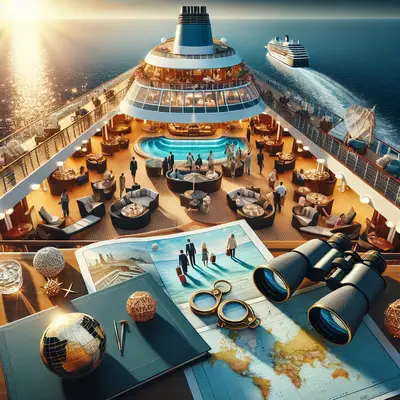
Truly seasoned cruisers create what might be called a “personal circuit” around the vessel—a curated sequence of spaces that become their private everyday route. It’s an understated luxury: knowing precisely where to wander at different hours for the ambience you prefer.
Begin with early mornings. Identify a café, quiet bar, or forward lounge that opens early and catches first light. There is a particular magic to watching the bow cut through an empty horizon while the rest of the ship sleeps. For mid-morning reading or work, libraries, card rooms, and less-trafficked observation lounges offer tranquility, especially on days when the pool deck hums with activity.
Afternoons reward subtlety. Seek out shaded promenade decks with real teak underfoot if your ship has them; these are havens for slow walks and reflective thought. Some ships feature small outdoor terraces tucked behind lounges or near specialty restaurants—often nearly empty on sea days. Mark these as your “default escape valves.”
Finally, choose your evening haunts according to mood rather than program. If you prefer conversation over spectacle, identify bars or lounges that are slightly peripheral to main traffic flows—often those on intermediate decks or at the ship’s extremities. Get to know a particular bartender or sommelier; the continuity of service and familiarity with your preferences create an experience that feels quietly bespoke, even on a larger vessel.
5. Shore Excursions as a Private Commission, Not a Package
Most travelers experience shore days as pre-packaged episodes; sophisticated cruisers increasingly treat them as lightly customized commissions. Even if you elect to use the cruise line’s shore offerings, the art lies in adjusting structure and timing to reclaim a sense of autonomy.
Instead of defaulting to all-day excursions, consider half-day experiences that preserve unscripted time. Morning tours with a guaranteed return before midday allow for a leisurely lunch back onboard and a tranquil afternoon, while late-departure ports invite the option of an independent early-evening stroll once the heat and crowds thin. In certain destinations, small-group excursions (or private drivers arranged through reputable providers) allow you to dictate pace, linger where the standard tour would hurry, or bypass predictable stops entirely.
Pre-cruise research elevates this approach. Identify one or two very specific experiences in each port—a particular café, gallery, historic quarter, or coastal walk—that align with your interests rather than a generic “highlights” loop. Then, if using the ship’s excursion infrastructure, select the tour that best preserves time and flexibility to reach those anchors.
Importantly, build in “white space” between structured elements. A port day that includes a focused, three-hour cultural immersion, followed by an hour of unscheduled wandering and then a return to a half-empty ship, often proves far more satisfying than an eight-hour checklist. The shift from consumption to curation turns shore days into extensions of your own tastes rather than mass-market experiences.
Conclusion
An exceptional cruise is rarely the product of one grand gesture. It is a composition of deliberate, almost invisible decisions: where you sleep, when you dine, how you use the ship when others leave it, and the circuits you trace through its public and private spaces. By approaching your voyage with this level of refinement—curating microclimates, treating dining as choreography, reimagining port days, designing personal routes, and commissioning shore experiences—you transform a standard itinerary into something far more intimate.
The real luxury is not merely in higher thread counts or premium labels, but in time that feels unhurried, precisely tuned to your preferences, and gently removed from the expected patterns of the crowd. At sea, as in life, sophistication is often found in the details no one else is noticing.
Sources
- U.S. Department of State – Cruise Ship Travel - Official guidance on planning, safety, and documentation for cruise passengers
- Centers for Disease Control and Prevention – Cruise Ship Travel - Health considerations, preparedness, and wellness recommendations for cruising
- CLIA (Cruise Lines International Association) - Industry research and insights on cruise trends, ship design, and passenger preferences
- Harvard Business Review – The Case for Vacation - Research-backed discussion of how rest, pacing, and time away impact well-being and performance
- Port of Venice – Passenger Information - Example of how major ports structure cruise operations, logistics, and guest flow
Key Takeaway
The most important thing to remember from this article is that this information can change how you think about Travel Tips.