Luxury cruising today is less about opulence on display and more about a carefully composed experience—measured, understated, and meticulously calibrated to how discerning travelers actually live. The finest ships no longer chase spectacle; they refine proportion, silence, light, and time. For guests who have already “seen it all,” the real luxury lies in what most passengers never notice, but always feel.
Below are five exclusive, often overlooked dimensions of luxury cruises that seasoned enthusiasts quietly pursue—and that the most sophisticated lines master with near-obsessive precision.
1. The Architecture of Privacy: How Ship Design Shapes Your Day
On truly luxurious vessels, privacy is not an amenity; it is a design language. Naval architects and interior designers collaborate to create flow patterns that segregate high-traffic areas from contemplative spaces without obvious barriers or signage.
Corridors to top suites are often angled or subtly offset so that doors are not directly opposite one another, reducing both noise and the unintended intimacy of eye contact every time you step out. Public rooms are zoned with changes in ceiling height, materials, and sight lines so that a bar, a library nook, and a small seating cove can coexist in a single open-plan space—each with its own acoustic and visual cocoon.
On the best luxury ships, even the route from suite to spa is orchestrated. Hallways narrow or widen to modulate pace; lighting shifts from cool to warmer tones as you move toward more private, restorative areas. The destination is relaxation, but the journey there has been engineered to slow your breathing and your day.
2. The Invisible Hand of Service: Anticipation Without Intrusion
If mass-market cruising is about efficiency of service, luxury cruising is about the choreography of it. The finest crew members are trained not simply to remember names, but to study patterns—and then to make those patterns effortless for you.
A butler who notices the particular way you take tea may quietly ensure the same setup in every venue you favor, without asking. A sommelier may recall which vintages you lingered over on night one and angle the week’s pairings toward your preferences while still nudging you toward discovery. In the top echelon of suites, housekeeping coordinates with restaurant and spa teams so that a late lunch automatically translates into a slightly adjusted evening turndown time—no knock, no call, just an uninterrupted afternoon that somehow feels uncannily “yours.”
True luxury service avoids theatrics. It is the waiter who materializes a shawl on a cool deck evening before you realize you are cold, or the concierge who rearranges a port day when weather shifts, presenting you with a reworked plan that still respects your tempo and interests. When it is done correctly, you do not marvel at the staff. You simply notice how rarely you need to ask for anything at all.
3. Culinary Precision at Sea: Beyond “Fine Dining” Labels
Most cruise brochures promise “gourmet cuisine,” but the serious luxury guest understands that excellence is not defined by chandeliers or tasting menus—it is defined by constraint and sourcing. The sea imposes its own discipline: limited storage, shifting weather, and vast distances from major markets. How a line responds to these constraints reveals its true culinary DNA.
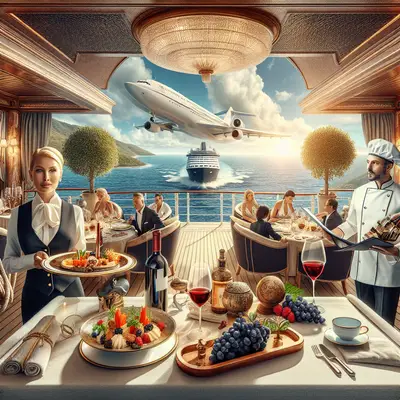
In the upper tier of luxury cruising, menus are deliberately compact. The apparent simplicity—fewer dishes, cleaner plates—often signals confidence in ingredient quality and the brigade’s ability to execute at a consistently high level. Some lines now form direct relationships with regional producers, flying in specialty items at specific embarkation points or arranging pier-side deliveries from trusted fishmongers and farms along a carefully plotted itinerary.
Wine programs follow a similar logic. It is no longer enough to tick boxes with a few trophy labels. Guests accustomed to serious cellars at home expect thoughtful curation: natural and low-intervention wines on polar itineraries; expressive, food-friendly European whites on Mediterranean routes; and small-producer reds that reward lingering over a late-night cheese trolley. The culinary luxury is not the volume of choice but the sharpness of its focus.
4. Time as the Ultimate Luxury: Slow Itineraries and Thoughtful Rhythms
For the experienced cruiser, an itinerary crammed with ports feels less generous and more demanding. The most sophisticated luxury lines have quietly pivoted toward what might be called “uncompressed” travel—fewer ports, longer calls, and more overnights in cities that are genuinely worth lingering in after dark.
This shift reflects a recognition that time, not thread count, is the true high-end currency. An overnight in a Mediterranean capital allows for unhurried museum visits in the afternoon, a proper aperitivo hour, and a late seating at a local restaurant that does not cater to hurried tour groups. In regions like Northern Europe or Asia, judiciously placed sea days create space for deep rest, extended spa rituals, and the kind of reading, reflection, and conversation that many guests have edited out of their land-based lives.
Within the ship’s daily rhythm, luxury lines are increasingly careful to avoid what might be called “programming pressure.” Activities are curated rather than crowded; there is an assumption that guests will opt out without guilt. On the best ships, the daily program reads like an invitation, not a schedule—space for you to define, rather than a script to follow.
5. Intellectual Quiet: Enrichment That Respects Your Intelligence
Lectures and onboard “enrichment” have long been a fixture of cruising, but the tone has changed dramatically at the top end of the market. The new luxury guest is not looking for vacation-school; they want context woven into the journey in a way that feels natural, not didactic.
Instead of generic port talks, the better lines bring in historians, architects, marine biologists, or photojournalists whose work is deeply rooted in the regions visited. Sessions might explore how sea lanes have shaped global trade, how coastal cities are rethinking resilience in the face of climate change, or how local culinary traditions reflect centuries of migration and exchange.
Equally important is how this content is delivered. Intimate lounge conversations, salon-style Q&As, small tasting seminars, and guided on-deck stargazing blur the line between lecture and conversation. Guests are treated not as an audience to manage, but as thoughtful travelers who already know something and are eager to refine that understanding.
This quiet intellectualism is one of the subtle markers that distinguishes true luxury at sea: curiosity is not merely accommodated; it is assumed.
Conclusion
The most refined luxury cruises are defined less by surface-level trappings and more by the invisible geometries underneath—how a ship manages privacy, how service anticipates rather than reacts, how cuisine respects both place and palate, how itineraries honor time, and how enrichment assumes a thoughtful, informed guest.
For the seasoned cruiser, recognizing these five dimensions can transform how you choose a ship, a route, and even a specific suite. In a market increasingly crowded with claims of “ultra-luxury,” discernment lies in noticing what others overlook: the silence between doors, the pacing of a day, the way a single well-chosen wine can anchor an evening at sea.
Sources
- Cruise Critic – Luxury Cruise Ship Guide – Overview of what differentiates luxury cruise lines, including service, dining, and ship design elements
- Condé Nast Traveler – What Luxury Cruising Looks Like Now – Insight into evolving expectations around luxury, privacy, and curated experiences at sea
- Seabourn – The Seabourn Experience – Example of how a leading luxury line frames its service ethos, culinary approach, and onboard ambience
- Regent Seven Seas Cruises – All-Inclusive Luxury Experience – Details on enrichment programs, itineraries, and the role of time and space in luxury cruising
- U.S. Department of Transportation – Cruise Ship Travel – Practical background on cruise ship travel and operations, providing context for the realities of life at sea
Key Takeaway
The most important thing to remember from this article is that this information can change how you think about Luxury Cruises.