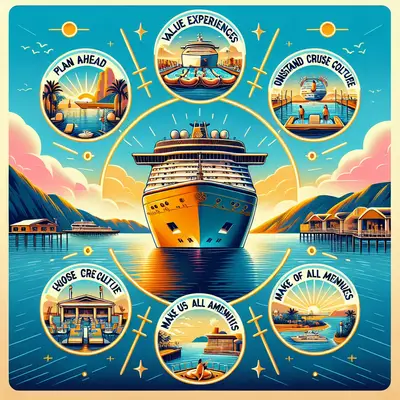
The most memorable cruises rarely begin at the gangway. They start far earlier—in the way you arrive, what you pack, how you move through ports, and the choices you make that turn a voyage from “well-organized” into quietly exquisite. For travelers who value refinement over fanfare, a cruise becomes less about spectacle and more about orchestration: timing, discretion, and small decisions that compound into ease.
These five exclusive insights are designed for cruise enthusiasts who already know the basics. They address the subtler layers of preparation and onboard strategy that distinguish a merely pleasant sailing from a truly cultivated journey at sea.
1. Treat Embarkation as a Prologue, Not a Starting Line
Sophisticated cruisers understand that embarkation day is not the moment to “begin” a vacation—it is the moment to refine it.
Whenever possible, arrive in your embarkation city at least 24–48 hours before sailing, even for domestic departures. This buffer is not simply insurance against delays; it’s an opportunity to reset your internal pace. Choose a hotel that aligns with the tone of your voyage—an urban boutique near fine dining for a cosmopolitan itinerary, or a heritage property for a historically focused cruise. Use this pre-cruise window to adjust your sleep cycle, unpack and repack with intention, and make any last-minute edits to shore plans with a clear mind rather than in transit fatigue.
On embarkation morning, aim to board in the earlier portion of your assigned window—not to rush to the pool deck, but to claim quiet. Many luxury travelers prefer to head directly to specialty dining reservations desks, concierge lounges, or spa reception to finalize onboard arrangements before queues form. Carry a curated “embarkation kit” in your hand luggage: a slim change of clothing suitable for lunch in a refined venue, a compact toiletries set for immediate freshening, and a neatly organized folder—digital or physical—with confirmations, shore arrangements, and insurance details. The goal is simple: to step aboard as though you are continuing a calm day, not recovering from a fraught journey.
2. Curate a Wardrobe That Moves Seamlessly from Deck to Dining
Packing for a premium cruise is less about volume and more about versatility under differing codes: resort casual by day, refined elegance by night, and culturally appropriate attire ashore.
Think in terms of “modular elegance.” Build around a restrained color palette—navy, cream, soft grey, and one accent tone—so that individual pieces can shift roles effortlessly. A lightweight unstructured blazer, for example, can serve as airport layer, embarkation staple, and evening smart jacket. For women, a silk or high-quality viscose dress in a solid color can transition from daytime port exploration (paired with flat leather sandals and a sunhat) to evening sophistication with understated jewelry and a change of shoes.
Fabric choices are critical when moving between air-conditioned lounges and warm decks: prefer breathable natural fibers (linen blends, lightweight wool, cotton poplin) and wrinkle-resistant technical fabrics for travel days. Footwear should be elevated but practical: leather loafers or chic low-heeled sandals rather than flimsy flip-flops or overtly athletic shoes for public indoor spaces.
Do not overlook security and discretion. A sleek crossbody bag with RFID protection, internal zippers, and a neutral design looks at home in a premium onboard environment yet performs reliably ashore. Jewelry should be elegant but not easily ostentatious in port; consider leaving irreplaceable pieces at home and opting for refined but understated alternatives. A well-curated wardrobe ensures you look appropriately polished in every venue without dragging a steamer trunk of “just in case” options from cabin to cabin.
3. Design Shore Days with “Anchors” Rather Than Exhaustive Checklists
Experienced cruisers know that the difference between a satisfying port day and a draining one often lies in restraint. Rather than attempting to “do” an entire destination in a few hours, design each port around one or two “anchors”: a single exceptional experience and a complementary secondary activity.
Your primary anchor might be a private guide to a key site, a hands-on culinary class with a reputable local chef, or a slower, curated exploration of a historic district with time set aside for a café or wine bar chosen in advance. Your secondary anchor should be deliberately lighter: a stroll along a waterfront promenade, a well-regarded bookshop, or a quiet garden or viewpoint. The goal is to avoid the frantic “box-ticking” model while still feeling that your time ashore is purposeful.
When evaluating whether to book ship-organized excursions or independent arrangements, consider three variables: distance from port, complexity of logistics, and your personal risk tolerance. For ports where key attractions lie hours away, or where local infrastructure can be unpredictable, ship excursions offer a valuable guarantee of return. In compact, walkable cities with robust public transport, independent exploration—with reputable local operators—often yields a more tailored experience with fewer crowds.
Build in a deliberate “re-entry” buffer by planning to return to the ship at least one hour before the all-aboard time. Use that hour not merely as contingency for delays, but as personal recovery: a shower, a quiet room-service snack, or time on your veranda to mentally transition from port to shipboard evening. This pacing preserves your energy for the length of the voyage rather than sacrificing tomorrow’s enjoyment to today’s ambition.
4. Quietly Optimize Your Cabin for Rest, Privacy, and Flow
Even the most luxurious staterooms benefit from subtle personalization. Discerning travelers treat their cabin as both sanctuary and command center—a place optimized for sleep, organization, and effortless daily rhythm.
Begin by editing visual clutter. Assign dedicated spaces for specific items: one drawer for shore-day essentials (lanyards, port maps, small currency), another for evening accessories, a narrow shelf for daily medications and sunscreen. Use packing cubes not just for transit, but as “drawers within drawers,” keeping evening wear separate from daywear and active gear. This minimizes rummaging and keeps your space visually serene.
Consider small, easily packed enhancements that have an outsized impact. A compact white-noise app or device paired with in-ear foam plugs can muffle corridor sounds without isolating you from important announcements. A thin silk or cotton sleep mask is far more comfortable than many complimentary options and improves rest during long summer evenings or early arrivals. Magnetic hooks (where permitted) can transform cabin walls into vertical storage for hats, lightweight jackets, or shore bags, freeing up limited closet space.
For privacy and discretion, establish a simple internal routine: a place for your daily program or app-based schedule, a set time each evening to review tomorrow’s activities, and a mutual understanding within your traveling party about early-morning and late-night noise. If your cabin includes a veranda, treat it as a transitional zone between public and private life; a quiet coffee at dawn or a nightcap at sea can be among the most refined moments of the entire voyage—if you have protected your rest well enough to enjoy them.
5. Elevate the Onboard Experience Through Deliberate Selectivity
On modern ships—even intimate ones—the menu of potential activities, dining venues, and events can feel overwhelming. The poised cruiser does not attempt to “get value” by doing everything; instead, they curate a personal collection of experience highlights and allow the rest to fall away.
Before sailing, study your ship’s deck plans and dining options with an eye toward atmosphere as much as cuisine. Reserve specialty venues that align with your preferences: a quiet, slow-paced tasting menu early in the cruise for calibration, then a second highlight dinner later, timed with a sea day to avoid rushing back from port. For included venues, observe early on which times of day feel calmer and more aligned with your sensibility—perhaps late breakfasts just before service ends, or early pre-dinner drinks in a lounge before peak hours.
Approach onboard enrichment the way you would a cultural program in a great city: select a small number of talks, classes, or tastings that truly intrigue you, and attend them fully rather than half-watching multiple overlapping events. Seek out offerings led by senior crew or visiting experts, where insight and conversation often outlast the scheduled hour. Conversely, do not hesitate to decline events that do not match your desired tone, even if they are heavily promoted.
Finally, preserve unstructured time at sea. The temptation to fill every hour is strong; resist it. The real luxury of cruising is not merely access to destinations, but the rare permission to be unhurried between them. A well-chosen afternoon in a quiet observation lounge with a well-made coffee and a thoughtfully selected book can be every bit as memorable as a gala night—perhaps more so, because it belongs entirely to you.
Conclusion
A refined cruise experience is rarely the result of grand gestures. It emerges from a series of considered choices: when you arrive, how you pack, what you decline, and the pace you set for yourself from embarkation to final port. By treating each element of your journey as part of a coherent whole—rather than a checklist of disparate tasks—you create a voyage that feels composed rather than crowded, elegantly paced rather than breathless.
For the discerning cruise guest, true luxury lies not in how much you can fit into each day, but in how gracefully each day unfolds.
Sources
- U.S. Department of State – Traveler’s Checklist - Official guidance on documents, safety, and planning before international travel
- U.S. Department of Transportation – Air Travel Consumer Reports - Data and insights on delays and cancellations, supporting the case for pre-cruise arrival buffers
- Centers for Disease Control and Prevention – Cruise Ship Travel - Health-focused recommendations specific to cruise passengers
- CLIA (Cruise Lines International Association) - Industry information and resources on cruise trends, ships, and best practices
- Harvard Business Review – The Case for Vacation - Research-backed perspective on rest, pacing, and the benefits of well-structured time away
Key Takeaway
The most important thing to remember from this article is that this information can change how you think about Travel Tips.