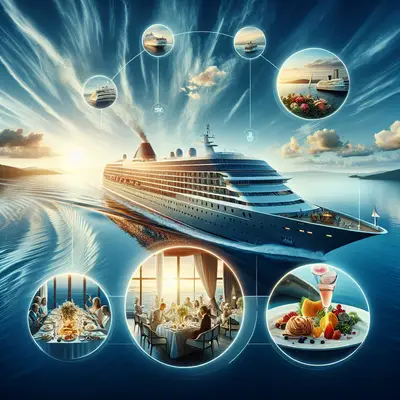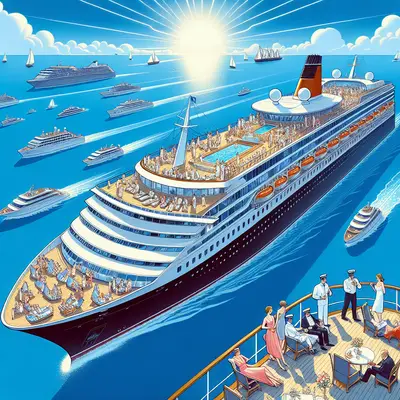
For the discerning traveler, cruise lines are no longer interchangeable vessels gliding along similar routes. They are highly curated worlds, each with its own aesthetic, unspoken codes, and quiet hierarchies of experience. Choosing the right line is less about picking a ship and more about selecting a cultural milieu at sea—one that aligns with how you like to dine, explore, and be recognized without ever needing to announce yourself.
Below, we explore how today’s leading cruise lines are quietly differentiating themselves—and share five exclusive, insider-level insights that seasoned cruise enthusiasts increasingly use to refine their choices.
Reading a Cruise Line’s “DNA” Before You Sail
Every major line projects a personality that goes far beyond its marketing. The real character is found in its decisions: how space is allocated, who it partners with, and how it approaches time onboard. A ship with expansive atriums, high-energy shows, and late-night venues speaks to a different sensibility than one that invests heavily in libraries, observation lounges, and slow-burn culinary experiences.
Attention to these subtler cues—such as the ratio of crew to guests, the size and variety of public spaces versus cabins, and the brand’s approach to shore excursions—offers a much clearer read on what your days and evenings will actually feel like. Luxury, in this context, is not defined solely by price or décor, but by how thoughtfully the line choreographs each hour you spend onboard.
When evaluating cruise lines, observe not just what they highlight in brochures, but what they treat as non-negotiable: wellness programming, destination immersion, enrichment partnerships, or high-energy entertainment. This “cultural signature” will determine whether your voyage feels symphonic, theatrical, or quietly bespoke.
Beyond Cabins and Suites: The Architecture of Privacy
For experienced cruisers, accommodations are only the beginning of the privacy equation. The truly sophisticated question is not, “How big is my suite?” but “How does this ship allow me to disappear—gracefully—when I choose?”
Some cruise lines now engineer privacy at multiple layers. Ship-within-a-ship concepts on premium and contemporary lines—complete with private lounges, reserved sun decks, and dedicated restaurants—create a buffer between the energy of the wider vessel and the calm of your own enclave. Meanwhile, ultra-luxury lines often dispense with such divisions entirely, as the entire ship functions at a quieter, more cultivated tempo.
Even the design of corridors, stairwells, and observation nooks matters. Lines that invest in semi-hidden viewing areas, low-traffic lounges, and calmer secondary bars are signaling an understanding that privacy is not just a cabin feature; it’s a spatial philosophy. Savvy cruisers increasingly study deck plans to identify ships where the flow of people naturally creates pockets of calm—an essential quality for refined, restorative sailing.
The Culinary Signatures: How Lines Reveal Their True Priorities
If you want to understand a cruise line’s true priorities, move past the flagship specialty restaurant and examine the edges of its culinary program. This is where the most telling details emerge.
Look at how the line treats breakfast and lunch—are there thoughtfully curated à la carte options, regional specials tied to the day’s port, or chef-attended stations that go beyond the expected? Consider whether the line invests in meaningful partnerships: Michelin-starred chefs, respected wine estates, or serious coffee programs. High-caliber collaborations require ongoing commitment, training, and sourcing—subtle markers of a line’s dedication to quality rather than optics.
For well-traveled guests, the deeper pleasure lies in nuance: a ship that adjusts menus in real time based on local provisioning, a dining room that never feels rushed, a bar team that keeps a mental catalog of your preferences after a single evening. Over several sailings, these patterns become recognizable signatures—elevated proof of which lines value culinary authenticity and which are content with surface-level spectacle.
Five Insider-Level Insights Seasoned Cruisers Watch For
For enthusiasts who treat cruising as an art form rather than a transaction, a different set of metrics emerges. Beyond price, itinerary, and ship age, these five refined indicators can quietly transform the onboard experience:
The “Invisible Concierge” Effect
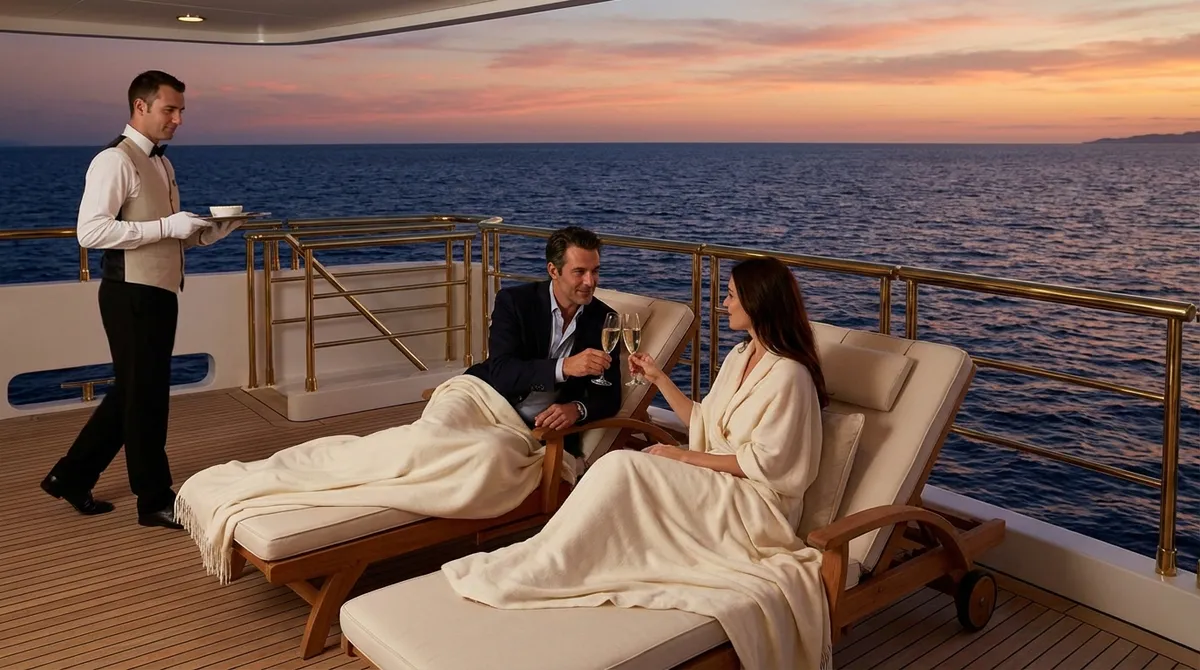
On certain lines, guest preferences are tracked and subtly anticipated without overt display. Your preferred water, pillow type, or pre-dinner drink begins to appear as if by instinct. This level of personalization often stems from strong crew training, high retention rates, and tightly integrated guest-service systems—all hallmarks of a line that invests deeply in human capital rather than purely in hardware.
How a Line Uses Sea Days
Sea days expose a cruise line’s intellectual and cultural ambitions. Some fill them with game shows and themed parties; others offer in-depth destination lectures, serious wine tastings, design-forward wellness sessions, and collaborations with universities or cultural institutions. Enthusiasts increasingly choose lines where sea days feel like thoughtfully composed interludes rather than gaps between ports.
Port Strategy: Depth Over Quantity
The most sophisticated lines are rethinking port calls, favoring extended stays, overnights, and access to less-trafficked harbors rather than stacking as many stops as possible. This shift from “collecting ports” to truly inhabiting them is a subtle but powerful differentiator—one that reveals a line’s respect for both local culture and the traveler’s time.
Crew Tenure and Training as a Luxury Indicator
Beyond polished interiors, the most enduring marker of quality is the stability and professionalism of the crew. Lines known for long-serving staff, rigorous training, and clear career development often deliver consistently elevated service across ships. For the regular cruiser, returning to a line where faces—and service standards—remain reassuringly familiar is a luxury that cannot be replicated by design alone.
Acoustic Design and Spatial Calm
Experienced travelers pay attention to sound. How noisy are public spaces? Has the line invested in acoustic materials, thoughtful zoning of venues, and traffic flow that reduces crowd pressure? The quietude of a ship’s library, promenade, or observation lounge speaks volumes about the brand’s priorities. Lines that treat sound as part of the luxury equation tend to excel in other elements of refinement as well.
Matching Your Travel Style to the Right Cruise Line “Family”
While each ship has its own character, cruise lines can broadly be grouped into “families” of experience: ultra-luxury, premium, contemporary, and expeditionary. The refined traveler’s task is not to chase the newest ship or most extravagant suite, but to match their preferred rhythm of life to the right family of lines.
Ultra-luxury brands cater to those who value discreet service, high crew-to-guest ratios, and an atmosphere where time feels unhurried. Premium lines often offer an appealing balance—elevated dining and service with more varied entertainment and a broader demographic. Contemporary lines favor energy and scale, but their ship-within-a-ship concepts now allow privacy-seeking guests to carve out a more rarefied experience within a larger floating resort.
Expedition and destination-focused lines, meanwhile, appeal to those who see luxury not as opulence, but as access: to remote landscapes, expert guides, and intellectually rich itineraries. Understanding which of these philosophies resonates most deeply with you will narrow the field more effectively than any deck-by-deck comparison.
The Future of Cruise Line Distinction
As new ships launch and established fleets are refined, the distance between marketing language and onboard reality is narrowing on the best lines—and widening on others. Sustainability commitments, integration of technology, and authentic destination partnerships are emerging as meaningful differentiators, not just buzzwords. Increasingly, lines are judged not only on what they offer guests, but on how responsibly and intelligently they operate within the broader world.
For the sophisticated cruiser, the opportunity lies in reading between the lines—studying not just the headline features, but the underlying philosophies that shape a voyage. Choose the brand whose quiet decisions align with your own preferences, and each sailing begins to feel less like a one-off trip and more like a series of well-composed chapters in an ongoing story at sea.
Conclusion
In a landscape where ships grow more spectacular each year, the true art lies in discernment. Cruise lines are no longer simply carriers; they are curators of tempo, taste, and atmosphere. The most rewarding experiences emerge when you look past cabin categories and marquee amenities and ask deeper questions about privacy, service, culinary integrity, and intellectual engagement.
As you plan your next voyage, consider not just where you want to go—but how you wish to feel along the way. The right cruise line will answer that question quietly, consistently, and with the kind of understated excellence that lingers long after you disembark.
Sources
- [Cruise Ship Health and Safety – U.S. CDC Cruise Ship Travel](https://wwwnc.cdc.gov/travel/page/cruise-ship) - U.S. Centers for Disease Control overview of cruise ship travel, health, and operational considerations
- [Cruise Industry Overview – Cruise Lines International Association (CLIA)](https://cruising.org/en/news-and-research/research/2023-state-of-the-cruise-industry-report) - Industry report offering data on cruise trends, segments, and guest preferences
- [Sustainable Cruising and Environmental Practices – Royal Caribbean Group](https://www.royalcaribbeangroup.com/sustainability/) - Insight into how a major cruise group approaches sustainability and ship design
- [Culinary Partnerships and Enrichment at Sea – Oceania Cruises](https://www.oceaniacruises.com/the-oceania-experience/fine-dining) - Example of how a premium line emphasizes gastronomy as a brand signature
- [Expedition Cruising and Destination Immersion – Lindblad Expeditions & National Geographic](https://world.expeditions.com/expedition-stories/stories/what-is-an-expedition-cruise/) - Explanation of expedition-style cruising and its focus on depth of experience
Key Takeaway
The most important thing to remember from this article is that this information can change how you think about Cruise Lines.