The most memorable cruises rarely hinge on the obvious upgrades. Instead, they’re defined by a collection of quiet decisions—timing, layout, service nuances, and subtle onboard rituals—that transform a good itinerary into a genuinely elevated voyage. For travelers who already know the difference between balcony categories and loyalty tiers, the real frontier lies in mastering the details others overlook.
This guide explores five exclusive, under‑the‑radar insights that seasoned cruise enthusiasts use to orchestrate an experience that feels tailored, unhurried, and impeccably considered.
1. Curating the “Silent Halo” Around Your Stateroom
For experienced cruisers, the cabin is not just a place to sleep; it is the private wing of a personal floating retreat. The art lies in selecting a stateroom that sits within a “silent halo”—a buffer from foot traffic, mechanical vibration, and late‑night activity.
Avoid cabins directly beneath pool decks, theaters, or main restaurants, where chair dragging, rehearsal noise, and galley operations can encroach into the evening. Similarly, cabins near service doors, elevators, or crew stairwells may introduce intermittent noise that feels minor in theory but cumulative over a week or more.
Instead, seek out mid‑ship cabins flanked by other stateroom decks above and below. This “stateroom sandwich” typically provides the most acoustically stable environment. On some premium and luxury lines, there are also “micro‑neighborhoods” that seasoned cruisers quietly favor—small clusters of cabins at the end of a corridor with reduced through‑traffic and slightly oversized balconies due to ship design quirks. A brief review of deck plans, combined with forum research and photo tours, often reveals these subtle gems that never appear in marketing copy but make a remarkable difference in day‑to‑day serenity.
2. Engineering a Seamless Embarkation (Before You Reach the Port)
Embarkation day sets the emotional temperature for the entire cruise—yet many travelers treat it as a logistical hurdle rather than something to choreograph. The most experienced cruisers begin refining embarkation weeks in advance, quietly eliminating friction points so the first hours onboard feel composed, not chaotic.
Pre‑booking transportation with precise buffer time for traffic and security is foundational, but refined travelers go further: understanding port opening times, peak arrival windows, and the line’s priority boarding tiers. When offered, selecting the earliest or latest feasible embarkation slot can dramatically change the atmosphere—early slots often mean a less crowded check‑in; later slots can mean walking straight on with cabins already ready.
One elegantly simple tactic: pack a deliberately curated embarkation tote with everything needed for the first six hours onboard—swimwear, a light change of clothes, medication, chargers, valuables, and a slim folder with printed confirmations. This allows you to ignore the whereabouts of your checked luggage, head directly to lunch or a quiet lounge, and begin the voyage in a state of ease rather than search. The result is not just convenience; it is a sense of immediate ownership over the experience.
3. Turning the Daily Program into a Personal Concierge
Most guests glance at the daily program; seasoned cruisers treat it as a strategic document. Hidden among the obvious shows and trivia sessions are micro‑experiences that, curated correctly, create a rhythm of indulgence, learning, and genuine rest tailored to your preferences.
Begin by deciding on a “theme” for your voyage—culinary discovery, wellness, enrichment, or cultural immersion—and then filter every day’s offerings through that lens. A traveler focused on gastronomy might prioritize live cooking demonstrations, sommelier‑hosted tastings, or regional wine flights tied to the next port. A wellness‑oriented guest might attend sunrise stretching on sea days, choose low‑impact excursions, and schedule thermal‑suite sessions during peak pool hours for a quieter environment.
The most astute cruisers also note the natural “pressure points” in the schedule: sea days with headliner performances, formal nights, or marquee theme parties. These are perfect opportunities to invert the crowd’s pattern. While the majority attend early shows, those in the know enjoy near‑private lounges, quieter specialty restaurants, or uncrowded promenades. Outbound from marquee ports, when everyone crowds the open decks for sail‑away, a more refined approach is to secure a lesser‑known viewing spot—perhaps an observation lounge with waiter service—sacrificing a wide‑angle view for a far more comfortable, curated one.
4. Elevating Dining Beyond the Menu (Without Overspending)
On contemporary ships, dining is no longer just about selecting venues; it’s about crafting a narrative across the voyage. The most sophisticated cruisers think in terms of progression: when to indulge, when to simplify, and how to make even included venues feel bespoke.
One subtle tactic is mapping dining choices to port intensity. On long, port‑heavy stretches, many find that main dining rooms and more casual venues are entirely sufficient, keeping energy and time focused on the destination. On lighter port days or sea days, however, a leisurely multi‑course lunch in a specialty restaurant with panoramic views becomes the highlight, especially when paired with a bottle chosen thoughtfully from the wine list rather than selected automatically by the glass.
Building rapport with the sommelier or head waiter on the first evening also pays quiet dividends. A brief but specific conversation about preferences—Old World versus New World wines, interest in regional pairings tied to upcoming ports, or dietary nuances—often unlocks off‑menu recommendations, thoughtful substitutions, and personalized pacing. Similarly, returning to a favored server or section when possible creates continuity; over the course of a week they begin to anticipate preferences, from bread selections to pacing between courses.
For those occupying suites or upper‑tier categories, it’s worth exploring whether breakfast or lunch in a more private venue is available exclusively to your category. These understated enclaves often serve as refined, unhurried alternatives to the buffet at peak times, turning a simple morning coffee into a civilized ritual instead of a negotiation for table space.
5. Designing Port Days with “Bookends of Calm”
Ports are where cruise memories are made—but they also hold the greatest potential for fatigue. The difference between returning to the ship exhilarated versus depleted rests not only on which excursion you choose, but on how you frame the experience before and after.
Refined cruisers often adopt a “bookends of calm” philosophy. Before a demanding excursion—say, a full‑day cultural tour or a high‑energy activity—begin the morning with a quiet, unhurried breakfast in a low‑traffic venue rather than the main buffet. This may mean room service on the balcony, a dining room breakfast as soon as it opens, or a small café off the main traffic flow. The psychological effect of a civilized, sheltered start before stepping into busy ports is profound.
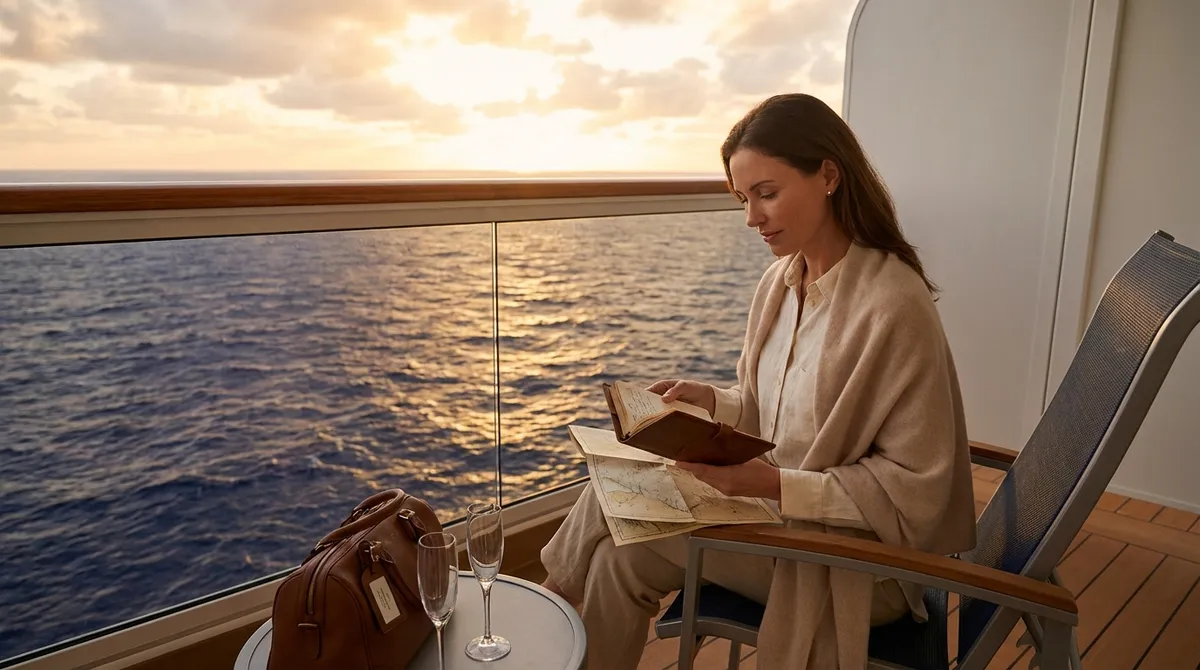
On return, resist the impulse to immediately rejoin the ship’s busiest spaces. Instead, plan a decompression ritual: a reserved spa appointment on late‑return days, a quiet hour with a book in an underused lounge, or a deliberate stroll on outer decks away from the pool. Savvy cruisers also take note of when all‑aboard times coincide with peak shower and pre‑dinner preparation; shifting your own schedule by as little as 30–45 minutes—either earlier or later—can turn a frantic transition into a seamless glide from shore to shipboard evening.
The most experienced travelers recognize that they do not need to extract every possible activity from every port. On select days, they intentionally choose shorter or more focused excursions, preserving a slice of afternoon to enjoy a semi‑empty ship while many guests are still ashore. Paradoxically, this “less but better” approach often yields richer memories and a more luxuriously paced voyage.
Conclusion
An exceptional cruise rarely announces itself with grand gestures. It emerges instead from decisions made quietly: the cabin you choose, the way you approach embarkation, how you interpret the daily program, and the rituals you construct around meals and port days. For those who have already fallen in love with life at sea, these five insights act as a discreet upgrade path—not necessarily to a higher cabin category, but to a higher standard of experience.
By intentionally shaping the rhythm of your days, aligning your choices with your personal priorities, and allowing for moments of deliberate calm, you transform a well‑planned itinerary into something far rarer: a voyage that feels distinctly your own.
Sources
- U.S. Department of State – Cruise Ship Travel – Official guidance on documentation, safety, and preparation for cruise travel
- Cruise Lines International Association (CLIA) – Industry research and insights on cruise trends and guest behavior
- Centers for Disease Control and Prevention – Cruise Ship Travel – Health and wellness considerations specifically for cruise passengers
- Port of Miami – Cruise Passenger Info – Example of port logistics, timing, and embarkation details from a major cruise hub
- Royal Caribbean – How to Choose a Cruise Cabin – Line‑provided guidance on stateroom selection and layout considerations
Key Takeaway
The most important thing to remember from this article is that this information can change how you think about Travel Tips.