There is a quiet art to cruising well—an elegance that sits just beyond the obvious decisions of cabin category and itinerary. For the seasoned guest, refinement lives in the details: the way you structure your days, the spaces you choose, the conversations you invite, and the rituals you curate. This is not about extravagance for its own sake, but about orchestrating a voyage that feels composed, personal, and effortlessly elevated.
Below are five nuanced insights designed for travelers who already know the basics—and are ready to cultivate a more considered, more rewarding life at sea.
Curating Your Own "Private Ship" Within a Larger Vessel
Even on a larger vessel, you can design an experience that feels almost bespoke. The key is to identify and choreograph a personal circuit of quieter venues and off-peak moments so that the ship functions less like a resort and more like a private club.
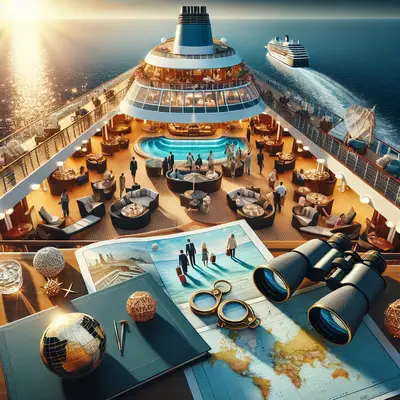
Begin by walking the ship intentionally on embarkation day. Note the tucked‑away lounges, observation nooks, and underused outdoor decks—often on transition levels or at the extreme bow or stern. These become your “portfolio” of preferred spaces. Pair them with time strategy: choose early-bird breakfasts, late lunches, and post-peak gym sessions to experience public areas at their calmest.
Consider upgrading selectively rather than universally. Booking a standard suite but investing in access to a ship‑within‑a‑ship enclave (where available) can feel more refined than opting for a larger cabin without such privileges. The result is a voyage where you float between curated enclaves, with the bustle of the main ship available when you want it, but never imposed when you don’t.
Treating the Ship as a Floating Cultural Residence
Beyond sun decks and cocktail hours, a well-designed vessel can function as a temporary residence devoted to curiosity. Approach it as if you were moving into a short‑term cultural salon rather than simply boarding a holiday.
Scan the schedule for lectures, tastings, recitals, and workshops that genuinely align with your interests—not merely what fits between meals. Prioritize depth over volume: attending a series of talks from the same historian or naturalist can create a through-line to your journey, transforming ports from photo stops into chapters of a narrative.
Bring the outside world in. Download or pack a carefully chosen book (history, travel writing, or a novel set in your region) and read it in spaces that echo its content—Mediterranean history in a shaded deck chair as you pass ancient coastlines, or Pacific exploration accounts while gazing over open water. This alignment between setting and subject can subtly elevate sea days, making the ship feel like a floating study, gallery, and salon in one.
Designing a Personal Dining Narrative, Not Just Restaurant Reservations
For many guests, dining becomes a checklist: steakhouse one evening, Italian the next, gala night on formal night. A more refined approach is to conceive your culinary experiences as a narrative that unfolds over the length of the voyage.
Start with a theme—perhaps “regional discovery,” “lighter wellness-forward cuisine,” or “classic ocean-liner nostalgia.” Then map your reservations accordingly: schedule the most anticipated venue for a night when you are neither rushed by port calls nor fatigued by long excursions. Keep your earliest evenings intentionally understated—room service on the balcony, perhaps—allowing the voyage to build towards your most special dining experiences.
Use your sommelier or headwaiter as a collaborator. Share your preferences early in the cruise and invite them to suggest a progression of wines or specialties across multiple evenings rather than one meal. This creates continuity and a sense of being personally looked after. Finally, reserve at least one unstructured evening with no plans at all: some of the most memorable meals emerge when you follow a casual recommendation or simply wander into a space that feels right in the moment.
Composing a Signature Daily Ritual at Sea
What distinguishes an ordinary sailing from an indelible one is often not the marquee moments, but the quiet, repeatable rituals that anchor each day. Designing a signature daily sequence—your own “sea-day symphony”—can lend structure, calm, and a sense of personal luxury.
This might be as simple as a pre-breakfast walk on deck while the ship is still hushed, followed by a solitary coffee in the same corner of the lounge each morning. Or a late-afternoon pattern of spa access, reading, and a single well-made cocktail before dressing for dinner. By holding to a few chosen rituals, the voyage gains a heartbeat; you begin to feel not like a temporary guest, but like a resident with an established rhythm.
Intentionally remove one element of digital noise from this ritual. Perhaps you leave your phone in the cabin during your morning walk or choose a “no photography” window each day. Allow at least one portion of the day to exist only in memory, unrecorded. The absence of documentation can paradoxically make the experience feel rarer and more luxurious.
Engaging With Crew as Partners in a More Refined Voyage
The most sophisticated cruise guests understand that the crew are not merely service providers—they are co-authors of the experience. Treating them as such opens doors to nuanced, often quietly extraordinary moments.
Start by learning and using names: your steward, your preferred bartender, the maitre d’, the sommelier, and any lecturer or entertainer whose work you particularly appreciate. Share your preferences early and graciously—how you like your cabin serviced, your preferred water or tea in the evening, your favored table location, your threshold for conversation versus privacy.
Equally important is curiosity. Ask crew members about their own favorite corners of the ship, their most beloved ports, and their personal recommendations for a quieter café or viewpoint ashore. These suggestions are rarely on the printed map, and often lead to your most distinctive memories. Show consistent, unobtrusive appreciation—both verbally and, where appropriate, through formal channels and gratuities—and you will often find the ship responds in kind, with attentions that feel entirely natural rather than ostentatious.
Conclusion
Elevated cruising is less about visible opulence and more about precise intention. By sculpting your own private geography aboard, treating the ship as a cultural residence, crafting a thoughtful dining narrative, instituting personal rituals, and engaging the crew as collaborators, you create a voyage that feels intimately tailored rather than merely well-appointed.
In a world where many itineraries and ships share similar headlines, it is how you inhabit the journey—quietly, intelligently, and with a sense of composed luxury—that will set your experience apart.
Sources
- U.S. Department of State – Cruise Ship Travel Tips - Official guidance on documentation, safety, and preparation for cruise guests
- U.S. Centers for Disease Control and Prevention – Cruise Ship Travel - Health-focused recommendations for cruising, including hygiene, illness prevention, and medical planning
- CLIA (Cruise Lines International Association) – Facts About the Cruise Industry - Industry data and insights that inform understanding of modern cruise operations and guest trends
- Princess Cruises – Onboard Experience Overview - Example of how a major cruise line structures dining, enrichment, and onboard venues
- Celebrity Cruises – The Retreat and Suite Experience - Illustrates ship‑within‑a‑ship concepts and curated enclaves referenced in the article
Key Takeaway
The most important thing to remember from this article is that this information can change how you think about Travel Tips.