There is an art to moving through a ship as if it were built around you. For many travelers, cruising is no longer about discovering the basics; it is about refining the details—those subtle decisions that yield silence instead of crowds, nuance instead of noise, and comfort that feels personally tailored rather than generically luxurious. These are not entry-level hacks; they are quiet, deliberate strategies that experienced cruisers use to shape voyages that feel singular.
Designing Your Daily Rhythm Around the Ship’s Invisible Clock
On a modern cruise ship, time is not merely what the clock suggests; it is a choreography of scheduled flows—dining seatings, showtimes, kids’ club rotations, shore-excursion departures. Seasoned cruisers learn to read this invisible timetable and sail slightly against its current.
Study embarkation-day patterns. Instead of racing to the buffet with everyone else, dine a bit later and use the first hour to secure reservations, request pillow types, and introduce yourself to your cabin steward or butler. A five-minute, gracious conversation here can quietly influence service for the rest of your voyage.
Shift your dining window by 20–30 minutes. Arriving just before or just after peak times softens the atmosphere: fewer queues at specialty venues, less pressure on staff, and a calmer, more attentive service cadence. Likewise, schedule spa treatments during early port hours, when many passengers are ashore; you’ll often find a more tranquil thermal suite and more lingering attention from therapists.
On sea days, use the ship’s own programming as a crowd map. Major trivia in the lounge? The forward observation area will be nearly empty. Afternoon show in the theater? The pool decks quiet subtly. Over time, you stop asking, “What time is the class?” and start asking, “What time will the ship exhale?”
Curating a Cabin Ecosystem That Feels Intentionally Yours
The truly seasoned cruiser treats the stateroom less as a hotel room and more as a private ecosystem—engineered for rest, ritual, and effortless transition between relaxation and readiness.
Begin with light and sound. If your cabin faces early-morning sun, bring a slim, high-quality sleep mask and consider a travel white-noise machine or app to soften hallway sounds. Some luxury lines now offer pillow menus and mattress toppers; confirm availability before sailing and have preferences noted in your profile, not just requested onboard.
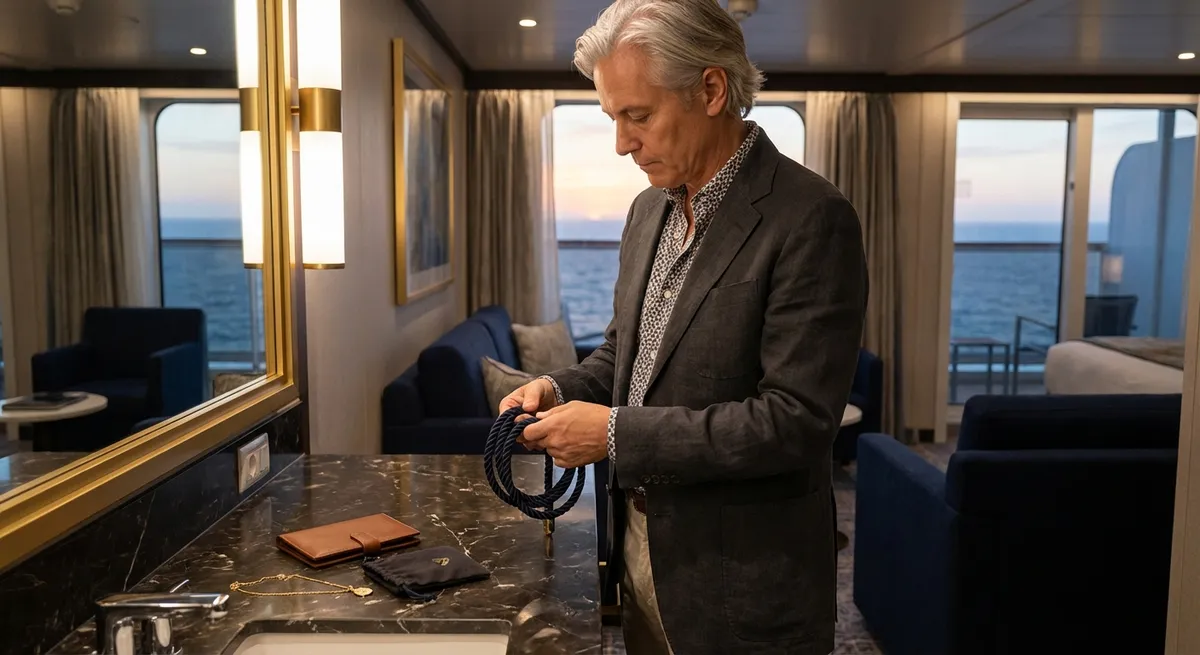
Invest in a small set of “cabin anchors”—items that live in a specific place and reduce friction. A compact leather valet tray by the bedside for keycard, watch, and ring; a slim folding stand or clip to keep the daily planner visible; a refined travel candle in a lidded tin (only if allowed by the line—many prohibit open flames) or a discreet room spray to establish a consistent, calming scent.
For longer itineraries, order a simple floral arrangement or greenery early in the voyage. It subtly upgrades the entire feel of the room and can often be refreshed with minimal cost. Use packing cubes not just for transit, but to “zone” your storage: one for shore wear, one for evening wear accessories, one for spa and fitness. You are not merely unpacking—you are designing how your days will flow.
Mastering Shore Days with Layered, Flexible Logistics
Well-executed port days feel effortless, but that grace is almost always the product of intelligent planning with flexible edges. Rather than fixating on a single must-do experience, sophisticated cruisers build layered, modular plans that can expand or contract depending on weather, crowds, and energy levels.
Start by separating ports into three categories: anchor ports (signature destinations where you book early, structured experiences), canvas ports (flexible, walkable places for spontaneous discovery), and rest ports (destinations where you deliberately do very little). This mental framework prevents every port from competing for your full attention—and your stamina.
When booking private or small-group tours, reverse-engineer from all-aboard time, not tour length. Factor in conservative buffers for traffic, tendering, and immigration. Share your ship’s schedule and your latest acceptable return time with the tour operator in writing, and confirm pick-up and drop-off locations with a map screenshot saved offline.
Carry a small, elegantly organized “shore kit”: a compact cardholder with local currency and a backup credit card, a slim reusable water bottle, a lightweight scarf or wrap that works for both sun and conservative religious sites, and a minimal first-aid set (pain reliever, blister care, motion-sickness tablets). Seasoned cruisers do not overpack day bags; they refine them.
Finally, allow for one unstructured hour in most ports. This is where the real texture emerges—a quiet café just beyond the tourist belt, a side street bakery, a small gallery that becomes the defining memory of the day. The best port days are not over-scripted; they are gently framed.
Navigating Onboard Dining Like a Private Member’s Club
On many modern ships, dining has become an ecosystem of main restaurants, specialty venues, casual grills, and chef’s table experiences. The experienced cruiser orchestrates these options not for sheer variety, but for narrative: a progression of meals that complement, rather than blur, into one another.
Before sailing, look at sample menus for both main and specialty restaurants. Instead of booking every premium venue on sea days, consider aligning certain restaurants with specific ports—seafood-focused dining after a Mediterranean fishing village call, or a wine-paired tasting menu following a day in a renowned vineyard region.
Build a rapport with the maître d’ early, ideally during a less-busy lunch on embarkation or day two. A respectful, concise conversation about your dining style—unhurried dinners, a preference for quieter tables, or a desire to try different sections of the menu over the week—can lead to thoughtful seating and pacing.
Leverage room service and casual venues strategically. A light, well-timed in-cabin breakfast on early excursion mornings preserves energy and composure. On the other hand, a late, minimalist lunch at a poolside grill allows you to enjoy the open air without sacrificing the evening’s appetite. Avoid the temptation to treat every meal as a production; let some be intentionally understated.
For those with dietary preferences or allergies, communicate early and then quietly confirm. Many premium lines have dedicated dietary teams; request to meet a supervisor once, establish your needs clearly, and then enjoy the peace of mind that allows you to dine like everyone else—just more thoughtfully.
Cultivating Invisible Status: Relationships, Discretion, and Continuity
Beyond loyalty tiers and colored keycards lies a more nuanced form of status: the kind that is earned not with points, but with behavior, consistency, and discretion. This is the realm where staff remember your name, your preferred sparkling water, your inclination for a particular gin, not because you demanded it—but because you made it easy for them to care.
Introduce yourself to key staff—cabin steward or butler, maître d’, sommelier, bar server at your preferred lounge—early and graciously. Learn their names, use them, and express specific appreciation when something is done well. Modest but thoughtful gratuities, aligned with the cruise line’s policy and your own standards, are best offered discreetly and without fanfare.
Return to the same lounge at roughly the same time for an evening drink. Over a few nights, your regular order and preferred seat will be quietly noted. This is how personal touches accumulate: a suggested off-menu cocktail, a reserved table without you ever requesting one explicitly.
Consider continuity across voyages. If you favor a particular line, join any available feedback or advisory programs, submit considered post-cruise surveys, and note standout crew members by name. This creates a record that can follow you, subtly influencing the way future teams approach your stay.
Above all, carry your expectations lightly. The refined cruiser understands that grace, patience, and small courtesies to staff and fellow guests are the true currency of recognition at sea. The most exclusive experiences often emerge not from demanding more, but from demonstrating that you understand—and respect—the quiet complexities of life aboard.
Conclusion
Exceptional cruising is rarely about chasing the most extravagant suite or the most photogenic pool deck. It is about aligning shipboard rhythms with your own, crafting a cabin that feels genuinely restorative, orchestrating port days with deliberate flexibility, dining with narrative rather than novelty, and investing in relationships that outlast a single voyage. These five insights are less about tricks and more about temperament: a composed, observant way of traveling that allows the ship, the crew, and the itinerary to rise to their full potential—quietly, almost inevitably, around you.
Sources
- U.S. Department of State – Cruise Ship Travel - Official guidance on documentation, safety, and health considerations for cruising
- U.S. Centers for Disease Control and Prevention – Cruise Ship Travel - Health-focused recommendations for cruise passengers, including illness prevention and preparedness
- CLIA (Cruise Lines International Association) - Industry association offering statistics, best practices, and insights into cruise operations and standards
- Royal Caribbean – What to Pack for a Cruise - Practical packing guidance that informs cabin organization and shore-day preparation
- Celebrity Cruises – Dining on Board - Overview of modern cruise dining concepts and venue types, useful context for planning a refined dining strategy
Key Takeaway
The most important thing to remember from this article is that this information can change how you think about Travel Tips.