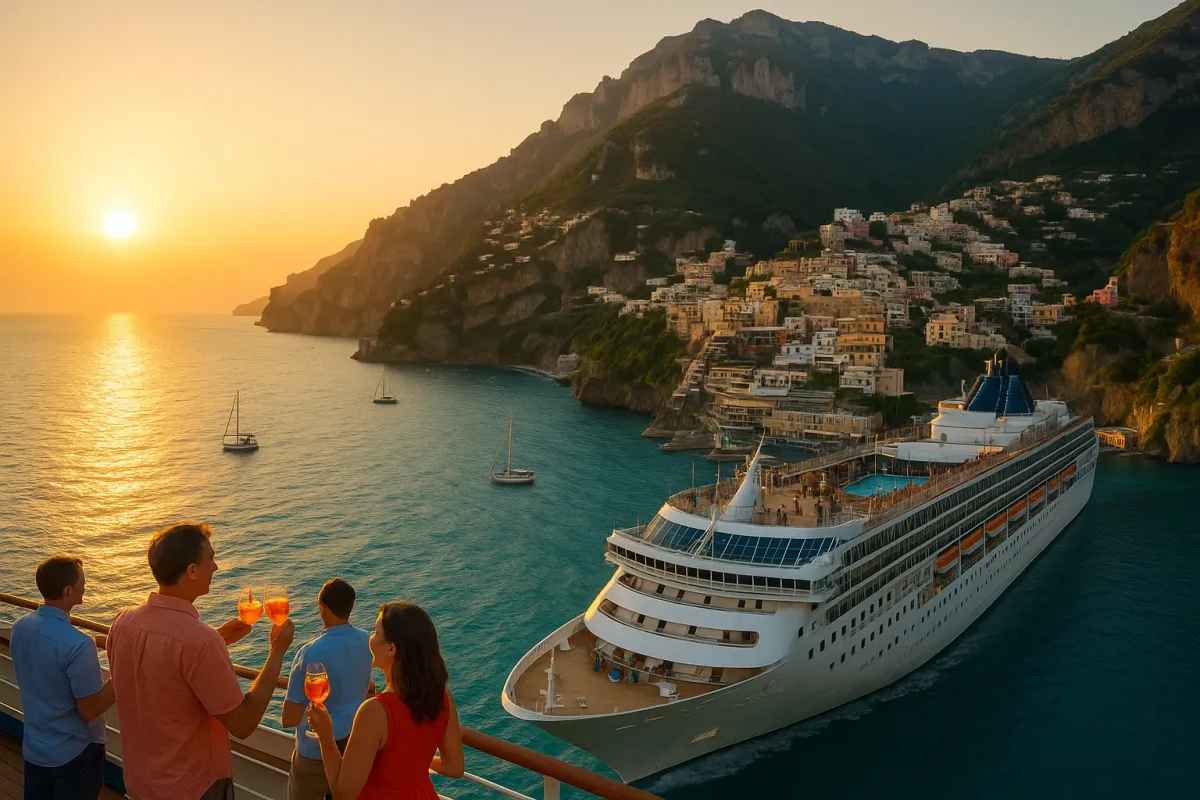
The Mediterranean has reclaimed center stage this season, with major cruise lines announcing expanded deployments, new luxury vessels, and longer overnight calls from Barcelona to Istanbul. Royal Caribbean’s latest capacity boost in the region, MSC Cruises’ year‑round Mediterranean focus, and the sustained rise of ultra‑luxury operators like Silversea and Seabourn are all converging into a single message: the Med isn’t merely “back”—it is defining what contemporary destination‑focused cruising can be right now.
For discerning travelers, this renewed emphasis offers something rare: the chance to experience iconic ports at a moment when itineraries are becoming more curated, more culturally attuned, and distinctly less hurried. As ships reposition and schedules shift to capture demand, a more refined Mediterranean has emerged—a Riviera of ideas as much as of coastlines.
Below, five exclusive, destination‑driven insights shaped by the latest Mediterranean cruising trends, designed for travelers who value nuance over novelty.
The Return of the Grand Overnight Stay
One of the most notable trends in current deployment announcements is the quiet resurgence of the overnight in marquee ports—Barcelona, Lisbon, Venice‑adjacent ports like Trieste, and increasingly Istanbul and Piraeus (for Athens). As capacity surges in the region, premium and luxury lines are rediscovering that true differentiation lies not in how many ports one can “collect,” but in allowing guests to inhabit a destination after the last day‑tripper has disappeared.
An overnight in Barcelona, for instance, transforms the city from postcard to mood piece: a late seating at Disfrutar or a table at Tickets’ spiritual successors, an unhurried stroll through El Born as shutters roll down, a nightcap on a rooftop bar with the ship’s lights against the harbor. Istanbul, now returning to more itineraries, becomes profoundly different when you can witness both sunrise and moonrise over the Bosphorus, dine at a contemporary meyhane, and still return to the sanctuary of your suite without racing the departure time. This new focus on extended stays, now highlighted in several 2025–2026 itineraries across major lines, is creating a more immersive, European‑paced experience that feels less like a “call” and more like a temporary residency.
The Adriatic and Eastern Med: From Side Trip to Centerpiece
Current schedules reveal a marked pivot toward the Adriatic and Eastern Mediterranean, as ports like Kotor, Dubrovnik, Split, and lesser‑known Croatian isles gain prominence alongside resurgent interest in Greece and Türkiye. With demand high for Italy and France, lines such as MSC, Celebrity, and Norwegian are threading in alternative, crowd‑diffusing routes that favor Adriatic fjords, Venetian‑style harbors, and Hellenic archipelagos over the predictable Western Med shuffle.
For the traveler, this means that ports once treated as charming detours are now being curated as destination highlights in their own right. Kotor’s medieval bay, framed by limestone cliffs, often appears as a dawn arrival showpiece, with captains timing the sail‑in to capture the quietest, most cinematic light. In the Cyclades, the focus is subtly shifting from headline‑grabbing Mykonos to islands like Paros and Syros, where the pulse is more local and less theatrical. Itineraries pairing Athens with Bodrum or Kusadasi now layer ancient Ephesus with contemporary Turkish beach‑club culture, offering a duality that today’s culturally curious cruiser actively seeks. As these regions command more dedicated sailings, the Adriatic and Eastern Med are no longer “alternatives”—they are the main attraction.
Shoulder Season Sophistication: The New Mediterranean Gold
If there is a single insider move emerging from current booking patterns and deployment choices, it is this: the most sophisticated Mediterranean is no longer in July or August. As more ships crowd the summer calendar, connoisseurs are shifting decisively into April–May and late September–October, a trend now mirrored in how lines promote their “best‑of‑Med” sailings.
Shoulder season in the Med offers advantages that go beyond simple crowd reduction. The light is softer, the air gentler, and the cities more themselves. Rome in late October, accessible via Civitavecchia, trades cruise‑terminal chaos for long, golden-hour walks through Trastevere. Amalfi in May feels perfumed rather than scorched; vineyards in Santorini or Sicily are alive with harvest rituals rather than selfie sticks. Cruise companies are responding with richer shore programming—truffle hunts in Istria, vineyard lunches in Provence, olive oil tastings in Crete—timed to seasonal abundance rather than calendar convenience. For travelers able to skirt school‑holiday peaks, the Mediterranean shoulder season is where the region’s most elegant, quietly luxurious personality emerges.
Quiet Luxury Ashore: Private Access in Iconic Ports
As competition intensifies, lines are racing not just to add ships to the Med but to elevate what happens once you disembark. The newest wave of curated shore excursions—particularly from ultra‑luxury and premium brands—leans into “quiet luxury”: private, often after‑hours access to cultural and culinary experiences that would be nearly impossible to orchestrate independently.
In Florence, this might mean a small‑group, pre‑opening visit to a Renaissance gallery, followed by a sommelier‑guided tasting in a historic enoteca. In Athens, it could be a twilight Acropolis experience, timed to avoid both heat and crowds, culminating in a rooftop dinner overlooking the illuminated Parthenon. In the French Riviera, private yacht tenders whisk guests from ship to secluded coves near Villefranche or Cap Ferrat, with onboard chefs preparing Provençal picnics and chilled rosé sourced from nearby estates. This shift toward exclusivity is not about ostentation but refinement: fewer people, more space, more time to absorb. It is no coincidence that as news circulates of record Mediterranean cruise volumes, the most sought‑after offerings are those that feel as if the rest of the world has been gently turned down.
The Rise of the Port‑Forward Itinerary
One of the more subtle but telling developments in current Mediterranean programming is the emergence of what might be called “port‑forward itineraries.” Rather than merely using the Med as a scenic backdrop, these sailings foreground destinations with a curatorial sensibility—fewer sea days, more regionally coherent routes, and a narrative logic that feels almost editorial in its pacing.
Travelers will notice this in itineraries that deliberately pair Barcelona with Valencia and Palma de Mallorca to trace a Balearic‑Catalan arc, or voyages that move from Marseille to Monte Carlo to Portofino and Livorno to follow the elegant sweep of the Western Riviera. In the Eastern Med, port‑forward voyages might chart a story from Venetian history in Dubrovnik and Kotor to Byzantine and Ottoman legacies in Istanbul and Thessaloniki. Luxury lines are increasingly designing these routes with a collector’s mindset, encouraging guests to linger over recurring regional motifs: Moorish tiles reappearing from Andalusia to Sicily, or the shifting blue of the Aegean telling its own tale from island to island. As this philosophy spreads—visible in the latest 2025–2026 deployment announcements across several major brands—the Mediterranean cruise is evolving from a checklist into a curated anthology.
Conclusion
With the world’s major players re‑investing in Mediterranean deployments and revealing increasingly nuanced itineraries for the coming seasons, the region is experiencing a sophisticated renaissance. Overnights in signature cities, Adriatic and Eastern Med ascendance, shoulder‑season allure, private cultural access, and port‑forward storytelling are reshaping what it means to “do the Med” by sea.
For those who view a cruise not merely as transport but as a finely tuned instrument for experiencing place, this is an exceptional moment. The Mediterranean—ancient, familiar, perpetually rediscovered—is once again the stage upon which the most imaginative, destination‑driven voyages are being performed. The only decision that remains is not whether to return, but which version of the Riviera dream you wish to inhabit, and in which precise light you want to see it.
Key Takeaway
The most important thing to remember from this article is that this information can change how you think about Destinations.