Some sail to escape; others sail to refine. For the seasoned cruiser, a voyage is less a holiday and more a carefully orchestrated composition—where timing, discretion, and a few well‑kept rituals transform a standard itinerary into a truly elevated experience. These are not tricks so much as nuanced practices: subtle adjustments to how you book, move, dine, and dress that quietly separate the merely well‑traveled from the genuinely discerning.
Below, five exclusive insights designed for those who already love cruising—and are ready to love it at a higher frequency.
The Art of the Boarding Window: Crafting a Seamless Embarkation
Most guests focus on the sail‑away; connoisseurs focus on the first 90 minutes on board. That window often determines whether your cruise begins in a flurry of queues and misplaced luggage, or with a glass of champagne and your shoulders already lowered an inch.
Study your embarkation port and time with the same care you devote to your itinerary. If your line offers staggered arrival appointments, consider the “second wave” rather than the earliest slot. The very first boarding period is frequently thick with eager crowds and still‑settling crew; arriving an hour or two later often means shorter lines, cabins already prepared, and restaurants open with full staffing.
Once on board, move with intention: bypass the buffet, which is almost always at its least appealing on embarkation day, and head instead for a quieter dining venue or lounge that serves lunch à la carte. This not only sets the tone for the voyage but also introduces you to a server team who may remember you kindly throughout the sailing.
Finally, carry a minimalist embarkation tote with just the essentials—documents, medication, a fine‑gauge knit, and perhaps swimwear. Anything more becomes clutter before your stateroom is ready; anything less risks a frantic search for what “must” be in your checked suitcase. A calm, unhurried embarkation is never accidental; it is curated.
Curating Your Cabin Atmosphere: Transforming a Stateroom into a Private Salon
Even the most thoughtfully designed suite can feel anonymous on day one. The refined cruiser treats the space as a blank canvas, layered with a few select touches that turn a standard stateroom into a private salon at sea.
Start with lighting. Overhead fixtures tend toward the practical rather than the flattering; prioritize lamps and sconces, and consider packing a compact, warm‑tone LED nightlight or portable reading lamp. Soft, indirect lighting instantly shifts the mood from functional hotel room to evening drawing room.
Scent is equally powerful. Bring a small travel candle (to be used unlit, as most lines prohibit open flame) or a discreet reed diffuser or scent cards with a single signature fragrance. Over a week or more, that scent will become anchored to the memory of the voyage in a way even photographs cannot match.
Textiles matter as well. A lightweight cashmere wrap or finely woven throw, dedicated to the cabin rather than shore excursions, softens standard seating and adds a quietly indulgent touch to early‑morning coffee on the balcony. If your line allows, request two extra pillows and a mattress topper in advance; these details can elevate sleep quality noticeably on longer sailings.
Order a pot of tea or a carafe of filtered water as a standing preference with your butler or steward, and designate a small corner as your “arrival station”—key card, sunglasses, miniature notebook, and pen—so you never spend precious minutes searching as the ship pulls into port. Over the length of the cruise, these small rituals differentiate “a room” from “your residence at sea.”
Navigating the Ship’s Rhythms: Moving One Step Ahead of the Crowd
Peak times on a ship are as predictable as tides, yet most passengers drift along with the flow. The sophisticated traveler moves half a step ahead, not through entitlement, but through an understanding of the vessel’s daily choreography.
Observe the first full day as an anthropologist would: note when the buffet is most crowded, when the pool chairs fill, how long show lines form before curtain. From there, you can subtly offset your schedule—arriving for breakfast 20 minutes before the usual surge, scheduling spa appointments during popular shore excursions, and opting for a late‑morning gym visit when early risers have already finished.
Leverage the quiet spaces others overlook: the library when the ship is in port, the observation lounge during early‑evening first seating, the promenade deck at midday when most guests are at the pool. On sea days, a strategically late lunch (often in a specialty restaurant that opens for midday service) followed by a mid‑afternoon walk on the nearly empty decks can feel like a private yacht experience.
Regarding venues, experienced cruisers learn the “secondary entrances” and less trafficked stairwells to avoid chokepoints near main atriums and theaters. Taking the stairs when practical not only avoids elevator queues but also offers a sense of relaxed autonomy—moving through the ship’s vertical spaces at your own pace rather than being swept along.
The result is not about avoiding people, but about reclaiming time. When you are not waiting, queuing, or circling for a spot by the pool, you are free to linger in the bar where the pianist actually sees you, or on a quietly sun‑warmed deck chair that feels improbably secluded for a ship of thousands.
Dining with Intention: Securing Memorable Tables, Not Just Meals
On a premium voyage, food is expected to be good; the connoisseur is after something rarer: consistency of service, a sense of being known, and the occasional off‑menu grace note that makes a dinner feel unmistakably “yours.”
Before sailing, research the ship’s restaurant architecture—how many main dining rooms, which specialty options, whether there’s a chef’s table, sushi counter, or wine‑pairing venue. Instead of defaulting to whichever reservation slots remain, proactively sketch a dining rhythm: a balance of early and late seatings, a quiet night in the main dining room after a port‑intensive day, and perhaps a later specialty reservation aligned with a sunset sail‑away.
On the first evening, introduce yourself to the maître d’ or restaurant host with understated courtesy. Express a preference not just for time, but for experience: a smaller table near natural light, a particular section with a server whose style you appreciate, or a booth that allows conversation without straining over ambient music. Once you find a server or sommelier whose approach aligns with your tastes, request their section whenever practical; continuity often leads to more thoughtful recommendations and occasional bespoke dishes.
Experiment with one or two lunches in non‑obvious venues: the main dining room (if open) on embarkation or sea days, or a quieter alfresco option that most guests overlook in favor of the buffet. On longer itineraries, ask about regional specialties sourced locally in port, and whether the chef can prepare a simplified version that highlights ingredients rather than culinary theatrics.
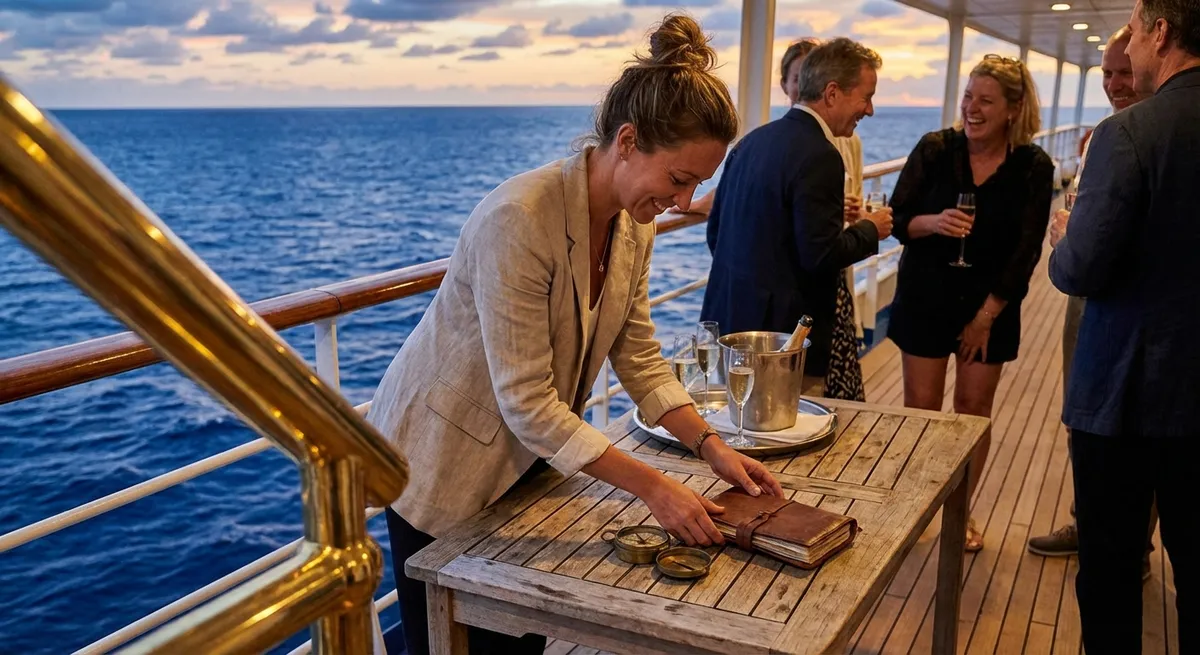
Finally, consider keeping a slim, elegant notebook to record wines you particularly enjoyed or preparations you might wish to recreate at home. Dining then transcends consumption; it becomes part of an ongoing personal archive of taste.
Dressing the Voyage: A Wardrobe That Moves Seamlessly from Deck to Dining
The old clichés of cruise formalwear are fading, replaced by a more nuanced dress code that values polish over ostentation. A sophisticated traveler reads this evolution correctly, packing a capsule wardrobe that feels quietly elevated without ever appearing contrived.
Think in terms of fabrics and silhouettes rather than “outfits.” Linen blends, fine‑gauge merino, silk‑cotton, and polished cotton sateen travel beautifully and transition well from day to evening with a change of shoes or accessory. A single impeccably cut blazer or softly structured jacket can anchor multiple looks—paired with tailored trousers for formal nights, or with dark denim or refined chinos for cocktail hours and relaxed specialty dining.
Daywear should respect both climate and context: wide‑brimmed hats that shield without shouting, leather sandals with proper support, and a palette that echoes sea and sky without resorting to nautical clichés. On port days, pack ensembles that photograph well yet remain practical—neutral tones with one accent piece, so you feel composed in gallery‑worthy interiors, sun‑washed lanes, and shipboard lounges alike.
Even in an age of “resort casual,” elegant evening wear still has its place. Instead of sequins and stiff tuxedos, consider a fluid silk dress or minimalist column, or a dinner jacket in a subtle texture paired with an open‑neck shirt. These choices look as at home in an intimate supper club as they do in the main dining room, and won’t feel out of place should you be invited to a last‑minute tasting or captain’s gathering.
Pack with the understanding that space is finite but repetition is invisible when done well. Rotating a few key pieces with different accessories produces a sense of effortless variation. The goal is not to be the most dressed, but the most considered.
Conclusion
Refined cruising isn’t about chasing the newest suite category or the grandest itinerary. It unfolds in the margins: the way you step aboard; how you light a room; when you choose to dine, walk, or withdraw; and the quiet assurance with which you inhabit the ship.
These five insights are less about privilege and more about perspective—tuning into the vessel’s natural cadence, editing out friction, and layering the journey with tactile, sensory details that feel distinctly your own. When practiced together, they turn a well‑planned cruise into something rarer: a voyage that feels, in the best sense, precisely tailored.
Sources
- U.S. Department of State – Cruise Ship Travel – Official guidance on documentation, safety, and health considerations for cruise passengers
- Centers for Disease Control and Prevention – Cruise Ship Travel – Health recommendations and best practices for staying well on cruises
- CLIA (Cruise Lines International Association) – State of the Cruise Industry – Industry data on cruise trends, passenger preferences, and onboard experience expectations
- Celebrity Cruises – Cruise Ship Dress Codes Explained – Illustrative overview of contemporary cruise attire standards and evening wear expectations
- Royal Caribbean – Embarkation Day Tips – Practical details on boarding windows, check-in timing, and first-day logistics on major cruise lines
Key Takeaway
The most important thing to remember from this article is that this information can change how you think about Travel Tips.