Some ports court attention; others quietly transform the way you think about the sea. For the discerning cruiser, the most rewarding destinations are rarely the loudest or the most photographed. They are the ones where time seems to slow, where the tenders arrive at dawn to a harbor still perfumed with woodsmoke and sea salt, and where the only souvenir that matters is the sense of having been allowed in, gently, to a place that has not built itself around your arrival.
This is an exploration of destinations best experienced from the water’s edge, with five exclusive insights that sophisticated cruise travelers use to unlock a deeper, more nuanced journey—long after the last gangway is raised.
Reading a Harbor Like a Connoisseur
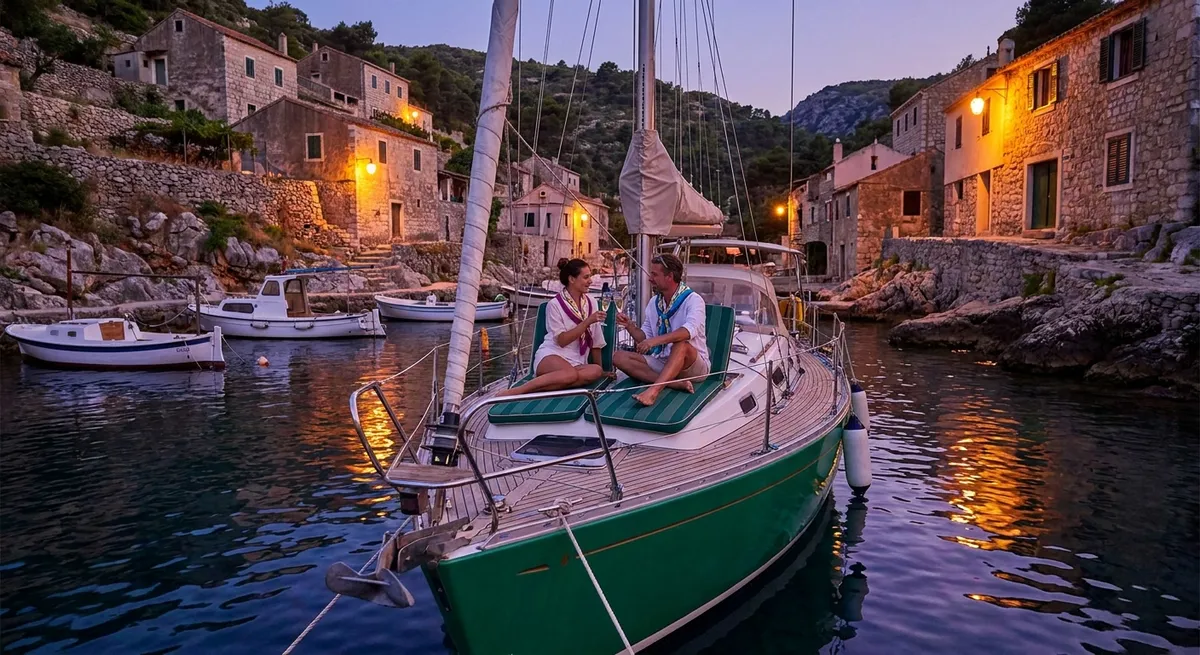
A practiced cruiser knows that the story of a destination starts not in its postcard landmarks, but in its harbor. The approach tells you almost everything: the curvature of the bay, the scale of the port, the way local life gathers along the waterline. A container-laden skyline, constant pilot-boat traffic, and a forest of cranes signal a working engine of commerce—impressive, but often less intimate. By contrast, a stone quay flanked by low-slung houses and a modest marina usually hints at a place still shaped primarily by its residents, not its visitors.
Arriving by sea to cities such as Valletta or Kotor reveals their topography in layers: bastions, hills, and steeples stacked like stage scenery, allowing you to understand the settlement as sailors once did. In smaller ports—think Nordic fishing villages, Aegean islands without cruise terminals, or Pacific coves where ships must anchor offshore—the tender ride becomes your first immersion, gliding past local skiffs and working boats rather than jet skis and party catamarans. Connoisseurs often wake before sunrise on port days not for the photos, but to watch the choreography: tugs, pilots, and port officials orchestrating your vessel’s arrival, a quiet masterclass in how the maritime world really functions.
Beyond the Headline Port: The Micro-Region Mindset
Well-traveled cruisers rarely think in terms of single ports; they think in micro-regions—compact, coherent clusters of culture, geography, and history linked by short sea passages. Rather than “the Mediterranean,” they talk about the Ligurian arc, the Dalmatian ribbon, or the pocket of islands that sits between Stockholm and Turku. This shift in perspective reframes destinations from isolated stops into conversations with each other.
In practice, that might mean using a marquee port as a mere gateway. Instead of “doing” Barcelona in eight hours, you might treat the city as a launch point to the Priorat wine region or the Catalan coastal towns that rarely see a tour bus. In Alaska, a micro-region mindset turns a sequence of ports—Sitka, Juneau, Skagway—into a layered study of Indigenous culture, Russian influence, and the evolution of frontier towns, especially if you selectively choose smaller-group excursions that follow local naturalists and historians rather than generic city tours. Along Norway’s coast, choosing an itinerary that pauses in lesser-known fjords, rather than sprinting only between Bergen and the North Cape, reveals subtle variations in dialect, cuisine, and architecture that most cruise brochures never mention.
Curating Time Ashore: The Art of Intentional Under-Scheduling
One of the quietest luxuries in any destination is unclaimed time. Seasoned cruisers understand that ports can be over-edited by the structure of shore excursions, compressing a place into a checklist. Instead, they practice intentional under-scheduling—a deliberate decision to do fewer things more thoroughly, accepting that some attractions will remain unseen in exchange for a more authentic sense of place.
In practice, that might mean dedicating an entire call in a marquee city to a single neighborhood: a morning market, a café where locals linger, a small museum or gallery not designed for crowds, followed by a slow return along side streets that do not appear in the port guide. In many Mediterranean or Caribbean ports, where heat and midday congestion can erode the pleasure of exploring, this measured approach creates space to appreciate subtleties: the difference between a café that welcomes cruise visitors and one where the staff actually recognizes returning crew members; the bakery where the last loaves sell out before noon; the bar where fishermen gather after sunset.
The exclusive insight here is that truly memorable port days often hinge on a single resonant encounter—a conversation, a shared meal, a quiet hour in a cloister or along a seawall—rather than frantic coverage. Under-scheduling leaves space for those serendipitous encounters to occur.
Seasonal Reversals: Choosing Destinations by Their Quietest Brilliance
For many destinations, the cruise calendar is built around obvious peaks: summer in the Mediterranean and Alaska, winter in the Caribbean. Travelers who value refinement over spectacle often reverse this logic, selecting destinations at moments when the experience ashore is most authentic—even if that means softer light, cooler temperatures, or fewer guaranteed beach days.
In Northern Europe, late spring and early autumn can transform a port call from a crowd-management exercise into something contemplative: cafés frequented by residents rather than seasonal staff, museums without queues, markets that feel like a weekly ritual rather than an attraction. The same is true for certain tropical and subtropical regions during shoulder seasons, when brief showers or slightly unsettled seas are offset by quieter beaches, more attentive service, and a gentler rhythm.
This seasonal discretion extends even to classic destinations like the Greek Islands or the French Riviera, where the weeks outside of peak holidays may reveal a different personality entirely—chefs experimenting with local produce, shop owners with the time to converse, and historic sites that can be visited without a countdown clock. For the refined cruiser, “best time to visit” is not a monolith; it is a negotiation between weather, atmosphere, and the desire to encounter a place closer to its unvarnished self.
Following the Local Pulse: How Subtle Signals Elevate a Port Day
One of the most sophisticated skills in destination travel is the ability to read small signals quickly and adjust your plans in real time. Cruise enthusiasts who excel at this treat each port as a living system rather than a scripted experience. They notice which restaurants are serving primarily locals at lunch, where the queues form in the late afternoon, and how residents use their own public spaces.
Upon arrival, a quick scan of community notice boards, café chalkboards, or municipal websites can reveal an entire parallel world of local events: a temporary exhibition opening, a live music performance in a courtyard, a seasonal food festival or market. These moments often fall completely outside curated ship excursions yet can become the highlight of a voyage. In some ports, simply adjusting your schedule—visiting a central square early, retreating to less-trafficked neighborhoods at midday, returning to the waterfront at twilight—aligns your experience with the natural tempo of the city rather than with the predictable arc of cruise-ship crowds.
There is also value in quietly observing where crew members go on their precious hours ashore. They are often connoisseurs of good value and genuine hospitality, pointing the way toward cafés, barbers, and small shops that welcome repeat local business as much as occasional visitors. Honoring this local pulse—spending thoughtfully, interacting respectfully, stepping aside from the most worn paths—turns a port call from consumption into participation.
Conclusion
The most memorable cruise destinations rarely announce themselves with spectacle alone. They reward those who pay attention: to the shape of a harbor, the logic of a region, the subtle shifts of season, the unhurried allocation of time, and the quiet cues of daily life ashore. For the refined cruiser, each port is less a box to be ticked than a conversation to be entered into briefly but meaningfully.
When you begin to see destinations through this lens, the voyage itself changes. You stop chasing completeness and start cultivating depth. You collect not attractions, but atmospheres. And long after the itinerary has faded from memory, it is these carefully observed harbors, these thoughtfully chosen moments ashore, that anchor your experience of the cruising world.
Sources
- [U.S. Department of State – Country Information](https://travel.state.gov/content/travel/en/international-travel/International-Travel-Country-Information-Pages.html) – Authoritative background on safety, local conditions, and entry requirements useful for evaluating destinations and seasons
- [UNESCO World Heritage Centre](https://whc.unesco.org/en/list/) – Detailed information on cultural and natural sites often visited on cruise itineraries, including historical context and conservation status
- [European Travel Commission – Seasonality Insights](https://etc-corporate.org/reports) – Research reports on tourism flows and seasonality in Europe, helpful for understanding shoulder-season advantages in popular cruise regions
- [NOAA National Ocean Service – Tides and Currents](https://oceanservice.noaa.gov/) – Context on coastal environments, tides, and harbors that influence ship approaches and port operations
- [Royal Caribbean – Destination Guides](https://www.royalcaribbean.com/cruise-destinations) – Representative example of how major cruise lines frame ports and regions, useful as a reference point for going beyond standard marketing narratives
Key Takeaway
The most important thing to remember from this article is that this information can change how you think about Destinations.