Luxury cruising is no longer defined solely by thread counts and champagne labels. The most discerning travelers are now looking deeper—into how a ship is conceived, how space is curated, and how the voyage itself is choreographed. Today’s most elevated experiences at sea are being shaped long before the first passenger boards, in design studios, shipyards, and carefully chosen partnerships around the world.
This is the realm where architecture, gastronomy, wellness, and service philosophy intersect—creating voyages that feel less like mass travel and more like inhabiting a meticulously crafted private world. Below, five exclusive insights illuminate what seasoned cruise connoisseurs quietly examine when choosing their next luxury sailing.
The New Blueprint: Why Ship Design Now Rivals Boutique Hotels
On true luxury ships, design is no longer decoration—it’s strategy. Naval architects and interior designers now collaborate to orchestrate how travelers move, linger, and feel on board. Space ratios (gross tonnage per passenger) are a discreet but powerful indicator of this thinking: the higher the ratio, the more generous the public areas and the greater the sense of breathing room, even on a full sailing.
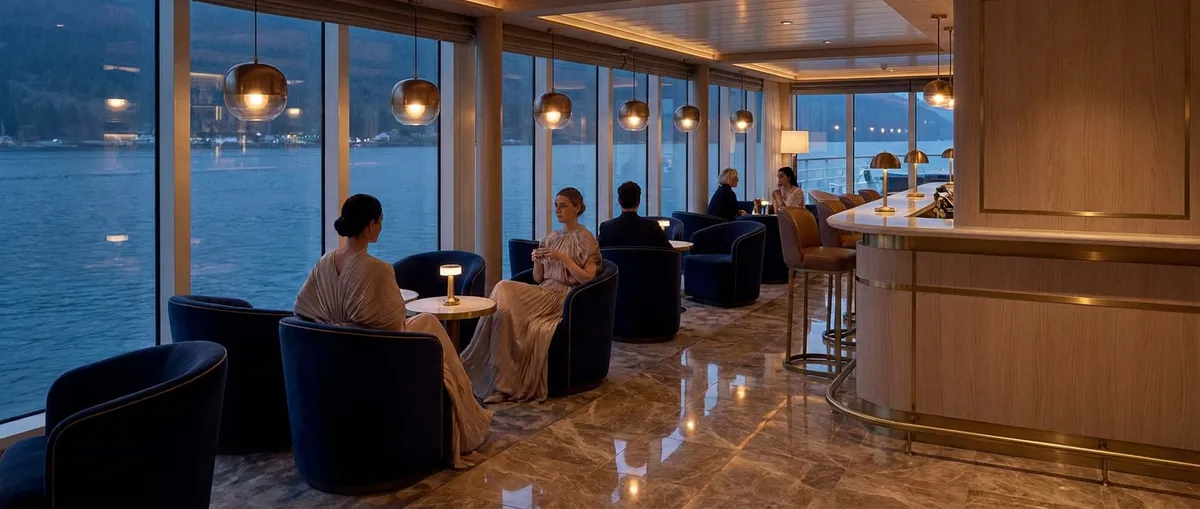
The most sophisticated lines borrow principles from high-end residential architecture: layered lighting instead of harsh overhead glare, sightlines that naturally draw you towards the sea, and transitional spaces that shift mood from morning café culture to evening salon ambience. Materials are chosen not just for opulence but also for tactility and acoustic performance—cladding that absorbs sound in restaurants, carpets that soften corridors, and furnishings that encourage conversation rather than crowding.
Suite design has also evolved beyond mere square footage. The best cabins now function as micro-residences, with smart zoning: separate sleep, lounging, and work areas; thoughtful storage that hides luggage; and bathrooms styled closer to spa sanctuaries than ship utilities. Balcony railings are reimagined with glass or lowered structures to frame the horizon, while increasingly subtle technology (from app-based climate control to nearly silent blackout systems) removes friction from daily rituals.
In this new era, a luxury ship is experienced less as transportation and more as a floating private club—one whose architecture quietly anticipates how you prefer to inhabit your days.
Curated Quiet: The Hidden Geography of Truly Luxurious Space
While brochures showcase glamorous atriums and infinity pools, connoisseurs pay attention to something less obvious: the geography of quiet. On sophisticated ships, serenity is deliberately mapped, deck by deck, to balance energy and repose.
Designers now carve out “second-layer” spaces—intimate reading rooms tucked behind visible lounges, semi-private terraces hidden just beyond main sun decks, and alcoves along promenades where the sea is the star and foot traffic thins dramatically. These are rarely headlined in marketing material; instead, they are discovered, like a favorite corner table at a city restaurant.
Noise management has become an art form. Positioning of lounges, theaters, and late-night venues relative to suites is studied meticulously, as is the placement of technical spaces. On the finest ships, you will notice an almost uncanny hush in corridor design: doors recessed to reduce sound spill, textiles chosen to dampen echoes, and clever routing of service areas so trolleys and provisioning occur out of sight and earshot.
Pool decks on luxury vessels are no longer single monolithic spaces but layered environments: a social hub with bar and music, a more tranquil pool for unhurried laps, and often a dedicated relaxation area reserved for suite guests or spa patrons. Attentive cruisers quickly learn to read the “rhythm” of each deck, tailoring their day to the unfolding mood of different zones.
The result is a ship that feels alive yet never oppressive—a place where you can move seamlessly from conviviality to solitude without ever feeling you’ve left the heart of the experience.
Gastronomy at Sea: When the Ship Becomes a Culinary Destination
The language of fine dining—provenance, seasonality, terroir—has decisively reached the oceans. What separates a refined cruise from a merely competent one is no longer how many restaurants a ship hosts, but how thoughtfully those venues are conceived and supplied.
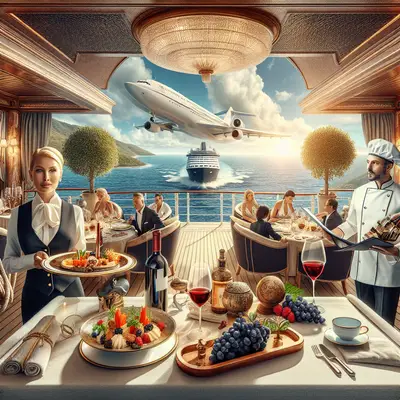
The most ambitious luxury lines operate with culinary philosophies more akin to leading land-based restaurant groups than traditional catering. Menus are now written to reflect regions sailed: Mediterranean herbs and coastal seafood prepared simply when hugging the Riviera, Nordic-inspired dishes in northern latitudes, and delicate spice work in the Indian Ocean and Asia. This goes beyond themed dinners; it’s a commitment to narrative, allowing the ship’s cuisine to echo the geography outside your porthole.
Sourcing has become a point of pride. On select itineraries, chefs disembark early to visit local fish markets or farmers, integrating same-day ingredients into menus. Wine programs mirror this sophistication: robust cellars, often with onboard sommeliers curating vertical tastings that showcase regional vineyards visited during port calls. Increasingly, ships partner with renowned chefs and culinary schools, not for nameplate prestige alone but to import discipline, training, and standards.
For the guest, the most rewarding experiences often happen in the margins of the main dining rooms: an intimate chef’s table with a menu created for a handful of diners; a compact, reservations-only venue focused on a single cuisine executed exceptionally well; or a quiet breakfast where a familiar server remembers exactly how you take your coffee without prompting.
The luxury cruiser today looks for coherence: does the gastronomy tell a story that feels connected to the route, the season, and the ethos of the ship—or is it merely plentiful? The difference, once you notice it, is difficult to unsee.
Wellness Reimagined: From Spa Menu to Voyage-Wide Ritual
Where spas were once a pleasant add-on, wellness on true luxury sailings now permeates the entire voyage. The refinement lies not in the length of the spa menu but in how harmoniously health, rest, and indulgence are blended into each day at sea.
Forward-thinking lines partner with established wellness brands, credentialed practitioners, and sometimes university-linked sleep or longevity experts. The spa itself becomes only one chapter: thermal suites that draw on regional traditions (Nordic saunas in northern waters, hammams in the Mediterranean), guided sunrise stretches on secluded decks, and nutrition-conscious menus that sit comfortably alongside more indulgent options.
Details reveal the depth of commitment. Some shipboard gyms now rival premium urban fitness clubs in both equipment and staffing, offering small-group reformer Pilates, specialist yoga, or tailored strength programs. Cabins might feature weighted blankets, aromatherapy options, or lighting systems calibrated to help recalibrate circadian rhythms after long-haul flights.
Crucially, wellness on a sophisticated cruise is never prescriptive. The most elegant experiences allow for contrast: a morning of disciplined training followed by an unhurried afternoon tea; a plant-forward tasting menu one evening, a celebratory multi-course pairing the next. The luxury lies in having a thoughtfully constructed framework that supports whichever balance you choose.
For guests who travel often, this consistent, ship-wide attention to wellbeing can be the difference between disembarking fatigued and returning to shore feeling genuinely restored.
The Invisible Choreography: Service, Sustainability, and the Art of Discretion
On the most refined ships, the most impressive details are often the least announced. Service, sustainability, and operational excellence have become increasingly synchronized, forming an invisible architecture that shapes your experience without calling attention to itself.
Service standards have shifted from formulaic formality to a more nuanced, anticipatory style. Crew are trained to observe preferences quietly: which wines you gravitate toward, whether you linger over dessert, how you prefer your cabin arranged. Names are remembered, but so is tempo; the evening when you feel like conversation is subtly distinguished from the one when you are clearly absorbed in a book by the window.
Parallel to this, sustainability has moved from marketing slogan to intricate technical project. New-generation luxury ships invest heavily in cleaner fuels (such as LNG where viable), advanced wastewater treatment, energy-efficient HVAC systems, and sophisticated hull designs that reduce drag and fuel consumption. The guest-facing manifestation might be gentle: refillable glass bottles instead of single-use plastics, thoughtfully portioned tasting menus to reduce food waste, or printed materials replaced by elegant digital platforms.
The connoisseur’s insight here is that genuine environmental responsibility and high-end comfort are not at odds when well executed. Reduced engine vibration, for example, is both an efficiency gain and a comfort enhancement. LED lighting, smart thermostats, and optimized routing diminish environmental impact even as they make cabins more pleasant and itineraries smoother.
The true luxury, ultimately, is this sense of effortless order—a voyage where countless complex processes are happening in the background while your days unfold with unhurried grace, shaped by staff who seem to appear a moment before you realize you need them.
Conclusion
Modern luxury cruising lives in the details: in the way a corridor muffles sound, how a restaurant menu converses with the coastline outside, and how a ship’s architecture invites you to inhabit time rather than fill it. For the traveler who looks beyond superlatives, these five dimensions—design, spatial quietude, gastronomy, wellness, and invisible choreography—offer a more discerning lens.
Choosing a voyage through this perspective transforms the experience. The ship becomes not just a means of reaching distant shores, but a meticulously designed habitat where every element, visible and unseen, is orchestrated to honor your time, your privacy, and your curiosity about the world. That, more than any single amenity, is the new language of luxury at sea.
Sources
- Cruise Ship Design & Construction – CLIA – Overview from Cruise Lines International Association on how modern cruise ships are designed and built
- Norwegian Cruise Line Holdings: Environmental, Social & Governance Report – Details on sustainability initiatives, fuel efficiency, and environmental technologies in contemporary fleets
- Harvard T.H. Chan School of Public Health: Healthy Travel Guidance – Context on wellness and health considerations relevant to travelers
- Relais & Châteaux – Culinary Philosophy – Insight into fine-dining principles and chef-driven gastronomy that increasingly influence luxury cruise dining
- Royal Caribbean Group Sustainability Report – Comprehensive look at environmental technology, waste management, and energy efficiency across modern cruise operations
Key Takeaway
The most important thing to remember from this article is that this information can change how you think about Luxury Cruises.