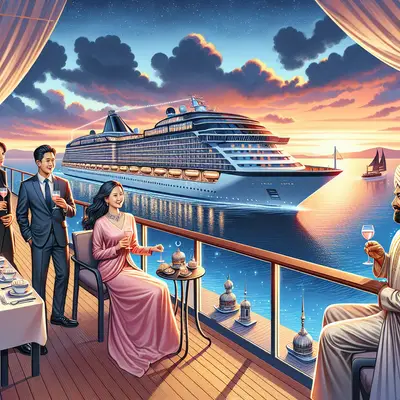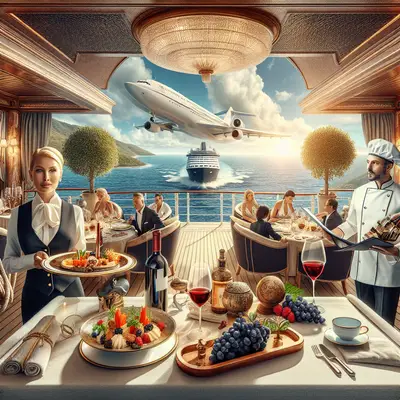
The most rarefied cruises no longer shout their luxury; they whisper it. The experience is less about spectacle and more about calibration—of space, of service, of time itself. For travelers who already know the difference between a well-appointed stateroom and a genuinely well‑considered ship, the real allure lies in the subtleties: how a line choreographs privacy, how a captain approaches a coveted harbor, how the wine list anticipates a guest’s curiosity rather than flaunting excess. This is the world of quiet grandeur at sea—where refinement is measured not in chandeliers, but in intention.
The Architecture of Privacy: How True Luxury Lines Shape Space
One of the clearest markers of a genuinely upscale cruise is how the ship’s architecture protects your sense of privacy even when the vessel is nearly full. It’s not only about generous square footage in suites, but about how public and semi‑private spaces are orchestrated to feel unhurried and uncrowded.
High‑end ships increasingly use layered zones instead of rigid “public vs. private” divisions. You may walk from a low‑lit library lounge into a champagne bar that opens discreetly onto an aft terrace—each area visually connected, yet acoustically and atmospherically distinct. Thoughtful sightlines prevent you from feeling like part of a crowd, even at peak times.
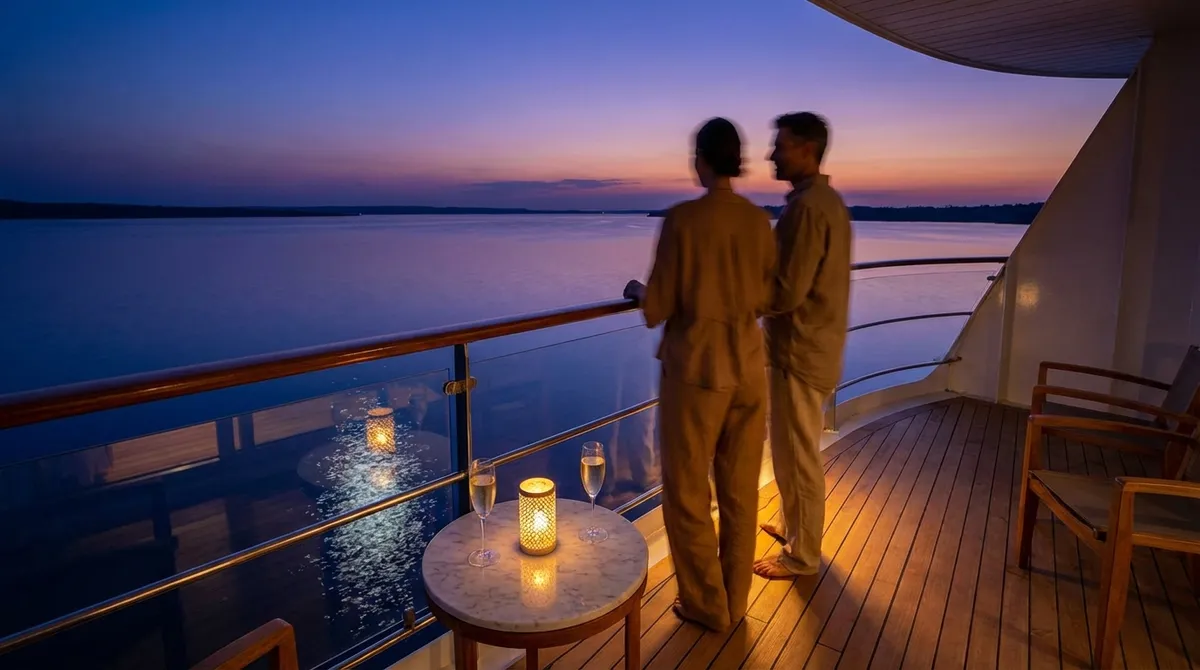
Suite decks often function almost like a boutique hotel stacked atop a smaller vessel, with dedicated lounge, pool, and dining venues that never feel gated, but quietly self‑contained. Elevators and stairwells are positioned to minimize foot traffic passing in front of top-tier accommodations. On newer ships, even outdoor decks are designed with subtle “eddies” of seclusion—small corners shielded from wind and view, where a single lounger and side table can feel like your own private veranda over the sea.
For the frequent cruiser, this micro‑architecture is where true luxury reveals itself: when a ship feels intimate without being insular, and social without ever being intrusive.
The New Service Code: Anticipation Without Intrusion
Seasoned cruise guests quickly learn that the most impressive aspect of a luxury voyage is rarely what appears on the brochure—it’s the invisible choreography of service. Fine lines train staff to master an ideal tension: being unfailingly available without ever hovering.
On these ships, the crew’s memory becomes part of the luxury. Your espresso order appears on the second morning with no need to repeat it; your preferred water still vs. sparkling is poured without question at dinner. But the refinement lies in restraint: the best butlers know when a gentle knock is welcome and when a full afternoon of silence is the true indulgence.
Top-tier lines invest heavily in staff‑to‑guest ratios, but the more revealing detail is the depth of cross‑training. When bar staff understand the culinary program, shore excursion managers can speak intelligently about the ship’s art collection, and butlers are conversant in both pillow menus and immigration timing, you begin to feel not “served” but understood.
Guests accustomed to high standards at land‑based resorts will notice the difference in how issues are handled. On well‑run luxury ships, problems—late luggage, a missed port, a weather‑altered itinerary—are treated not as inconveniences to be excused, but as opportunities to demonstrate care: a handwritten note, a proactive adjustment to dining or spa plans, and, often, a solution already underway before you formally raise the concern.
Culinary Precision: Beyond “Fine Dining at Sea”
The language of “gourmet at sea” is nearly ubiquitous, but only a subset of lines approach dining with the intensity and nuance found in serious city restaurants. The most sophisticated luxury vessels now operate with a culinary philosophy rather than a menu cycle.
These ships increasingly foreground regionality and restraint. In the Mediterranean, you may find a lunchtime menu leaning toward coastal Italian simplicity—crudo, just‑grilled seafood, market vegetables—while a Baltic leg might emphasize Nordic purity, pickled elements, and smoked fish. The luxury here is not excess but relevance: food that is aware of where you are.
Wine programs have become another arena of quiet competition. Instead of simply amassing an expansive cellar, the savviest lines curate lists that reward curiosity, from classic producers in Burgundy and Bordeaux to small biodynamic estates and lesser‑known regions like Etna, Tasmania, or Uruguay. Sommeliers are shifting from mere pairings to genuinely consultative roles, remembering your comfort zone while gently expanding it throughout the voyage.
On the most elevated ships, room service becomes an extension of the restaurant rather than an afterthought. Breakfast in‑suite might arrive on linen with warmed plates, proper pastries, and a pot of coffee that has clearly not been sitting on a warmer. Late‑evening snacks are plated with as much care as a tasting menu canapé. For guests who understand that real luxury is often a beautifully prepared, perfectly timed simple meal, these details resonate long after the voyage ends.
Itineraries as Curated Narratives, Not Checklists
For the discerning cruiser, a port list is no longer sufficient—the question is how a line interprets those ports. The most sophisticated itineraries are being treated less like logistics and more like narratives, with each call forming a chapter that builds toward a coherent sense of place.
Luxury lines increasingly adjust timings and docking locations with an eye to ambiance. Arriving later into a typically crowded port to capture the golden hours after the day‑trippers have departed, or securing anchorage rather than a commercial pier to preserve the romance of tendering into a historic harbor, both signal a certain sensibility. Overnight calls in cities like Venice (when permitted), Istanbul, or Hong Kong allow guests to experience destinations as locals do—lingering dinners, twilight walks, late performances—rather than compressed day visits.
On smaller, more nimble vessels, the ship itself becomes a tool of access. Shallow drafts and advanced maneuvering capabilities can allow captains to edge into coves and fjords that larger ships must admire from afar. Expedition‑style tenders and zodiacs have slipped into the luxury mainstream, turning what was once seen as “adventure” into an elegant form of intimacy with a coastline.
Sophisticated guests also note how pre‑ and post‑cruise arrangements are handled. Partnerships with storied hotels, private transfers instead of group buses, and curated land extensions (think a two‑day architecture immersion in Copenhagen or a vineyard residence in Stellenbosch) transform an itinerary from a voyage into a cohesive journey.
Wellness Reimagined: From Spa Appointments to Holistic Voyages
While almost every ship now boasts a spa, the upper tier of luxury cruising is redefining wellness from a menu of services into a philosophy that permeates the voyage. For well‑traveled guests, the difference lies less in heated loungers and more in how the entire onboard rhythm supports a personal sense of balance.
Leading luxury lines have moved beyond standalone treatments into tailored programs: morning mobility classes timed to sunrise, nutrition consultations that inform both dining room choices and in‑suite amenities, and mindfulness sessions that are subtly woven into days at sea rather than packaged as “activities.” Some itineraries are even designed around circadian sensitivity, with lighting schemes and scheduling that help mitigate jet lag as the ship sails across time zones.
A more nuanced understanding of “wellness” now includes mental and aesthetic nourishment. Onboard art collections curated by serious galleries, lecture programs led by academics or acclaimed authors, and residencies by musicians or chefs shift the ship from simple conveyance to floating cultural salon. For many guests, an hour spent in a quiet observation lounge with an expert naturalist or historian offers more restoration than a second massage.
Crucially, the most refined lines make wellness feel unforced. Plant‑forward menus may appear as options rather than proclamations; fitness spaces are discretely positioned with sea views instead of hidden below decks; and spa circuits are designed as tranquil pathways rather than Instagram backdrops. The result is a ship that quietly supports how you wish to feel, rather than loudly prescribing how you should.
Conclusion
True luxury cruising flourishes in the spaces between the obvious highlights: a corridor that muffles sound just so, a maître d’ who remembers that you prefer a corner banquette, a captain who adjusts speed to ensure a passage through a strait at first light rather than mid‑afternoon. For those who already understand the vocabulary of premium travel, these voyages are less about “more” and more about “better tuned”—architecture that protects privacy, service that anticipates without insisting, cuisine that speaks in the local dialect, itineraries that tell a story, and wellness that feels deeply personal.
In this realm, the ship is not a floating resort but a finely calibrated instrument. The pleasure lies in hearing how quietly, and how beautifully, it can play.
Sources
- [CLIA: 2023 State of the Cruise Industry](https://cruising.org/en/news-and-research/research/2023/state-of-the-cruise-industry-2023) - Industry overview, including trends in luxury cruising and guest expectations
- [U.S. Federal Maritime Commission – Cruise Information](https://www.fmc.gov/resources-services/cruise-information/) - Official background on cruise operations, passenger protections, and regulatory context
- [Condé Nast Traveler – Luxury Cruise Travel Guide](https://www.cntraveler.com/story/luxury-cruises-travel-guide) - Editorial perspective on leading luxury lines, service models, and evolving onboard offerings
- [Forbes Travel Guide – What Makes a Luxury Cruise](https://www.forbes.com/sites/forbestravelguide/2019/06/27/what-makes-a-luxury-cruise/) - Insight into how service standards, design, and dining define the top tier of cruise experiences
- [Harvard T.H. Chan School of Public Health – Healthy Travel Tips](https://www.hsph.harvard.edu/nutritionsource/healthy-travel/) - Evidence‑based guidance on wellness and nutrition while traveling, relevant to wellness programs at sea
Key Takeaway
The most important thing to remember from this article is that this information can change how you think about Luxury Cruises.