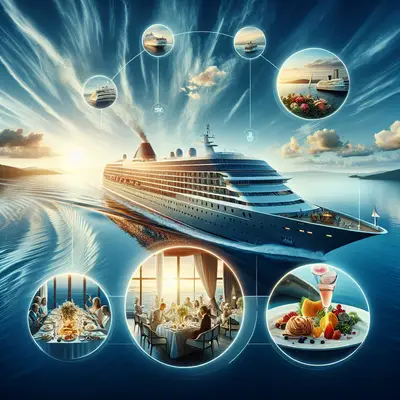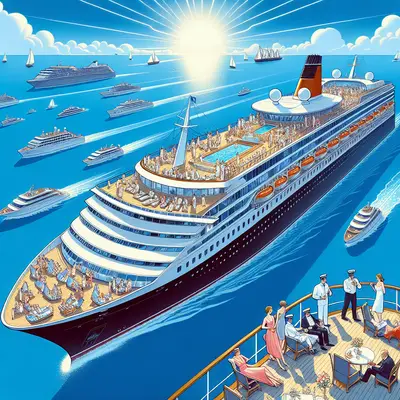
Even among seasoned travelers, there is a certain hush that falls over the conversation when the subject turns to truly exceptional cruise lines. Not simply “nice ships” or “good service,” but fleets where precision, restraint, and thoughtful design transform a voyage into a quietly memorable ritual. For the discerning cruiser, understanding what actually distinguishes these lines goes far beyond brochure adjectives and loyalty tiers.
Below, we look past the marketing gloss to explore five exclusive, often-overlooked insights that serious cruise enthusiasts quietly trade among themselves—signals that a line is operating at a higher caliber than most guests will ever notice, yet all will feel.
The Signature of a Serious Line: How They Handle Sea Days
Ask frequent cruisers how they judge a line, and many will point not to the gala night or the marquee port, but to what happens when the ship is at sea—when there is nowhere to hide behind scenery.
Refined lines treat sea days as an art form, curating the rhythm of the ship with the same care a conductor brings to an orchestra. Look for:
- Layered programming instead of noise: Fewer loud “events,” more overlapping tiers of enrichment—lectures, small-group tastings, quiet music sets, and unadvertised pockets of calm.
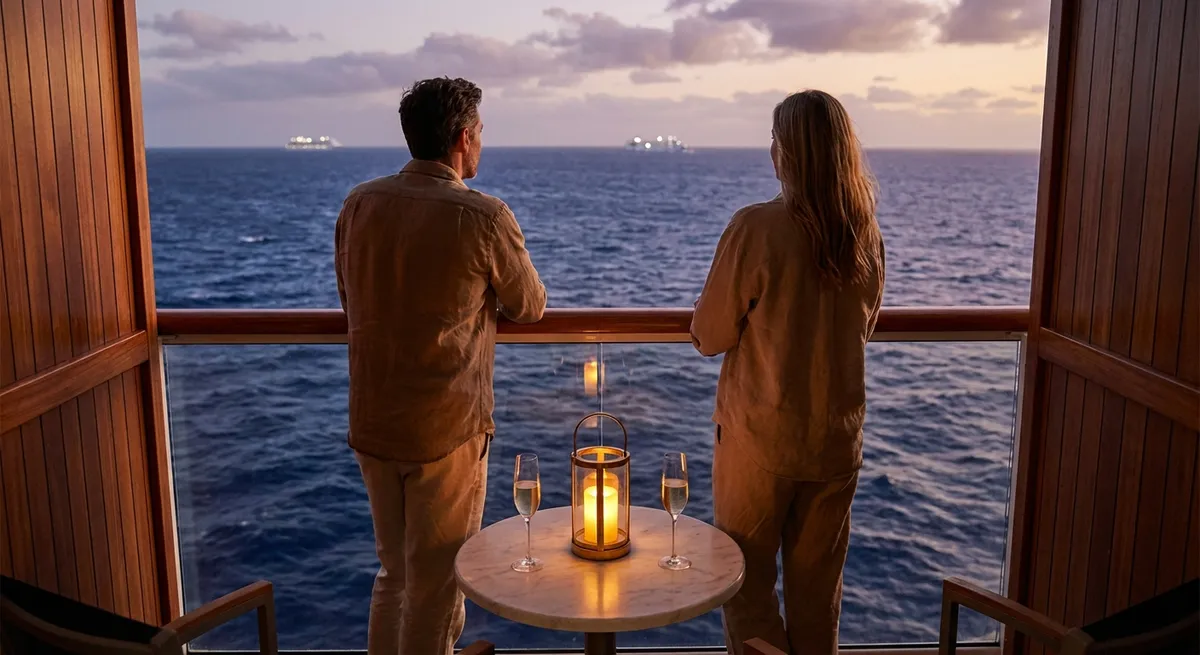
- Spatial choreography: Public areas are used differently across the day; the same lounge might host a morning classical trio, a mid-day reading salon, and an evening champagne service without ever feeling multipurpose.
- Intelligent pacing: Activities are sequenced to nudge guests from stimulation to reflection—morning talks, late-afternoon spa and quiet decks, evening dining that never feels rushed.
The most cultivated lines understand that guests may forget the exact trivia quiz or cooking demo, but they remember how the day felt—coherent, unhurried, and surprisingly restorative.
Culinary Intelligence: Reading Beyond the Menu
In luxury cruising, menus are lavish almost by default. The real question is not what is listed, but how intelligently the culinary program is constructed and executed.
Enthusiasts increasingly look for:
- Short, seasonally adaptive menus: A concise menu that changes elegantly across the voyage is often a better sign than a sprawling, unchanging list. It suggests the kitchen is cooking to the market, not to a static template.
- Regional specificity, not clichés: High-caliber lines move beyond generic “Mediterranean night” or “Caribbean buffet,” showcasing regional dishes, local olive oils, artisanal breads, and thoughtfully sourced cheeses as the itinerary shifts.
- Quiet mastery at breakfast and room service: Anyone can stage an impressive gala dinner; consistency in seemingly simple offerings—poached eggs at 7 a.m., properly chilled sparkling water, a still-warm croissant delivered to the suite—reveals the true discipline of the galley.
Pay attention to the wine program, too. On refined lines, the head sommelier is not just a salesperson but a curator: modest markups on thoughtful Old World selections, half-bottle options for couples with different preferences, and by-the-glass lists that are coherent rather than merely long.
Design That Disappears: When Ship Layout Is the Real Luxury
True comfort at sea is rarely about gold leaf or crystal chandeliers. It is about design so well considered that it almost disappears—a ship that feels intuitive the moment you board.
Savvy cruisers quietly evaluate:
- Circulation and “escape routes”: Can you move from bow to stern on a busy sea day without being funnelled through bars and boutiques? On better-designed ships, there are quieter, almost secret pathways and staircases that keep public spaces from feeling congested.
- Acoustic discipline: Premium lines invest heavily in sound attenuation—insulation in staterooms, thoughtful placement of music venues, and buffer zones between active and quiet areas. You will feel it most at night, when you don’t hear your neighbors returning to their suites.
- Human-scaled spaces: Instead of enormous, undifferentiated lounges, you’ll find subtly zoned areas—nooks for reading, alcoves for intimate conversation, soft partitions that give each table a sense of privacy without closing off the room.
Increasingly, design excellence also includes sustainability measures—advanced hull forms, energy-efficient lighting, and thoughtful air-conditioning systems—that you may never see, but which contribute to a smoother, more comfortable, and more environmentally considerate voyage.
The Invisible Service Layer: What You Notice Only When It’s Absent
On a truly well-run cruise line, service functions as an invisible infrastructure. You sense its presence not in scripted greetings or ornate rituals, but in the reduction of friction at every touchpoint.
Experienced guests watch for:
- Unobtrusive personalization: Staff recall preferences—espresso order, preferred pillow, sparkling vs. still water—without frequent, intrusive “Is everything all right?” check-ins. The guest’s name is used sparingly and naturally, not as a trained reflex.
- Anticipatory housekeeping: Cabins are refreshed at intelligent intervals based on observation, not a rigid schedule. Evening turndown appears after you leave for dinner, not before you’ve dressed; laundry returns precisely when promised, crisply folded and subtly scented.
- Discreet problem resolution: On higher-tier lines, issues are resolved before they reach the guest: a port substitution already accompanied by alternative private excursions; a weather delay softened by nimble rescheduling of onboard experiences and dining times.
The most revealing signal is how the crew handles small disappointments—a missed canapé, a lukewarm dish—quickly, graciously, and without overcompensation or drama. It is in these refined course corrections that a line’s culture becomes visible.
Shore Experiences as a Signature, Not an Afterthought
Ports of call are the shared canvas of the industry; what differentiates cruise lines is how they choose to paint on it. To sophisticated travelers, shore excursions have become a clear marker of a line’s priorities and imagination.
Indicators of a more cultivated approach include:
- Depth over breadth: Instead of a long list of near-identical bus tours, you’ll see a smaller selection of well-researched experiences—access to private estates, after-hours museum entries, curated tastings with local producers, or partnerships with respected academic and cultural institutions.
- Thoughtful pacing and group size: Refined lines avoid the “march of the lanyards,” favoring intimate groups, unhurried schedules, and time for independent wandering. Transfer routes are chosen for scenery and interest, not just speed.
- Clear point of view: The shore program reflects a philosophy—perhaps emphasizing gastronomy, design, history, or outdoor pursuits—rather than attempting to be all things to all guests. Over time, enthusiasts learn to recognize and seek out these signatures.
Increasingly, the most forward-thinking lines also prioritize responsible tourism: working with local operators, managing crowding, and minimizing environmental impact. For the discerning cruiser, there is a quiet satisfaction in knowing that indulgence and responsibility can coexist.
Conclusion
In an era when even mainstream vessels advertise “luxury,” the true distinctions among cruise lines have become subtler, more structural, and more interesting. For those who sail often—and who value refinement over spectacle—the quiet signals matter most: the choreography of a sea day, the intelligence of a menu, the logic of a corridor, the elegance of a resolved problem, the depth of a shore experience.
To notice these details is to travel differently: not merely as a passenger moving from port to port, but as a connoisseur of the craft of cruising itself. For those willing to look beyond the obvious, the world’s most refined cruise lines offer not just transportation, but an ongoing education in how excellence at sea is quietly, meticulously made.
Sources
- CLIA – 2024 State of the Cruise Industry Report – Industry overview, trends in ship design, sustainability, and guest expectations
- Cruise Lines International Association – Sustainability Initiatives – Details on environmental technologies and operational practices used by leading cruise lines
- Seabourn – Onboard Experience – Example of a luxury line’s approach to service, culinary programs, and space planning
- Regent Seven Seas Cruises – Immersive Shore Excursions – Illustrates how premium lines design and position enriched port experiences
- Harvard Business Review – “The Elements of Good Service” – Broader framework for understanding anticipatory and invisible service, applicable to cruise hospitality
Key Takeaway
The most important thing to remember from this article is that this information can change how you think about Cruise Lines.