Some cities are merely visited; others are properly arrived at—slowly, by water, with the skyline unfolding like a curtain call. For the seasoned cruiser, a port is more than a stop on an itinerary. It is a stage set for architecture, gastronomy, and culture that feel uniquely heightened when approached from the sea.
This is not a list of “best ports” or “top 10 stops.” Instead, consider it a curated lens on coastal destinations that reveal their most compelling selves specifically to those who sail in. Woven throughout are five quietly exclusive insights—details and strategies that dedicated cruise enthusiasts can use to experience these cities in their most refined form.
When a City Is Meant to Be Approached by Water
Certain cities were drafted on nautical blueprints long before they appeared on land maps. Their most dramatic angles and most storied avenues are oriented toward the ocean, a river mouth, or a sheltered bay. To arrive there by ship is to follow the path of explorers, merchants, and dignitaries who have done the same for centuries.
Venice famously offers this sensation, but it is far from alone. Lisbon’s pastel facades and terracotta roofs climb from the Tagus like a living amphitheater. Quebec City floats above the St. Lawrence on sunlit cliffs, its château-like skyline recalling Old World Europe. Istanbul’s domes and minarets punctuate the Bosphorus with a geometry that feels designed to be admired from a ship’s rail, not a taxi window.
For the thoughtful cruiser, the key is to choose itineraries where the approach is not simply transit, but theatre. Dawn or dusk arrivals into historically maritime cities allow you to experience what land-based travelers simply cannot: the gradual revelation of a destination at the tempo of the tide rather than traffic.
Exclusive Insight #1 – Book for the Approach, Not Just the Port:
Study scheduled arrival and departure times as carefully as you compare cabin categories. Favor sail-ins that occur shortly after sunrise or before sunset into cities with significant waterfront skylines—Lisbon, Sydney, Quebec City, Hong Kong, Cape Town, and Istanbul among them. The true luxury is not just being there; it is how you enter.
Lisbon: Where the River Reads Like a Prologue
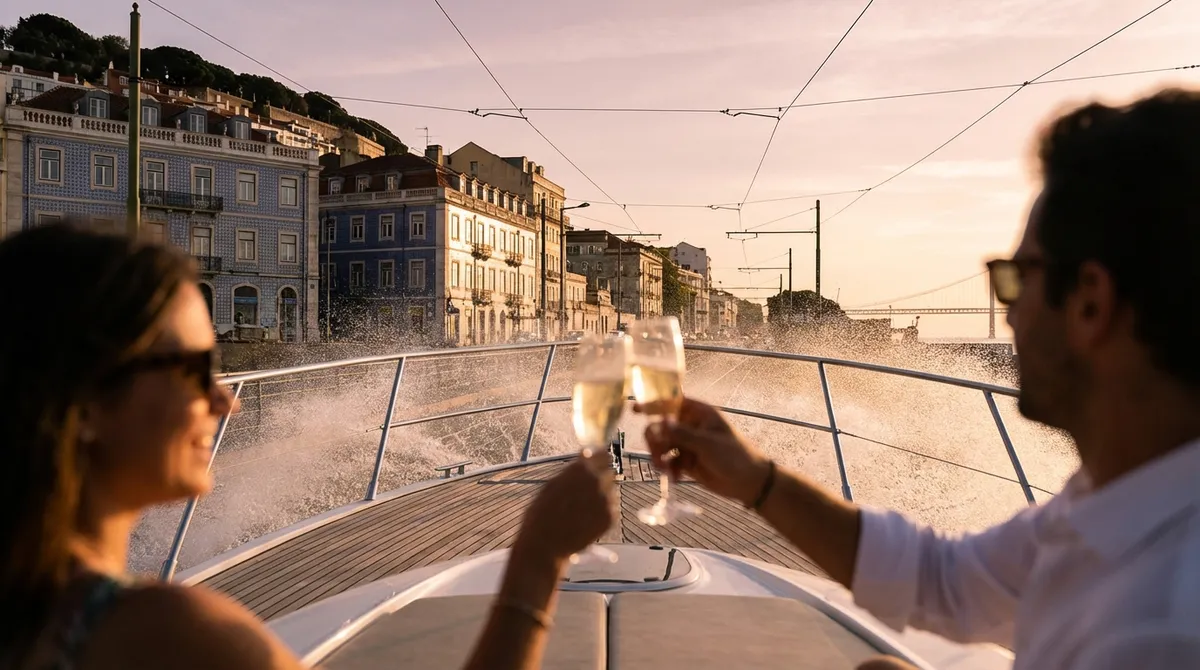
Lisbon is one of the few capitals where the pilot’s channel feels like a curated introduction. The sail along the Tagus River passes under the 25 de Abril Bridge and alongside the Belém district, where monuments and monasteries mark the Age of Discovery. From the water, the narrative is coherent: empire, exploration, and modern life layered seamlessly.
Once docked, discerning cruisers know to resist the temptation to rush immediately into the city center. Instead, a more measured progression—from riverside to hilltop—allows you to feel the city’s vertical rhythm. Start quaintly along the waterfront in Belém, with a visit to the Jerónimos Monastery and Belém Tower, and only later traverse up to Chiado and Bairro Alto for more sophisticated cafés and boutiques.
Exclusive Insight #2 – Use Smaller-Scale Transit to Preserve the Sense of Place:
In waterfront capitals like Lisbon or Stockholm, choose trams, funiculars, or small river ferries over taxis for your initial foray ashore. These slower modes maintain continuity between ship and city and let you absorb harbor views, bridges, and bank-side neighborhoods that set the tone for the rest of your day.
Quebec City: Old World Drama on a North American Stage
Few cruise destinations manage to feel both intimately European and distinctly North American. Quebec City accomplishes this with a sort of theatrical poise, its fortified old town perched above the St. Lawrence River. The ship’s approach frames the iconic Fairmont Le Château Frontenac as a focal point, creating a skyline that feels like an illustrated bookplate.
Walking from the port into the lower town, cobblestone streets and stone buildings create a rare continuity of period architecture. Ascend via funicular or the steps to the upper town, where plazas, boutiques, and cafés feel tailor-made for lingering. Autumn sailings add further drama: the foliage along the riverbanks glows, and cooler air sharpens the sense of crisp refinement.
Exclusive Insight #3 – Time Your Return for the “Reverse Panorama”:
In ports with elevated vantage points—Quebec City, Dubrovnik, Kotor, Cartagena—reserve your most memorable view for last. Plan your day so that your final hour ashore is spent at a high overlook, terrace bar, or city wall walk at golden hour. Watch your ship anchored or docked below, then descend leisurely. Seeing your vessel in context with the city’s architecture reframes the voyage itself as part of the landscape.
Istanbul: Where Continents and Currents Converge
Istanbul is perhaps the quintessential “arrive by water” city. The Bosphorus is not merely a strait; it is a living thoroughfare where ferries, fishing boats, and tankers glide between Europe and Asia. From the deck, the city’s most revered silhouettes—the Blue Mosque, Hagia Sophia, Topkapi Palace—compose themselves against the sky like a calligrapher’s script.
The luxury here lies in embracing Istanbul’s rhythm rather than overpowering it with an overly dense checklist. A refined experience might begin with an early ferry ride across the Bosphorus, allowing you to absorb the city’s vastness before delving into individual sites. Later, retreat to a terrace café in Karaköy or Cihangir, where the view is as integral to the experience as any museum collection.
Exclusive Insight #4 – Decenter the “Must-See” in Favor of the “Perfectly Placed”:
In complex, iconic cities like Istanbul, Barcelona, or Naples, identify one or two anchor experiences—a museum, a historic site, a guided walk—but reserve meaningful time for well-situated cafés, rooftop lounges, or boutique hotels with day-access terraces. Choose venues with clear views of the harbor or main waterway. This approach replaces frantic box-ticking with curated, visually anchored moments that are both memorable and restorative.
Sydney and Cape Town: Urban Harbors with Natural Theatre
Some ports dazzle not solely because of their urban texture, but because city and landscape are in elegant counterpoint. Sydney’s sail-in is dominated by the Opera House and Harbour Bridge, yet the surrounding headlands and coves remind you that this is first and foremost a harbor—deep, sheltered, and innately scenic. The best itineraries glide past suburban bays where residents swim, sail, and dine, making your arrival feel like you are joining an ongoing coastal ritual.
Cape Town offers a different but equally dramatic composition. Table Mountain presides over the city and harbor with a stillness that contrasts beautifully with the motion of ships and waterfront life. Approaching by sea, you sense the city as a slender stage set between ocean and mountain, a geography that land arrivals never fully convey. From the V&A Waterfront, the interplay of working harbor, retail sophistication, and natural grandeur is best appreciated with unhurried pacing: a harbor-side lunch, a glass of South African wine, and time simply to watch the mountain’s changing light.
Exclusive Insight #5 – Prioritize Ports with Layered Horizons:
When evaluating itineraries, look for destinations where at least three visual layers align: maritime foreground (harbor activity, marinas, ship traffic), architectural middle ground (historic districts or distinctive skyline), and a compelling natural backdrop (mountains, cliffs, or broad estuaries). Examples include Sydney (harbor–city–headlands), Cape Town (port–city–Table Mountain), and Rio de Janeiro (bay–city–Sugarloaf/Corcovado). These layered horizons deliver a sense of depth and place that is far more rewarding from a ship than from an inland hotel.
Curating a Destination Portfolio as a Seasoned Cruiser
For the well-traveled cruiser, the art lies not just in choosing a cruise line, but in curating a personal portfolio of ports—cities that you come to know in different seasons, on different ships, and from subtly different vantage points. Some are worth returning to with larger vessels for the grand entrance; others reward smaller ships or expedition-style yachts that can slip closer to historic centers or into lesser-known inlets.
Consider alternating itineraries that feature storied classics—Venice’s lagoon, Athens via Piraeus, Stockholm’s archipelago—with newer maritime darlings such as Bilbao, Reykjavik, or Porto, where contemporary architecture and ambitious cuisine meet long seafaring traditions. Over time, your logbook becomes less about how many countries you have “checked off” and more about how thoroughly you have understood particular cities through repeated, thoughtfully timed arrivals.
In an age of constant haste, cruising still offers something rare: the luxury of a deliberate approach. The ship’s bow points not only to a port, but to a particular way of seeing it—slowly, ceremonially, from the waterline up.
Conclusion
Destinations that reveal themselves best by sea are not just beautiful; they are coherent from the moment their silhouettes rise on the horizon. For those who choose their itineraries with intention, the harbor itself becomes part of the experience—not a logistics node, but a grand foyer through which you enter the world’s most evocative coastal cities.
By seeking ports with dramatic approaches, layered horizons, and refined vantage points, and by weaving in the exclusive strategies shared here—scheduling for the sail-in, favoring smaller transit modes, and designing days around views rather than volume—you turn each arrival into an event. The result is a style of travel in which every destination feels less like a stop and more like a carefully framed scene in a longer, elegantly composed voyage.
Sources
- Visit Lisboa – Official Tourism Board – Details on Lisbon’s waterfront districts, monuments, and visitor experiences along the Tagus River
- Quebec City Tourism – Official Site – Information on Quebec City’s historic upper and lower town, funicular access, and port proximity
- Go Türkiye – Official Istanbul Tourism – Overview of Istanbul’s neighborhoods, Bosphorus ferries, and key landmarks visible from the water
- Destination NSW – Sydney Harbour – Insights into Sydney’s harbor, waterfront attractions, and scenic viewpoints
- South African Tourism – Cape Town – Background on Cape Town’s geography, V&A Waterfront, and Table Mountain setting
Key Takeaway
The most important thing to remember from this article is that this information can change how you think about Destinations.