There are ports that appear in every brochure, and then there are those that only reveal their true character to travelers who arrive by sea. For the discerning cruiser, destination choice is less about ticking off capitals and more about finding places where the rhythm of the harbor, the angle of the light, and the choreography of arrival all conspire to create something quietly unforgettable. These are the meridian secrets of modern cruising: coastal cities, islands, and inlets whose finest details emerge only when approached at a ship’s measured pace.
When the Harbor Is the Destination
Some ports are framed to be seen from the water; their harbors are not merely functional, but theatrical. Think of cities where the skyline, the fortifications, or the natural amphitheater of hills have been gently orchestrated over centuries to greet ships first, pedestrians second.
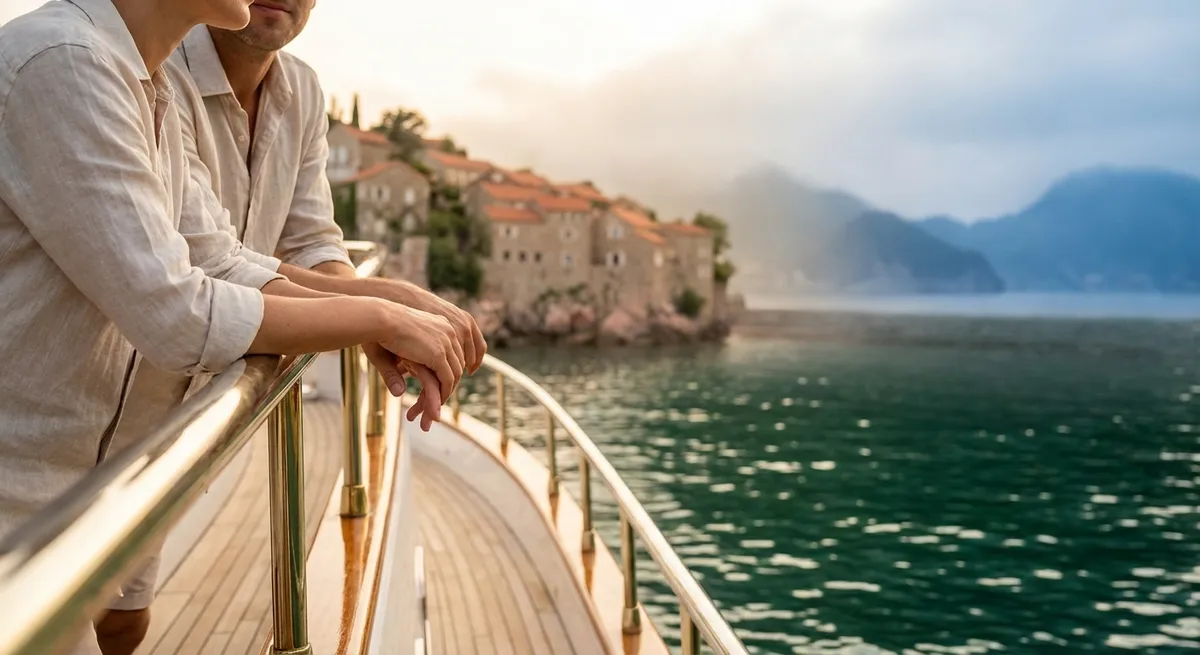
In Valletta, Malta, the Grand Harbour is less an entry point and more a stone-carved proscenium. From a ship’s deck, the layered bastions, honey-colored limestone, and church domes create a visual narrative of siege, trade, and faith that no land-based arrival can fully replicate. Likewise, in Kotor, Montenegro, the final approach through the Bay of Kotor—past tiny islets and beneath limestone cliffs—is as memorable as the town itself.
For travelers who value nuance, choosing itineraries with “harbor cities” at their core transforms the voyage into a curated gallery. Hamburg’s Elbe approach, Lisbon’s Tagus estuary framed by the 25 de Abril Bridge and Belém Tower, and Quebec City seen from the St. Lawrence River each offer a prelude that sets the tone for the day ashore. The harbor becomes part of the destination, not a mere logistical detail.
The Tidal Clock: Timing Destinations with Precision
Sophisticated cruisers know that the timing of arrival and departure can matter as much as the port itself. Some destinations are fundamentally shaped by tides, currents, and light—factors that reward travelers who pay attention to the ship’s schedule with almost conspiratorial satisfaction.
Sailing into Saint-Malo or Mont-Saint-Michel’s bay on France’s northern coast reveals one of the world’s most dramatic tidal ranges; witnessing exposed sandbanks at low tide and a seawater surge hours later offers a living lesson in coastal dynamics. In Alaska’s Inside Passage, understanding tidal windows through narrow channels like Wrangell Narrows can explain why your ship glides in stillness at dawn rather than mid-morning.
This “tidal clock” also applies to urban ports. Approaching Stockholm through its archipelago in the lingering light of a Nordic summer evening, or entering Sydney Harbour just as the early morning sun catching the Opera House sails, are experiences defined not only by place but by precise timing. Reading itineraries with an eye for sunrise, sunset, and tidal patterns transforms a cruise calendar into a finely tuned instrument rather than a simple list of stops.
Beyond the Terminal: Ports with Seamless Cultural Access
For travelers who value depth over breadth, not all ports are created equal. Some offer immediate access to the cultural core; others demand a time-consuming transfer that dilutes the experience. Enthusiasts quickly learn to recognize ports where the ship docks within an elegant stroll—or a short tram ride—of the city’s historic and artistic heart.
In Barcelona, docking at the World Trade Center or Moll Adossat places you within easy reach of La Rambla, the Gothic Quarter, and the waterfront promenade. In Copenhagen, the Nordre Toldbod and Langelinie piers allow a graceful walk along the harborfront past the Amalienborg Palace and Designmuseum Danmark before weaving into the city’s café-lined streets. In Bordeaux, river-cruise vessels moor along the Garonne quays directly opposite neoclassical façades and mirrored squares.
Choosing itineraries with ports that offer “seamless cultural access” allows you to spend your day lingering in small galleries, wine bars, and local markets rather than on highways and transfer coaches. Over time, experienced cruisers curate a mental map of such ports—places like Valletta, Quebec City, Porto, and Trieste—where the gangway feels like a discreet back door to the city’s cultural salon.
The Micro-Region Strategy: Reading Between the Ports
Itineraries often emphasize major names—Athens, Rome, Venice—while the real sophistication lies in understanding the micro-regions threaded between them. Cruise enthusiasts increasingly look for voyages that illuminate a specific coastal narrative rather than a checklist of greatest hits.
Consider the Dalmatian Coast: Dubrovnik may be the marquee destination, but it is the combination of Dubrovnik with smaller ports such as Šibenik, Hvar, or Korčula that reveals the Adriatic’s layered Venetian, Ottoman, and Austro-Hungarian influences. In the Baltic, the interplay between Tallinn, Helsinki, and Stockholm offers a nuanced reading of Scandinavian and Baltic identity when experienced collectively by sea.
Similarly, in Japan, itineraries that include smaller ports such as Kanazawa, Hakodate, or Takamatsu alongside marquee cities like Tokyo and Osaka afford a far richer look at regional crafts, gardens, and culinary traditions. The micro-region strategy favors sailings that linger within a defined coastal arc—French Riviera and Ligurian Coast; New England and Canadian Maritimes; or the Canary Islands chain—allowing each stop to comment subtly on the last.
Five Exclusive Insights Seasoned Cruisers Use to Elevate Destinations
Experienced cruise enthusiasts often share a quiet understanding: the most rewarding port experiences are seldom accidental. These five under-discussed insights shape how they select and savor destinations:
- They study the pilotage and approach routes.
By examining nautical charts, harbor diagrams, or even AIS ship-tracking data before a voyage, they identify approaches that promise especially scenic or technically intricate navigation—Glacier Bay, Norway’s Geirangerfjord, or Chile’s fjords—and treat those transits as highlight events, not just transit time.
- They cross-reference port calls with local cultural calendars.
Instead of simply checking the weather, they investigate festivals, exhibitions, opera seasons, and seasonal food markets at each port. A call in Venice during the Biennale, in Málaga during Holy Week, or in Reykjavik during a major arts festival turns a standard port day into a one-of-a-kind experience.
- They differentiate “embarkation cities” from “immersion cities.”
Some coastal hubs—Miami, Fort Lauderdale, Civitavecchia, Piraeus—function primarily as gateways, while others, like Lisbon, Vancouver, or Cape Town, reward a pre- or post-cruise stay with deep cultural immersion. Savvy travelers build intentional overnights in these latter cities to turn a cruise into a more complete journey.
- They pay close attention to tender vs. docked ports.
Tender ports—such as Santorini or some smaller Greek islands—offer picturesque anchorages but reduce spontaneity ashore due to capacity and weather constraints. Knowing in advance which ports are tender-only helps prioritize flexible, high-value stops where you can return easily to the ship and venture out again without logistical friction.
- They evaluate ports by “radius of authenticity.”
Rather than judging a destination solely by its immediate cruise-terminal surroundings (which often cater to volume tourism), seasoned cruisers look at what lies 10–20 minutes beyond: the first neighborhood café where menus are not translated into five languages, the local market used by residents, the back streets where laundry and church bells reveal a more lived reality. They base their feelings about a port on that radius, not the souvenir gauntlet by the pier.
Designing an Itinerary Around Subtlety, Not Spectacle
Truly exceptional cruise itineraries feel composed rather than assembled. They exhibit a sense of pacing—alternating intense, museum-rich capitals with quieter, walkable towns; pairing rugged natural anchorages with elegant urban waterfronts. It is the difference between a playlist and a symphony.
When curating your next voyage, look for patterns: a ship that traces wine regions along the Douro, Rhône, or Moselle; a coastal route that highlights UNESCO World Heritage ports along the Adriatic or Baltic; or a repositioning cruise that strings together off-season Mediterranean cities in the mellow light of early spring or late autumn. These sailings might not dominate billboard advertising, but they often deliver the richest experiences.
As cruise lines increasingly diversify into boutique and expedition-style offerings, the most rewarding destinations will continue to be those that respect the essential character of the coastline. For the refined traveler, the objective is not simply to “see more ports,” but to align the ship’s slow movement with geographies that still respond best to maritime arrival. In that alignment—the measured approach to a well-chosen harbor, the careful reading of tides and calendars, the search for authenticity just beyond the dock—a cruise becomes something more than a holiday. It becomes a dialogue with the world’s shorelines, carried out at the dignified pace of the sea.
Conclusion
The finest cruise destinations are rarely defined solely by their postcards or their popularity. They distinguish themselves through the theater of their harbors, the precision of their timing, the ease with which culture flows from gangway to city, and the coherence of the regions they inhabit. For travelers who approach the sea with discernment, selecting a voyage becomes an act of quiet curation: choosing not only where to go, but how, and most importantly, why a place reveals its true self only when reached by water.
Those who learn to read destinations in this way—through approaches, micro-regions, tidal clocks, and subtle patterns of authenticity—discover that the map of cruising is far richer than it first appears. It is in these meridian secrets, tucked between the well-known ports and the expected itineraries, that the most rewarding stories of the sea are still being told.
Sources
- UNESCO World Heritage Centre – Maritime and Coastal Sites – Overview of significant coastal and maritime heritage destinations often featured on cruise itineraries
- International Maritime Organization – E-Navigation and Sea Lanes – Context on navigation, approaches, and pilotage that influence how ships enter ports
- Port of Barcelona – Cruise Activity and Passenger Information – Example of an urban port with direct cultural access from the cruise terminals
- Visit Norway – Norwegian Fjords Travel Guide – Insight into fjord destinations and scenic approaches particularly relevant to cruises
- Malta Tourism Authority – Valletta and Grand Harbour – Background on Valletta’s harbor, fortifications, and its unique perspective from the sea
Key Takeaway
The most important thing to remember from this article is that this information can change how you think about Destinations.