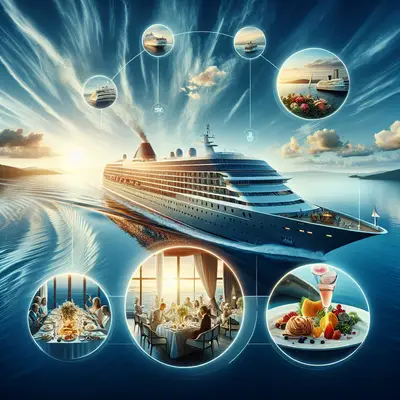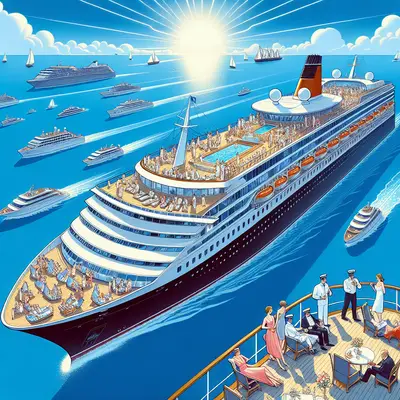
For the experienced cruiser, the most rewarding evolutions at sea are rarely announced with fanfare. Instead, they unfold in the quiet recalibration of itineraries, the rethinking of space on board, and the unspoken understanding between ship and guest that true luxury is as much about what’s removed as what’s added. Today’s leading cruise lines are not simply building bigger ships; they are re‑designing the entire idea of how a voyage should feel, from the way you embark to the way you remember a port long after you’ve sailed away.
Below, we explore how top-tier lines are refining the experience with five exclusive, insider-level shifts that seasoned cruise enthusiasts are already noticing—and quietly coveting.
From Ship-Centric to Journey-Centric: Rethinking the Entire Arc of a Voyage
For years, the industry’s gravitational pull revolved around the ship itself: larger vessels, headline entertainment, and amenity-rich decks. Discerning passengers, however, are increasingly evaluating not just what is on board, but how the entire journey is orchestrated from door to deck and back again.
Leading luxury and premium lines are quietly investing in pre- and post-cruise architecture that feels less like logistics and more like curation. Think: dedicated concierges coordinating private airport transfers, overnight stays in heritage hotels, and timed embarkations that feel like a personal invitation rather than a queue. Multi-city pre-cruise land programs—whether a wine-focused detour through Bordeaux or a chef-led immersion in Osaka—are no longer bolt-on extras, but integral chapters of the story the line is telling.
Equally important is how the “rhythm” of days at sea and days in port is engineered. Lines with a refined understanding of guest psychology now stagger intense, excursion-heavy days with deliberately unhurried sea days, providing a kind of built-in recovery cadence. The result is an itinerary that feels composed, not compiled, where ports are not a checklist but movements in a larger symphony.
The New Geometry of Space: Suites, Sanctuaries, and Seamless Transitions
The true connoisseur of cruising understands that square meters tell only half the story. What matters is how space flows—how private areas, semi-private enclaves, and public venues interlock to create a sense of effortless movement.
Cruise lines at the upper end of the market are now applying residential and boutique-hotel design philosophies to their ships. Suite corridors are quieter and more insulated; living spaces emphasize layered textures, tactility, and sightlines that subtly direct the eye toward sea and sky. Bathrooms, once an afterthought, now emulate spa suites, with rainfall showers, natural materials, and lighting designed for both ritual and rest.
Beyond the suite itself, “ship-within-a-ship” enclaves—private sun decks, exclusive lounges, and dedicated restaurants—have evolved from mere status markers into thoughtfully choreographed sanctuaries. The best implementations avoid feeling like gated bubbles; instead, they serve as tranquil “home bases” from which guests can choose how immersed they wish to be in the life of the larger ship. Transitions between these zones are increasingly seamless: discreet keycard access, private lifts, and carefully managed sightlines enable privacy without ostentation.
For those who notice such details, this new geometry of space is less about opulence and more about spatial intelligence: how well a ship understands the way you like to move, withdraw, and reappear.
Culinary Intelligence at Sea: When Menus Tell You Who a Line Really Is
If ships once competed on sheer variety—counting restaurants like trophies—the game has moved towards depth, provenance, and a kind of narrative honesty on the plate. For enthusiasts who care about where ingredients come from and how dishes reflect a region, the most interesting cruise lines are those curating menus that belong to their itineraries.
The most sophisticated programs now link culinary offerings directly to the sailing’s geography and seasonality. A Mediterranean voyage might feature olive oils and wines from the very ports visited days before; a Baltic itinerary might showcase hyper-local breads, cured fish, and foraged ingredients sourced through relationships with local producers. On select lines, chefs are joining shore excursions, turning market visits into prelude rather than sideshow.
Equally telling is the shift toward “quiet luxury” in dining: fewer theatrical flourishes, more emphasis on pacing, discretion, and genuine table-side expertise. Sommeliers are increasingly empowered to curate off-menu pairings, and smaller, chef’s-table venues emphasize intimacy over spectacle. For passengers with specific dietary philosophies—plant-forward, low-intervention wines, wellness-led menus—the best lines now offer robust, thought-through choices rather than perfunctory alternatives.
The enthusiast’s advantage lies in reading between the lines: studying how a line treats its culinary identity as a throughline across its fleet, voyages, and partnerships. In many ways, the menu is now one of the clearest expressions of a line’s true character.
Ports Reimagined: From Standard Calls to Deep-Cut Coastal Access
Perhaps the most telling differentiator among cruise lines today is how they think about the shore—not just which ports they visit, but how they access them and what they choose to do once there. The shift away from “mega-port tourism” toward deeper, more meaningful coastal engagement has become one of the most quietly revolutionary trends in upscale cruising.
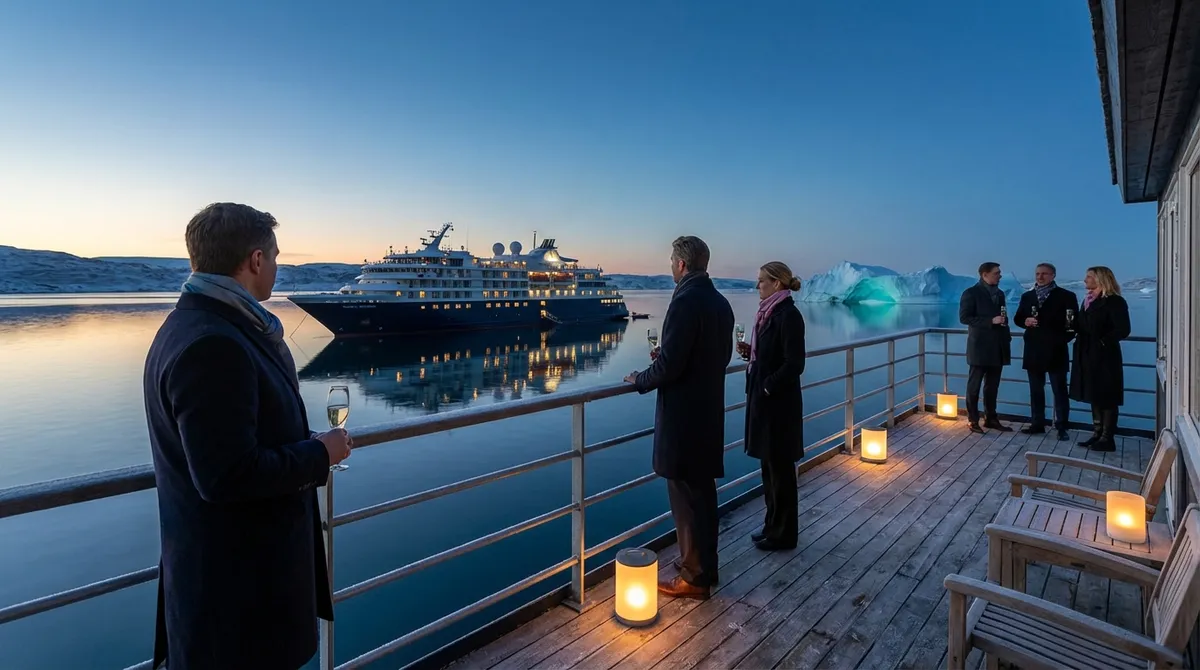
Smaller and mid-sized ships—often operated by premium and luxury lines—are exploiting their size advantage to access lesser-known harbors, historic town quays, and protected anchorages that are simply off-limits to larger vessels. These calls may lack the marquee recognition of a headline city, but they reward travelers with shorter tender rides, walkable old towns, and a sense of unhurried authenticity.
The most advanced operators are designing itineraries around access philosophy rather than simple geography: time in port is extended into late evenings or overnights when a destination genuinely warrants it; elsewhere, shorter, more surgical calls are used to access remote natural sites or specialist experiences. Increasingly, lines are favoring bespoke, small-group shore programs—private museum openings, vineyard visits outside normal hours, architect- or historian-led urban walks—over mass-market coach tours.
For the experienced cruiser, this is an invitation to look beyond the route map and ask more pointed questions: Which tender ports are used, how often late stays are scheduled, how many guests each excursion actually takes. The most rewarding lines tend to be those whose itineraries read less like a brochure and more like a carefully researched dossier.
Discreet Personalization: When Service Learns, Adapts, and Then Disappears
Luxury at sea has always been closely linked to service, but what defines excellent service is evolving—and the best cruise lines are moving away from choreography that feels rehearsed toward a form of hospitality that’s deeply observant and quietly anticipatory.
What’s emerging is a new standard of discreet personalization. Guest-preference data—collected over multiple sailings—is being used with increasing nuance. Housekeeping knows which pillows you prefer and how you like your cabin lit in the evening; bar staff recall not just your favored drink, but how you take it depending on the time of day. Butler services, where offered, are shifting from performative ceremony to genuinely useful orchestration: private deck dining on a night you might otherwise avoid the crowds, spa appointments aligned with sea days rather than rushed into port days.
Crucially, the finest lines are training their crews to interpret not just requests, but silences. They recognize when a guest wants conversation and when they want solitude. They know when to suggest an alternative experience and when to simply make things happen in the background—securing a preferred tender time, adjusting a restaurant reservation, or arranging a low-key celebration without the theatrics.
Technology—apps, wearable devices, digital concierge platforms—is present, but the most sophisticated deployments keep it invisible. Guests can leverage it if they wish, but never feel obligated to interact with a screen to be well looked after. For the enthusiast, these subtleties are where a line’s true ethos reveals itself: in the gap between what you ask for and what quietly appears.
Quiet Sustainability: The Engineering Beneath the Elegance
While sustainability is often presented in marketing language, the more engaged cruiser is increasingly interested in how—not just whether—their preferred lines are investing in cleaner, more responsible operations. Here, the most forward-looking cruise brands are channeling substantial resources into the invisible architecture beneath the surface.
New builds and extensively refurbished ships are incorporating advanced propulsion and energy systems—LNG-capable engines, battery hybrids, and shore-power connectivity that allows vessels to “plug in” and reduce emissions while docked. Wastewater treatment now frequently exceeds regulatory minimums, with advanced purification systems that mirror land-based municipal plants. Many lines are moving beyond plastic reduction toward full lifecycle thinking: sourcing from suppliers with verifiable environmental standards and investing in food-waste mitigation technologies.
Equally compelling is the rise of science and education partnerships. Some expedition and destination-focused lines now carry researchers on board, supporting marine and climate studies while also offering guests the option to attend briefings and field lectures. Others are employing certified naturalists and cultural experts to contextualize both the beauty and the fragility of the regions visited.
For the seasoned cruiser, sustainability has become another lens through which to assess a line’s seriousness. The most credible commitments are those backed by specific, time-bound targets and transparent reporting. Increasingly, choosing a cruise line is as much a statement of values as it is a choice of itinerary.
Conclusion
For those who already understand the appeal of life at sea, the most exciting developments in cruising are neither loud nor obvious. They reside in the geometry of a stateroom, the curation of a menu, the decision to linger in a harbor past sunset, the ease with which a request is met before it’s spoken, and the quiet hum of cleaner engines beneath the waterline.
Cruise lines operating at the thoughtful end of the market are no longer competing solely on excess; they are competing on discernment—on how selectively, intelligently, and gracefully they can shape the totality of a voyage. For the enthusiast, the reward lies in recognizing these subtleties and selecting the lines that align not just with one’s tastes, but with one’s sense of how travel, at its best, should feel.
Sources
- [CLIA: 2024 State of the Cruise Industry](https://cruising.org/en/news-and-research/research/2024/state-of-the-cruise-industry-2024) - Industry overview covering growth, sustainability initiatives, and evolving guest preferences
- [U.S. Environmental Protection Agency – Cruise Ship Discharge Assessment Report](https://www.epa.gov/vessels-marinas-and-ports/cruise-ship-discharge-assessment-report) - Technical background on wastewater treatment and environmental practices in the cruise sector
- [International Maritime Organization – Air Pollution and Energy Efficiency](https://www.imo.org/en/ourwork/environment/pages/air-pollution.aspx) - Details on MARPOL regulations and emissions standards affecting modern cruise-ship engineering
- [Harvard T.H. Chan School of Public Health – Health and Safety on Cruise Ships](https://www.hsph.harvard.edu/news/hsph-in-the-news/health-concerns-cruise-ship/) - Context on public health considerations and how lines have adapted operations
- [Forbes Travel Guide – The New Era of Luxury Cruising](https://www.forbes.com/sites/forbestravelguide/2023/03/16/the-new-era-of-luxury-cruising/) - Insight into how luxury cruise lines are elevating design, service, and culinary programs
Key Takeaway
The most important thing to remember from this article is that this information can change how you think about Cruise Lines.