There are ports that dazzle at first glance—and then there are those that reveal their finest layers only to travelers willing to linger, to walk past the duty-free arcade, and to follow the rhythm of the tide rather than the timetable of the tour bus. For cruise guests with a cultivated eye, the real luxury is not merely where the ship calls, but how one chooses to inhabit a destination. In the right coastal cities, the most memorable experiences unfold in quiet intervals: a harbor that changes character by the hour, a market that crests and ebbs with the fishing boats, a museum that feels almost private in the late afternoon glow.
This is a guide to experiencing select cruise destinations in a way that feels rarefied rather than routine—anchored by five exclusive insights that reward travelers who prefer nuance over spectacle.
The Art of Arrival: Reading a Port Before Stepping Ashore
The most accomplished cruisers begin their exploration before the gangway is dropped. As your ship navigates into port, the approach itself is a kind of prologue—one that reveals more than any brochure.
From the observation lounge or your balcony, watch the choreography: cargo cranes in motion, small service vessels darting around, pilot boats guiding the ship. The character of a port is often written in its working waterfront. In places like Rotterdam or Busan, the industrial drama forms a compelling contrast to the polished old town you’ll see later; in smaller harbors such as Kotor or Nafplio, the approach feels almost theatrical, with fortresses and cliffside villages arranged like scenery.
Use this period to calibrate your expectations. How dense is the skyline? How close is the historic center to the pier? Do locals gather along the promenade to watch ships arrive, as they often do in Mediterranean resort towns? These details provide clues about whether to walk, take local transport, or invest in a private transfer.
An additional advantage: early observation helps you choose where to return at twilight. A harborfront bar with discreet lighting, a rooftop terrace facing the anchorage, or a quiet bench on a seaside promenade often reveals itself only when seen from the water. Mark these vantage points mentally; they’re where you’ll truly feel the city belong to you for an hour.
Exclusive Insight #1: Treat arrival as reconnaissance, not merely scenery. The most rewarding corners of a port often announce themselves—subtly—from the ship’s rail long before you disembark.
Time as a Luxury: Choosing the Right Hours to Experience a City
Among seasoned cruise travelers, there is a growing recognition that when you explore can be as decisive as where you go. Many ports now host multiple ships in high season, compressing crowds into the same midday window. Travelers who value refinement learn to sidestep the peak hours and reclaim the destination on their own terms.
In compact cities—think Dubrovnik, Bergen, or Tallinn—mid-morning to early afternoon is often saturated with group tours. Those who disembark early can enjoy historic streets before they flood, then retreat during the busiest hours to quieter pursuits: a long lunch at a restaurant favored by locals, a visit to a lesser-known gallery, or even a return to the ship for spa time and a leisurely, uncrowded pool deck.
Conversely, some destinations—Lisbon, Marseille, Buenos Aires—unfold most gracefully in the late afternoon and evening, when residents emerge for a passeggiata, an apéritif, or a stroll along the waterfront. In shoulder seasons, lingering ashore until the final embarkation call often yields unexpectedly tranquil experiences: a near-empty basilica, a sunlit plaza populated mostly by locals, or the soft transformation of a port as harbor lights flicker on.
When itineraries offer overnight or extended stays—Reykjavík, Quebec City, Stockholm—embrace them as the ultimate luxury. Allocate one day for the widely admired sights, and the next for neighborhoods that rarely figure in shore-excursion brochures: market districts, university quarters, residential streets where café culture is unforced rather than curated.
Exclusive Insight #2: Build your port days around rhythms, not lists. Prioritize early mornings and late afternoons; let the high-traffic hours pass you by while you seek out slower, more local patterns of life.
Quiet Cartography: Mapping Micro-Districts Instead of “Must-Sees”
Most cruise passengers receive some version of the same advice: the cathedral, the fortress, the main square, the shopping street. For those seeking a more cultivated experience, a better organizing principle is the city’s micro-districts—compact neighborhoods, each with its own texture and tempo.
Before arrival, study a city map not for attractions but for clusters: where markets gather, where galleries are concentrated, where older townhouses or warehouses face the water. In ports like Valencia, Antwerp, or Yokohama, a single, well-chosen neighborhood can provide more resonance than darting between half a dozen marquee landmarks.
For example, instead of racing across Barcelona from Gaudí site to Gaudí site, consider adopting one quadrant for the day—the Eixample, with its elegant boulevards and modernist façades, or El Born, with its balconies, boutiques, and wine bars tucked into medieval streets. In a Scandinavian capital such as Copenhagen, a canal-side district like Christianshavn or a residential quarter such as Østerbro can feel like an exquisite counterpoint to the busier city center, while still being within easy reach of the ship.
Once you’ve selected your neighborhood, commit to it. Walk its side streets. Linger in a single café long enough to watch the changing clientele. Step into the smaller, non-blockbuster church or museum. The result is a day that feels lived rather than sampled.
Exclusive Insight #3: Choose one or two micro-districts per port and explore them deeply. This creates a more textured memory—and a more genuinely local perspective—than racing between scattered “highlights.”
Savoring the Shoreline: Waterfronts That Come Alive After the Crowds Depart
In many coastal cities, the waterfront transforms dramatically once the day-trippers return to their ships or coaches. For the observant traveler, this liminal period—between businesslike bustle and nocturnal glamour—is where the essence of a port reveals itself.
In Mediterranean harbors, fishermen’s boats often return in late afternoon, their catch destined for the very restaurants you might choose for dinner. Markets along the quays in cities like Catania or Piraeus quiet visibly by mid-day but leave behind a rich visual and aromatic trace: crates of citrus, rope and netting coiled in intricate patterns, chalkboard menus adjusted in real time.
Northern ports are equally compelling. In places such as Oslo, Helsinki, or Hamburg, waterfront promenades shift from commercial to convivial as locals take to the water’s edge for a drink, a run, or a simple moment with the view. The interplay of working harbor craft, commuter ferries, and pleasure boats offers a kind of maritime theater that feels intimate and unexpected.
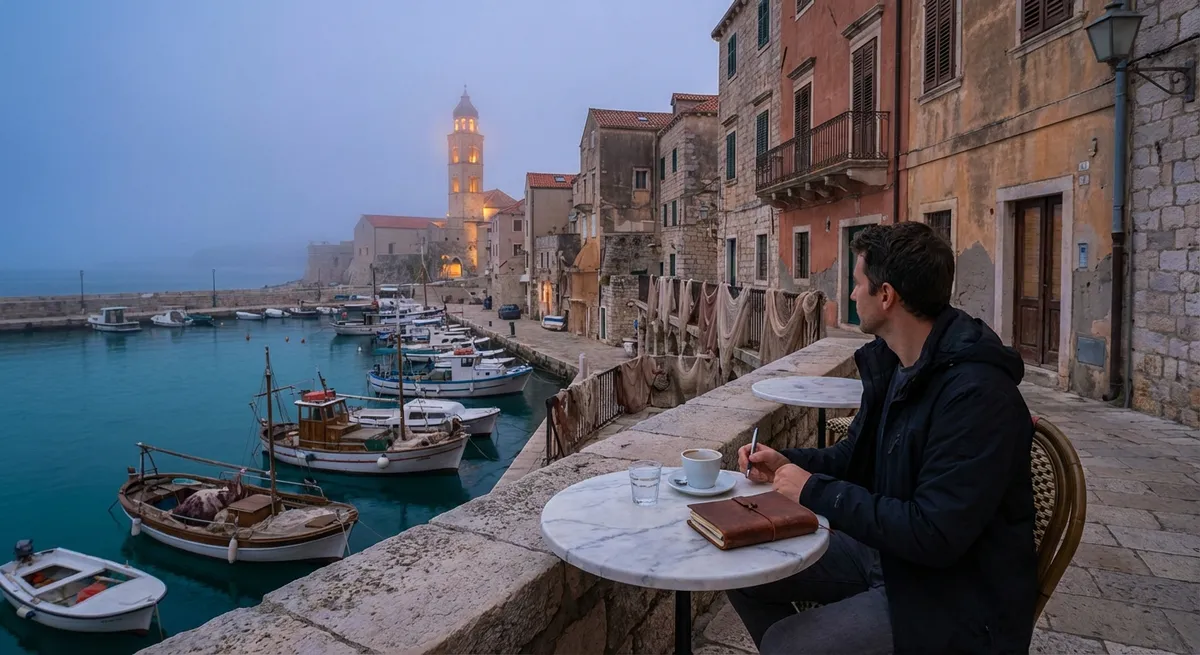
The key is not merely to pass through the waterfront, but to inhabit it. Choose a spot with sightlines toward both the city and your ship. Order something local but unfussy—a glass of vinho verde in Porto facing the Douro, or a simple coffee on Stockholm’s Skeppsbron. Let the light change. Let the tide mark the time instead of your watch.
Exclusive Insight #4: Plan at least one port day around the return to the waterfront. An hour framed by the ship’s silhouette on the horizon, the harbor’s working boats, and the city’s evening rituals can become the trip’s most resonant memory.
Culinary Latitude: Following Food Routes Instead of Tour Routes
While organized “food tours” have become common, discerning travelers can craft their own more subtle—and often more authentic—culinary pathways through a port city. The aim is not excess, but sequence: a graceful progression of flavors that mirrors the geography of the place.
Begin with the morning market if time permits. In cities like Nice, Honolulu, or Vancouver, markets are living textbooks of regional taste. Note which vegetables are prominent, which fish are abundant, which pastries attract a queue. You don’t need to eat a full meal here; a single piece of seasonal fruit, a local cheese, or a small pastry can orient your palate to the region.
Next, allow yourself a long, considered lunch—ideally off the main tourist arteries. Look for rooms filled mostly with local conversations, menus written primarily in the domestic language, and staff who seem more amused than eager to attract passing trade. Ask for a recommendation that reflects the day’s catch or the season’s best ingredients; chefs in port cities often excel at dishes that draw from both land and sea.
Finally, reserve the late afternoon or early evening for a final flourish: a glass of something characterful overlooking the harbor or in a neighborhood bar. In Marseille, this might be pastis; in Porto, a small glass of tawny port; in Naples, an espresso taken standing at the bar. The cumulative effect is an edible map of the destination, one that feels curated rather than consumed.
Exclusive Insight #5: Use food as your guide to both geography and daily rhythm: market for orientation, local lunch for depth, harborfront drink for closure. This trilogy quietly turns an ordinary port call into a layered culinary and cultural experience.
Conclusion
For the experienced cruiser, the true measure of a destination is not how many sights it can offer in six hours, but how gracefully it yields its character to those who move slowly, observe closely, and prioritize texture over tally. By treating arrival as reconnaissance, time as a luxury, districts as your compass, the waterfront as your salon, and food as your cartographer, you transform familiar ports into ever-renewing discoveries.
In an era when more ships visit more cities than ever, the rarest luxury is a sense of unshared intimacy with a place—even if thousands of fellow guests are in port alongside you. That intimacy comes not from exclusivity in price, but from exclusivity in perspective: the quiet, cultivated choices that turn a scheduled stop into something far more enduring.
Sources
- UN World Tourism Organization – Cruise Tourism Overview – Background on cruise tourism trends and the growing importance of destination experience
- European Travel Commission – Exploring Cities by Neighbourhoods – Research insights on urban tourism, neighborhoods, and visitor behavior
- Port of Barcelona – Cruise and City Integration – Official information on how a major cruise port connects guests with different city districts
- VisitCopenhagen – Neighbourhood Guides – Exemplary presentation of micro-district exploration in a cruise-accessible city
- FAO – The State of World Fisheries and Aquaculture – Context on coastal fishing and markets that shape culinary experiences in port cities
Key Takeaway
The most important thing to remember from this article is that this information can change how you think about Destinations.