The most compelling cruise lines today no longer sell “vacations.” They curate a private latitude—an invisible belt of standards, rituals, and quiet privileges that reveal themselves only when you are paying close attention. For discerning travelers, understanding how the best brands actually differentiate themselves turns a pleasant voyage into a finely tuned, repeatable ritual of pleasure. Beneath the glossy brochures and shipyard tonnage statistics lies a subtler story of design discipline, service choreography, and carefully engineered freedom.
This guide looks past the marketing superlatives to examine how top-tier cruise lines construct their worlds—and highlights five exclusive, under-discussed insights that sophisticated cruise enthusiasts quietly trade among themselves.
The Architecture of a Brand at Sea
Every serious cruise line is more than a fleet; it is a philosophy expressed in steel, teak, and time. From the moment you step aboard, that philosophy is encoded in hundreds of micro-decisions: corridor widths, color temperatures of lighting, the grain of the wood beneath your hand on the stair rail. What the most refined lines understand is that their “product” is not a cabin or an itinerary, but a consistent feeling that follows you from ship to ship, region to region.
For heritage-rich lines, the ship’s architecture carries a sense of continuity. A Cunard elevator lobby feels different from a Seabourn stairwell or a Celebrity lounge, not by accident but by doctrine. The lines that excel invest in a narrative thread that runs through their art collections, scent profiles, glassware choices, and even the typography on printed menus. This cohesion creates a form of emotional muscle memory for repeat guests: you are not merely boarding a vessel; you are re-entering a familiar world whose rules and aesthetics you already understand.
The savviest cruisers learn to read this architecture in the first hour aboard. They pay attention to the balance between public glamour and private refuge, to the way sound is managed in atriums and lounges, to the sightlines in bars and observation decks. These details are often a better predictor of your overall experience than the raw list of restaurants or headline entertainment.
Service as Quiet Choreography, Not Performance
Luxury at sea is often described in the language of indulgence—champagne, butlers, suites. Yet the most sophisticated lines focus on something far more elusive: how service feels when you are not consciously noticing it.
Exemplary operations train their teams not simply to remember names, but to interpret patterns. Your server observing that you always choose sparkling water at lunch and still water at dinner, your room attendant noticing which side of the bed you favor and adjusting turndown details accordingly—these are micro-observations that convert service from a transaction into a form of anticipatory hospitality.
The difference between “nice” and “remarkable” service is often in the handoffs between departments. On well-run premium and luxury lines, housekeeping knows about your shore excursion schedule, the spa knows your dining time, and the maître d’ is aware that you requested feather-free pillows the first night. This subtle internal choreography prevents you from having to repeat yourself and allows each interaction to feel as if the ship has genuinely taken an interest in your preferences.
Astute cruise enthusiasts look beyond the smiles and scripted greetings. They watch what happens when something goes wrong—a missed tour, a misrouted bag, a last-minute dietary request. The quiet elegance with which a line resolves friction tells you more about its culture than the welcome glass of prosecco ever will.
Exclusive Insight #1: The “Hidden Tier” Inside Every Cruise Line
Even on ships without formal ship-within-a-ship complexes, experienced travelers know there is a de facto hidden tier—an overlay of experiences and micro-privileges that are not overtly advertised.
This hidden tier can manifest through:
- Cabin placement strategy that yields softer motion, more privacy, and faster access to key venues without paying suite-level fares. Selecting midship staterooms on higher accommodation decks, avoiding service corridors, and choosing cabins directly beneath quiet public spaces can feel like stepping into a different category altogether.
- Restaurant and lounge “ownership.” On some lines, securing the same table, section, or barstool at your preferred venue creates a quasi-private club experience. Regulars know which bartenders favor classic cocktails, which sommeliers lean adventurous, and which servers can secure off-menu dishes from the galley.
- Soft perks extended to proven loyalists. While loyalty programs are public, how they are interpreted is often personal. Returning guests who engage graciously with crew, provide thoughtful feedback, and show genuine interest in the ship’s operation sometimes find themselves invited to low-key bridge tours, galley walks, or informal meet-the-officers moments that never appear in print.
Understanding that every line has this discreet inner ring, and learning how to enter it without entitlement, is one of the subtle arts of frequent cruising. It transforms the experience from “what everyone gets” to “how this ship responds to you, specifically.”
Exclusive Insight #2: Itinerary DNA Reveals a Line’s True Priorities
It is easy to compare cruise lines by their ships; connoisseurs compare them by their itineraries. Beyond ports of call, seasoned travelers examine how a line shapes time: port intensity, overnight calls, scenic cruising, and shoulder-season deployments.
Lines oriented toward a sophisticated audience often:
- Favor depth over breadth. Rather than seven ports in seven days, they design itineraries that linger—over-nighting in cities like Venice or Montreal, or allowing two full days in marquee ports such as Reykjavik or Tokyo.
- Embrace shoulder seasons. For those who value atmosphere and authenticity over heat and crowds, voyages in late April, May, September, and October frequently offer more nuanced experiences ashore. Lines that deliberately build shoulder-season portfolios are signaling an understanding of travelers who prioritize culture and calm over peak-season spectacle.
- Stage scenic days as signature events. Transits through fjords, canals, or remote archipelagos are treated as ship-wide “happenings,” with narrative commentary, themed culinary offerings, and adjusted spa and activity schedules that encourage guests to engage with the sea rather than indoor entertainment.
Cruise enthusiasts who study itinerary patterns over several seasons can read a line’s deeper intentions—whether it chases volume and predictability, or deliberately curates journeys that reward knowledge, patience, and a willingness to explore beyond the obvious.
Exclusive Insight #3: Culinary Strategy Is Really About Time, Not Food
Menus and celebrity chef partnerships are the most visible expressions of onboard culinary ambition, but the crucial differentiator is how a line manages the guest’s time around food.
Refined cruise lines subtly reframe dining as a living, dynamic part of the voyage rather than a fixed nightly obligation. Their strategies often include:
- Flexible pacing: Allowing guests to orchestrate their evening flow—aperitif in a quiet lounge, unhurried tasting menu in a specialty venue, then a late, minimalist dessert on deck—without feeling rushed by show times or table turnover pressures.
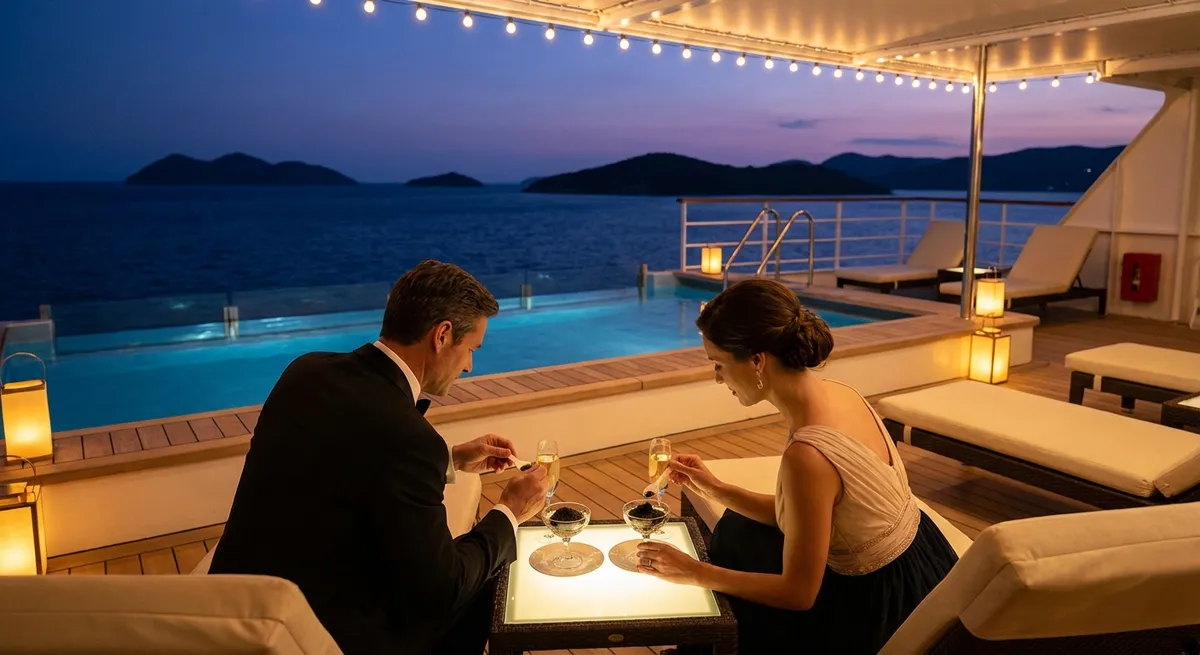
- Micro-venues with distinct moods: Instead of a binary choice between main dining room and specialty restaurants, well-curated fleets offer in-between spaces—a champagne bar with a caviar-focused small-plates menu, an understated chef’s counter, or an alfresco grill where the simplicity of grilled fish and a well-chosen white Burgundy eclipses more elaborate offerings.
- Quietly serious beverage programs: The most interesting lines treat their wine and spirits lists as cultural experiences, not mere accompaniments. Regionally tailored selections, thoughtful by-the-glass options, and staff trained to guide you to unfamiliar producers turn a standard dinner into a low-pressure masterclass in global flavors.
Cruise enthusiasts who value culinary depth know to look past headline specialty restaurants and ask: How gracefully does this line allow me to eat well while still owning my evening—from first sip to final espresso?
Exclusive Insight #4: Spa, Wellness, and the Redefinition of “Sea Day”
Sea days were once viewed as filler between ports. Today, the best cruise lines treat them as the canvas upon which the entire voyage’s rhythm is painted. Nowhere is this more evident than in their evolving approach to wellness.
Premium and luxury brands are moving beyond simple spa menus toward integrated wellness ecosystems, where:
- Spaces are designed for progression. Thermal suites, thalassotherapy pools, and relaxation areas are sequenced so that guests can move from active therapy to contemplative quiet in a natural flow. The architectural choreography—views, acoustics, and materials—becomes as important as the treatments themselves.
- Programming mirrors circadian rhythms. Morning yoga with sunrise views, mid-afternoon mindfulness sessions, and evening sound baths or stargazing events create a holistic sense of reset. These elements are curated so that a sea day becomes an intentional retreat rather than a gap in the itinerary.
- Nutrition and movement are integrated. On lines that take wellness seriously, menus clearly signal lighter, regionally sourced options, and fitness teams coordinate with chefs to support guests who want to experiment with healthier patterns without sacrificing pleasure. The aim is not austerity, but an elegant recalibration.
Sophisticated cruisers recognize that on such ships, a well-designed sea day can be the most memorable “destination” of the voyage. When comparing lines, they examine not just spa square footage but the thoughtfulness of the entire day’s arc.
Exclusive Insight #5: The Understated Power of Design Literacy
In an era of Instagram-ready atriums and theatrical LED installations, the most quietly luxurious cruise ships favor something different: design that respects the long gaze. This is where design-literate guests find their greatest pleasures.
Key markers include:
- Materials with integrity. Genuine woods, well-finished metals, and textiles that patinate gracefully signal a long-term vision. Cruise enthusiasts note whether surfaces still feel coherent after a few years in service; a ship that ages well often belongs to a line that thinks in decades, not deployment cycles.
- Acoustic intelligence. The finest public rooms control sound with invisible sophistication. You can hear a string quartet without shouting over your companion, enjoy a cocktail bar that hums without clamor, and sleep in a cabin insulated from corridor noise. These are design decisions, not accidents.
- Lighting as narrative. Lines that invest in talented lighting designers create different emotional climates throughout the day: dawn suffused with soft, cool tones; late afternoon bars taking on a golden warmth; restaurants shifting from bright clarity at lunch to flattering intimacy at dinner.
Travelers who consciously observe these elements quickly develop preferences for specific classes of ships or particular refurbishments within a fleet. This design literacy allows them to choose not just a line, but a version of that line that aligns best with their own aesthetic sensibilities.
Choosing Your Latitude: Matching Line to Traveler
Beyond price brackets and cabin categories, each major cruise line carries its own cultural temperature. Some are quietly club-like, where conversation and reading chairs define the social fabric. Others embrace a glass-of-champagne-in-hand exuberance that delights travelers who want their voyage to feel celebratory at every hour.
For the discerning cruiser, the process of selection becomes almost curatorial:
- Identify which rhythm of day you favor: long, contemplative afternoons on deck vs. programming-rich schedules.
- Decide how you prefer to engage ashore: independent exploration, curated small-group experiences, or immersive overnights.
- Consider your ideal social bandwidth: intimate ships where you recognize faces by day two, or larger vessels with enough scale to remain partially anonymous.
When these preferences are mapped carefully against a cruise line’s itinerary patterns, design language, service philosophy, and wellness approach, the result is not just a successful holiday but an enduring alignment. You are no longer simply “taking a cruise”; you are returning to your chosen latitude at sea.
Conclusion
Cruise lines that command real loyalty in the premium and luxury space succeed not by offering more of everything, but by editing with precision. They orchestrate architecture, service, time, and design into a coherent, repeatable experience that sophisticated travelers come to trust. For enthusiasts willing to look beyond marketing slogans, the sea is now a matrix of distinct worlds—each line, and often each class of ship, offering its own interpretation of what a life well-lived between ports can feel like.
To travel well by sea today is to choose with intent: to understand the hidden tiers, the itinerary DNA, the culinary and wellness philosophies, and the design intelligence that quietly separate one line from another. In that understanding lies the greatest luxury of all—stepping aboard and knowing, from the first polished handrail to the last evening on deck, that you are exactly where you belong.
Sources
- U.S. Federal Maritime Commission – Cruise Passenger Information - Regulatory context and consumer protection information for cruise travelers
- Cruise Lines International Association (CLIA) - Industry-wide insights on cruise trends, guest experience, and market data
- Cunard Line – The Cunard Experience - Example of how a heritage cruise brand articulates its service and design philosophy
- Celebrity Cruises – Edge Series Design - Illustrates contemporary cruise ship design priorities and guest-centric spaces
- Harvard Business Review – The Future of Luxury: Business Insights - Explores broader luxury trends and consumer expectations that influence premium cruise experiences
Key Takeaway
The most important thing to remember from this article is that this information can change how you think about Cruise Lines.