Every modern cruise line sells a promise: a floating world of ease, style, and effortless logistics. Yet seasoned travelers know there is an unspoken hierarchy at sea—between brands, ship classes, and even decks—that quietly shapes every experience, from the first glass of Champagne to the final disembarkation call. Understanding that hierarchy is not about ostentation; it is about precision. When you know how cruise lines truly differ, you can curate sailings that feel less like a packaged holiday and more like a finely tuned residency at sea.
Below, we explore how leading cruise lines subtly differentiate themselves—and share five exclusive, insider-level insights to help you navigate the upper tiers of ocean travel with confidence.
Mapping the Modern Cruise Line Landscape
Not all “luxury” at sea is created equal. Today’s cruise lines fall into distinct but overlapping strata: contemporary, premium, luxury, and ultra-luxury—each with its own vocabulary of space, service, and expectation.
Contemporary lines, such as Carnival and MSC Cruises, prioritize scale and energy, offering large resort-style ships with high guest capacity, exuberant entertainment, and broad-demographic appeal. Premium lines—including Celebrity Cruises, Princess Cruises, and Holland America Line—trade some of that spectacle for enhanced dining, more refined design, and a slightly lower guest-to-space ratio. Luxury and ultra-luxury brands, like Regent Seven Seas Cruises, Seabourn, and Silversea, take a more residential approach: all-suite or suite-forward accommodations, butler or dedicated attendant service, expansive inclusions, and carefully calibrated itineraries that emphasize time and access over sheer number of ports.
The key is that each tier is not a simple “upgrade” from the last; it is a change in philosophy. Contemporary lines optimize for choice and activity. Premium lines chase balance: elevated experiences that remain accessible. Luxury operators focus on frictionless travel—gratuities, premium beverages, and many shore excursions often folded into the fare. Ultra-luxury lines extend that logic further, striving to remove decision fatigue altogether, so that days at sea feel closer to a private club than a hotel.
For discerning cruisers, the real magic lies in learning how these philosophies express themselves in ship design, staffing ratios, enrichment, and onboard culture—details that often matter far more than a brand’s marketing language.
How Cruise Lines Quietly Signal Their Real Priorities
Look beyond glossy brochures and highlight reels, and cruise lines begin to reveal themselves through their design and operations. Ship architecture is one of the most revealing signals: how space is allocated between suites and interior cabins, how many square feet are dedicated to revenue-generating venues versus public lounges, and whether the ship prioritizes sea views or internal promenades.
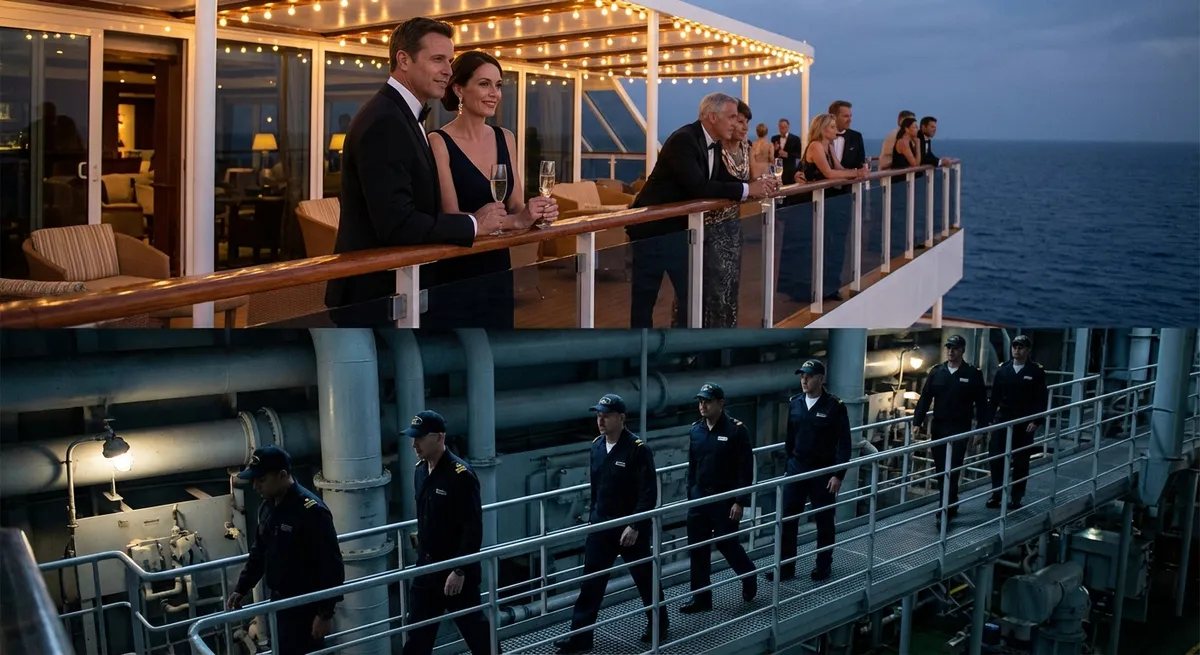
Staffing ratios offer another clear indicator. Ultra-luxury cruise lines commonly run near 1:1 guest-to-staff ratios, enabling highly individualized attention—from remembering precise preferences at breakfast to tailoring shore suggestions by name and interest. Premium lines, though not as intensive, still maintain a more personalized feel than mega-ships, particularly in suites and upper cabin categories. Contemporary ships, with their larger passenger loads, excel at orchestration rather than intimacy, relying on systems and scheduling to keep crowds flowing smoothly.
Culinary investment, too, acts as a barometer. Not simply the number of dining venues, but the caliber of partnerships, sourcing practices, and menu curation reveals whether a brand views food as a differentiator or a supporting amenity. The most ambitious lines now work directly with regional producers, fly in specialty ingredients mid-voyage, and adopt rotating chef-in-residence programs that transform dining rooms into culinary studios.
Taken together—space, staffing, and F&B ambition—these elements create an unspoken profile of a cruise line’s true priorities, far more honest than any tagline.
Five Exclusive Insights for the Attentive Cruise Enthusiast
While many travelers focus on loyalty points or cabin square footage, there are quieter levers that materially change your experience at sea. These five less-publicized insights tend to matter most to those who cruise frequently and expect a certain level of refinement.
1. “Ship Within a Ship” Concepts Are Not Created Equal
Several contemporary and premium lines now offer enclave experiences—ship-within-a-ship complexes such as Norwegian’s The Haven, MSC’s Yacht Club, or Celebrity’s The Retreat. On paper, they seem comparable: private lounge, dedicated pool, enhanced suites, priority embarkation, and a more personalized staff-to-guest ratio.
In practice, the differences can be dramatic. The physical separation from the rest of the ship—how self-contained the enclave really is—shapes its character. Some complexes have their own restaurant, bar, and sundeck arranged on a single vertical stack, creating the feel of a boutique vessel nested inside a resort ship. Others are more dispersed, requiring regular movement through public corridors and elevators, subtly eroding the sense of retreat.
Understanding the exact layout and access points of these enclaves, not just their amenities list, is key. In many cases, you are effectively choosing between a curated micro-ship experience and a premium key that unlocks selected quiet corners of a much busier vessel.
2. The “Soul” of a Line Often Lives in Its Smaller, Older Ships
New builds receive the marketing spotlight: futuristic design, water parks, and architectural flourishes. Yet for many established cruise lines, the most characterful experiences reside not on the latest flagship but on mid-size or slightly older vessels that have been carefully refurbished.
Smaller ships often host the most devoted crew, the most seasoned hotel directors, and the most loyal repeat guests. Their itineraries may be more interesting, too—able to access ports that mega-ships literally cannot enter due to draft, pier, or tendering constraints. These ships frequently feature a more traditional notion of elegance: paneled libraries, proper promenade decks, and lounges that favor conversation over spectacle.
Choosing a line’s “classic” ship instead of its most heavily publicized newcomer can yield a more intimate, less performative voyage, one that feels designed for people who cruise for the sea itself rather than for onboard attractions.
3. Enrichment Programming Tells You More Than Brochures Do
Lecture programs, art initiatives, and musical residencies reveal a cruise line’s cultural ambitions. Some brands treat enrichment as pleasant background; others curate it with the care of a small arts institution. Lines that invest in partnerships with universities, museums, or scientific organizations tend to attract a more intellectually curious audience and foster a different onboard atmosphere.
World cruises and longer grand voyages are particularly instructive. Study the guest speakers and workshops: astrophysics talks under clear night skies, political commentary contextualizing port calls, or in-depth culinary sessions with regional experts. The level of depth and curation is a strong proxy for how seriously the brand regards its passengers’ time and attention.
For those who value thoughtful engagement as much as Champagne, the quality of enrichment programming can be a decisive reason to choose one brand—and even one specific sailing—over another.
4. The Best Suites Are Often Defined by What You Do Not See
Suite life is marketed through obvious metrics: square footage, outdoor space, and signature perks. Yet the details that separate a pleasant suite from a genuinely elevated one are often subtler: acoustic insulation, door placement, sightlines, and traffic patterns outside your cabin.
Some lines, particularly in the luxury and ultra-luxury space, quietly invest in engineering decisions that minimize noise transfer between decks, angle beds toward panoramic windows rather than walls, and ensure that suite corridors are not thoroughfares to public areas. Elevated materials—proper blackout curtains that truly seal, soft-close balcony doors, and intelligently placed lighting—make an outsize difference on longer voyages.
When comparing suites across lines, look for deck plans that position high-end accommodations away from anchor mechanisms, galley spaces, and late-night venues. The mark of a sophisticated cruise line is not only what it adds to its top suites, but how meticulously it protects them from intrusion.
5. Itineraries Reveal a Line’s Relationships and Negotiating Power
Two cruise lines may advertise similar routes—say, Athens to Istanbul with stops in the Aegean—and yet the experiences can be worlds apart. The difference often lies in the brand’s relationships with ports, local operators, and destination authorities.
Lines with deeper local partnerships may secure more desirable berths, longer time in port, or access to venues closed to the general public. Late departures that allow for unhurried dinners ashore, early entries that permit private museum visits, and limited-capacity excursions led by notable local experts are rarely incidental; they are the result of years of careful relationship-building.
When you evaluate a potential voyage, look beyond port names and count the evenings in port, overnight stays, and whether the line is known for operating small-group “insider” experiences. You are not simply booking transit between cities; you are buying into a brand’s ability to unlock a place on terms that feel both privileged and respectful.
Choosing the Right Cruise Line for a Refined Experience
For travelers accustomed to premium hospitality on land, the sheer variety of cruise lines can be disorienting. The solution is to invert the usual decision-making process. Instead of beginning with the ship or the brand, start with your non-negotiables: the ratio of quiet to spectacle, your tolerance for scale, how much you value inclusions versus à la carte freedom, and the level of cultural depth you expect.
From there, examine each candidate line through the lens of its smallest details: ship design, staffing ratios, enrichment partnerships, and the nuances of its itineraries. Pay close attention to where a brand chooses to be generous—space, time in port, specialized talent—and where it chooses to be efficient. These trade-offs are where a cruise line’s true identity emerges.
In an era where every operator claims to offer “luxury,” the most rewarding voyages tend to be those where the line’s philosophy quietly aligns with your own: where the view from your balcony is framed just right, where staff anticipate your rituals without intruding, and where the sea is not merely a backdrop, but the central character. Choose with that level of discernment, and the hierarchy of cruise lines becomes not a ladder to climb, but a map to your own preferred way of being at sea.
Sources
- CLIA – 2024 State of the Cruise Industry Report - Industry overview of cruise segments, capacity, and traveler trends
- Cruise Lines International Association – About the Industry - Background on cruise line categories, ship sizes, and market structure
- U.S. Department of Transportation – Cruise Ship Travel - Government guidance on cruise operations and passenger considerations
- Regent Seven Seas Cruises – The Regent Experience - Example of ultra-luxury positioning and inclusions at sea
- Norwegian Cruise Line – The Haven - Illustrates a “ship within a ship” concept and enclave-style design on a contemporary line
Key Takeaway
The most important thing to remember from this article is that this information can change how you think about Cruise Lines.