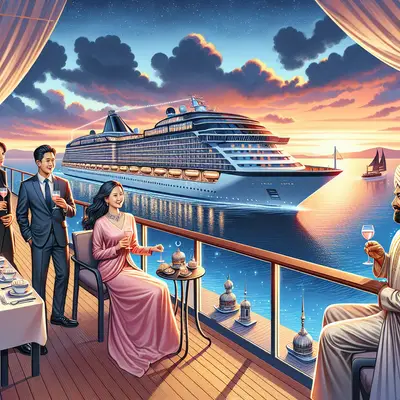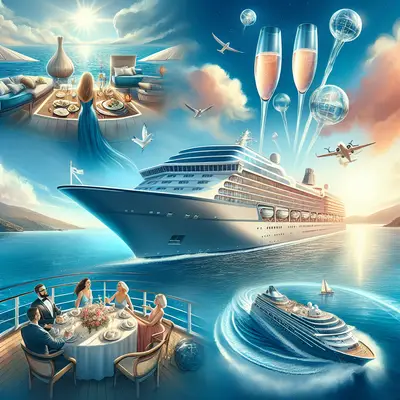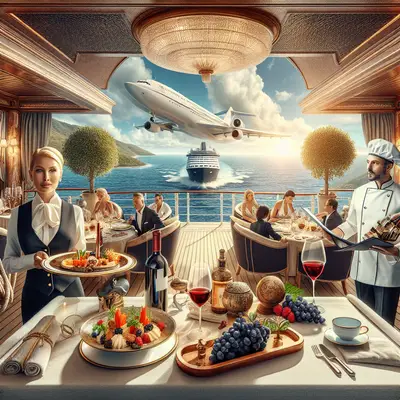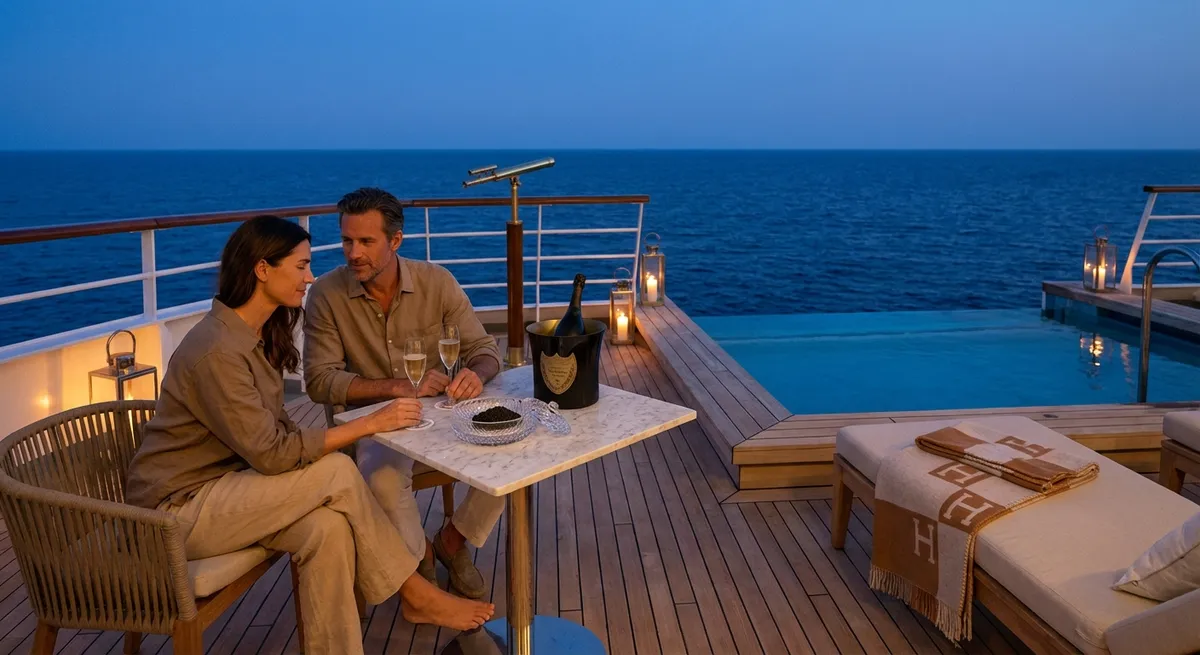
In the rarefied tier of luxury cruising, excellence is never announced; it is inferred from details, orchestrated in ways that seasoned travelers recognize instantly. The finest ships are less about spectacle and more about precision—how your preferences appear without being voiced twice, how a port call feels curated rather than crowded, how you move through each day with a sense of unhurried abundance. For cruise enthusiasts who already know the difference between a premium sailing and a genuinely luxurious voyage, certain markers quietly signal you’ve stepped into another class entirely.
This is an exploration of those subtleties—five exclusive insights that often go unspoken yet matter immensely to the connoisseur of the sea.
The Signature of True Luxury: Space as a Form of Service
In the luxury segment, square footage is not simply a specification; it is a service philosophy. Space dictates how you feel on board—how easily you disappear into a quiet corner, how rarely you wait in line, how often crew can attend to you without rushing. The most discerning cruisers look beyond headline suite sizes and focus on spatial ratios: guests to crew, guests to dining venues, and guests to public lounging areas.
Top-tier ships often carry hundreds fewer passengers than their physical dimensions would allow, creating a sense of residential calm rather than resort bustle. Corridor width, balcony depth, and even table spacing in restaurants subtly signal intentional design for privacy and ease. When a ship’s public spaces remain tranquil even on sea days, and you can arrive at a lounge or pool without strategizing for a seat, you are experiencing a carefully engineered luxury—one that translates directly into more attentive service and a more refined onboard rhythm.
The Quiet Power of Culinary Curation, Not Just “Fine Dining”
Luxury cruise marketing frequently leans on superlative dining claims, but the sophisticated traveler looks beyond tasting menus and white tablecloths. The true distinction lies in curation: how flexibly the culinary program adapts to you, how deeply it reflects the itinerary, and how artfully it balances indulgence with wellbeing.
On the highest echelon of ships, menus evolve mid-voyage in response to fresh local provisioning, not merely rotating on a fixed schedule. Chefs appear ashore at morning markets, sourcing regional specialties that reappear as evening degustations. Plant-forward fine dining and thoughtfully calibrated portions coexist with Champagne brunches and caviar moments, signaling a modern understanding of luxury as both pleasure and longevity.
For enthusiasts, an important tell is whether the line’s culinary leadership is visible and engaged: hosting intimate chef’s table experiences, partnering with Michelin-starred talent or respected sommeliers, and remembering your preferences from earlier in the cruise. When staff can recall your ideal level of spice, your favored water still or sparkling, or your preferred bread accompaniments without prompting, dining ceases to be service and becomes personalized ritual.
The Art of Intelligent Itineraries: Depth Over Distance
Not all “exotic” itineraries are created equal. Astute cruisers understand that luxury is as much about how you visit as where you visit. A crowded call with a noon arrival and early afternoon departure suggests a box-ticking schedule. By contrast, thoughtfully designed voyages prioritize late departures, overnights in compelling cities, and access to ports that reward smaller, more nimble ships.
Extended stays in ports like Venice (via alternative nearby docks), Monte Carlo, Yokohama, or Cape Town allow guests to experience destinations at their most atmospheric—after day-trippers depart and local life resumes. Itinerary design that clusters culturally related ports—such as a sequence through the lesser-known Greek islands or a slow progression along Japan’s inland sea—conveys intention, inviting immersion rather than a string of disconnected excursions.
Luxury lines increasingly collaborate with destination experts, historians, and conservationists to craft shore experiences with fewer participants and deeper access—private gallery openings, small-boat wildlife expeditions with researchers, or after-hours palace tours. When a cruise feels more akin to a curated grand tour than a checklist of calls, you are in the realm of genuine high-end travel design.
Wellness Reimagined: From Spa Menu to Holistic Voyage
The modern luxury cruiser expects more than a beautiful spa and a list of massages. Wellness at sea is evolving into a coherent, voyage-long narrative that respects both body and mind while acknowledging that indulgence is part of the experience, not its enemy.
On the most forward-thinking luxury ships, wellness touches every layer of the journey: circadian lighting in suites to ease jet lag, nutrition-conscious options integrated into every menu rather than relegated to a “healthy corner,” and fitness spaces that feel like boutique studios rather than afterthoughts. Yoga or Pilates may be complemented by breathwork sessions, sleep optimization programs, and mindfulness workshops led by credentialed practitioners, not generic instructors.
The discerning guest notes how fluidly wellness integrates with the itinerary itself: sunrise stretching on deck while approaching a fjord, guided forest bathing on a Japanese island, or post-excursion recovery sessions tailored for guests returning from active hiking or kayaking. When a cruise line considers how you will feel on disembarkation day—and designs backward from that point to shape your onboard experience—you are encountering a sophisticated, holistic approach to luxury.
The Discreet Architecture of Service: Anticipation, Not Performance
For enthusiasts who have sailed across brands and continents, true luxury reveals itself most clearly in how service is delivered. It is not about formality for its own sake, nor about flamboyant displays of attention. Instead, it is about invisible preparation and almost uncanny anticipation.
On the most refined ships, butlers and suite attendants map your preferences during the first twenty-four hours with meticulous quiet—identifying your preferred coffee preparation, ideal housekeeping times, reading habits, and tolerance for conversation. Crew communicate discreetly with one another so your proclivities follow you: a bartender knowing your usual aperitif already adjusted to your favored garnish, or a shore-excursion team proactively arranging a car for a guest who always returns early from group tours.
Equally telling is how the ship responds when something goes wrong. Luxurious service culture does not insist on perfection; it insists on graceful recovery. A missed port, a delayed departure, or a technical issue becomes an opportunity for thoughtful gesture: private briefings, personalized alternatives, or unannounced onboard enhancements. When apologies are offered with specifics—not scripted phrases—and solutions arrive before complaints, you are witnessing the highest form of hospitality at sea.
Conclusion
As luxury cruising matures, the distinction between “nice” and “extraordinary” has become more nuanced. The very best experiences are not defined by chandeliers and grand lobbies, but by considered spatial design, culinary intelligence, meaningful itineraries, integrated wellness, and a choreography of service that feels effortless. For enthusiasts who already know their way around the world’s oceans, these subtleties become the true collectibles: the details you carry with you long after disembarkation, and the quiet markers by which you choose your next ship.
In an era when many sailings promise opulence, it is this deeper architecture of thoughtfulness that separates a merely expensive voyage from an authentically luxurious one.
Sources
- Cruise Lines International Association (CLIA) – 2024 State of the Cruise Industry - Industry overview highlighting trends in luxury, experiential travel, and guest expectations
- Regent Seven Seas Cruises – The Regent Experience - Illustrates how ultra-luxury lines position space, service, and inclusions as core differentiators
- Seabourn – Onboard Experience - Details on small-ship design, wellness offerings, and service culture in the luxury segment
- Harvard Health Publishing – A Wellness Prescription for Travel - Context on integrating wellness and restorative practices into travel experiences
- U.S. Department of State – Tips for Traveling Abroad - Practical guidance that informs preparation and risk awareness for international cruise itineraries
Key Takeaway
The most important thing to remember from this article is that this information can change how you think about Luxury Cruises.