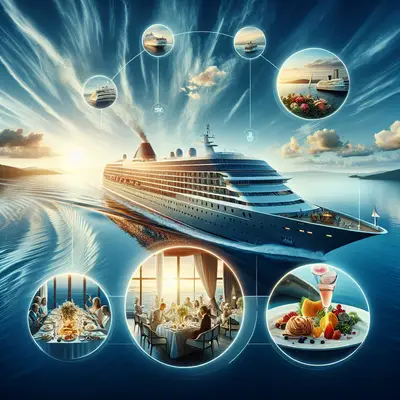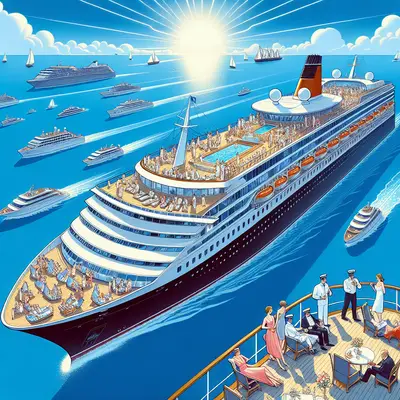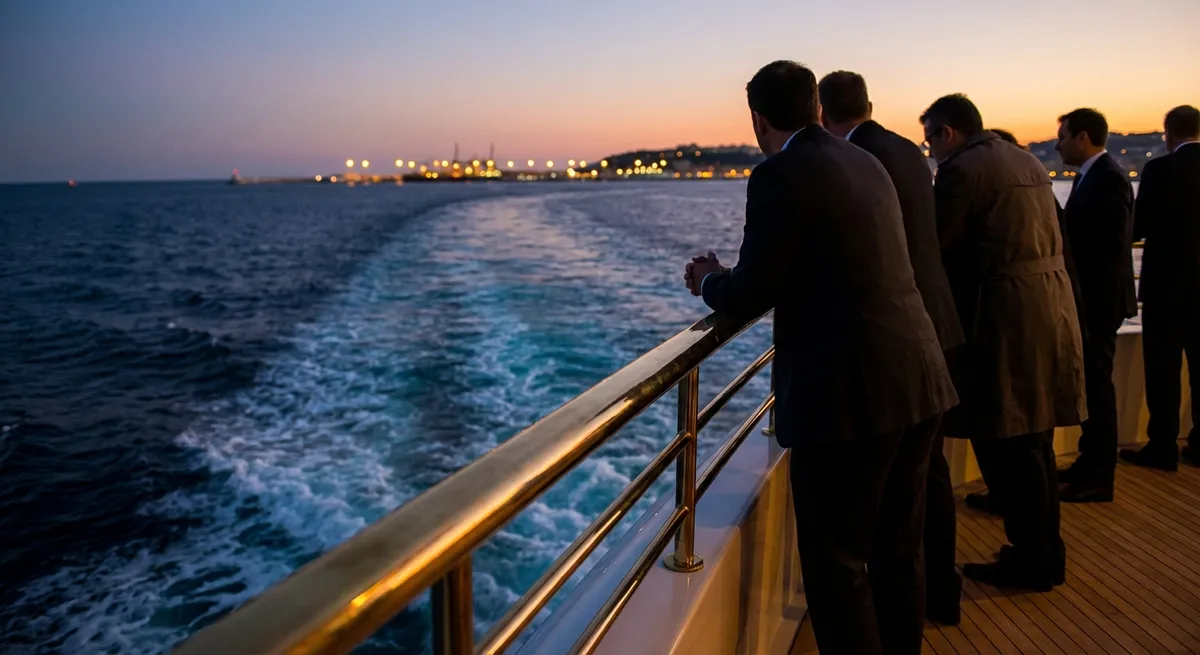
In the polished world of contemporary cruising, the gleam of marble atriums and the promise of curated itineraries are only the visible tip of a vast, intricately managed enterprise. Behind every elegant embarkation lies a matrix of strategic decisions—about design, deployment, dining, and even data—that determines how discerning guests experience life at sea. For the well‑traveled cruiser, understanding these subtler forces does more than satisfy curiosity; it sharpens one’s ability to choose the right line, the right ship, and the right sailing, every time.
Below, we explore five under‑discussed realities that quietly distinguish the most sophisticated cruise lines—and how to use that knowledge to sail with greater intention.
The Signature of a Fleet: Why Sister Ships Are Not Truly Twins
To the untrained eye, “sister ships” appear interchangeable—same class, similar layout, nearly identical specifications. Yet in practice, no two vessels within a fleet offer precisely the same experience, and cruise lines rely on this nuance to fine‑tune their brand for different types of guests.
Subtle structural differences—perhaps an expanded specialty restaurant, a reconfigured spa, or an additional suite category—often reflect lessons learned from earlier ships in the class. A vessel launched later in a series frequently incorporates design refinements based on guest feedback, revenue analysis, and evolving trends: more alfresco space, quieter lounges, or enhanced soundproofing in premium accommodations. Even when deck plans look similar, a ship’s “flow”—the way guests naturally move between venues—can feel markedly different after a dry dock or major refurbishment.
For the discerning cruiser, it pays to go beyond the class name and examine the specific ship and build year. Two vessels marketed identically might offer very different atmospheres: one with a livelier, more social personality and another calibrated for quieter, contemplative voyages. When choosing among sister ships, seasoned travelers increasingly study refurbishment dates, venue lists, and suite configurations—not just the brochure photography—to secure the onboard ambiance that best aligns with how they truly wish to spend their time at sea.
The Hidden Cartography of Deployment: How Ships Really Find Their Seasons
Cruise itineraries may appear to be a matter of geography and weather, but deployment decisions are driven by a far deeper calculus. Lines analyze a blend of demand forecasts, currency fluctuations, port capacity, political stability, and airlift from key markets to determine where each ship should sail—and when.
Premium vessels are often treated like movable assets, rotated strategically between regions that can support higher per‑diem rates during “peak value” windows. A ship might spend European summer in the Mediterranean when demand from North America and Europe is strongest, shift to the Caribbean or South America for winter sun, then reposition via a grand voyage that quietly doubles as an ultra‑profitable repositioning run. Regulatory frameworks and port agreements play their part as well; cabotage rules, environmental requirements, and port development incentives all influence which ships appear in which harbors.
For guests, this means that certain itineraries—short shoulder‑season sailings in coveted regions, or unusual one‑way routes between continents—offer access to flagships normally reserved for marquee seasons. Those willing to sail slightly earlier or later than the crowd often find more refined ships, fewer families, and a more cosmopolitan passenger mix, all while visiting ports at moments when the local rhythm feels more authentic. Understanding deployment strategy allows travelers to treat the cruise calendar not as a fixed schedule, but as an opportunity map.
Culinary Theatre and Quiet Logistics: How the Best Galleys Stay Ahead
The refined dining experience on modern cruise lines—artfully plated tasting menus, sommelier‑driven wine pairings, and late‑night caviar on demand—rests on a remarkably complex supply chain and culinary infrastructure that must perform flawlessly at sea. The most sophisticated lines have transformed their galleys into high‑performance ecosystems, where logistics and artistry are inseparable.
At the procurement level, supply teams work months in advance to secure specialty ingredients across multiple continents, often aligning provisioning schedules with regional highlights: white asparagus in Northern Europe, seafood from Norwegian waters, or premium tropical produce in the Caribbean. Strict food safety protocols, cold‑chain logistics, and onboard storage limitations require meticulous planning; premium lines frequently charter dedicated containers or collaborate closely with port authorities to expedite fresh deliveries.
Within the galley, the choreography becomes almost balletic. Distinct production lines handle bakery, garde manger, hot kitchen, and pastry, while separate teams focus on the brand’s signature venues. The finest operations invest heavily in chef training, kitchen ergonomics, and menu engineering—designing dishes that remain exquisite when prepared at scale and plated hundreds of times each evening. For guests, recognizing the logistical precision behind an apparently effortless dinner service can be the deciding factor when comparing cruise lines: those that prioritize culinary integrity, even under the constraints of the open sea, tend to elevate the entire onboard experience.
The Discreet Economy of Space: How Square Footage Shapes Experience
Onboard real estate is the most finite resource any cruise line manages, and how that space is allocated reveals a great deal about a brand’s true priorities. Every additional suite, lounge, or lounge chair is a deliberate choice, balancing revenue potential, guest comfort, and the line’s long‑term positioning in the market.
Some lines maximize stateroom count, favoring a livelier onboard atmosphere and broader accessibility. Others reserve substantial square footage for generously proportioned public spaces, multiple small‑scale venues, and expansive spa and wellness facilities. At the ultra‑premium end, the calculation tilts further still: fewer guests, more private outdoor areas per person, and a noticeable amount of “unused” space that translates into tranquility and privacy rather than constant activity.
Savvy cruisers pay close attention to passenger‑space ratio (the relationship between gross tonnage and guest capacity) and how that ratio manifests in real life. A ship with elevated space per guest and thoughtfully segmented venues often feels quieter and more bespoke, even when sailing near capacity. Furthermore, the emergence of “ship‑within‑a‑ship” concepts—private suite enclaves with dedicated lounges, restaurants, and sundecks—demonstrates how lines are using spatial economics to create tiered experiences on a single vessel. For those seeking a sense of sanctuary at sea, understanding how a cruise line engineers space is as important as studying its stateroom categories.
The Silent Hand of Regulation and Sustainability: Luxury in an Era of Accountability
As cruising evolves, luxury is increasingly defined not only by what guests see and touch, but by what operates quietly in the background: advanced environmental systems, fuel innovations, and regulatory compliance that shape itineraries and onboard life. The most forward‑thinking cruise lines invest heavily in technologies that are rarely marketed as aggressively as culinary or design features, yet have profound implications for the future of refined travel at sea.
Stricter international regulations on emissions, wastewater management, and fuel standards have accelerated the adoption of cleaner fuels, shore power connections, advanced waste treatment plants, and energy‑efficient propulsion systems. New‑build ships often debut with LNG capability, optimized hull designs, and sophisticated energy‑management software that reduces consumption without compromising guest comfort. Premium lines, in particular, increasingly frame sustainability as part of their brand ethos, recognizing that their most discerning guests pay attention to environmental stewardship and port impact.
These operational choices influence everything from which ports are visited, to how long a ship remains alongside, to whether certain fragile destinations can be included at all. For cruisers who see travel as a long‑term pursuit, this emerging layer of responsibility has become part of the decision matrix: choosing lines that invest in greener technologies and responsible destination partnerships is, in many ways, a commitment to preserving the very coastlines and cultures that make ocean travel so compelling.
Conclusion
The world of cruise lines is far more intricate than a catalog of ships and itineraries might suggest. Fleet design, deployment strategy, culinary logistics, spatial economics, and sustainability frameworks quietly converge to define how each voyage feels, who it attracts, and how it lives in memory. For the sophisticated cruiser, appreciating these hidden dimensions is an invitation to travel with greater discernment—to choose ships not only for where they sail, but for the philosophies and decisions that shape every moment on board.
In doing so, the ocean journey becomes something richer than a sequence of ports and sea days. It becomes a considered experience, crafted in partnership with cruise lines whose underlying choices align with one’s own values: privacy or vibrancy, tradition or innovation, visible glamour or understated refinement. Understanding the quiet realities behind the wake is, ultimately, the surest way to ensure that each sailing feels precisely, and unmistakably, your own.
Sources
- [Cruise Lines International Association (CLIA) – 2023 State of the Cruise Industry](https://cruising.org/en/news-and-research/research/2023/state-of-the-cruise-industry-2023-edition) - Industry overview on deployment trends, capacity growth, and evolving guest preferences
- [U.S. Federal Maritime Commission – Fact Finding 30 Report](https://www.fmc.gov/fact-finding-30-international-ocean-transportation-supply-chain-engagement/) - Background on maritime logistics and regulatory context relevant to cruise operations
- [International Maritime Organization – MARPOL and Air Pollution from Ships](https://www.imo.org/en/OurWork/Environment/Pages/Air-Pollution.aspx) - Details on environmental regulations influencing fuel choices, emissions control, and sustainable ship design
- [Royal Caribbean Group – Sustainability Report](https://www.royalcaribbeangroup.com/sustainability/) - Illustrates how a major cruise company implements environmental technologies and responsible practices fleetwide
- [Cornell University School of Hotel Administration – Hospitality Research](https://sha.cornell.edu/faculty-research/research/hospitality/) - Academic insight into hospitality operations, including space utilization, service design, and guest experience economics
Key Takeaway
The most important thing to remember from this article is that this information can change how you think about Cruise Lines.