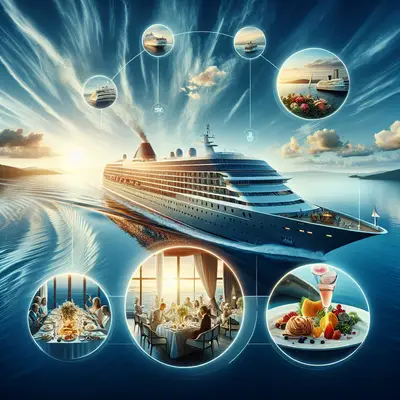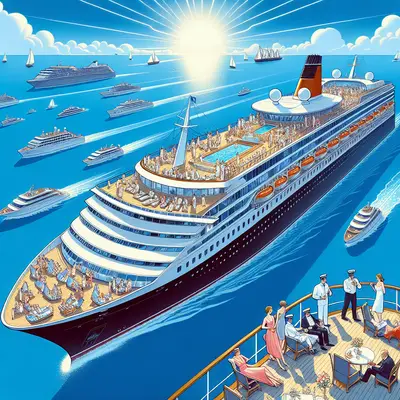
In the polished theatre of modern cruising, much of what defines excellence happens far from the spotlight—behind galley doors, in hushed design studios, within data centers tracking ocean currents and guest preferences in real time. For discerning travelers, the choice of cruise line is less about headline amenities and more about the invisible architecture of care, precision, and foresight that shapes every moment on board. This is an exploration of how the world’s leading cruise lines quietly orchestrate experiences that feel effortless—and five under‑discussed insights that connoisseurs of the sea will recognize instantly.
The Silent Choreography of Service
On the most refined ships, service is less a function and more a choreography—highly structured yet seemingly improvised. While guests glide from morning espresso to evening champagne, a meticulously timed system hums beneath the surface.
Every interaction—from your favorite wine reappearing unrequested to a perfectly timed turndown—is driven by a fusion of human memory and digital precision. Many cruise lines now employ sophisticated guest‑preference systems, where your coffee order, pillow choice, and spa schedule are logged and quietly shared across departments. The staff’s ability to “remember everything” is rarely coincidence; it is, instead, the cumulative effect of well‑designed training, cultural rigor, and increasingly, data.
In elevated suites and ship‑within‑a‑ship enclaves, butlers and concierges often attend pre‑shift briefings built entirely around individual guests. Allergies, anniversaries, preferred dining times, even social habits are analyzed to anticipate—and sculpt—your day. The experience feels uncannily intuitive because it is intentionally engineered to be so, hour by hour.
The Design Language You Feel but Rarely Notice
For cruise lines operating at the high end of the spectrum, design is not mere décor—it is a silent language guiding how you move, rest, and socialize. Some of the world’s leading hospitality designers now work almost exclusively in maritime contexts, translating land‑based luxury into a floating environment governed by physics, safety laws, and tight spatial constraints.
Why does one ship feel instantly calming while another feels busy and restless? Look closely and you’ll see subtle signatures: ceiling heights tuned to the emotional cadence of each space, corridor lighting that leads you instinctively toward public areas, materials selected not just for aesthetics but for how they age at sea. Acoustics are obsessively engineered to soften the murmur of a cocktail bar or shield a quiet library from evening entertainment elsewhere on board.
The most thoughtful cruise lines also design “escape valves” into their ships—semi-hidden terraces, tucked‑away lounges, and quiet nooks that never feature prominently in brochures. These become sanctuaries for well‑traveled guests who value refuge as much as spectacle. The finest luxury today is not only what you see, but the serenity you do not have to fight for.
Culinary Ambitions Far Beyond the Buffet
The world’s top cruise lines are no longer content to approximate great restaurants at sea—they now compete directly with them. Many have moved from traditional banquet‑style provisioning to near‑restaurant‑grade systems, where ingredients are sourced with chef‑driven intent rather than generic volume buying.
Culinary teams often begin planning menus for a season many months ahead, syncing itineraries with sourcing opportunities. A Mediterranean sailing might see fresh seafood brought on in Sicily or Marseille, while Alaska itineraries prioritize wild salmon and regional specialties. Some luxury lines maintain dedicated provisioning experts whose only mandate is to align local seasonality with the ship’s culinary ambitions.
Wine programs, too, are no longer afterthoughts. Advanced sommeliers curate cellars that rival top restaurants ashore, navigating the complexities of storage at sea, varied climates, and changing guest demographics. On certain itineraries, the wine list subtly shifts mid‑voyage as new vintages are loaded in European ports or boutique producers are featured for special events.
For enthusiasts, the real pleasure lies not only in tasting menus and name‑brand partnerships, but in recognizing the intellectual ambition behind them: how a given meal reflects geography, supply‑chain constraints, and a chef’s interpretation of time and place—all while at sea.
Quiet Personalization: When the Ship Adapts to You
While “customization” has become a buzzword across hospitality, the most sophisticated cruise lines treat personalization less as a marketing claim and more as a philosophy of flow. The ship, in effect, adapts to you.
Well before embarkation, guest data—preferences, loyalty history, prior bookings, even spa or excursion patterns—can be mapped to create a subtle “profile” that guides recommendations and micro‑experiences. A returning guest who frequently booked private shore tours might find discreet invitations to bespoke, small‑group experiences rather than the usual mass‑market excursions. A traveler who tends to dine late could see later seating suggestions, alternative venues, and after‑hours entertainment curated to align with their rhythm.
On tech‑forward ships, this extends to the environment itself. Room climate and lighting scenes may be auto‑suggested based on how you adjusted them earlier in the voyage. Activity suggestions in the onboard app evolve as you ignore some options and consistently select others. For luxury lines, the emerging frontier is anticipatory personalization that never feels algorithmic, always human—data in service of discretion.
The refinement lies in subtlety. The best cruise lines understand their guests want to feel known but not surveilled, anticipated but not managed. When done well, the ship seems to “understand” you without ever asking twice.
Sustainability as a New Measure of Discreet Luxury
For today’s sophisticated traveler, environmental stewardship is no longer a peripheral concern—it is part of the definition of luxury. The most forward‑thinking cruise lines are investing not just in compliance, but in a profound reimagining of how a ship coexists with the sea it traverses.
Liquefied natural gas (LNG) engines, advanced air‑lubrication systems that reduce drag, and shore‑power connectivity that allows ships to shut down engines in port are becoming hallmarks of a more conscientious fleet. Some lines experiment with hybrid propulsion and waste‑heat recovery systems, converting what was once lost energy into useful power. Behind the scenes, complex waste‑management centers resemble industrial facilities more than hotel backrooms, sorting and treating everything from food waste to greywater with a precision most guests never see.
Sustainability also influences itinerary design. Sensitive destinations increasingly require controlled visitor flows, partnerships with local communities, and adherence to strict environmental protocols. The most elevated cruise experiences now often involve smaller‑group, low‑impact excursions, collaborations with local conservation groups, and educational programs that respect both the ecosystem and the culture that hosts you.
For travelers who view luxury as a long‑term relationship with the oceans rather than a fleeting indulgence, these choices matter deeply. The future of refined cruising lies in quiet, measurable commitments that protect the very waters that make the experience possible.
Five Exclusive Insights for the Devoted Cruise Enthusiast
For those who have already sailed extensively and seek a more nuanced understanding of cruise lines, these five insights often separate a merely pleasant voyage from a genuinely exceptional one:
Loyalty Programs Shape the Onboard Culture More Than You Think
High‑tier loyalty guests influence everything from bar menus to event programming. Lines with deeply entrenched repeat‑guest communities often curate more intellectually driven lectures, destination workshops, and long‑form entertainment, knowing their audience values depth over novelty.
Crew Retention Is the Most Underappreciated Indicator of Quality
A cruise line that quietly boasts long crew tenures is usually one that treats its staff well, invests in training, and maintains a stable, confident onboard culture. Guests feel this in the smallest moments—unhurried conversations, genuine smiles, and teams that function with almost familial cohesion.
The Best “Secret Spaces” Are Often Designed for Transitional Moments
Thoughtful lines build small lounges or terraces near embarkation points, spa entries, or observation areas—places where guests naturally pass through. These become unadvertised havens for reading, early‑morning coffee, or sunset watching away from the crowd.
Itinerary Cadence Is a Deliberate Art, Not an Afterthought
On more sophisticated lines, port‑intensive sailings are balanced with strategically placed sea days that serve as restorative interludes. The sequence of ports—cultural intensity, scenic cruising, and relaxed beach calls—is often carefully curated to create a narrative arc rather than a checklist.
True Luxury Lines Obsess Over “In‑Between” Moments
Anyone can stage a grand gala or headline show. What defines the very best cruise lines is how they handle transition: returning from a long shore excursion, late‑night strolls back to your suite, the quiet after a missed reservation. Warm towels, a perfectly timed small‑plate bite, a bartender who has already poured your usual—all of this signals a line that understands luxury lives in the margins.
Conclusion
In an era when nearly every ship promises infinity pools and specialty dining, the genuine distinctions between cruise lines reveal themselves in what is not immediately advertised: how service teams think, how ships are drawn, how energy is used, how a day at sea coheres into something more than a scattering of activities. For the discerning cruiser, selecting a line becomes less about the loudest promises and more about the quiet intentions woven into every corridor, cocktail, and course.
The ocean offers the same horizon to every ship. What separates the finest cruise lines is the unseen intelligence with which they guide you toward it—subtly, thoughtfully, and with a level of care that lingers long after the wake has faded.
Sources
- U.S. Federal Maritime Commission – Passenger Vessel Information - Overview of major cruise operators and regulatory context
- CLIA (Cruise Lines International Association) – 2024 State of the Cruise Industry - Industry trends, sustainability initiatives, and guest behavior data
- Norwegian Cruise Line Holdings – Sustainability Report - Detailed look at environmental technologies, LNG adoption, and waste management practices
- Carnival Corporation – Sustainability & Reporting - Information on advanced air quality systems, shore power, and efficiency programs
- Cornell University School of Hotel Administration – Hospitality Research - Academic insight into service design, guest experience, and personalization in hospitality contexts
Key Takeaway
The most important thing to remember from this article is that this information can change how you think about Cruise Lines.