The most intriguing cruise lines rarely shout about luxury; they curate it. For discerning travelers, the difference between a merely beautiful voyage and a truly memorable one lies in the details that never make the brochure: the way a ship moves through a quiet harbor at dawn, the unspoken choreography of the crew, the sense that the entire vessel is tuned to your preferences before you voice them.
Today’s refined cruisers are looking beyond square footage and brand names. They’re reading between the lines—evaluating the personality of a fleet, the philosophy behind its design, and the values encoded in every onboard decision. These are the subtleties that separate a pleasant sailing from a signature cruise line you’ll follow from ship to ship, itinerary to itinerary.
Below, five insider perspectives reveal how leading cruise lines are defining a more nuanced, elevated standard at sea—and how to recognize it when you step aboard.
The Art of the Fleet “Signature”: Reading a Line’s Design Language
Every serious cruise line has a design language, and learning to read it is one of the most rewarding skills for seasoned guests. Look first at how public spaces flow: does the ship invite you to linger, or simply move you from restaurant to theater? On thoughtfully conceived vessels, each corridor and staircase reveals a subtle narrative—art that changes character as you ascend decks, lighting that warms as the evening progresses, and sightlines that frame the sea rather than compete with it.
Cabin design is another quiet signature. On high-caliber lines, the smallest stateroom still feels intentional: switch placement that makes sense in the dark, sound insulation that turns the ship into a private cocoon, and textiles chosen not just for appearance but for how they respond to salt air and repeated laundering. Take note of the thresholds between “zones”: the spatial shift from spa to pool, from lounge to observation deck. When these transitions feel almost cinematic, you’re on a ship where design has been treated as storytelling, not just décor. Over time, you’ll begin to recognize a line’s aesthetic the way you recognize a favorite architect’s work—from the curve of a staircase or the way afternoon light falls in the library.
Service as Choreography: How Exceptional Lines Anticipate, Not React
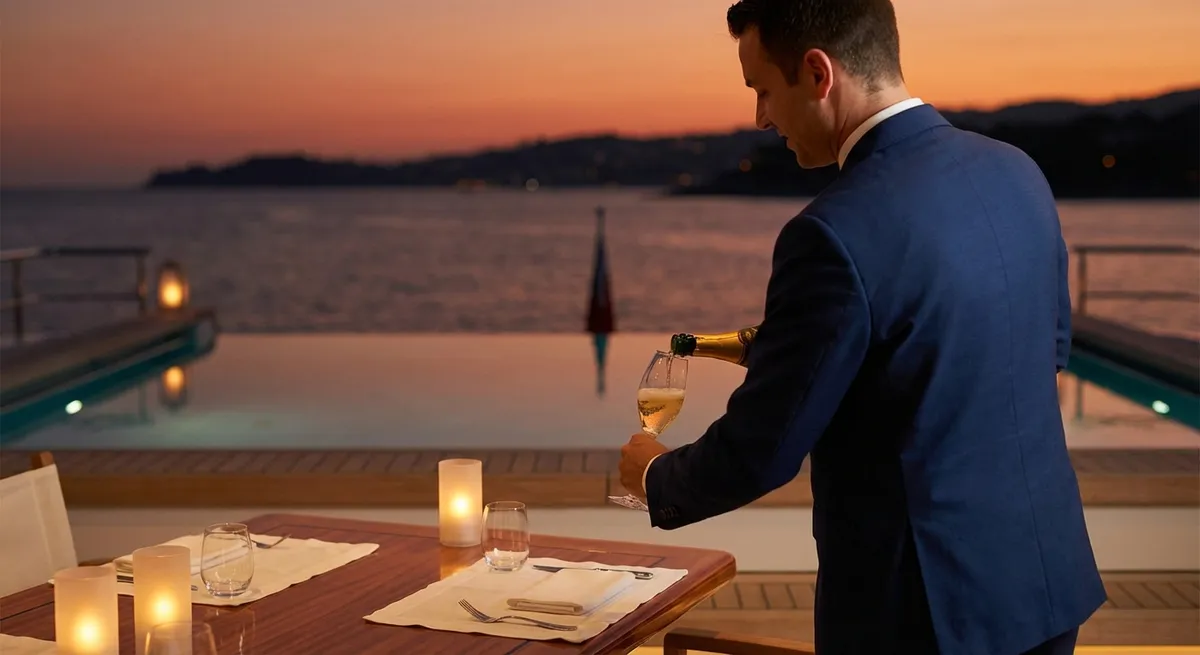
On the finest cruise lines, service feels less like hospitality and more like a quiet, ongoing conversation. The difference is anticipation. Rather than responding to requests, the best crews move in a subtle choreography: a favorite tea appearing on day three without being re-ordered, the perfect pillow waiting after you casually mention a sore neck, the sommelier recalling which vintage you preferred at the Captain’s Welcome. This depth of attentiveness doesn’t happen by accident; it reflects a service culture that treats every interaction as data in a living, breathing guest profile, refined voyage after voyage.
Pay attention to how the crew communicates with one another. Discreet hand signals during dinner, a quick adjustment of a table before you sit, a room attendant who knows your rhythm without knocking at the wrong moment—these are markers of training that goes far beyond the standard script. On such lines, staff are encouraged to make micro-decisions on the spot: adjusting timelines for a delayed excursion, holding the galley for a guest lingering in the spa, or subtly re-routing foot traffic so that embarkation feels unhurried. What you experience as seamless grace is, beneath the surface, an intricate dance that only the best cruise lines can consistently sustain.
Quiet Innovation: Technology That Disappears Into the Experience
Not all innovation is meant to be seen. The most sophisticated cruise lines are increasingly defined by technology you don’t notice—the kind that dissolves into comfort rather than demanding your attention. Behind the scenes, intelligent HVAC systems track occupancy and weather to maintain an almost impossibly consistent cabin climate, while advanced stabilizers soften a rolling sea into a gentle, nearly imperceptible motion. You may never see the algorithms, but you’ll feel their influence in the fact that you sleep more deeply and wake more refreshed than you expected at sea.
Guest-facing technology tells its own story. On thoughtfully equipped ships, apps and wearable devices never become barriers between you and the ocean; they simply clear the path. Consider the ease of reserving a last-minute tasting menu from a quiet corner of the lounge, or ordering a perfectly timed in-suite breakfast that arrives just as the ship glides into port. Lighting and curtains that respond to a simple touch—or better yet, to a curated “scene” for sunrise, pre-dinner, or night—allow you to shape your private environment in seconds. The gold standard isn’t the most visible gadgetry; it’s the line that integrates technology so discreetly that the only thing you truly notice is how effortlessly your preferences are honored.
Culinary Identity: When a Cruise Line’s Kitchen Has a Point of View
Menus can be copied; culinary philosophy cannot. The most compelling cruise lines have a distinct taste profile, a recognizable point of view that runs like a quiet thread through every dining venue onboard. You might sense it in the confidence with which they present a single, perfect seasonal ingredient rather than an overcomplicated plate, or in the willingness to feature a regional dish in its authentic form instead of a diluted “international” version. This is where serious lines distinguish themselves: in the discipline to edit, not merely to add.
Watch how a line handles repetition over the course of a voyage. On thoughtfully curated ships, breakfast evolves subtly from day to day, afternoon tea reflects the region you’re sailing through, and the dessert buffet avoids “greatest hits” in favor of a few exceptionally executed pastries. The sourcing story is revealing as well. Lines serious about gastronomy tend to showcase relationships with small producers—olive oil from a particular coastal village you happen to be sailing past, or cheeses from a farm that supplies only that fleet. Even in the most relaxed venues, there’s a traceable DNA: from the choice of bread in a poolside slider to the finishing salt on a simple grilled fish. When a cruise line’s cuisine feels coherent across casual and fine dining, you’re tasting a true culinary identity rather than a collection of outsourced concepts.
Time as the Ultimate Luxury: How Leading Lines Reimagine the Cruise Day
For seasoned cruisers, the rarest indulgence is not another amenity—it’s time that feels expansive, unhurried, and entirely your own. The most forward-thinking cruise lines are quietly restructuring their itineraries and onboard programming around this idea. Instead of packing each day with overlapping activities, they craft a considered rhythm: mornings that begin gently, with minimal announcements; mid-days that respect the sanctity of a long, lingering lunch; evenings that open and close like a well-paced performance, with distinct chapters rather than a blur of competing options.
Port calls are an even more revealing indicator. Pay attention to dwell times and departure hours. Lines that truly respect their guests’ experience will favor later stays that allow for uncompressed shore days, or deliberately schedule scenic sailaways to coincide with the golden hours of light. Onboard, the daily program betrays a line’s philosophy of time: are you being pushed to “maximize” every hour, or invited to savor them? When enrichment lectures are spaced to allow for reflection, when spa appointments don’t feel rushed, when live music is allowed to stretch naturally rather than cut on the hour, you’re sailing with a cruise line that understands the most refined form of luxury is not abundance—but the freedom to inhabit each moment fully.
Conclusion
Choosing a cruise line is no longer just a question of ship size, itinerary, or cabin category. For those who view the sea as a recurring chapter in their travel life, the true distinction lies in intangibles: design that tells a story, service that anticipates without intruding, technology that fades into comfort, cuisine with a clear point of view, and an almost curatorial respect for your time.
As you evaluate your next voyage, look past the headline features and start tracing these quieter signatures. Over time, you’ll find yourself gravitating toward the lines whose values feel aligned with your own—fleets where every sail-away, every quiet corridor, every impeccably timed gesture feels less like a product, and more like a continuing conversation between you and the sea.
Key Takeaway
The most important thing to remember from this article is that following these steps can lead to great results.