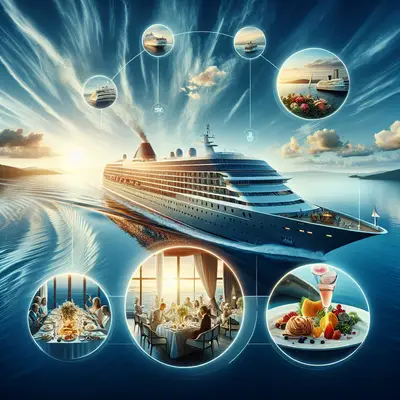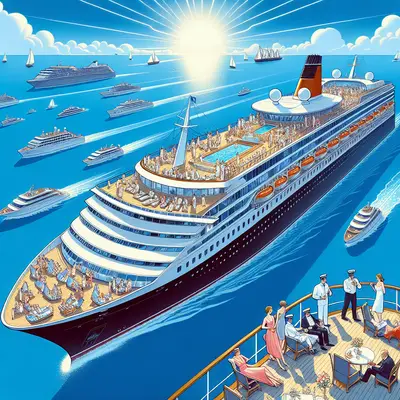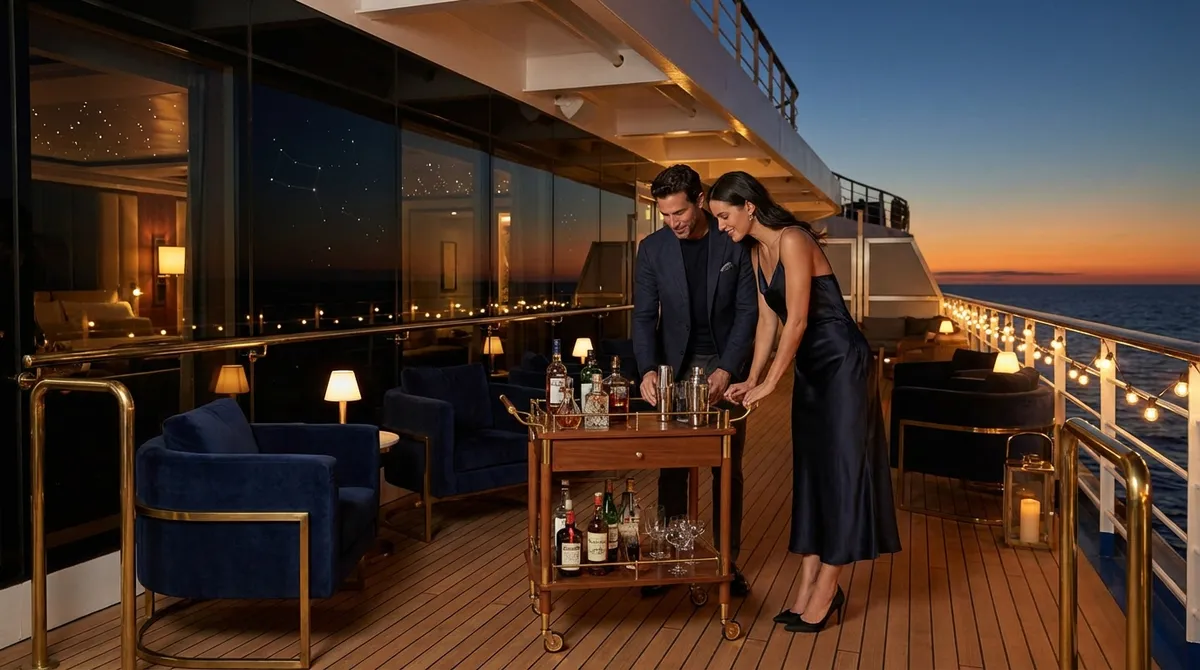
In a marketplace where ships increasingly resemble floating resorts, the most discerning travelers are less interested in sheer spectacle and more attuned to nuance: the craftsmanship of service, the personality of a fleet, the way a line interprets “luxury” without loud declarations. Modern cruise lines have moved far beyond basic transportation; each now curates a distinct philosophy of time, space, and service at sea. For the traveler who collects experiences rather than souvenirs, understanding those subtleties transforms a voyage from “pleasant” to exquisitely personal.
This is not about comparing star ratings or counting specialty restaurants. It is about reading the quiet signals each brand sends—the design of a public room, the cadence of an announcement, the way a shore excursion is framed—to understand what the line truly values. Below are five exclusive insights that seasoned cruise enthusiasts use to decode cruise lines well before they ever step aboard.
1. The “Invisible Script” of a Cruise Line’s Day
Every cruise line runs on an unwritten script—how your day is gently choreographed from dawn to well past midnight. For the informed traveler, decoding that script reveals more about the line’s priorities than any brochure.
Some lines design mornings for momentum: early fitness classes, energetic poolside music by 10 a.m., announcements that nudge guests into organized activities. Others respect quiet ritual—espresso bars that open before sunrise, unhurried breakfast service, and an almost monastic hush in corridors until late morning. One is selling you energy; the other, serenity.
Pay attention to the pacing of events. Are lectures scheduled opposite spa discounts and trivia, creating a carousel of choices? That suggests a line that believes in constant stimulation. Are key cultural programs given a quiet, spotlighted time slot with minimal competition? That points to a brand invested in intellectual engagement rather than pure entertainment volume.
Even the timing of the captain’s announcements is revealing. Frequent, chatty updates indicate an approachable, convivial personality; sparse, formal communications hint at a line that cultivates discretion and a sense of ceremony. Understanding this rhythm lets you choose a line whose daily “script” harmonizes with your natural cadence—whether you seek a day that flows like a curated exhibition or a resort-style blur of options.
2. Design as a Signature: Reading the Ship Like a Boutique Hotel
Before the first drink is poured or the first course served, the ship’s design will quietly tell you who it is for. The most refined cruise lines now treat their vessels as boutique hotels at sea—spaces that express a point of view rather than a generic notion of “elegant décor.”
Look at the public rooms as you would a gallery. Lines that invest in original art, architectural sightlines, and tactile materials—linen upholstery, real wood, interesting stone—are sending a clear message about permanence and taste. A cohesive palette that transitions gracefully from lounge to restaurant often signals a brand with a strong design narrative; a patchwork of themes and bright colors leans more toward family fun and visual theater.
Spatial choices matter as much as aesthetics. Expansive open atriums suggest a preference for spectacle and social energy, whereas discrete, layered spaces—intimate nooks, tucked-away libraries, and low-lit bars—indicate a line that privileges privacy and conversation. The way outdoor space is configured speaks volumes too. Wide promenade decks, shaded quiet corners, and loungers that face the sea rather than the pool show a commitment to the ocean as the central “amenity,” not merely a backdrop.
Discerning cruisers also consider how a line handles circulation. Can you move effortlessly from suite to spa to specialty dining without feeling you are walking through an amusement park parade? If so, the line likely understands that for many guests, the daily journey through the ship should feel as composed as the itinerary itself.
3. The True Test of Service: How a Line Handles the Unscripted
Anyone can deliver polished service when conditions are ideal. The true character of a cruise line appears the moment something unplanned happens—a delayed tender, a missed port, a guest’s quiet request that falls outside the usual menu of services.
High-end lines train their crews not simply in procedures but in judgment. When weather forces an itinerary change, some brands respond with perfunctory announcements and a hastily arranged replacement port. Others treat the disruption as an opportunity to showcase agility: thoughtfully curated alternative programming, complimentary enhancements (from wine tastings to extended spa hours), and transparent communication that respects guests as partners in the voyage.
At the micro level, pay attention to how crew handle edge cases. When a guest requests a small adjustment—a custom dish for a dietary need, a slight cabin maintenance issue, a last-minute tour change—does the response default to “not possible,” or does the staff work quietly to find an elegant solution? On the most refined lines, you will rarely hear the word “no” outright. Instead, you see a choreography of small negotiations and creative substitutions that rarely disrupt the guest’s sense of ease.
This “unscripted service” reveals the depth of a line’s training culture. Lines that invest in longer contracts, continuous education, and career progression often develop teams who feel genuine ownership of the guest experience. For the seasoned cruiser, these are the ships where you feel known not by your loyalty tier, but by your preferences—how you take your coffee, which wine regions you love, what time you like your suite prepared for the evening.
4. Culinary Philosophy: Beyond “Fine Dining” Labels
Most cruise lines now promise “elevated gastronomy,” but the most astute travelers listen for what is not said in the marketing: provenance, philosophy, and restraint. It is no longer enough for a line to partner with a celebrity chef; what matters is how that partnership shapes the everyday dining experience, not just a single specialty venue.
Start with the menus. Do they talk about regionally sourced ingredients and feature dishes that echo the ports you are visiting? A Mediterranean itinerary with no serious nod to local olive oils, seafood traditions, or regional wines suggests a missed opportunity. Conversely, a line that calibrates menus to geography—perhaps a Ligurian pesto one evening, a Santorini-inspired seafood lunch the next—reveals a commitment to culinary storytelling.
Wine lists are equally revealing. A thoughtful program is not simply long; it is coherent and alive. Look for depth rather than breadth—well-curated selections from classic regions, complemented by discoveries from emerging wineries. Some of the most sophisticated lines now host sommeliers who use sea days to run structured tastings tied to upcoming ports, turning the ship itself into a prelude to shore.
Restraint may be the most underrated luxury. Not every plate needs to be elaborate. Lines that are confident in their culinary ethos are not afraid to offer deceptively simple dishes executed with precision—perfectly poached fish, hand-rolled pasta, a modest but impeccable cheese trolley. For enthusiasts, these quiet triumphs often linger in memory longer than the most flamboyant multi-course tasting menu.
5. Shore Experiences as a Window Into a Line’s Soul
If the ship is the canvas, the shore is the narrative. The way a cruise line curates its excursions reveals how it views its guests: as mass tourists to be processed efficiently, or as curious travelers to be introduced thoughtfully to each destination.
Examine the excursion catalog. Does it lean heavily on panoramic bus tours and generic shopping stops, or does it offer immersive, small-group experiences—behind-the-scenes museum access, private vineyard visits, workshops with local artisans, or culinary tours limited to a handful of participants? The latter suggests a line that values depth over volume, even when that comes at the cost of scalability.
Timing is another subtle indicator. Some lines time their port calls to maximize operational convenience; others adjust arrival and departure windows to align with local culture—staying late for an evening performance in a European city, or arriving early to avoid crowds at a heritage site. That attention to temporal nuance tells you how seriously the line takes its role as a conduit to the destination rather than a simple conveyor.
Lastly, the presence of onboard experts—marine biologists in Alaska, archaeologists in the Mediterranean, cultural historians in Asia—signals a brand that sees shore excursions as chapters in a broader educational journey. These specialists often brief guests the night before a port call, then accompany them ashore not as guides, but as interpreters of place. For the enthusiast, this intellectual continuity—sea to shore and back again—turns an itinerary into a cohesive narrative rather than a string of scenic pauses.
Conclusion
Choosing a cruise line at the premium level is no longer about counting amenities; it is about alignment—between your personal rhythm and the ship’s daily script, your aesthetic sensibilities and the vessel’s design, your curiosity and the brand’s approach to service, cuisine, and shore experiences. The distinctions can be subtle, but to those who value refinement, they are decisive.
By reading beyond the brochure—studying how a line choreographs time, shapes space, responds to the unscripted, cooks with intention, and curates the world beyond the gangway—you move from being simply a passenger to becoming a connoisseur of the sea. In that space of discernment, each voyage stops being a generic “cruise” and becomes something rarer: a finely tuned expression of your own way of traveling.
Sources
- [Cruise Lines International Association (CLIA) – 2024 State of the Cruise Industry](https://cruising.org/en/news-and-research/research/2024/state-of-the-cruise-industry-2024) - Industry data and trends on cruise growth, guest preferences, and evolving offerings
- [U.S. Federal Maritime Commission – Cruise Industry Overview](https://www.fmc.gov/resources-services/cruise-information-resources/) - Regulatory context and background information on how cruise lines operate
- [Celebrity Cruises – Destination Enrichment Programs](https://www.celebritycruises.com/things-to-do-onboard/enrichment) - Example of how a major line structures lectures and expert-led enrichment at sea
- [Seabourn – Culinary Partnerships and Dining Philosophy](https://www.seabourn.com/en_US/why-seabourn/cuisine.html) - Illustrates how a luxury line articulates its approach to gastronomy and chef collaborations
- [Regent Seven Seas Cruises – Shore Excursion Collection](https://www.rssc.com/shore-excursions) - Demonstrates the range and structure of immersive and small-group experiences offered ashore
Key Takeaway
The most important thing to remember from this article is that this information can change how you think about Cruise Lines.