Some ports dazzle at first glance; others reveal themselves only to those who move at a slower, more considerate tempo. For the refined cruiser, the true luxury is not another champagne welcome but the feeling that a destination has opened a private wing of itself—quiet streets at the edge of town, a discreet gallery, a table kept for those who know when to ask. This is the realm of “horizons in reserve”: coastal destinations that become quietly extraordinary when approached with intention rather than urgency.
In this guide, we explore a curated set of destination strategies and five exclusive insights that reveal a more nuanced, insider’s experience of port days—crafted for travelers who value poise over spectacle and depth over volume.
Coastal Cities That Transform After the Last Tender
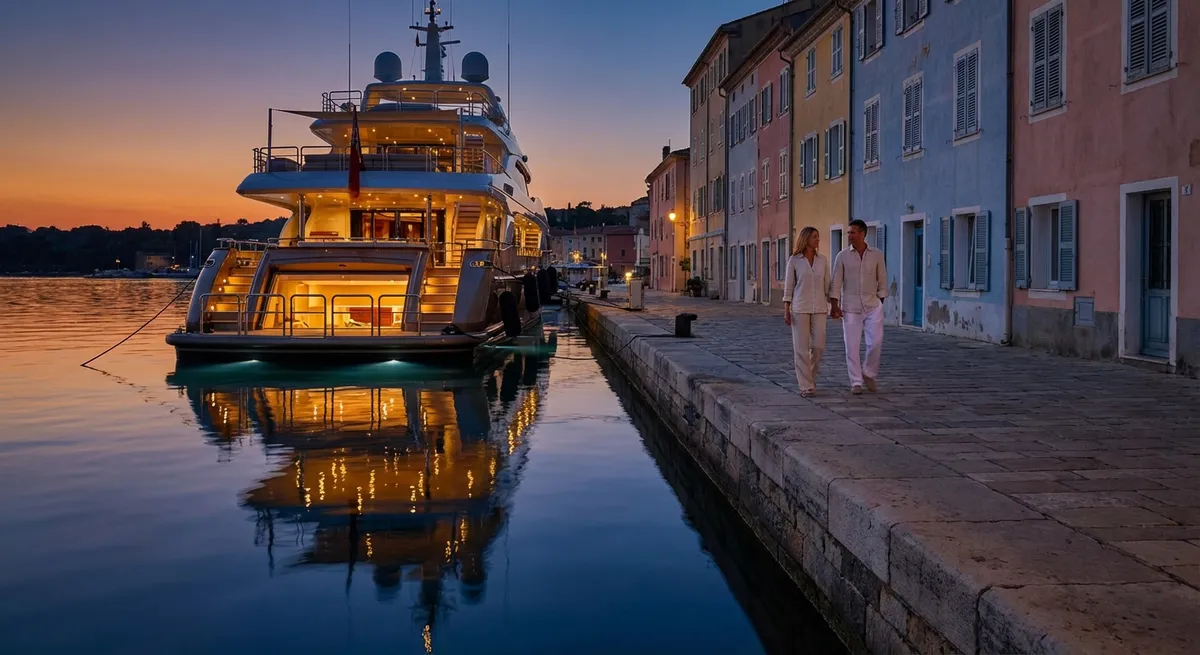
For many travelers, a port is something to “do” by 4:30 p.m., a checklist that ends as the final tender departs. Yet a select group of coastal cities become particularly beguiling in the late afternoon and early evening—precisely when day-trippers vanish and the local rhythm reasserts itself.
Ports such as Valletta, Reykjavik, and Trieste shift character dramatically as golden hour sets in. Cathedral facades soften in the angled light, waterfront promenades are reclaimed by residents, and restaurants that felt touristic at noon settle into their authentic personality. Long-stay or overnight calls in these ports let you trade souvenir stalls for the small rituals of local life: early-evening passeggiata in Italy, geothermal pool culture in Iceland, or wine bars in Malta where the conversation is entirely in the local language.
This is where choosing itineraries with late departures or overnights pays real dividends. Rather than rushing to “see everything,” you can layer your day: a quiet cultural visit in the morning, a retreat to the ship when crowds peak, and an intentional return ashore in early evening. The result is a far richer sense of place—and surprisingly uncrowded, atmospheric streets that feel worlds away from the midday crush.
Exclusive Insight #1: Track Sunset, Not Just Sail-Away
When evaluating itineraries, compare local sunset times to your ship’s departure. A port that keeps you until at least one hour after sunset—especially in cities like Dubrovnik, Santorini, or Quebec City—often grants you crowd-free access to the most photogenic, ambient moments of the destination. It’s a subtle but revealing indicator of how much the line trusts you to engage with the city beyond the standard tour-window.
The Quiet Power of Secondary Ports
Major marquee ports—Barcelona, Venice (via nearby terminals), Miami—signal prestige, but the seasoned cruiser understands that some of the most rewarding days ashore unfold in less publicized harbors. Secondary ports such as Porto’s Leixões, Kotor, Nafplio, or Ålesund offer a different equilibrium: real life is not tidied away, and the relationship between ship and shore feels more like a visit than an invasion.
These smaller cities and towns often have compact, walkable cores where architectural detail is best appreciated at an unhurried pace: carved stone lintels in old merchants’ houses, civic staircases weathered by centuries of footsteps, vernacular shopfronts that have not yet been redesigned for global brands. Cafés and wine bars cater primarily to locals and regional visitors, not transient crowds, which makes a quiet solo espresso on a side street more revealing than any panoramic bus tour.
Secondary ports also tend to attract smaller vessels and itineraries curated for cultural texture rather than volume. The absence of cruise-terminal fanfare encourages a gentler embarkation into the city: a stroll down a real working quayside, a short taxi ride with a driver who is not rehearsed for mass tourism, a chance encounter with a neighborhood bakery that has nothing in English on the menu—and does not need it.
Exclusive Insight #2: Read the Ship-Roster Before You Sail
Many port authority or tourism websites publish daily cruise-ship calls. A port with only one ship scheduled—ideally under 1,000 passengers—signals a very different onshore experience than a harbor welcoming three mega-ships. Checking this calendar in advance allows you to identify which stops will likely feel intimate and which may require more strategic planning (early starts, pre-booked private guides, or pivoting to less obvious neighborhoods).
Beyond the Postcard View: Navigating the “Second Layer” of Iconic Ports
Some destinations—Sydney, Cape Town, Rio de Janeiro, Hong Kong—are so visual and so frequently photographed that it is tempting to believe you already know them. Yet for the reflective cruiser, the aim is not simply to reproduce the classic skyline shot but to step deliberately behind it, into a second layer of spaces that locals actually inhabit.
In these cities, the traditional top-ten sights function as a gateway, not a checklist. Take Sydney: the Opera House and Harbour Bridge are just the prologue to harborside residential enclaves with understated cafés, art spaces in repurposed warehouses, and shoreline walks where the soundtrack is joggers’ footsteps rather than guidebook recitations. In Cape Town, Table Mountain may dominate, but the more intimate revelations often happen along the Atlantic Seaboard, in small galleries, wine bars, and coastal paths that locals frequent at dusk.
Approaching iconic destinations this way requires a different kind of preparation. Instead of only reading cruise-focused literature, look at local lifestyle magazines, regional cultural calendars, and neighborhood maps. The goal is to identify pockets where residents spend their downtime—waterfront precincts, farmer’s markets, design districts—then arrive slightly off-peak to observe, not orchestrate.
Exclusive Insight #3: Study Public-Transit Maps Before Tourist Guides
Urban transit maps (metro, tram, or ferry) are a sophisticated cruiser’s secret weapon. The endpoints and interchange hubs often correspond to genuine local centers of gravity rather than tourist circuits. By plotting a short foray one or two stops beyond the obvious (for example, taking a local ferry beyond the standard harbor loop in Stockholm or Sydney), you reach neighborhoods that retain a more authentic rhythm—yet remain easy to navigate within the ship’s schedule.
Shore Time as a Curated Ritual, Not a Race
Premium cruising has increasingly elevated the onboard experience, but discerning travelers recognize that the rarest luxury is still unfragmented time ashore. Treating port days as a curated ritual—not a race against departure—changes every decision: what you see, where you linger, and how you remember it.
Begin by choosing a single thematic thread for each port: maritime history, modern design, café culture, artisan food, sacred architecture, or even simply “waterfront walks.” Allow that theme to guide a small number of deliberate choices instead of attempting to compress every attraction into a single day. This thematic focus sharpens your attention; a detail that might otherwise pass unnoticed—a sculpted ship’s figurehead in a museum, a minimalist café interior in Copenhagen, a centuries-old chapel tucked up a laneway—becomes part of an intentional narrative.
Equally important is building restorative pauses into your day. A late-morning espresso under a colonnade or a half-hour spent on a bench facing the harbor is not “wasted” shore time; it is how your mind orders impressions into memory. On premium lines with frequent shuttle service or easily accessible docks, you can also segment the day: a morning immersion ashore, a brief return to the ship for a quiet lunch while excursion crowds surge, then a more personal, contemplative walk in the subdued light of late afternoon.
Exclusive Insight #4: Design a “Three-Moment” Shore Plan
Instead of a long list of sights, identify just three deliberately contrasting “moments” you want from each port—perhaps a high vantage point, a local flavor experience, and a silent or contemplative space. This framework keeps the day purposeful yet spacious, and it translates beautifully into post-trip storytelling and social sharing, where three strong, well-composed vignettes feel more elegant than dozens of hurried snapshots.
The New Geography of Ocean and River Combinations
For cruisers seeking destinations that feel both novel and deeply textured, one of the most sophisticated developments has been the increasing interweave of ocean and river cruising within a single journey. Regions such as Northern Europe, the Mediterranean basin, Southeast Asia, and parts of North America now lend themselves to “layered” itineraries: an ocean voyage along the coast, paired with a river cruise inland before or after.
This combination changes the emotional geography of a destination. Consider the difference between seeing Bordeaux as a single coastal call versus approaching it first via the Atlantic coast (perhaps with a call in La Rochelle or Bilbao), then continuing on the Garonne and Dordogne rivers into the wine country’s interior. Or pairing a Mediterranean voyage that touches Venice or Trieste with a Danube river voyage that explores Central Europe’s inland capitals. The sea gives you the grand, horizon-forward approach; the river provides the granular, village-to-village intimacy.
Such pairings also deepen your understanding of how a region’s maritime history, trade routes, and river systems shaped its cultural and culinary identity. Ports stop being isolated dots and reform into a network of influences that you can actually feel in the architecture, menus, and dialects as you move from coast to interior and back again.
Exclusive Insight #5: Let Wine (or Another Local Craft) Be Your Compass
When considering an ocean–river combination, choose a single regional specialty—wine, olive oil, tea, textiles, or even traditional shipbuilding—and use it as a through-line for both segments. In France, that might mean coastal oyster bars and Atlantic-influenced white wines on the seaboard, followed by château tastings inland along the Garonne. In Southeast Asia, coastal seafood markets could lead naturally into inland tea or spice regions. This continuity creates a satisfying narrative arc, elevating your journey from “two cruises back-to-back” to a thoughtfully composed expedition.
Conclusion
The most rewarding cruise destinations are not necessarily those with the biggest headlines, but those that reveal a different face to travelers who refuse to rush. By favoring ports that breathe after sunset, giving secondary harbors their due, stepping beyond postcard vistas, treating shore time as a crafted ritual, and weaving ocean and river into a single cartography of experience, you create voyages that feel distinctly your own.
For the discerning cruiser, this is the real allure of the sea: not just the comfort of a well-appointed suite, but the knowledge that each horizon holds a quieter chapter—waiting, patiently, for those prepared to meet it on its own elegant terms.
Sources
- U.S. Department of State – Country Information - Authoritative guidance on local conditions, safety, and entry requirements for planning port days and extended stays
- UNESCO World Heritage Centre – World Heritage List - Detailed information on culturally and historically significant coastal and port cities around the world
- Port of Dubrovnik Official Site – Cruise Schedule - Example of how port authority schedules can reveal congestion patterns and help sophisticated cruisers plan for quieter days ashore
- Port of Sydney – Cruise Schedule & Visitor Info - Insight into operations at a major iconic port and how ship calls shape the onshore experience
- European Commission – Sustainable Cruise and Port Studies - Context on evolving cruise patterns, port development, and emerging destinations in Europe
Key Takeaway
The most important thing to remember from this article is that this information can change how you think about Destinations.