Some destinations do not reveal themselves to those in a hurry. They reward the traveler who returns by sea, who lingers through a second dusk, who remembers the relief of a quiet pier after the crowd has gone back to its hotel transfer. For the discerning cruiser, the most memorable ports are not always the most famous—they are the ones that feel differently when the gangway rises and the harbor lights begin to glow.
This is an exploration of destinations that unfold in layers when approached by ship, and of the subtle details that seasoned cruisers quietly look for. Woven through are five exclusive insights—less about “must‑see sights,” more about how to inhabit these places with a certain quiet precision.
Where Harbors Set the Tone: Reading a Port Before You Step Ashore
Every experienced cruiser knows the journey into a harbor sets the emotional register for the entire call. The sweep of coastline, the industrial silhouettes, the way a city meets its waterline—all of it is an overture.
Arrivals into cities like Stockholm, Sydney, or Québec City are particularly revealing. The long, island‑studded approach to Stockholm feels like slipping through a private archipelago, with summer houses and forested islets replacing the usual container cranes. Sydney’s sail‑in, if timed for early morning, is an architectural crescendo: headlands, harbor homes, and then that unmistakable pairing of bridge and opera house. Québec City, approached along the St. Lawrence, rises like a European hill town transplanted to North America, the Château Frontenac watching over the river with theatrical poise.
For a refined cruiser, the harbor is not just scenery; it is a reading of priorities. How does the city balance commercial docks with heritage waterfronts? Are warehouses being converted into galleries and restaurants, or is the waterfront still purely functional? The answers signal how worthwhile it is to invest emotional energy—and future returns of your time—into that port.
Exclusive Insight #1: Use the sail‑in as a filter. Seasoned travelers often decide, during that first hour of approach, whether this is a city to explore independently, a place best seen via curated excursions, or a port to enjoy from the quiet vantage of the ship itself. Carry binoculars, watch for how locals actually use the waterfront, and let the harbor’s “handwriting” guide how you spend the day.
The Second Dusk Principle: Why Overnight Calls Redefine Familiar Cities
If there is a single privilege that reshapes how you experience a destination, it is the overnight call. Remaining alongside into the late hours—or staying for two or more days—turns ports into temporary neighborhoods rather than postcards.
Cities like Venice, Dubrovnik, Bergen, and Singapore become unrecognizable after the last tender or coach has departed. In Venice, evening vaporetto rides and half‑empty campos feel worlds away from midday crowds. In Dubrovnik, the stones of the Old Town cool, and locals reclaim their favorite side streets. Bergen’s wharf, under a lingering northern twilight, reads less like a tourist icon and more like a working city with exquisite taste in timber and color. Singapore, meanwhile, nurtures a kind of nocturnal precision: gardens lit like art installations, hawker centers reaching full rhythm well after traditional dinner hours.
Exclusive Insight #2: Treat overnight ports as “resident days.” Instead of rushing to “cover everything,” choose one or two neighborhoods and walk them as if you lived there—at different times of day. Morning markets, late‑afternoon cafés, and post‑dinner promenades offer three distinct readings of the same city. The seasoned cruiser will often save marquee attractions for the ship’s excursion team, and claim the evenings for unstructured, hyperlocal wandering.
Micro‑Geographies: Discovering the 20‑Minute Radius Around the Pier
Another quiet advantage of cruising is the micro‑geography surrounding the port itself. This is the overlooked zone most day visitors rush through on their way to headline sights. For the observant cruiser, that 20‑minute radius around the pier can be the most revealing—and least curated—segment of a destination.
In Mediterranean ports such as Valencia or Trieste, the dockside fringe often holds fishermen’s bars, utilitarian cafés, and family‑run groceries that predate the cruise terminal. In Northern Europe—think smaller Norwegian fjord towns or Baltic ports—this immediate circle tends to be a careful blend of maritime heritage and contemporary design: converted warehouses hosting micro‑roasteries, glass‑fronted libraries open to the sea, or modest but exquisite bakeries catering to commuters rather than tourists.
The charm here is not spectacle but texture: street signage, the rhythm of deliveries, the way schoolchildren move through public squares. It is a study in how a place actually works.
Exclusive Insight #3: Always give yourself one “pier hour.” Before or after your principal sightseeing, reserve at least an hour to wander only within walking distance of the ship—no taxis, no transfers, no agenda. Choose a single café, bakery, or waterfront bench and observe. Veteran cruisers often report that their most deeply felt impressions of a country come not from its famous monuments, but from these ordinary, unvarnished margins of the harbor.
Climate Lines and Light Lines: Choosing Destinations by Atmosphere, Not Latitude
Discerning cruisers increasingly think less in terms of regions and more in terms of light, climate bands, and seasonal character. Two ports at similar latitudes can feel radically different depending on ocean currents, prevailing winds, and local architecture.
Consider the contrast between the Adriatic and the Aegean, or between the Jalisco coast of Mexico and the Sea of Cortez. The Adriatic, framed by limestone and terracotta, bounces light sharply; cities like Split and Kotor appear almost sculpted from reflected sun. The Aegean, with its iconic whites and blues, diffuses brightness in a softer, more graphic palette. Along Mexico’s Pacific coast, Puerto Vallarta’s lush backdrop and humidity feel utterly distinct from the drier, more elemental landscapes of La Paz or Loreto in the Sea of Cortez, where desert meets sea in almost minimalist strokes.
These nuances profoundly shape how you spend your time ashore. Some destinations invite languid café hours and shaded courtyards; others are at their best on open promenades, windswept fortifications, and long coastal walks.
Exclusive Insight #4: Curate your itinerary by “quality of light.” Seasoned travelers will often repeat a region in a different month simply to experience a change in atmosphere: Athens in late October instead of July, or Alaska in early September instead of midsummer. When planning, consider not just temperature and rainfall, but also day length, angle of sun, and the cultural calendar—shoulder seasons can turn overly familiar ports into something far more intimate and refined.
Ports With a Second Story: Destinations That Transform From the Water
Some of the world’s most interesting cruise destinations have an entirely different narrative when experienced from sea versus land. These are ports where the coastline itself is a storyteller, and where the most resonant “sightseeing” occurs during sail‑away or coastal transits rather than on shore.
Norway’s fjords, Chile’s Patagonia, and New Zealand’s fjordlands are the most obvious examples; their drama is architectural, carved in stone and ice. But there are subtler cases. Sailing past the Amalfi Coast, you see the improbable logic of terraced villages and vertiginous roads far better than from any shore excursion. Approaching Hong Kong by water, particularly in the evening, reasserts its essential identity as a harbor city—neon‑edged towers rising where boats once clustered in floating communities. Even the low‑slung, coral‑fringed silhouettes of the Caribbean’s smaller islands tell you more about their histories of trade, defense, and cultivation than any single museum could.
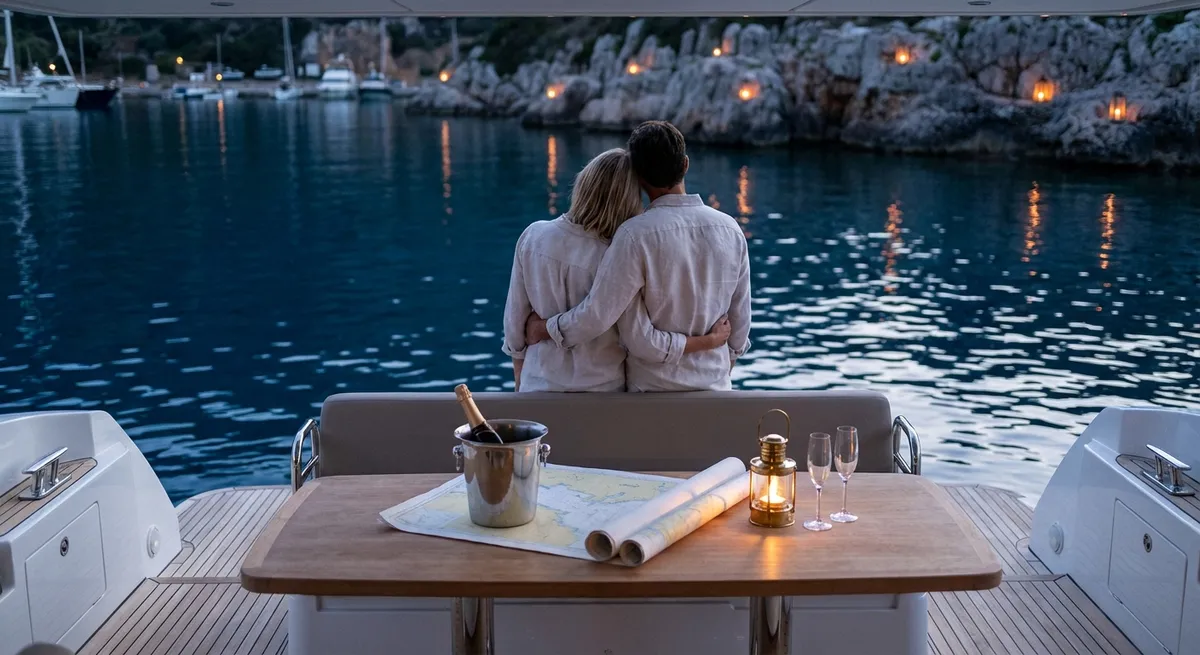
Exclusive Insight #5: Treat coastal transits as “floating galleries.” Instead of viewing scenic cruising as downtime, approach it with the same curiosity you would bring to a world‑class exhibition. Study charts or maps ahead of time; identify key headlands, straits, and islands. Use the ship’s observation lounge, forward decks, and port‑side or starboard balconies strategically, depending on the route. Many seasoned cruisers keep a slim notebook just for coastal impressions—sketches of skyline shapes, notes on water color, and the particular mood of each departure.
Conclusion
The true luxury of destination‑focused cruising is not measured in square footage or thread count, but in layers of perception. It lies in the ability to read a harbor as you enter, to claim the after‑hours version of a city as your own, to find authenticity within a short radius of the pier, to follow bands of light instead of lines on a map, and to treat coastlines as narratives revealed in real time.
For the cruise enthusiast who travels with intention, each port becomes more than a stop on a route. It becomes a relationship—one that deepens with every sail‑in, every second dusk, and every quiet hour spent observing how land and water negotiate their shared edge.
Sources
- UNWTO – Tourism in Coastal and Maritime Destinations - Context on how coastal and marine tourism shapes destinations and local economies
- UNESCO World Heritage Centre – Venice and its Lagoon - Background on Venice’s unique relationship with its lagoon and maritime setting
- Norwegian Fjords Cruise Guide – Visit Norway (Official Tourism Site) - Official insight into fjord cruising and the character of Norwegian coastal destinations
- Port of Sydney – Port Authority of New South Wales - Information on Sydney’s harbor, cruise facilities, and maritime environment
- Government of Canada – St. Lawrence Seaway Information - Details on the St. Lawrence Seaway, providing context for approaches to Québec City and other river ports
Key Takeaway
The most important thing to remember from this article is that this information can change how you think about Destinations.