For the practiced cruiser, the choice of cruise line is less about brand logos and more about the quiet details that reveal a company’s philosophy at sea. Beneath the brochures and banner ads, each line carries an unwritten code—expressed in how they design their ships, curate their crew, and choreograph the flow of a day on board. These nuances rarely appear in marketing copy, yet they are precisely what separate a pleasant sailing from a truly elevated voyage.
This guide looks past the obvious—cabin categories, headline restaurants, showpiece suites—and focuses instead on five refined, often-overlooked markers that seasoned enthusiasts use to discern which cruise lines genuinely honor the art of sophisticated travel.
The Architecture of Space: How Deck Plans Reveal a Line’s Priorities
Experienced cruisers often start not with itineraries, but with deck plans. The way a ship is spatially composed offers unusually candid insight into a line’s real priorities—long before you set foot on the gangway.
A premium-minded line subtly protects quiet zones: placing spas and observation lounges away from high-traffic corridors, designing circulation patterns that keep families and groups happy without disturbing guests seeking serenity. Look at where the main pool sits relative to the ship’s dining core; whether lounges are stacked vertically for sound insulation; and how many venues have genuine sea-facing seating rather than interior-facing bar stools.
Some lines invest heavily in forward-facing, high-up lounges with panoramic windows, signaling a commitment to the contemplative cruiser who values the sensation of being at sea. Others give over prime real estate to retail or casino floor, suggesting a different focus. The ratio of outdoor promenades, shaded terraces, and semi-private nooks to raw passenger capacity is another refined marker: lines truly invested in guest comfort resist the temptation to monetize every square foot and instead preserve unhurried, uncrowded vantage points over the water.
When comparing cruise lines, read the deck plan as you might a floor plan for a residence. Ask: Where will I naturally gravitate in the late afternoon? How many spaces exist for two quiet chairs and a drink? Which line has engineered the ship to breathe, not merely to carry as many guests as possible?
The Invisible Choreography of Service: Timing, Not Just Smiles
Many cruise lines can deliver a warm welcome. Far fewer master the invisible choreography that seasoned travelers recognize as the hallmark of elevated hospitality: precision timing.
On refined lines, guest-facing interactions are quietly orchestrated so that service feels anticipatory rather than reactive. In practice, this can mean that your preferred table in a lounge is remembered and held a few minutes longer at the hour you tend to appear, or that room service on sea days arrives reliably within a narrower time window than advertised. You are not told about these systems; you simply experience them.
Watch how a line handles peak moments: embarkation day lunches, pre-dinner cocktails, post-show dispersal. Does the bar team seem overwhelmed, or do additional staff quietly materialize at exactly the right moments? Do dining room doors open with a rush and a queue, or is seating subtly staggered so guests drift in without congestion?
The best cruise lines also train staff in restrained discretion. On-board sommeliers who remember your preferences without over-selling, but still introduce a lesser-known regional wine at precisely the right moment, are not improvising; they are working within a service culture that values the long arc of your experience over quick transactions. Enthusiasts quickly learn that service choreography, not just staff-to-guest ratios, separates genuinely premium lines from those merely claiming the title.
Culinary Depth Beyond the Headline Restaurant
The easiest way to judge a line’s culinary ambition is to tour its specialty restaurants. The more telling measure, however, lies in the quiet corners of the food operation: the consistency of room service, the creativity of poolside menus, the seriousness with which the line treats breakfast, and how it responds to guests who truly care about provenance and preparation.
Premium-minded lines increasingly invest in regionally reflective menus that evolve during the voyage instead of repeating a static rotation. On itineraries through the Mediterranean, you might notice olive oils shifting by region, local seafood appearing with discernible differences from port to port, or lunch buffets that feel curated rather than simply extensive. These are deliberate choices that demand more from culinary logistics—and speak to a cruise line willing to value narrative over convenience.
Another reliable indicator is how a line handles dietary nuance. It is one thing to accommodate allergies; it is quite another to deliver creative, visually compelling dishes for vegetarian, vegan, or low-sodium preferences without repetition or compromise. Enthusiasts often speak highly of lines whose chefs invite guests for brief menu consultations early in the voyage, adjusting dishes or suggesting off-menu options tailored to their tastes.
Look also for small, telling details: Does the line offer a proper loose-leaf tea service? Are espresso drinks artfully prepared across the ship, not just in a single café? Are wine lists curated to reflect regions visited, with thoughtful by-the-glass selections beyond the usual suspects? These quiet culinary decisions say more about a line’s luxury credentials than any single marquee restaurant ever could.
Guest Mix by Design: How Itineraries Curate the Onboard Atmosphere
For many enthusiasts, the true luxury at sea is not a particular material amenity, but the social atmosphere on board. Savvy cruise lines understand this and design their deployment—where they sail, how long, and in what season—as a powerful tool for guest curation.
Shorter, weekend-adjacent cruises from major drive-to ports naturally invite a different energy than extended itineraries in remote regions. Lines that cultivate a more contemplative, experience-led clientele quietly favor longer sailings, unusual port combinations, and shoulder-season departures. These choices tend to attract guests who prioritize immersion and continuity over simple entertainment.
World cruises and grand voyages amplify this effect: guests willing to commit months at sea often bring a particular intellectual curiosity and patience for nuance. Lines that emphasize these epic itineraries, along with lecture programs and cultural partnerships, are signaling a focus on enrichment rather than spectacle. You can often see this in their marketing to past passengers: invitations to themed voyages with guest speakers, regional experts, or collaborations with cultural institutions.
Examine how different lines speak about their ports. Some emphasize “fun” and “bucket list” stops; others lean into lesser-known harbors, overnight stays, and late departures that allow for evening performances ashore or unhurried, post-dinner strolls. The more a line prizes time and depth in port over sheer port count, the more likely it is to attract a measured, engaged guest mix—the kind that many experienced cruisers quietly seek.
The Texture of Quiet Luxury: Acoustics, Light, and Material Choices
High-end cruise lines understand that luxury is not only what you see, but what you do not hear and what you subtly feel. Seasoned travelers pay close attention to the sensory texture of a ship: the acoustics of corridors, the warmth of lighting after dark, the tactile quality of surfaces you touch dozens of times a day.
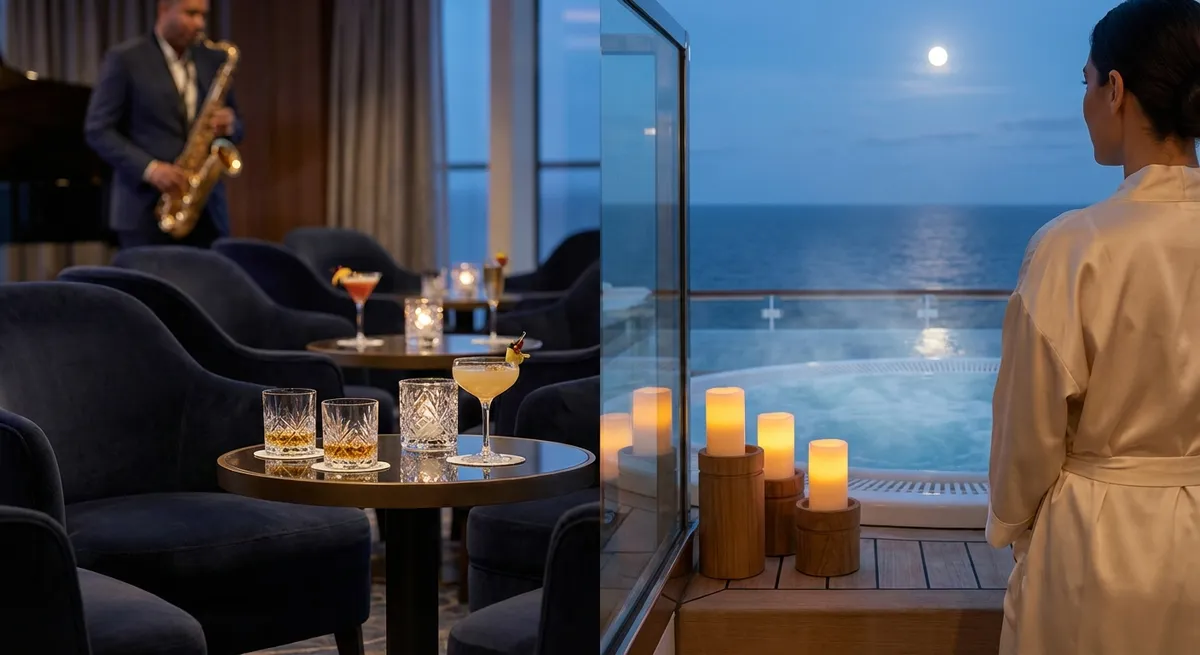
Ships built or refitted with a premium guest in mind often employ advanced soundproofing not just in suites, but in standard staterooms and public areas. Cabin doors that close softly, corridors that dampen footfall, and partition walls that preserve privacy are not accidents—they reflect investment. Step into an observation lounge during a sea day: can you hold a low-voiced conversation without competing with ambient noise? This is where the difference between “stylish” and “considered” design becomes apparent.
Lighting schemes are equally telling. Lines that prize sophistication adopt layered lighting: warm, adjustable cabin lights; thoughtfully lit staircases that guide rather than glare; public spaces that shift subtly from day-bright to evening-intimate. Screens and digital signage are integrated with restraint rather than saturating the visual field. Even the choice of floor coverings—carpet versus tile, matte versus gloss—reveals the line’s commitment to comfort over aggressive shine.
Materials matter as well. Genuine woods, high-density upholstery, and well-fitted hardware age gracefully and feel substantial under hand. Better lines refurbish their ships frequently enough that public areas never feel tired, while resisting the temptation to over-theme or clutter. Enthusiasts often report that on certain lines, the ship itself becomes a calming presence—an object crafted with care rather than a mere venue for activities.
Conclusion
For those who return to the sea year after year, the choice of cruise line becomes less about category labels and more about personality—expressed in architecture, service choreography, culinary depth, itinerary philosophy, and sensory detail. These five subtle dimensions form a quiet language that experienced cruisers learn to read, revealing which brands are truly committed to an elevated onboard experience.
By looking past overt marketing and examining how a line uses space, manages time, curates people, and shapes the feel of its ships, enthusiasts can align themselves with fleets that honor not just where you travel, but how you feel while traveling. In that alignment lies the true luxury of modern cruising: a voyage that feels precisely, almost invisibly, attuned to the way you prefer to experience the world at sea.
Sources
- U.S. Federal Maritime Commission – Passenger Vessel Operators - Official registry and oversight information for major cruise lines operating from U.S. ports
- CLIA (Cruise Lines International Association) – State of the Cruise Industry - Industry-wide data on deployment, guest profiles, and trends in cruise experiences
- Royal Caribbean Group – Sustainability Report - Insight into ship design, refurbishment philosophy, and investment in guest-focused infrastructure
- Carnival Corporation – Fleet Overview - Corporate perspective on brand differentiation and how various cruise lines position themselves within one group
- Harvard Business Review – “The Elements of Good Experience” - Broader analysis of experiential design and service choreography relevant to understanding premium hospitality at sea
Key Takeaway
The most important thing to remember from this article is that this information can change how you think about Cruise Lines.